v
 The task is like climbing Mt. Washington, the highest peak in New England. The task is simple but not easy. Mt. Washington is a deadly peak showing little mercy for those who may make even a small mistake. High winds, sub-freezing temperatures, and snow are common even in July. The terrain steep and rocky. The views approaching and above tree line are dramatic, distracting, and just plain awesome. The task is simple really, inspire your students to learn what you are teaching and incorporate the lessons into their daily lives to become better at what the do. However, like trails to the summit of Mt. Washington, the path to successful training not easy. Adult learners are distracted in many ways. Some dealing with problems at home. Others deal with problems at work. Problems are like the tremendous views causing students not to pay attention to the trail. Some students do not feel they need to learn what they were sent to learn at your training, while others may think they know more than you do about the topic (and they might). Both groups are like large rocks tripping you if you do not pay attention to your student’s needs. Like to cold in July, some students remain cold through out the class. Vision is often discussed as a leadership tool to help employees focus on what is right. With vision comes passion. Vision in training and education accomplishes the same result as it does in leadership. With learners, vision creates a desire to pay attention, focus on the learning, and demonstrates you are prepared for whatever the mountain throws at you.
An example of casting a vision that catches the eyes of your student could be as simple as the opening of this blog. It is a short glimpse of an exotic place rife with danger. Showing (showing is a vision word) how your lesson connects to something exotic captures your students attention. It also provides you the tool the show your passion for the subject.
Instructors with passion retain the interest of students longer. In order for your training to affect the behaviors of students, they first must receive the information you provide. Passion for your topic, demonstrated through your vision, keeps their attention on your message.
As a believer, an instructor provides opportunities during training for students to practice new skills. Simple practice exercises allowing students to try skills keeps them focused, and reinforces you know something about what you teach. Skills students master during training are more likely used in life outside the classroom. They leave with the courage required to accomplish change.
 Most people want to learn to work better, rather than harder. Paint a picture of a hammock strung between two coconut palm trees, the wind gently swinging them back and forth as they sip a cool tropical drink on a quiet, sandy beach. Let them leave your training with the passion, vision, and confidence that using your ideas and skills will lead them to that hammock. Students who understand how your lessons creates a simpler life encourages them to pay attention and learn more. Some say life on the beach is better than climbing mountains. Creating a vision of success inspires your students to implement the things they learned from you.
– – – – – – – – – – – –
Photo Credits
Both from Flickr.com using Creative Commons License
Rocky Trail by Paul Irish

Beach Hammock by Kok Chih and Sarah Gan
https://www.flickr.com/photos/gandhu


 Companies carefully develop and vigorously safeguard their corporate logos and trademarks because the leaders understand the importance of brand. Logos speak for the company, what it makes, and stands for. Some trademarks become terms for common items, actions, or a range of products. Years ago people would Xerox a copy when they wanted a photocopy. Everybody had a Frigidaire even if their refrigerator was a Whirlpool. Today if you want to find out some piece of information, you Google it. Mention these names or show their logos and people create a vision of excellence in each of those industries. The trademark is the company and people know the values of each. Artifacts, such as logos and trademarks, are the visible representations of an organization’s culture and values. Other aspects of artifacts include customs, traditions, celebrations, buildings, and attire. Leaders can use artifacts to change behaviors of stakeholders to align with desired values.
 Inexperienced instructors struggle to learn ways to involve their students. A simple, yet effective method is Ask, Pause, Call.
 Asking questions through out your training helps students pay attention. They never know when you will call upon them to answer a question. It allows them to make connections to other learning and experiences. Their answers let you know if they are receiving and understanding the information, or if you need to represent the information using a different approach.
 their answers to make the learning point. If they are a bit off, follow up with leading follow up questions that tends to suggest the correct answer.

 the supervisor includes one of the guiding principles on the first Monday of the month. The supervisor provides the company’s definition of the principles and facilitates a discussion about ways employees can incorporate behaviors into their work lives to live up to the principle. This week they discuss loyalty. The conversation includes loyalty to the company, the smaller group, customers, and shareholders. The meeting breaks and employees go about their work.
 conversation when you return to the first guiding principle. Allow that employee to discuss and introduce the guiding principle. She could lead the conversations about how others engaged in behaviors exemplifying the principle. Repeating the process instills a deeper understanding of each principle and allows employees to further ingrain that principle into their daily lives. As new employees come on board, they learn not only how things are done, but why.

 Rules tell each employee what to do and what not to do in a given situation. The problem with rules is no organization can write a rule for every situation, and organizations like the VA have tried. Often rules conflict in a given situation. When faced with a situation not covered by a rule, or one where the rules provide conflicting guidance, people have to make decisions. That is why guiding principles are necessary.
 instead of rules that fence in options. Guiding Principals develop effective organizations. They create a climate for employees and junior leaders to safely take risks within established areas. Leaders use mistakes as learning opportunities for the employee and others. Employees respond to increased trust by finding improved ways to accomplish the organization’s mission. All stakeholders receive the results they expected. By using guiding principals, people find their own route to success within establish boundaries. Now is a great time to review your organization’s principals and determine how you can improve them for increased success in the coming year.
 Developing employees into leaders prepares organizations for both attrition and unexpected opportunities. Both Bill and Sally understood the importance of developing their next leaders for continued organizational growth and sustainment of excellence.
 One up and coming leader recognized the importance of developing young leaders. He examined everything the new guys and gals needed to know. He recognized it would take hundreds of hours to teach them everything. He faced a choice to move forward teaching a little at a time, or to become overwhelmed by the size of the task and quit. He decided to start small, directing three of his proteges to read an article on leadership. The following week he brought them to lunch to discuss what they learned and what ways they could apply those lessons to their own activities.





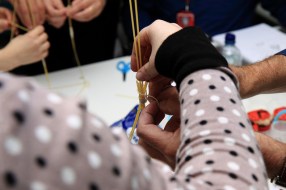 class that is designed specifically to meet your training objectives. Good practical exercises are copied by instructors because designing them is tough work. The first time you have a student build a pasta tower to the ceiling and perches his or her marshmallow at the top, you realize it is better to use your own ideas to reinforce your learning points.

 There is more to wandering than aimlessly walking around. For LBWA to be effective you have to wonder around the areas and among the people least likely to otherwise have access to you or that you would ordinarily see. People only bring problems to accessible leaders. You have to be accessible to hear people’s concerns.

 ided so the student understands help really is there.


 Forgiveness is often seen as a weak, outward display directed at those who offend us. Unlike respect, viewed as strong, outward behaviors directed towards others, forgiveness is a strong, inward action directed towards ourselves. Holding grudges does little to change someone’s behavior. Instead, grudges harm the holder, preventing him from developing better relationships.

 On Memorial Day, we take time to remember those who died in combat. We should. There are two groups who we should also remember; the family members of those who died, and those who later die by their own hand because of internal injuries sustained on the battlefield no one can see.
