Helping those you lead to apply lessons learned enables them to broaden their horizons and chart a course that requires less direct supervision. -Photo by ClickerHappy on Pexels.com
Learning to establish measurements sets leaders and their followers up well for the step covered in this post. If you have not read the post on measuring success, go back and read it now or you will be lost here (click here). In this step, we analyze the progress made on the goal. If one is meeting expectations, help them reflect on what actions are achieving those results best. If things are lagging or there is lots of friction, help them identify the causes of the problems. In both cases, both you and those you lead learned how to do things better along the way. Use this time to discuss applying those lessons so others may replicate them and achieve positive results. People accept change better when they are the ones discovering how the change is better rather than someone telling them to change. Successful people reflect on things they learn, good and bad, so they repeat the behaviors that helped them and avoid those that caused them to fail.
I find it is helpful to begin the meeting with the challenges facing the person you lead. Look at the shortfalls in the progress of their goal. Use questions to help them examine the perceived causes of those failings. Discuss what behavioral changes might improve the situation and how they will apply them in their work and life.
While I served in the National Guard, I was also a police supervisor. Police work involves working various shifts, and at that time, the supervisor job entailed working a weekend night shift. Well I learned I could work the night shift, have someone cover a couple hours for me, and still attend a full day of training for Guards. However, on the weekends we had to complete a physical fitness test, it was not so good. With only a few hours of sleep, I often failed the test. I would retake the test later the same week and pass it. I figured out that instead of working the night shifts on the weekend of the fitness test to take time off instead of working. Being well rested, I passed the tests. Making that simple change set me up for increased success, paving the way for promotions to positions of increase responsibility both in and out of the military.
When people fail to identify things they learned that helped them succeed, they end up having to relearn those lessons. Helping those you lead figure out what helped them achieve success ensures they only have to learn the lesson once. -Photo by cottonbro studio on Pexels.com
When I met with the leaders I led who faced challenges, this lesson allowed me to help them understand how a person’s personal life affected their job performance. We could discuss ways they could appropriately inquire about things happening in their followers lives that might be taking them away mentally or physically from their work. Understanding how those issues impacted the leader’s success or failure helped them become more empathetic to those they led. Modeling the behavior with those leaders taught them how to work their employees. Once these personal issues were identified, the leader and worker collaborated on ways to implement changes.
While this example focuses on personal problems and issues, the same process applies to any area someone is struggling. You may learn through this meeting they need additional training in some aspect of the job, a piece of equipment is not working correctly, or some other issue blocking success. Use this information to develop a plan to improve the situation so those you lead achieve their goal and help the organization succeed.
This is not a disciplinary meeting. As the leader, understand people make mistakes as they learn and grow. There is a big difference between deliberate misbehavior and making inadvertent mistakes. If a person knows the standard, and behaved in a fashion that violated that standard, there may be an opportunity to learn from that mistake, but the consequences conversation must be separate from the learning conversation. For example, miscounting change for a customer and coming up a few dollars short in the cash drawer and deliberately stealing company funds are different behaviors requiring different responses. The two should not be treated the same.
The lessons learned conversation creates new behaviors to help your followers be more competent and independent. Working through the learning process develops them professionally in two ways. First it helps them improve with their specific assigned tasks. Second, you model the behavior to help them become the next set of leaders in your organization. Every leader will eventually leave their organization. These kinds of conversations ensure quality leaders are groomed for the next level.
Anyone can be a boss. A leader invests time with people to help them learn to independently succeed. -Photo by https://kaboompics.com/ on Pexels.com
Investing time with those you lead to help them identify and apply lessons learned as they pursue professional goals is a critical leadership task. Coaching them demonstrates your concern for their personal and profession growth and well-being. Leaders who assist others to achieve their goals develop trust and greater influence. People learn to evaluate their own progress, and develop critical thinking skills. As these people grow, they prepare to move into leadership positions and require less direct supervision. In the beginning, this process requires leaders to invest more time with individuals. As those individuals grow, leaders create more time because they directly supervise less. Most importantly, leaders following this process improve the likelihood their people successfully achieve goals that help the leader achieve his or her goals. In turn, the organization accomplishes its goals and mission. Invest time this week with someone you lead to help them identity and apply the lessons of their profession development goal.
References
Brown, J. (2006). A leader’s guide to reflective practice. Trafford Publishing.
There is an old saying that you measure the success of a manager with dollars sold, saved, and earned. Leaders are measured by the number of people they develop. Because managers are often concerned with dollars, they lack the sense required to deal with the people who are in the best position to sell, save, and earn the dollars required for the organization’s success. Understanding different measures of success helps leaders teach their followers ways to measure success other than through monetary value. Such measures can be broken down into two categories: performance and effectiveness. When you teach others how to measure performance and effectiveness well, they will understand how they contribute to the organization and require less direct supervision.
There are two broad categories of measures: performance and effectiveness. Use performance measures to determine if you are executing the steps of your tasks appropriately. Measuring the process helps determine how well you are executing the tasks you identified when setting the goal as the most likely to achieve your goal. If your analysis was correct, these measures predict your success. In some disciplines of execution, they call such measures leading indicators.
Performance measures
Performance measures are those things that measure the processes and task steps selected to achieve the goal. These measures look at how well an operation, process, procedure, or other action is being performed against an established standard. These measures should be part of task step statements developed in the goal and refined as the person working towards the goal approaches that step. Performance measures help leaders determine if selected tasks are being performed correctly. Performance measures are leading indicators of effectiveness.
Examples of performance measures include:
Value of goods sold
Hours of billable time worked
Number of widgets produced in a period of time
Number of miles completed
Number of people contacted
Rate of data entry errors
Times an activity was completed correctly
This is not a comprehensive list. Notice how many examples in this list, however, deal with numbers—all of them. If one cannot understand how to measure performance when one reaches a particular task step, the person does not yet fully understand the problem and the task.
Let’s say you are leading a number of people who interview crime victims and there is a standard that each attends a peer review two times per year. Your big goal is to have an effective crime victim interviewing section. One of your selected task steps is to conduct four peer review sessions each year. In order to demonstrate successful completion of the task step, you have two measures. The first measure is to ensure each person you supervise attends two peer reviews each year. If someone has only attended one, or even none, you and they fail. Second, you chose to offer a peer review each each quarter to allow all interviews to attend at least two. It would be reasonable to assume that when October rolls around, you would have completed three peer reviews, once each quarter. These are two examples of comparing observed behaviors to required measures.
Learning to measure tasks and processes is important because this activity is how an organization accomplishes its what. For example, as a leader of a nonprofit, you need to raise $100,000 to execute a project. The $100K is what you need to do. How does a nonprofit raise $100,000? Those are the tasks and processes you, as the leader, establish. Those activities need to be measured to ensure you are doing them to achieve your what.
Effectiveness measures
Effectiveness measures demonstrate that your task steps and activities are making a difference, creating the change your organization seeks. The sum of all of your activities should equal that change. The first step in measuring effectiveness is to precisely measure your performance of tasks, activities, and processes. Next, identify the measures for your effectiveness. Like performance measures, if you do not know how to measure your effectiveness, you lack an understanding of the problem and solution. Effectiveness measures are trailing indicators that you are doing the right things.
Let us look back at the example of the nonprofit seeking to raise $100,000 for programming. This is a pretty simple effectiveness measure: how close to $100,000 are your activities getting you? If you engaged in a number of fundraisers and failed to meet the goals for those activities, you will not likely reach your goal. This shows your activities are not effective, and why you need to determine if your processes are being accomplished to your defined expectations.
Here is a short example of going through the process. You are the General Manager of a supermarket who wants to increase profitability. You meet with the bakery department manager to set goals that enable you to achieve your goal. The manager sets a goal to improve profits of his department by 3% through reduced waste from unsold inventory, and increasing the variety of products desired by customers over the next three months. This statement identifies the following in the SMART model:
Specific: Increase profitability of the bakery department
Measureability: Increased profits of 3%,
Less waste from unsold inventory,
Increased product variety.
Attainability: is partially answered by identification of two task steps listed in the above measureability statement above. These task steps require additional analysis to determine ways to accomplish those activities.
Relevant: The manager’s goals are relevant to your goal. If you can increase profitability in every department, you will increase the profitability of your store.
Time-bound: The manager set a three-month limit to accomplish this goal.
As you work through the process with the bakery manager, create a goal worksheet for both reducing waste and increasing product variety. Those are the two processes required to have the effect of increasing profitability. On the surface, both seem like they are easy to measure; you know how much unsold product there is at any given time and what your current product line is. As you diversify your product line, though, you may find an increase in unsold inventory because your attempts to find desirable products may result in unwanted items and therefore increase waste temporarily.
Think about what additional measures exist to identify reducing inventory waste. Are there products that sell out every day? What products only seem to sell at certain times of the year, or days of the week? Do you have feedback from customers about products they would like to see the bakery carry? What is the dollar value of each of the undersold products? You may find you lose more money with only two unsold cakes than you do from two dozen unsold cookies.
Once you think you help your workers identify the right processes, they are in place, and meeting your metrics; measure if they are having the desired effect. If we continue with the bakery example, your baker produces three fewer cakes per day. As a result, you find that profits have not increased and total sales have decreased. There is an old saying that you cannot sell what you do not have on the shelves. If people come into the bakery near the end of the day to buy a cake and find the display case empty, and they do this two or three times, they may start to buy all their products elsewhere. Work with your employees to identify other processes that impact profitability other than unsold products. Reducing product waste is not improving your profitability.
The reason the process of reducing product did not improve profitability was from several causes. This demonstrates that either you or your employee does not fully understand all the variables that drive your sales and expenses. Step back and evaluate again ways you can improve your profitability.
When you sit down with those you lead to help them establish goals, use this information about performance and effectiveness. Do more than explain the theory; ask them to provide examples in their goal setting about how they will measure both performance and effectiveness. Write down the metrics for both. This documentation accomplishes two things. The first is preserving the content of your discussion and mutual agreement. Second, each of you can use the document to determine progress on the goal in both terms of performance and effectiveness.
Remember that performance measures indicate you are doing things right. Effectiveness measures show you are doing the right things. Performance should be leading indicators to effectiveness. Effectiveness measures are trailing indicators, showing success because you selected and executed the correct tasks.
Spending time with those you lead to establish goals helps the organization accomplish its goals. The only way to know if individuals and the organization are moving towards their desired goals is by establishing measures of success. When a goal is set, task steps are established to move along. These are the processes to be performed at given intervals. These metrics are called performance measures because they measure how well a process is followed. Performance measures should be leading indicators to the effectiveness of a process. If the tasks and processes are being followed, leaders should expect to see movement toward the desired goal by both the individual and the organization. These metrics are called effectiveness measures. Effectiveness measures are trailing indicators because the change sought to accomplish goals is underway by the time these show positive results. Performance and effectiveness measures show you are doing things right and doing the right things. When you are doing the right things the right way, you will accomplish your goals.
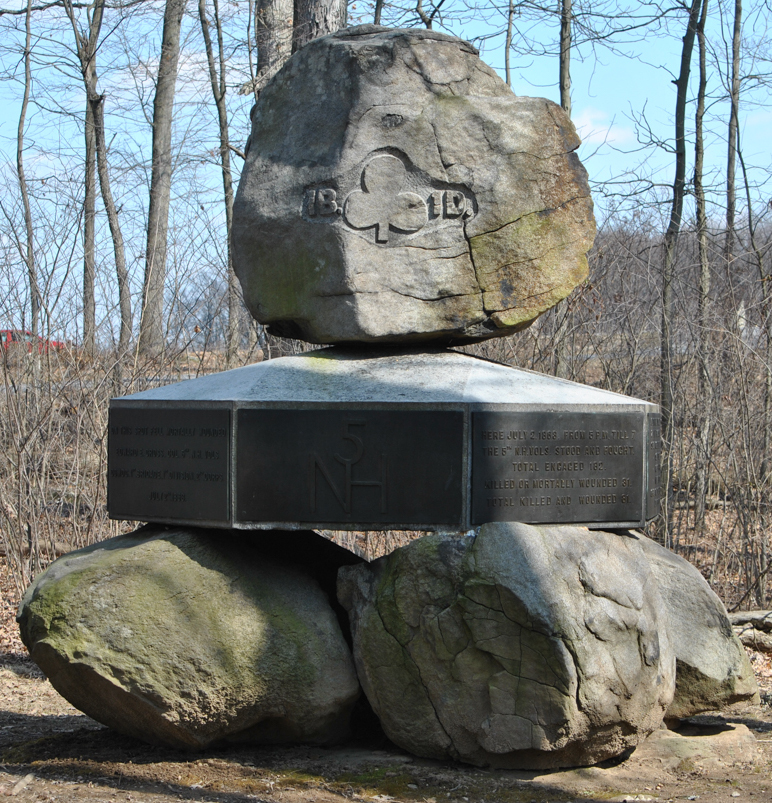
Memorial Day is a time to remember those service members who gave their last full measure of devotion to our nation to defend liberty. During the American Civil War, COL Edward Cross led a the 5th NH Volunteer Regiment until July 2, 1863. On that day, in Gettysburg, PA, he was killed in action. The New Hampshire Army National Guard named their military training school after him, the Edward Cross Training Center in Pembroke.
In 1898, One of the Regimental Surgeons, MAJ William Child, MD, collected a number of documents related to the 5th’s actions during the Civil War and wrote a history on the unit. This poem appears on pages 303 & 4 of that history.
The Bivouac of the Dead
The muffled drum’s sad roll has beat
The soldiers’ last tattoo;
No more on life’s parade shall meet
that brave and fallen few.
On fame’s eternal camping ground
Their silent tents are spread,
But glory guard with solemn round,
The bivouac of the dead.
Their shivered swords are read with rust;
Their plumed heads are bowed,
Their haughty banner, trailed in dust,
Is now their martial shroud.
And plenteous funeral tears have washed
the red stains from each brow,
And the proud forms by battle cashed,
Are free from anguish now.
The neighing troop, the flashing blade,
The bugle’s stirring the blast
The chard, the dreadful cannonade,
The din and shout are past.
Nor war’s wild note, nor glory’s peal
Shall thrill with fierce delight
Those breasts that never more shall feel
The rapture of the fight.
Rest on, embalmed and sainted dead,
Dear as the blood ye gave,
No impious footstep here shall tread
The herbage of your grave;
Nor shall your glory be forgot,
While fame her record keeps,
Or honor points the hallowed spots
Where valor proudly sleeps.
On fame’s eternal camping ground
Their silent tends are spread,
But glory guard with solemn round
The bivouac of the dead.
As you and your loved ones celebrate the beginning of summer, take time to remember those who died serving our country at home and abroad.
The 5th NH Monument at Gettysburg Battlefield. – by author during a battlefield visit.
Reference:
Child, W. (1898). A history of the fifth regiment New Hampshire volunteers, in the American Civil War 1861-1865. R. W. Musgrove, Printer. 1893
Leaders who work with others to establish and follow up on set goals have happier, motivated followers who achieve more and contribute to the organization’s success. -Photo by DS stories on Pexels.com
SMART goals have been around for a long time. According to Gemini, Google’s AI model, Google Lens sees over 20 billion searches each month for related to SMART Goals. Clearly, there are lots of people who still think it is worthwhile and relevant model to achieve success. With over 20,000,000,000 searches each month, why do most people give up on their New Year’s Resolutions before the end of March? There are a variety of reasons people fail. Discipline and lacking a trusted guide top the list. This post will review SMART Goals and provide insights for leaders to guide their followers to stay on the path using regular check ins, course corrections, and setting clear expectations.
As you begin using goals to inspire people’s work, you will find different experience levels and commitment to the job. Your responsibility as a leader to modify your approach to match their experience and commitment. A CEO working with another C-level executive approaches the conversation differently than a front line leader has with a new volunteer at a nonprofit with lots of commitment, but no experience.
The foundation for working with others to accomplish objectives is the SMART Goal. Much has also been written about SMART goals as well, so this will only serve as a review.
S-pecific
M-easureable
A-ttailable
R-elevant
T-ime bound.
Specific is a statement that sets you up for the next step of measurable. For example, a strategic goal for a nonprofit I worked with was, “Increase our unrestricted reserve by 30% in the next five years.” The statement is very specific compared with something like, “Do more fundraising.”
Measurable gives the goal setter something to determine progress. In the above examples, both statements are measurable. If that nonprofit had been raising $5,000/year and at the end of theifive-yearar window they were raising $5,001, technically they would have met their goal. However, a 30% increase provides a specific number that is easier to measure.
Attainable can require a person or organization to stretch and yet still be something achievable. An example was my decision to complete the Army 10-Miler Shadow Run a number of years ago. People in my hometown might describe me as a runner, but I don’t. I run to stay fit, not for distance. However, I worked with an experienced runner who helped me create a training plan. As a result, I was able to complete ten-milele run in the required time be counted as a finisher. Ten miles at one time was more than I had run in more than 30 years at that point, but the goal was attainable even if it required me to stretch my abilities and grow.
Relevant is the whole point of you as a leader working with your followers. If you run a manufacturing team that makes parts for wood working machines, you might have a person or two who also enjoys working with wood. If they create a goal to buy one of your machines, it is relevant to the success of the organization. While it may not seem relevant to the day-to-day work, this person is a potential customer and understands the expectations of customers when they buy something like a table saw. Those expectations can help you whole team better meet those expectations.
Time-bound is an important aspect of SMART goals. A goal without a date for achievement is a dream. Looking back at the nonprofit example, “Do more fundraising.”, you can see why that is a weaker goal than increasing their reserve. Doing more fundraising someday is not as powerful and less likely to happen than the 30% increase in five years. Even if they miss their five-year mark by a few months, they will likely have increased their available funds in that five years compared to a nonprofit that simply stated they wanted to raise more money with no time constraint.
Good leaders meet with those they lead regularly to review progress on goals and coach them over hurddles and roadblocks until they succeed. Take time to write them down so everyone remembers what the goal was and the measures of success. -Photo by Darlene Alderson on Pexels.com
Understanding the SMART model is important for leaders. You must model this behavior. When I was the Chief Executive at the nonprofit I led, I shared my goals with my #2 person to demonstrate what to do. This also allowed her and her team to select goals that supported my goals and the goals in our strategic plan. As you work with followers on goal setting, take time with them to write down their goals. Each of you receives a copy of the worksheet. The goal should contain the specific goal statement and its measure of success. List the big actions steps required, who is responsible for them, and timelines to complete each to ensure the goal is attainable. Discuss how this goal will help your team ensure the organization complete its mission and strategic goals. Identify and write down the expected completion date.
The worksheet should not fill more than one page. Keep the whole plan under 250 words, white space can be your friend here. This document is something the employee should be able to review quickly as he plans activities between all the whirlwind stuff that happens every day. Depending on the experience and commitment of the person, schedule time regularly to review their progress on these goals. Once each week but no longer than a month seems to be ideal for most.
During these sessions, you will be tempted to offer advice. With a very new person, this may be appropriate, but for most, it is better to let them identify their progress, shortfalls, and remediation plans. Use questions rather than answers to encourage them to think of ways to overcome hurdles and barriers. In the beginning, this will take longer, but eventually people will develop problem-solving skills. Identify whether their metrics really are measuring what they want to achieve. It is common to think you know the answer to a problem, take steps to fix, and then find out your solution is not affecting the metrics.
There are number of reasons for actions not moving metrics. One is that you are not measuring the right things. Another is you are not measuring correctly. A third is the action to reaction time is longer than you anticipated. The process may be incorrectly executed. There are more reasons for metrics not moving in the direction or as quickly as one would like. Learning to examine and analyze the variables is what helps makes you followers more effective in their jobs, and starts to set them up for leadership positions in the organization. The most important thing here is to ask appropriate, probing questions that help them solve the problem rather than providing the answer.
Understanding the SMART Goals Model helps you teach those you lead to set effective goals. Help them understand what make s a goal specific. Teach them what measures demonstrate progress. Ensure the goal is difficult to achieve, but also attainable. Relevant goals are tied to the goals established by the leaders in the organization so when the employee succeeds, it improves the success across the organization. Work with them to set reasonable time limits for success. Write down the goal, task steps and measures for success. Meet with them regularly to review progress and help them make corrections so they stay on track. Using this model takes more time up front. As you and your followers become accustom to this process, it goes faster, they become more independent. That allows you more time to work on your goals, gather resources for your team, and meet the needs of your leaders better. Give it a shot. You will be surprised at the innovations your followers develop.
References
Blanchard, K., Zigarmi, P., & Zigarmi, D. (2013) Leadership and the one minute manager; A situational approach to leading others. HarperCollins.
Kinicki, A., & Williams, B. (2008). Management: A practical approach. Mcgraw-Hill Irwin
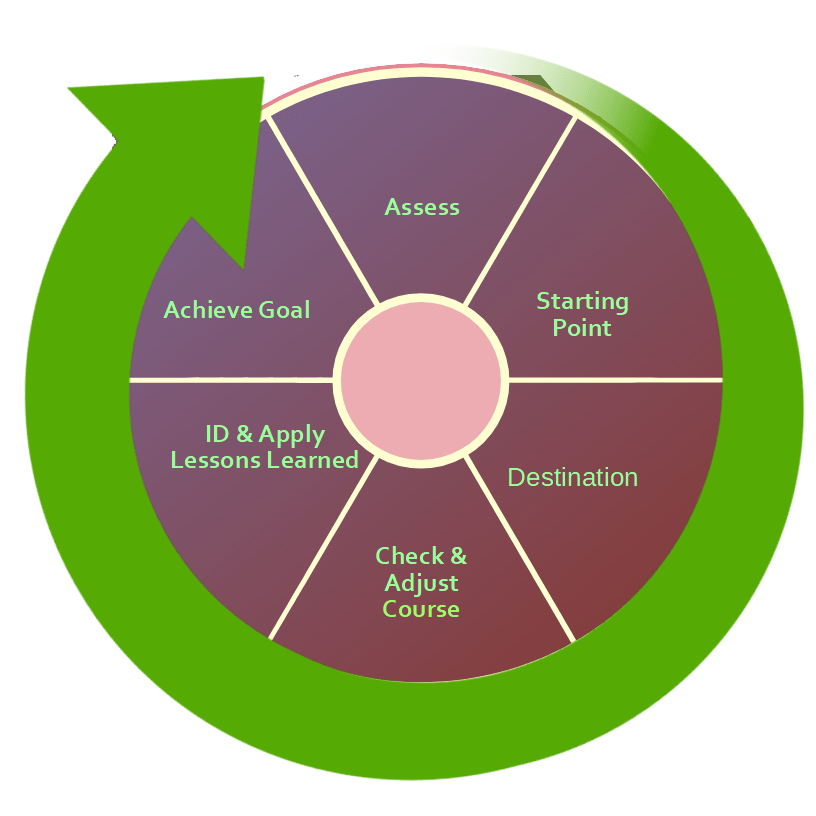
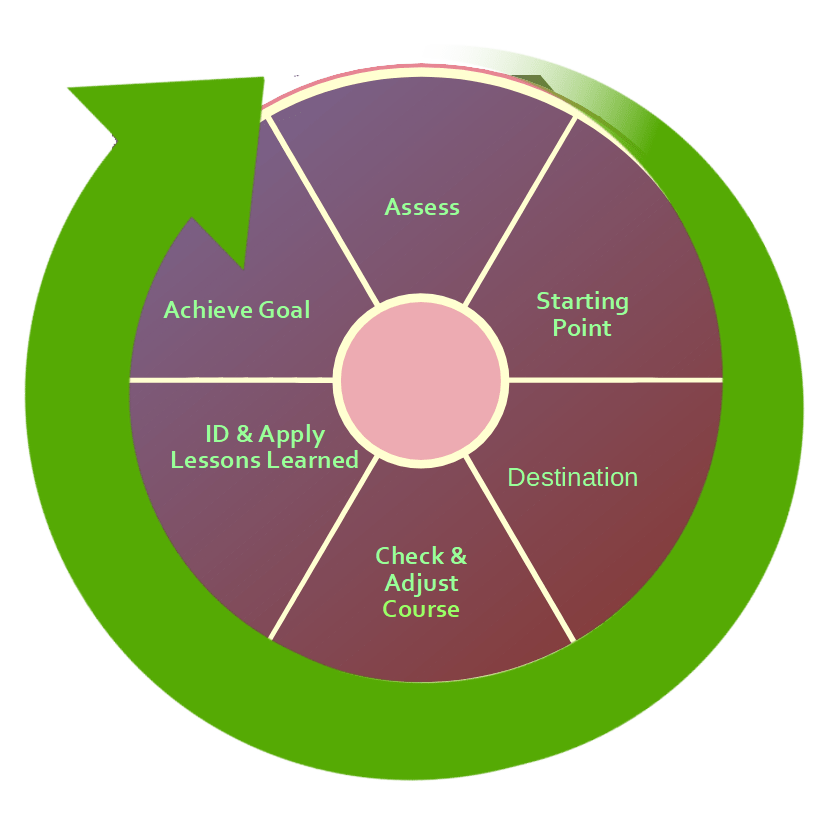
The goal setting cycle is a great model for leaders seeking to help their followers achieve success. The model provides guidance about the process in a way that is easy to explain and understand. There are six steps or stages in the cycle, assess, identifying your starting point, determine your detestation, periodically check and adjust your course, identify and apply lessons learned along the way, achieve your goal. Like many models, some of these stages and steps overlap and rely on other stages for completion. While the model serves as a road map for success, know that the route you select may not be available so you as a leader, you need to be ready to help your follower chart detours. Let’s dive into the stages and how to use them with those you lead.
Assess
This is the foundational state of the cycle. How you apply the assessment depends on how much experience the person you are working with has in life, on the job, and in their current position. The chairman of a board of directors is going to have a much different conversation with the organization’s president than a front line leader with a brand new, right out of school hire. Both can use similar techniques however through the use of appropriate questions. Martha Lask teaches a method called appreciative inquiry. The foundation of appreciative inquiry is leaders asking questions that require positive responses, from a place of gratitude. They must also listen to the answers without thinking about how they will respond. These questions require narrative responses about actions that resulted in achieving successes in the past, and how to apply those lessons and practices to achieve future goals.
Using appreciative inquiry in the assessment step allows leaders and followers to develop an understanding of the followers strengths and weaknesses, interests and desires, hopes and dreams, and experiences that made them who they are. This information is used to identify the starting point for any professional goals, which are the desired destination. The responses inform the leader about the qualities a person possesses so they can determine what tasks to assign in order to achieve the team goals supporting the organization. Additionally, you learn about any additional developmental training or assignments benefit this person’s professional growth.
Conducting a quality assessment is important. Do not confuse good for perfect. The reason a leader helps followers with assessments is because of their experience. The more assessments you conduct, the better you become. Working with those you lead allows them to conduct better assessments soon because of your experience. A direct consequence of showing those you lead how to conduct good assessments is they increase their competency to conduct assessments for any assignments received, and improve the quality of their work.
Starting point
The purpose of assessments is to find your starting point. The assessment finds where you are. When lost in the wilderness, you look for landmarks that help you determine where you are so you can determine which direction you need to move to arrive at your destination. The more landmarks you identify, the greater the accuracy of your starting point.
Think about driving to a location two states away. If your starting point is your home or office, you probably don’t need to input your full address into your GPS because you probably know how to get out of town. If your starting point is in an unfamiliar city, you need those local directions to get started.
The same is true of those you lead. If they are new to the organization, they lack understanding of their surroundings. As their leader, you are responsible to orient them through the assessment process so they know how to get around. Working with more experienced people allows you to refine defining starting points and directions. You use less time orienting them to the local landscape and help them understand how an indirect route provides them experiences that help them grow to meet the challenges on their upcoming journey.
No matter the skill level of those you lead, it is important to have mutual understanding of a person’s starting point. This reduces conflicts as people move forward toward their goals. It establishes expectations by both the leader and employee. A clear starting point is the foundation of any journey.
Destination
As a younger person, I read 7 Habits of Highly Effective People. Stephen Covey uses the proverbial ladder metaphor as an icon to describe our life journey. He cautions people to ensure not only that they are climbing a ladder that reflects their vales, but that it also leaning against the correct wall. As you help those you lead climb the organization’s ladder, you are responsible to help them pick the best ladder and wall based on their values, skills, and experiences. Growth experiences are only opportunities when a person is ready for tat experience. Plopping a person in the wilderness with only a knife and coil of rope p9resents them with a growth experience. However they are more likely to succeed in that opportunity if they had some training on using knives and ropes to survive in the wilderness. Putting a city born and breed adult into the White Mountains Great Gulf Wilderness will more likely result in their death than learning important lessons. The names of injured and killed there includes even well qualified people.
The assessment stage of the goal setting cycle allows one to identify where they are and where they want to go on their goal achieving journey. -Photo by John-Mark Smith on Pexels.com
Ensure that those lead are selecting destinations in their goals that not only help them grow, but also help your team and the overall organization grow and meet their strategic expectations. Individual goals that are tied to organizational success create synergy. Aligning individual goals helps ensure people have the resources they need to achieve their goals because those should be the very resources the organization is acquiring to achieve their mission. Leader justify requests for those resources by showing how they are necessary to move the organization to mission accomplishment.
A destination should be rather specific. There should be no doubt when that person arrives. Like providing an apartment number at a street address, one can look around and know they have arrived. There is no question of their success. I think we have all opened our mailboxes occasionally and found a letter address t a neighbor. Sure, the letter got to the right street, It might even be in the correct building, but it has not successfully arrived at the correct destination. When working with employees, it is important that their goal destination be as specific as possible with measurable metrics. Do not send them on a journey to find Sam and then be upset when they tell you about eh afternoon they spent with Samantha instead of Samuel.
Checking In
In the post on setting and establishing goals, I will discuss the importance of writing them down. People who write down their goals have better clarity about their goals and are more likely to achieve them. As a leader, having the goal with task steps written down along with the metrics agreed to by both people enables honest conversations about progress.
Research by Dr. Gail Matthews shows that people with written goals, and develop a system of accountability for taking steps to achieve those goals are 70% more likely to accomplish them. This is where you as a leader comes in. After taking time to help those you lead set and document a goal, meet with them regularly to measure their progress. Work with them to help them understand their mistakes and successes. Between setting a goal, and achieving it, life happens. Things change. Use this time to help your people understand how changes in the environment require them to make adjustments to their path.
Think of the changing landscape like a crash on a highway the totally blocks the road. As a driver, you have choices. You can hang out and hope the road opens quickly. You can get out of your car and walk. You could execute a u turn and find a detour. Your meetings help your followers identify roadblocks and slowdowns so they can pick a course of action that makes sense. Sometimes hanging tight is the right choice, but do not sit still. Identify what other actions you can take during this slow time to prepare for when things are moving again.
These help people move forward two ways. The first is ensuring progress is being made. Are people doing what they know they need to do to move forward. Second is the decision making about slowdowns and road blocks. Both maintain momentum.
Identify and Apply Lessons
Through the check in process, both you and your follower will identify lessons from mistakes or getting lost. The easiest way for a supervisor to identify these lessons and how to apply them is for you to tell people their mistake and what to do to fix it. It is also the poorest way. People learn better if they identify the reason for the mistakes, and develop strategies to avoid making the same mistake in the future, and how to correct for the mistake. That process requires a different set of leadership skills you will need to learn. There till need to stop in and be directive. However, like the discussion of appreciative inquiry above in the assess stage, asking appropriate questions provides deeper understanding for you and your followers. The questions allow them to solve their own problems.
I knew I had become successful in this style of leadership when one of my followers came seeking help with a problem. He said, “I don’t know why I am really here. I am going to tell you my problem. You are going to ask me a bunch of questions that help me figure out the answer on my own, but I still need your help.” He was right. My response was, “Come in, close the door, sit down and tell me what’s on your mind.”
“I knew your were going to say that!
This person knew what the right answer was. He needed guidance to identify the best way to approach the right answer without being directive. He is not the only person to provide feedback on the effectiveness of helping others learn how to solve their own problems.
Achieve Goal
As part of the goal setting cycle, you and your followers identify measures of success. When you conduct your regular check ins with people, compare the current state of their progress against these measures. One day, you will both realize that the goal has been accomplished. Often success is known between check ins and is not a surprise. The measures ensure you did really achieve what you set out to do, rather than just appearing to have succeeded.
Using the goal setting cycle with those you lead improves the chance they will achieve their goal. Teaching others how to work through the process helps them learn to solve their own problems, figure out how to support you and the organization, and reduces the time leaders need to directly supervises others. -Photo by Manfred Irmer on Pexels.com
Measuring success requires similar questions as the assessment stage. As you near completion of a goal, people start to thing about what comes next. Part of the measuring stage is assessing your new starting point and destination. To paraphrase Dorthy, you may find you are no longer in Kansas. What comes next?
Assess and Begin Again
And the answer is to assess, set a new goal, and begin again. Some important questions include:
How did the accomplishment of this goal help the person grow?
What new achievements do they now think re possible?
What changes helped they achieve the goal?
How did their success help others succeed (important in developing your team)?
How can they help someone else accomplish a goal.?
How can they apply lessons learned from this goal to their next goal?
What changes would improve the process for the employee?
What opportunities were missed?
There are dozens of questions in the assessment process between goals. While there are many that are specific to the goal and process, there are also a bunch that apply to any goal and process. The best questions are those that require a narrative from the employee rather than a yes or no response. Also, avoid questions that pose as advise or suggestions.
With this new information, work to set a new goal. There is not rule that a goal has to take a year to complete or that anyone is limited to one goal per year. However, it is best to limit individual goals to three or less at any time. The point of goals is to focus energy. Too many goals at once diffuses the energy. With each cycle, allow the employee to take more of a lead in the assessment and development of the goal. That is the point of working with them on this process, to free the leaders time to do things only the leader can do.
Conclusion
Understanding the goal setting cycle helps leaders guide their followers pursuit of success. Having a system allows the leader to focus on the employee and aiding them rather than figuring out what comes next. In this model, leaders help employees conduct an assessment to identify where they are and where they want to go. It establishes the starting point and destination. Leaders meet with followers regularly, preferably weekly, to review progress and make necessary adjustments. In these meetings, the pair also identify lessons that are being learned and how to apply them moving forward. With a good plan, proper check ins, reasonable task steps, and focused energy, bot the follower and leader develop confidence that the desired goal will be achieved. If progress is not being made. The leader address issues and works with the employee to find solutions, rather than solving the problem for the employee. After each iteration of the cycle, the follower becomes more competent, and less reliant on the leader to achieve success.
References
Blanchard, K., Zigarmi, P., & Zigarmi, D. (2013). Leadership and the one minute manager: Increasing effectiveness through situational leadership II (Updated ed.). HarperCollins.
Bushe, G.R. (2012) Appreciative inquiry: Theory and critique. In Boje, D.,
Covey, S (1989). The 7 habits of highly effective people. Fireside. New York, NY.
Lask, M. (2020) Frameworks for leadership development. Leader Exchange and Coaching Seminar, Cohort 12, Northeast Regional CAC, Philadelphia, PA
Welcome to 2026. If you are like many people, you set a formal or informal resolution at the beginning of the year. So did many of the people you lead. Depending on the source, Quitter’s Day ranges from January 9th until the last week of January. According to Forbes, 22% or people who make New Year’s Resolutions last until the end of March before quitting. Imagine if your organization ran that way. Even if you find yourself struggling, or have actually given up on your resolution, you can begin again. As a leader, you have an obligation to help your organization accomplish its stated mission within its guiding principles. You can only do that if you have people you lead that know how to set and accomplish goals that support your team’s work. While I have written an number of posts in December in January about accomplishing goals on a personal level, and helping employees set and achieve goals, it seemed to me that a series this year might help more people and leaders accomplish personal and professional goals. So, I will post a series of essays intended to help leaders achieve goals, and offer methods to assist their followers achieve theirs too. When those you lead succeed, you and your team succeeds. Your followers become self-directed, reducing the amount of time required for direct supervision. Your team becomes more responsive to the needs of the organization, creating greater trust, and opportunities for bigger, better assignments. This series will cover the goal setting process, setting and documenting SMART goals, conducing assessments to ensure goals are nested within organizational goals, how to measure success, how to work with employees to help them do these tasks, and how to conduct regular check ins to ensure progress and success.
The Goal Setting Cycle is a process leaders use to set goals for themselves, their teams, and to help those they lead. The first step is assessing the current situation. Determine where you want and need to go. Periodically look around to ensure you are still moving toward your goal. Identify mistakes you’ve made so you can learn from them. Develop a plan to apply lessons learned. Upon achieving a goal, begin the cycle. See my post on Slide Share; https://www.slideshare.net/slideshow/goal-achieve-cycle/43107761
Setting goals well is an important part of the process. SMART is one model of goal setting.
S=Specific
M=Measurable
A=Attainable
R=Relevant
T=Time bound
Document SMART goals using a product such as the goal setting worksheet at this link. Your goal should include all the elements of the SMART model. Include task steps and methods of measuring success. Use this worksheet with your employees to improve their effectiveness. Documenting the agreed goal keeps memories fresh as the goal is reviewed in the future.
Like this set of dolls, goals should fit into and support the larger goals of the organization. -Photo by cottonbro studio: from pexels.com.
Nest goals so they support the leader’s goals, which in turn should support the goals set by the organization. Goal nesting ensures that everyone is pulling in the same directions and reduces friction within the team, and between teams. Take time to analyze personal and professional goals with your employees, ensuring alignment with organization’s mission and goals.
There is no point in establishing goals without measures of success. There are generally two types of measures, performance and effectiveness. Performance measures compare actual behaviors against agreed upon performance of processes. Effectiveness measures determine if the correct performance behaviors actually result in desired changes defined in the goal. If you cannot identify appropriate measures of success, you do not understand the problem yet. In your analysis, identify the current starting point. Identify lead and trailing indicators. Write down the performance and effectiveness measures agreed to between the employee and leader.
As a leader, you need to work with those you lead to set and develop goals. Remember, leaders are measured by the number of leaders they develop; establishing goals is the first step to developing people. Helping others set and achieve goals sets a good leadership example and builds trust, the cornerstone of leadership. When employees know what is expected of them, they focus on the things they understand are important. This helps you prepare accurate evaluations that demonstrate their growth. Share the SMART model and demonstrate how to use it. Assist employees to create goals that support the organization’s mission and develop clear metrics of success with them. Learning to ask questions that require them to think, rather than suggesting answers and solutions, spurs growth.
The Goal Setting Cycle shows the process to work your way through a series of steps to achieve goals. -Graphic by author
In the goal setting cycle, one step is to check your progress. As a leader, that means you meet with your people to check their progress. Require them to bring their goal worksheets. Compare their performance to agreed on measures. Teach them to assess their progress and determine if their processes create effective change. Coach them to solve the differences. Work to develop plans addressing shortfalls. As you work your way through this process, consider the developmental level of the employee. Update the goal work sheet to close the session.
Moving forward, each post will address one of the above topics in greater detail. Following these steps grows your followers and helps them accomplish goals they only dreamed of achieving. Understand the goal setting cycle. Teach them how to set SMART goals. Use a goal setting worksheet. Ensure goals support organizations goals. Create measures of success. Work with your followers to create achievable goals so they can grow and help the organization succeed. Meet regularly with them to assess their progress and help them adjust as necessary. These steps help them succeed. Their success helps you and your team succeed. Your success improves your organization’s success. At the end of the year, when people talk about failed resolutions, those you lead can brag about their achievements instead. Not only will this process help those you lead and grow, you will also grow as a leader, opening bigger and better opportunities for you and your team. Follow along and achieve your goals.
References
Aruwayo-Obe, G. (2026) Kotter’s 8-step change model. The LeadXI Company.
Blanchard, K., Zigarmi, P., & Zigarmi, D. (2013). Leadership and the one minute manager: Increasing effectiveness through situational leadership II (Updated ed.). HarperCollins.
Listening is a leadership trait that open sleaders to the influence of those they lead. -Photo by Andrea Piacquadio on Pexels.com
Listening is a key leadership behavior that enables improved decision-making at lower levels, develops junior leaders, and opens the leader not only to influence others, but to be influenced. A Soldier I once led lead expressed this best during her promotion ceremony to Warrant Officer One. WO1 Connelly said, “I’m a firm believer that a good leader is equally shaped by their leaders and mentors, their peers, and their subordinates. To explain: While my leaders have mentored and coached me, my radar kids challenged me more as a leader than any mentor ever could, and my peers challenged me and shaped me within the organization because they knew me best.” Those influences helped her grow as a leader because she chose to listen to other’s feedback and input. While we expect to be influenced by our leaders, few ever consider how peers and subordinates also influence them. Those who fail to reflect on the influence of others miss opportunities to lead up and across their organizations.
Influence from, and influencing your leaders
Influence from our leaders is easy to recognize; every action and statement creates impressions required to accomplish tasks leading to mission accomplishment. Influencing leaders is an important aspect for followers; they know things the leaders do not. You create the ability to influence your leaders through your behaviors. Demonstrate that you are capable, value mission accomplishment, and treat clients, peers, and leaders respectfully. Likewise, listen to the valuable feedback from those you lead.
Influencing your peers
In every organization, there are overlaps of responsibility, authority, and resources. Leaders who influence peers are valued by their leaders. You develop influence with peers by treating them respectfully. Cast a vision demonstrating how both your teams win by working together. Give them credit when discussing successes with anyone. These behaviors will create trust and establish you as a safe working partner.
Being influenced by your followers
Learning to lead by allowing yourself to be influenced by those you lead is the peak skill for high performing leaders. Being influenceable means you listen to input, provide opportunities for others to make necessary decisions appropriate for their level and experience, and require junior leaders to do their own planning that properly supports your efforts. People respect leaders that provide them opportunities for growth. People will push the limits of their decision-making, authority, and policy restrictions. That’s okay because they know only confident leaders would give them space to engage in these behaviors. As the leader, you still have the ability to say no, enforce standards, and suggest alternatives, which means you are not a push over. These actions allow your people to grow and gain confidence.
Openness
When you start expecting leaders to act responsibly, most will gratefully accept the challenge. Be open about your reasons for loosening the reins. Set clear boundaries and expectations. Establish decision-making authority. You will be amazed at the growth you witness.
Being open to follower influence requires leaders to set limits and boundries. Restrictions allow followers opportunities to make decisions within their skill range safely and enables growth. –Worcester Bus Depot yard site safety regulations by Jaggery is licensed under CC-BY-SA 2.0
For example, you may have a new front line leader running a team. Tell them as a leader you expect them to make appropriate decisions. You might allow them to plan schedules for their team, decide who can or should attend developmental or remedial training and similar activities. Likewise, clarify what decisions you expect to be briefed on, and which you retain for yourself or more senior leaders, such as approving payroll hours, or ordering durable equipment. Providing this clarity creates openness so people better understand what is wholly theirs, what is shared, and what is out of bounds.
Trust
This openness creates trust and a sense of safety critical to team building. You will need to make corrections along the way as people learn and grow. As their competence grows your trust grows in them allowing you to focus elsewhere. Everything rests on the trust cornerstone. Your people trust you more as you give them reasonable challenges, you trust them more as they successfully accomplish those challenges. Increased trust creates opportunities for you and your team to take on bigger challenges and achieve greater results.
Development
Creating a culture of influence increases the number of ideas available at any time to solve problems and identify improvements. As you counsel and coach those you lead, you develop better listening skills. You will hear things you did not hear from others before because of your new awareness, and because they will tell you more because they know you hear them. These experiences help them grow, becoming new leaders and better leaders. There is an old saying that the measure of a manager is dollars sold, widgets made, calls answered, or money saved; whereas there is only one measure of a leader, the number of leaders s/he develops.
When you open yourself up to be influenced by those you lead, you create a culture of openness that builds trust and develops future leaders. Just because you are currently in a leadership position doesn’t mean you are the smartest team member, know all the answers, or need to make all the decisions. Being open to the influence of others helps everyone learn and grow. There are few things in life more rewarding than hearing someone you used to lead talk about how they tried what you taught them, succeeded, and then passed that lesson on to another generation of leaders. Ms. Connelly is but one leader I helped on her path (I was not alone guiding her, only a small part of her learning). In a few years, she will be at a promotion ceremony and one of her former followers will have a little leadership lesson they share that will amaze her. You can be that leader too, but only after you are open to your followers’ influence.
References
Connelly, N. (2025) Promotion ceremony speech. Concord, NH
Covey, S (1989). The 7 habits of highly effective people. Fireside. New York, NY.
Not all bosses are leaders. Bosses are, well, bossy and ungrateful. Leaders express thanks. Leaders create safety. Leaders seek input. Leaders provide and willing receive feedback. -Photo by Lukas on Pexels.com
For too long the image of a boss has been a person who expresses little appreciation for the work of their employees and barks orders expecting immediate compliance. These bosses are not well respected, are marginally effective, and frequently lose people to others. Sometimes well respected leaders act bossy. However, they can do it because of the respect and influence developed by showing gratitude for their before critical situations happen. Leaders that regularly show appreciation they set an important example, achieve better results, retain team members longer, and develop those they lead to become leaders.
In my Trust is the Cornerstone of the Leadership Foundation series, Setting the Example is one of the facets of that Cornerstone. When leaders influence from a place of gratitude, they begin the process of changing the way their brain functions. In turn, when they praise the work of others, and express appreciation for accomplishments, they become known as a positive influence. Others want to work for and follow leaders like this. According to John Antal in Leadership Rising, people who find reasons to be thankful are 25% happier than those who are resentful (page 107). As you publicly express your gratitude to those you work with, bosses, peers, and your team, not only do you become happier, those around you become happier. Publicly praising others increases your influence, which improves your leadership power.
Like any skill offering apprciation and gratitude rquires practice. The more you practice thanking others for their work and contributions, your offers of praise improve. You help create a culture of gratitude and begin the process of developing the next generation of leaders. -Photo by Mikhail Nilov on Pexels.com
Feedback helps those you lead to grow. This means you need to speak with your people about the quantity and quality of their work on a regular basis. Waiting for an annual review is too late to praise or correct. I once had a subordinate leader who was struggling to influence his team to accomplish assigned tasks. I am often in the spaces where people work in order to watch and learn. During several of my walk abouts, I noticed a particular leader provided information to his team well. He failed to assign tasks to team members, or seek input when possible about ways to accomplish the tasks assigned to his team. When I brought this to his attention, he said they should just know what to do. I asked him how they were supposed to know what to do unless he told them what parts of the task were their responsibilities. He stared at me. We discussed the importance of not only directing the overall work to be done, also assigning parts of the task to an individual so they would know what was expected of them. We also reviewed the importance of checking back to ensure people were meeting the expectations. I worked with this leader for a few weeks, but it wasn’t long before leaders senior to me noticed the team’s lack luster performance in a fast-paced operational environment, and he was terminated. People only know what to do and how well they are doing when we provide feedback as leaders. Opportunities exist to express gratitude every time leaders offer feedback for observed improvements.
Leadership is influencing others to implement behavioral changes to accomplish the organization’s mission. Leaders who lead well surround themselves with quality, motivated, competent, but imperfect people. Too many conversations about improvement begin from a position that something is wrong. Using an appreciative inquiry model allows leaders to acknowledge the great things people do. Appreciative inquiry recognizes all individuals and organizations have room to improve. Start improvement discussions by appreciating what people accomplished and express gratitude for their efforts. This creates safety, allowing them to consider what changes improve the good they accomplished to something better. Asking appropriate, probing questions to identify shortfalls and possible improvements provides personal investment for the changes the leader seeks. This process reduces resistance to change and improves outcomes because those creating the change, developed the plan. Gratitude is the foundation of the process and provides physiological safety required for effective teams. Appreciative inquiry also develops the next generation of leaders as they learn how to identify and fix problems.
Giving thanks to others develops leadership influence. Asking appreciative questions allows others to solve their own problems. Offering gratitude builds a foundation to build your team. -Photo by Pixabay on Pexels.com
Expressing gratitude is an effective way to lead others because it builds trust and safety for your team. When you express appreciation for the good things others do, you set an example for others to follow and establish a positive culture. From this foundation, you become known as a thankful leader which provides you greater influence with those you lead, your peers, and your leaders. Appreciative feedback ensures those you lead know what is expected of them, they will be recognized for the efforts, and are more likely to produce effective results consistently. Effective leaders use appropriate, probing questions. Those questions help establish what things are going well and allow followers to identify improvements. Followers discover for themselves how they can implement effective changes that improve success for them and the organization. Through these appreciative practices, people are more effective, create positive change, increase leadership power, and help the next generation of leaders develop from their leader’s example. In this season of thanksgiving, think of ways you can improve your gratitude practice with those you lead, reap the rewards of improved effectiveness, and empower your people. Thanks to all my faithful and regular readers.
References
Antal, J. (2021) Leadership rising. Casemate Publishers. Havertown, PA
Bushe, G.R. (2012) Appreciative inquiry: Theory and critique. In Boje, D., Burnes, B. and Hassard, J. (eds.) The Routledge Companion To Organizational Change (pp. 87-103). Oxford, UK: Routledge.
Giuliano, G. (2024) Coaching for (a) change: How to engage, empower, and activate people. (1st Ed.) Wren House Press. E-Book.
Lask, M. (2020) Frameworks for leadership development. Leader Exchange and Coaching Seminar, Cohort 12, Northeast Regional CAC, Philadelphia, PA
Miller, C, Aguilar, C., Maslowski, L, Et al. (2004) The nonprofits’ guide to the power of appreciative inquiry. Community Development Institute. Denver, CO.
(c) 2025 Christopher St. Cyr
Always written with natural intelligence, no matter how flawed!
This is the coin I received from the First Army Command Sergeant Major in 1998. This and a five dollar bill will get you a cup of coffee at Starbucks or Dunkin, and in some circumstances, maybe a free beer at the enlisted club. While the coin may lack monetary value, it has a great deal of sentimental value for this old Soldier. -Photo by author
April, 1998, I found myself attending drill in Orlando, FL with the New Hampshire National Guard State Command Sergeant Major. On this drill weekend, the rest of my battery was in Jericho, VT shooting howitzers in the snow while I enjoyed beer in a hot tub in Florida. I had been selected as the 1997 Noncommissioned Officer of the Year for the New Hampshire Guard. The eastern regional competition was in Orlando that year. Someone else won the competition at this level, but all the competitors received a challenge coin from the First Army Command Sergeant Major, CSM Kenneth Cummings. This was my first, but not the last, challenge coin I received in my military career.
Challenge coins are an old military tradition. If you research internet sources, you will likely find versions of three stories about the origin of challenge coins. The first dates back to Roman times, when the leaders of Roman Legions had coins minted with the Legion emblem. They were awarded to Legion Soldiers for honorable actions. The next is a story of a World War I pilot who feared he or members of his unit would be shot down behind enemy lines and then shot by allied forces while attempting to cross into friendly territory. He had tokens minted with the unit heraldry and issued them to all the pilots for proof of identity. A third common story dates back to watering holes in Vietnam. Soldiers who lacked some memento to prove they had engaged with the enemy in close combat were required to buy everyone in the club a round.
However, there are two other stories I know related to challenge coins. The first is from an episode of Turn, a television series about GEN Washington’s spy network. In this episode, one of the characters is challenged to prove he is a member of the network. He produces a coin, mixed in with other coins of the land, to show he works for Washington. Another story is in the book written by COL (r) David Hackworth, About Face: The Odyssey of an American Warrior. I would cite the page of this story, but I am not digging back through a 900+ page book to find it! COL Hackworth tells a story about issuing every Soldier in his Battalion a card with his personal and operations center’s contact information. Every Soldier was required to carry the card with them at all times. If they found themselves in some sort of trouble, they could call for help. This card was an inspectable item. Members of the Battalion were often challenged to produce their card.
This is the siler dollar presented to me by then 2LT Krauklin. He still serves as a commissioned officer today. We worked together again after his commisioning. -Photo by author.
Another coin tradition is that of the First Salute. Upon receiving his or her commission as a Second Lieutenant, Officers give a silver dollar to the first enlisted Soldier to render them a salute. Today that tradition is built into the commissioning ceremony. Near the end of the ceremony, each new 2LT is called forward to receive his or her first salute. The enlisted person is selected by the new Officer and is commonly a person who had a positive influence in their life.
In 2004, I was deployed to Baqubah, Iraq along with about 100 other American Soldiers at a downtown Police Headquarters. SGT Peter Krauklin was one of the Soldiers who worked in our operations center, the vital communications link between the Soldiers guarding our tiny perimeter, out on patrol, and with our higher headquarters. Krauklin was a last minute addition to our unit when it was activated. He had zero friends or acquaintances when he arrived. While I cannot say I went out of my way to make him feel part of the team, that is my method of operation. After my second deployment, I was promoted to Master Sergeant and reassigned to the Modular Training Company,195th Regiment (NH Reg Tng Inst) as the Chief Instructor. I was required to complete several training programs to be qualified, including the Platoon Leader Trainer Qualification Course, conducted by the 195th’s OCS Company. A student in that class was OC Peter Krauklin. When OC Krauklin completed OCS the following September, he selected me to present his first salute at his ceremony. Of the many coins I have, the silver dollar I receive from 2LT Krauklin is one of my most cherished.
This coin from the 42nd Infantry Division was awarded to me by both the Commanding General during a visit to our unit in 2022, and his Command Sergeant Major in 2023 at his Change of Responsibility Ceremony. I told the CSM his CG had already given me one. -Photo by author
I often encourage others to do more than thank service members and veterans for their service. Instead, ask them to tell a story about a memorable time from their service. One way to get a vet to open up is asking if they ever received a coin. Ask if they have it with them and to tell the story of how they received it. Many times military members, past and present, have official awards and medals, but for personal reasons, they may not want to talk about them. Coins however are unofficial awards, or sometimes personal purchases to remember a place or event. Soldiers want to talk about those situations. Asking about their coin is one way to better understand the service and sacrifice of those serving or served in the military.
Units will often mint coins for their members to memorialize specific events. The coins will be available for members through purchase or provided by leaders with their own funds. One of the most common reason for every unit member to receive a coin is deployment. A company or battalion will design a coin that is specific to service in that period of time. Such coins are completely appropriate with the history of challenge coins, as the only way to receive a copy of that particular coin is to belong to the unit at the time of issue.
As the Command Sergeant Major of the 197th Field Artillery Brigade, the Army provided 50 coins for me to award to Soldiers. I did not feel that was enough, so I order my own. The Army also had strong rules about how to present coins that did not apply to the coins I purchased. I know there are Soldiers across the military will tell the story of how they received this coin for years. -Photo by author.
While the origin of challenge coins will never likely ever truly be known, they have become a symbol of belonging. Coins represent the stories of a Soldier’s career. Those small tokens represent their participation in events that become history. Coins demonstrate recognition for accomplishments, belonging, and excellence. Each has its own story of service, sacrifice, honor, and is part of the legend of military service. When you see a current or past service member, after thanking them, ask if they have a challenge coin. Then ask them to tell the story of their coin. You can bet that no matter how few or how many she or he has, they can tell you the story of each of them.
SOAR and SWOT are two strategic assessment models that are better together. The SWOTAR model allows leaders to get above the problems of SWOT to really see the landscape. Like hot air balloon, you start on the ground and then look higher returning to Earth at the end of the ride -Photo by Mikka on Pexels.com
Over the last several months, we have explored strategic assessments using the SWOTAR model. The SWOTAR is a strategic assessment model helping organizations determine where they are, changing environmental elements, and a direction for their future. There are other models, and SWOTAR is a melding of two of those models, SWOT and SOAR. The SWOT model encourages organizations to analyze their strengths, weaknesses, opportunities, and threats. The SOAR model focus on strengths, opportunities, aspirations, and desired results. While the two are very close, both miss important elements the other provides.
SWOTAR combines the two models and creates a better assessment of the environment, and the desires of the leaders. Both are required for an organization to determine what comes next. SWOTAR challenges leaders and stakeholders to assess their internal factors such as strengths and weaknesses; external factors such as opportunities and threats; and to voice their aspirations for the future and identify what results help them achieve those aspirations.
Each assessment is important to complete as an organization develops its strategic plan. SWOTAR identifies where you currently are internally and externally. Use the model to scans internal and external factors impacting change. Finally, it speaks important things necessary to achieve leaders and stakeholder expectations.
Conduct Parallel Assessments
While the SWOTAR model examine six individual areas, assessments of each are all related to the others. Consequently, leaders conduct the analysis of each area concurrently. Done this way, you will find when you identify an opportunity, you will also want to scan for threats, which in turn help evaluate the likelihood of achieving a specific result. As you move through the process, you are looking to match strengths, opportunities, and aspirations. Additionally, you want to identify how those positive attributes compensate for weaknesses and threats so you can achieve desired results.
Not too far from my home was a mill that was famous for making the best wooden cogs in the world. In the 1700s and 1800s, that was great for them. The company manage to stay in business until the 1980s because of the quality of their workmanship.. However, as more manufacturing transitioned away from the use of wooden cogs, demand shrank. A successful strategic assessment may have helped them diversify and skill exist today.
Loop around, but Don’t Swirl around
Because the elements of SWOTAR are related, it is important for leaders to loop around again to each. Looping around a few times is okay, but do not start swirling around or you will get dizzy and fail to move forward. -Photo by Landiva Weber on Pexels.com
One of the problems with the SWOTAR, or any strategic assessment model, is determining when you have completed enough laps. No plan is ever perfect. As GEN Patton noted, it is important to remember with any plan that the enemy always gets a vote. President Eisenhower said that plans were worthless, but the planning process was invaluable. What both of these leaders knew was that there is no such thing as a perfect plan. Likewise there is never a perfect assessment. Taking time to assess strategic issues allows leaders to think about possibilities. As a result, when a government regulation changes, the economy tanks, or your competition beats you to the patent office, your planning probably created some discussion about such eventualities. That allows you to adjust your plan as the world changes in ways you could not expect. However, it is also true that an 80% plan delivered on time is 100% better than a perfect plan completed ten minutes late. Recognize when enough loops of SWOTAR have been completed and move on to the next stage of the planning process. Many people and organizations get stuck in this loop and fail to notice they are swirling around without moving forward.
Selecting Strategic Direction and Goals
Use your assessments to pick a direction and establish goals. Now that you know where you are, and what aspirations and results you want to achieve, decide what direction and what three to five high level goals will help you move in that direction. Writing your plan improves the likelihood of achieving your desired results. Things change over time, so keep your goals and the task steps specifically general and high level.
When developing short term goals, one year or less, I encourage the use of the SMART model. However over the course of three to five years, enough things change and detailed specificity can cause more problems than general direction. So if you select three goals that build on each other to accomplish over five years, apply SMART to the first goal.
For example, a goal you seek to achieve for your nonprofit might be to increase available unrestricted funds by 30%. In the long term, you might have a series of task steps like:
-identify current amount of unrestricted funds
-add 30% to that amount
-identify two fundraising activities in the next two years that will help us raise that amount of money that can be repeated annually.
Future readers understand what needs to be done. When this goal reaching a point of action, increase the specificity of the task steps like:
Identify how much has our unrestricted reserve increased since the inception of our strategic plan?.
Identify how much more we need to raise to reach our 30% goal.
Conduct a key leader retreat on August 15th to identify two fundraising activities to meet these objectives in the next two years that can be repeated annually.
Appoint a committee of five members to each activity selected for fundraisers
Require each committee to report progress to the BOD each month.
Execute each fundraiser in the next twelve months, and follow up with a second event in the following twelve months.
Notice how the details are more concrete when it comes time to begin the action.
Writing your plan is important. There are a variety of ways to write a strategic plan. Use a format that is easy to understand, easy to share with others, and contains enough details so everyone will recognize success. Goals are only one part of your strategic plan. Other important aspects include:
Organizational vision
Updated mission statement
Guiding principles or if you prefer the term, values, and
Your timeline for completion.
Each of these elements should be part of your strategic assessment. For example, as the leaders discuss aspirations, you may realize that your past guiding principles and your aspirations are not aligned. Discuss and decide what changes are needed to realign principles and aspirations. In most cases, you may make no changes or small changes to your mission. Sometimes organizations realize the world around them is changing and they need to make major changes to remain relevant. An example of this is Kimberly-Clark’s decision to sell all their paper mills, leaving the coated paper making market, and competing in consumer paper products. When Kimberly-Clark changed their aspirations and desired results, they had to complete a new mission statement.
Change is hard. Without change, there would be no need for leaders or leadership. Strategic assessments help organizational leaders understand where they stand in the world, try and understand what the future looks like, and create changes so their organization remains alive, vibrant, and relevant to their stakeholders. Whether you lead a for-profit, non-profit, governmental, or civic organization, as a leader, you need to always be looking forward. If you drive always looking in the mirror, you will crash. Safe drivers look forward while remaining aware of their surroundings. Strategic assessments help leaders focus on the future and look forward. While there are a number of strategic assessment models. SWOTAR provides organizations the ability to look internally, externally, and examine their greatest dreams. Internally, assess your strengths and weaknesses. Externally evaluate your opportunities and strengths. Identify your aspirations and desired results. Withe these assessments, you can create an inspirational strategic plan that defines your goals, guiding principles, vision, and mission; and creates hope. Take time to dream a little, then begin bold action to move your organization into a bright future with SWOTAR.
References
Collins, J (2001). Good to great. Harper Collins Publishers, Inc.
Eisenhower, D. (1967) At ease: Stories I tell to friends. Doubleday & Co.
Morreale, S (October 21, 2009). Executive Strategic Thinking. [Training Presentation] Command Training Series: Executive Development Course. New England Association of Chiefs of Police. Held at Roger Williams University, Bristol, RI
Province, C. (1995). Patton’s one-minute messages. Ballantine Books
If you like this content, subscribe, please. I do not spam your inbox. You will receive the latest posts and a periodic announcement of upcoming in-person and virtual trainings. Several are free, the rest are less costly than similar options because I am simply trying to pay forward lessons taught to me for free or low cost.
Shooting a rocket to the moon successfully on your first attempt is very unlikely. It takes several attempts. Likewise, finding the key activities that lead to achievement of strategic goals takes more than one attempt. -Photo by SpaceX on Pexels.com
The purpose of creating a strategic plan is to achieve results benefiting stakeholders. While it might be possible for a brand-new organization to build a rocket and put a person on the moon in their first year of existence, it is very unlikely. Leaders need to select the results they want to achieve in the next 3–10 years based on what they find reasonable from their assessments of the Strengths, Weaknesses, Opportunities, Threats, and Aspirations. While this post presents measures in the reverse order, discussing lag measures first, they represent the indications of final results. Leading measures are the most important These are the actions required to perform regularly, are hardest to identify, and are often counterintuitive.
Lag Measures = Measures of Effectiveness
Lag measures are the results you expect to see if your selected change actions are effective. In some circles, lag measures are called measures of effectiveness because changes made in process should result in the effective results envisioned by leaders. For example, a nonprofit sets a goal to increase its unrestricted reserve. A lag measure would show an increase on the balance sheet and in the check book of unrestricted funds raised. This measure means the processes to change your fundraising efforts are being effective, so it is a measure of effectiveness.
Lag measures indicate that the organization is making progress on its strategic goal. Progress is not the same as achievement. Lag measures typically show successful results weeks, months, or years after a change occurred. Some time ago, I was chatting with the owner of a car dealership. He shared that every year they support the local agricultural fair. They offer large discounts on cars during the fair and for four weeks after the fair closes. This is fourth generation family dealership providing the owner the wisdom of his ancestors. The family found they sell very few cars at the fair. Interest in car buying picks up the week following the fair. Many fair goers stop by the dealership to have a second look at cars they saw at the fair. In the next few weeks, they sell 45% of the cars they sell all year. Attended the fair is a leading performance measure. Selling cars is a lagging effectiveness measure.
Leaders need to understand the delay between process changes, and effective results. Understanding the delay creates the discipline to continue processes, identified by lead measures, for an appropriate period of time after the change or event.
Lead Measures = Measures of Performance
Measure performance and effectiveness. Share results of both with dashboards or scoreboards. Such products help people understand how their efforts move the organization closer to its strategic goals and desired results. -Photo by Pixabay on Pexels.com
Lead measures, also called measures of performance, determine how well chosen activities are being completed. In our nonprofit example above, the Executive Director determines raising awareness of the organization and the issue it champions will help raise unrestricted fundraising. She decided one way to do this is post to social media platforms every day alternating between the organization and the cause. The performance measures are pretty simple. The ED can go to the selected social media sites to see the daily postings. In this example, if staff are failing to post daily, they are failing to meet performance objectives that in theory undermine the strategic goal of raising more unrestricted revenue, the measure of effectiveness.
Identifying lead measures is not easy. As a leader works through the process, they may find activities they thought should produce effective end results are different from their expectation. That means they need not only to regularly measure performance of lead measure activities, but monitor the measures of effectiveness as well. You may learn what you thought were important activities are less important to the results desired. Reevaluate your leading activities and performance measures.
Keeping Score
Identifying what leading activities influence effectiveness measuring performance. Report measures to the doers. There are a variety of ways to track progress. Engage the doers when developing methods of reporting.
When I served as a Command Sergeant Major, there was a section that wanted to have the highest physical fitness test results in the command. The hard part was the section was divided into two shifts to cover time in the operations center. When I stopped in to visit during the night shift, I saw a new ‘scoreboard’ on the wall showing the number of push ups, sit ups, miles run by the night shift. One of the Specialist told me it was their challenge to the day shift to match their activity so their section could achieve their goal. The next day, I noticed the day shift added their own score board, and they were slightly higher in ‘points’ than the night shift. I pulled the section sergeant aside and asked how he thought of the scoreboard and how he motivated his section to attempt to achieve this goal. He laughed and said, “Sargent Major, we were just talking smack about having the best PT score one day. Next thing I knew, it was a thing. The night shift came up with the score board. I’m just trying to keep up!”
While the sergeant’s reply was a little modest, I knew he had a desire to achieve the highest section PT score. His section picked up the idea and made it better. They created the standard. They identified the leading actives required to achieve it. They developed the methods of measuring. That section did achieve the best PT score in headquarters battery.
Score boards are important. They must show the progress of the leading measures. They should be developed by those doing the work and displayed so everyone knows where they stand.
By measuring the results of your processes and effectiveness, you are able to determine progress on achieving strategic goals. Identify these measures during the strategic planning process. Adjust activities to ensure the organization continues to move in the correct direction. -Photo by Frans van Heerden on Pexels.com
As you identify results desired for your strategic plan, also identify the performance processes required to achieve those results. Select lead (performance) and lag (effectiveness) measures. Create scoreboards sot those completing the work know where they stand. Make the process fun so people want to participate. Evaluate if the lead activities are moving you in the right direction. If not, find out if that is because performance is not what is expected, or because you picked the wrong actions. Make changes and continue to measure. Selecting the right leading activities will ensure you achieve the results you desire by the end of the strategic plan.
References
Bossidy, L, & Charan, R. (2002) Execution: the discipline of getting things done. Crown Business. New York, NY.
George, M, Rowlands, D, Price, M, & Maxey J. (2005). The lean six sigma pocket toolbook. McGraw Hill. New York, NY
Lab, S (2007) Crime prevention: approaches, practices and evaluations. Mathew Bender and Company.
McChesney, C, Covey, S, & Huling, J. (2012) The 4 disciplines of executions: achieving your wildly important goals. Free Press. New York, NY
As I worked on my first draft of this post, two close family members fell ill, and died. This caused me to reprioritize actives and reflect deeper on the importance of strategically analyzing aspirations. After all, organizational aspirations are those things the leaders envision as the legacy of the organization in the months and years after they are gone. Those organizational aspirations should be tied to individual leaders’ personal aspirations. In my family member’s case, I am sure they had some regrets, but overall, I think they are happy with the legacy left behind. Each has a long list of accolades, accomplishments, family connections, achievements, and impact on the future. At the end of your life in your organization, will you be happy with the accomplishments, achievements, and impact of you and the people you lead in the organization?
Shoot for the moon. Even if you miss you will land among the stars. Norman Vincent Peale. -photo created by Gemini. While my writing is still created using natural intelligence, I struggled to find an image that embodies Dr. Peale’s idea and asked Gemini to help.
In his book, 7 Habits of Highly Effective People, Seven Covey challenges readers to envision their funeral. He asks them to think about what the reader wants people to say about them after they passed. Joan Garry in a recent podcast recommended a similar exercise for new organizational leaders. She suggests that the new leader write the press release announcing their departure. What will people say about you, your character, accomplishments, relationships, and legacy? How will they remember your actions? Few will remember everything you said, but all will remember how you made them feel. Either exercise will better help you understand how your aspirations inspire those you lead.
At the organizational level, the aspirations of the organization should inspire all their stakeholders. Before your aspirations can inspire others, you and the other leaders in the organization must identify those aspirations that are common across the leadership. Those aspirations should also support the reason for your organization’s existence.
Leaders should evaluate the aspirations of employees, volunteers, clients, and customers. This evaluation helps in two ways. First, you retain quality people. Second, you attract new talent and clients. When the organization’s aspirations are aligned with leader, employee, and customer aspirations, great things happen. Gaining alignment happens when leaders collect the aspirations from people at every level of the organization. That collection provides information identifying common aspirations, fueled by their passions. You will find building on these common passions creates support for the organization’s aspirations.
In his book Good to Great, Jim Collins talks about three factors that make a company great. One of those is identifying passions. As a leader, you may find some of those you lead have passions that are not aligned with the organization’s. They might be great people, hard-working, honest; but they may need to find work in a different organization if their aspirations are out of alignment. As their leader, you can help them move in a direction that will help them feel fulfilled in another organization, and remain a champion of yours.
Aspirations are the foundation of the future. That is why they are an important part of any strategic assessment. When aspirations align, great things happen. -Photo by Amina Filkins on Pexels.com
An organization’s aspirations become the launching pad for inspiration. In the 1980s, the US Army recruiting slogan was “Be all that you can be.” It was the beginning of the all volunteer Army, an army that was shaking off years of frustrating jungle fighting in a war that had poorly defined mission parameters. “Be all you can be”, is an inspiring aspiration. The Army promised to help every individual become the best possible version of themselves, and in turn expected those high quality people would make the Army the best it could be. In 2025, the US Army is in a similar position. After even more years of fighting two wars with poorly defined mission parameters, recruiting was falling. The Army returned to the “Be All That You Can Bel slogan. Recruiting is soaring. If the Army actually helps people be the best version of themselves, the Army will remain the best army in the world. People are always inspired to belong to an organization that seeks the best in their people so they can be the best organization.
A short time ago, I worked on a strategic plan with a nonprofit. They worked hard to create an inspiring plan for the future and wanted to celebrate. The Executive Director held a statewide video pep rally to introduce the leadership’s vision for the future. Selected members of the Board of Directors presented parts of the plan to the membership, explaining how each goal benefited the membership. At the end of the hour, the membership was excited about the future. They could see the growth from the previous plan. The rally helped them focus on the most important things, so everyone could serve better. It was inspiring.
Inspired people work with a sense of purpose and belonging. Aspirations, become the foundation to potential new hires. Leaders determine if new business opportunities will help reach organizational aspirations. Use aspirations to improve staff evaluations.
Aspirations provide inspiring stories of the future. Steve Jobs regularly used aspirations to motivate people to be part of the Apple story. Sharing stories of the organization’s aspirations, inspires great work and involvement from all stakeholders. People want to belong to something that makes a difference. Meaningful work provides fulfillment and builds lasing trust. Stories help employees and other stakeholders connects their work and involvement with their dreams for the future.
Aspirational alignment across the organizaton, at all levels, ensure things mesh and inspire others to be the best they can be. -Photo by Miguel u00c1. Padriu00f1u00e1n on Pexels.com
Aspirations are those big dreams we all have as children. Involvement in organizations what have similar aspirations provides people opportunities to grow and achieve meaningful accomplishments. Begin by identifying the aspirations of the organization by finding the aspirations of stakeholders. Work to align organizational aspirations to individual aspirations. Once identified, aspirations become the foundation to evaluate behaviors, and identify potential staff, volunteers, and board members. Use stories to tell about an improved future for the organization and people in it. Assessing, identifying, and documenting aspirations during a strategic assessment helps organizational leaders ensure alignment across the strategic plan. When you shoot for the moon, when you miss, you still shine with the stars1.
1. This inspirational quote was paraphrased from Dr. Norman Vicent Peale, “Shoot for the moon; even if you miss, you’ll land among the stars.” I believe I first became aware of this thought from either a speech I listened to by Dr. Peale, or from his book The Power of Positive Thinking.
References
Collins, J. (2001). Good to great: Why some companies make the leap… and others don’t. HarperBusiness.
Sinek, S. (2009). Start with why: How great leaders inspire everyone to take action. Portfolio.
Vago, S. (2009). Law and society (9th ed.). Pearson.