
Last January, I wrote a post on creating a personal development plan by picking a future destination for your life and figuring out what goals and task steps you need to complete to achieve your plan. I mentioned that my inspiration was the process of beginning the development of a strategic plan for an organization I run. We just completed that plan, which again made me think about the importance of goals and planning not only in our lives but for organizations. The important lesson from this process for me was that quality long-term plans require long-term effort to complete. The ideas I had a year ago only slightly resemble the final plan. The benefits of developing such a plan go beyond having a road map to follow on your journey through time. The process established priorities and revealed unknown strengths, weaknesses, opportunities, and threats. If you follow the steps in the process outlined here, you will find hidden treasures as you plan your organization’s future. This is not an overnight project, but rather a short trip to identify what is important. As a leader, you have an obligation to set up your organization for future success. The principals are the same as developing your personal development plan, but more people are involved in the process.
Every strategic planning process begins by gathering facts to help you identify your strengths, weaknesses, opportunities, and threats. This process is called a SWOT analysis. Use other people to work on the SWOT assessment. Others have different perspectives on your organization. Vendors probably have a better understanding of you supply lines. Customers see how well your customer service responds to problems customers face. Line workers know what quality controls work, and which need improving. Managers know about the quality of employees and challenges of training and retaining good people.

When working on your SWOT assessment, think of strengths and weaknesses as internal issues. Gather information from your employees and internal contractors. Opportunities and threats are external issues. Key people in your organization may have some perspective on opportunities and threats, but your best information comes from those outside the organization. Ask your vendors and customers about things you do well and things you can do better.
There are two major theories about identifying strengths and weaknesses. The first is that you should ignore your weaknesses and only continue to develop your strengths. The second is you should build your weakness in order to become more rounded and effective in more areas. A third theory is to focus on your strengths, but examine your weaknesses to identify those that have the potential to destroy you. No matter how strong your strengths, some weaknesses prevent you from reaching your full potential. You need to develop those weaknesses to allow your strengths to propel you higher.
For example, you might run a small retail store and know little about employment law and accounting. You contracted with an HR firm to help you with employee issues and a CPA for accounting. Even with their help, if you do not know some basic principals you may find you still end up in trouble. You might deny an employee a right because of an on-the-spot decision that results in a law suit. Your accountant discovers you do not verify your monthly financial report and starts to divert your money to his or her accounts. Your accountant ends up with the beach villa and you end up in debt.
Analyzing threats and opportunities is challenging. The challenge lies in the fact that what appears on the surface to be a threat may be an opportunity in disguise. Like strengths and weaknesses, you can focus on responding to either, but it is probably better to recognize and conduct some risk mitigation for a few threats and focus on your opportunities.
Reach out to your vendors and customers. Develop a short online survey and ask them to complete it. You may learn of a feature customers want but you do not offer. A vendor may tell you about a potential problem in your supply chain not known to you.
Your facts help you determine where your organization is right now. Facts do not tell the whole story. No person ever has all the facts, not even Google. People fill in gaps with assumptions. It is dangerous to blindly assume anything. Use facts and good judgment to reach reasonable conclusions. As you gather more facts, reassess your conclusions and assumptions in order to continue being successful.

Role up your SWOT assessment as a grid with the SW in the top two quadrants, and the OT in the bottom two quadrants. This allows you and others to visualize the relationship of all the facts.
I attended a few classes on leadership when the instructor encourages students to write their own obituary. Organizational leaders need to do a similar exercise by envisioning what they want others to say and think about their organization. This exercise allows leaders to pinpoint their organization’s future. There was a time when people talked about The Phone Company when referring to AT&T, or dreamed of paying off their Sears card. Instead today, people have a choice of phone companies, and the executives at Sears dream of extracting themselves from their debt quagmire. When Walmart opened its first store, Sears, Newberry’s, and Woolworth’s were the retail giants. No one ever doubted they would stay in business. That is why it is important for organizational leaders to see the future of their organizations.
Values, or guiding principles, are an important part of creating your organization’s strategic plan. An exercise I use in my training requires students to select their values from a list on a worksheet I provide. This is an awesome group activity that needs to start before any planning retreat. Include this as part of a pre-retreat survey. Ask survey takers what values best reflect the organizations and provide a list. Limit them to a few answers to focus on the most important, three to five. Provide a space for them to enter an answer not provided. During our values focus group, we struggled to narrow down three similar values into one. One participant spoke up and suggested we keep them all because they are necessary to the work we do as a team. BAM! Teamwork had not been offered as a value or principal, yet it was the very term to describe what to describe what we were trying to say.
Now that you have an idea about where you want to lead the organization in the next few years; you understand the organization’s strengths, weaknesses, opportunities, and threats; and you know what guiding principles are important, you can start to chart the path. Identify two to five activities or achievements your organization needs to accomplish to reach their destination. Think of each of these as milestones. Each should build on and support the others. Limit your strategic goals to five or less.
For example, you decide you want to become the premier craft brewery in your region. You spend one or two years learning about medium levels of producing brew. In the second year, you develop your brand and marketing plan. In your third year you develop a pub menu that comes from local suppliers and appeals to your target audience. In your fourth year you renovate your space to make your customers comfortable and encourages repeat visits. Each goal depends on the previous goal to reach success. You cannot do all of them at the same time well, so you focus on one area, building on success each year.

Use some of the information from your SWOT analysis to focus your strategic goal setting. You may recognize that you seek to achieve a particular task, but one of the critical resources was identified as a weakness. Strengthening that weakness will help you achieve your goal. Use product ideas from your external surveys. If your customers are asking for it and you are not figuring out how to meet their demand for it you can bet your competitor will.
Just because the focus is on one goal does not mean you ignore everything else. Complete activities to support your main effort, and prepare for the transition from one goal to the next. Figure out which supporting activities are essential for the completion of the main effort. Schedule those tasks on your organization’s calendar. Assign a person by name or title to supervise and complete each task. No matter what, the main effort needs to be the main effort.
You only have to plan the task steps of each goal as the start date approaches. Many things may happen in the world as your strategic plan becomes reality. Action plans at this stage only require two to four steps.
A final step in strategic planning is resource allocation. Knowing there can only be one main effort, every resource in the organization must be poised to support that effort. You cannot plan on your master brewing becoming an expert on using modern technology to brew old fashion recipes and then slash your travel and training budget the next year. The two ideas are incongruent. Ensure your resources are aligned to support the main effort.
Strategic plans are like road maps in that they are only helpful when drawn out. Anyone who has tried to follow verbal directions knows how hard it is to remember whether you were supposed to turn left at the third traffic light, er was it right? When your plan is written you can refer back to it to remember what comes next. A document is easier to share with others increasing understanding across the organization. You can use your plan to lure investors, employees, and customers. Even if you leave the organization, your replacement knows why certain things are being done, and understands what comes next.

Strategic plans can be a one-page document, or a multi-page report. You want enough detail so there is no question about why the organization is changing, how it plans to change, or what changes are coming. If you have a small organization you can farm out the work to a consultant. There are benefits of hiring someone outside the organization to write the plan even if you have the resources to do it yourself. They can remove jargon making the messages clearer. That fresh set of eyes serve as a common sense check.
December and January seem to be the time of the year people pause and reflect. As one year ends and another begins people recognize the importance of planning for change. I provided some ways your organization can plan for the future by analyzing strengths, weaknesses, opportunities, and threats. Gathering and analyzing facts allows your organization to reach reasonable conclusions and make informed decisions about future objectives. Aligning short-term goals with long-range objectives ensures your main effort has support. Clarifying your values helps develop the direction. Creating a written plan ensures you have a solid picture of how to use your resources over the next few years. The plan serves as your map. With your map (written plan) and compass (values) in hand, navigating the uncertain of the future is easier. Take some time this season to draw your organization’s map before it starts the journey in 2019.
_________________________
Photo Credits
Starting line by Martin Roz from Pexel.com CC0 License
Builders by Michael Gaida from Pexel.com CC0 License
SWOT by Author
Map Saddle by Author

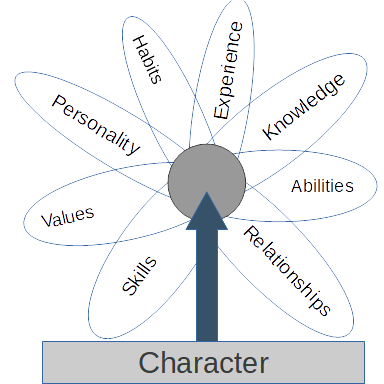 is the sum of a person’s habits and qualities. It is the center of a Venn diagram of your skills, knowledge, abilities, values, relationships, past experiences, habits, and personality. Developing good character helps develop a good reputation, which helps gain influence. Others determine whether or not you are a good leader, or have the potential to be a good leader, by observing common traits in the character of other good leaders. Developing good character traits is within your control.
 That first lesson I learned during field feeding taught me the importance of taking care of those you lead. When your followers know you are taking care of their needs, they know they can focus on their tasks required to accomplish the mission. They know you have their back. That only happens when leaders receive trust from those they lead. Trust turns into respect. Respect creates disciplined organizations. Disciplined organizations accomplish great things in the face of adversity.
 Unlike the other factors discussed above, we only have limited control of our experiences. A person may seek out experiences, but sometimes you have to be in the right place at the right time with an open mind and properly prepared for some experiences. There are plenty of experiences people can control and obtain. You can choose to hike the Appalachian Trail and gain that experience. You can choose to develop a speaking program and present it to several local civic groups to demonstrate expertise in a subject area. Not everyone can go to Harvard, but most people can complete college if they really want and have a college experience. Not everyone can perform in Carnegie Hall, but there are plenty of performance venues if you want to perform.
 The foundations of character date back eons. Periodic reviews, such as this blog, keep lessons fresh in people’s minds. Each of us can change our behavior to improve our character.

 Some decisions should be delayed, but most can be made quickly. Making decisions at the correct point frees the time by avoiding waffling that robs not only your valuable time, but also energy. Avoid going back and forth over the same options. Making a decision at the appropriate time eliminates stress, confusion and anxiety you feel about making mistakes. Most decisions fail to work out as planned requiring adjustments along the way. Taking greater control builds your trust with others and your confidence to make good decision. Decision-making skills are like exercise. When you exercise more, you develop fitness factors that increase your physical ability. Making decisions increases your self-confidence and your ability to make better decision. You create positive momentum because it’s easier to make decisions when you believe in yourself and your abilities.



 He told his classmates he devised a simple system using spreadsheet software to track employee issues. Every morning he made a list of people to contact to follow up on those issues ensuring they were addressed. His actions allowed employees to focus on their work, not their problems. His habit of tracking people’s problems and checking with them periodically, resulted in a reputation of being a compassionate leader. He only spoke with others who had a reason to know about the problem in order to provide support to the employee or help resolve the problem. He did not gossip. His habit of keeping his mouth shut gained him the reputation of being trustworthy. His habits and actions told others the story of how he felt about resolving people’s problems, not a speech delivered from a soapbox about being there to help his people. His character was defined by what he did, not what he said.
 Power is commonly obtained in one of a few ways. The first is positional power, that which an organization give an individual in supervisory positions. Another is expert power. If you are an expert by means of knowledge on a topic, or possess a critical skill that you use and share. You sway others by your expertise. A third source of power is attraction. That ability some people have to draw the positive attention from others and to make others want to be liked by them. Often called charisma, it enables those endowed with it to influence people by bestowing attention on those seeking their approval. A final source of power is reward and punishment. This sounds like something a boss can do, such as providing a wage increase, or dismissing an employee. In this example it is not someone in a position of authority. People who use rewards and punishment for power include people like playground bullies, or a grass roots community activist. Each finds ways to reward and punish people they influence outside traditional organizational structures. Some example include using force in the case of the bully, or endorsing a political candidate in the case of the activist. These rewards and punishments lack official sanction. The power comes from the personal traits of the individual such as strength or speaking ability.
  Learning to develop power across several sources is a skill necessary to influence others. Each has benefits and limitations depending on the skill of the wielder, the situation, and the audience. Each is a tool. One cannot build a house only using a saw; likewise, one cannot lead well with only one source of power.
 This story illustrates the importance of knowing your audience and the message they need to hear. As the instructor pointed out, if the message is what the candidates needed to request to install a flagpole, the communication is different than directing a Soldier to emplace the flagpole. Of course if the Soldiers were less experienced than the Platoon Sergeant, the instructor needed to provide more direction. The senior person in the story understood he was directing another experienced person to complete a task. Detailed instructions were not required.
 confronting unacceptable behaviors and addressing uncomfortable truths, such as failures to reach revenue expectations. Setting standards is action. Leaders execute by jumping in, getting their hands dirty and shoes messy. Doing something dirty is action. Leaders develop power and influence by doing things; acting, not just talking and planning. If you are not doing, you are not leading. Leading is a verb. Verbs are action. Actions, executed properly at the right time by the right right people result in success. You can plan. You can talk. You can be virtuous. You accomplish nothing until you act.

 Assign a protegee to the mentor who is dealing with performance problems. Often we think of performance problems as coming from problem employees. Frequently though performance problems come from inexperienced people, or people assigned new tasks without appropriate background or training. Use your subject matter expert to teach this person how to improve. As they work with the newer person, they may find a need to refer back to their original class notes. Good thing they typed them so they are legible! Because you modeled goal setting with your employee, they use that skill to help their protegee set goals. Your newer, inexperienced person benefits from the training provided to the mentor weeks or months ago, another return on your investment. Instead of sending this person to the same training to learn the basics, you book them for something different. When they return, repeat the process and you have a new expert on a different topic.
 When setting goals, task steps are the pavers on your path to accomplishment. Accomplished goals are the cobblestones of your road of life-time achievements. Your achievements define who you are as a person.
 Next, figure out what you desire to accomplish in your life. Stephen Covey talks about what you want your obituary to say. Unless you have reason to believe it is likely you will die in the next three to five years, perhaps thinking about what you want people to say about you in five years may be a better example. As you think about your accomplishments remember the many facets of your life. The facets in your life cause you to focus on events and opportunities in different ways. Some facets of life include personal, family, spiritual, health, community, and professional. A goal that covers multiple areas of your life will feel more fulfilling when accomplished. General people can only focus on fewer that four big goals at anytime. Aligning large and small accomplishments in each area helps improve opportunities for success.

 You wonder where you went wrong. The truth is you did a great job. Your boss understands the importance of asking critical questions about everything in the organization. The knows to verify things that appear to be one thing to ensure they are not something else. With experience, the boss learned the right questions to ask related to a host of issues and situations.
 Socratic questions that stimulate discussion and analysis may include:
 Whether you are developing a course of action to market a new product, or deciding where to go on your next vacation, learning to ask the right questions helps you make better decisions. Questions that challenge conventional thinking allow decision makers to identify alternative courses of action and determine if they would be effective. Allowing others to challenge your conclusions with Socratic questioning improves your logical thinking. As you step into your next leadership position, or prepare a briefing for the boss, take time to think about questions to uncover the best solution to any situation.
 Trainers and leaders need to measure success. Measures of success demonstrate the organization does things correctly and does the correct things. Trained tasks support the organizational mission, the organization’s why. Trainers measure performance and leaders measure effectiveness. Understanding the difference ensures organizations correctly apply the correct measures to tasks by the right people.
 Reflecting on past mistakes and successes teaches leaders how to adjust behaviors improving successful. Few new leaders understand the importance of reflection. As a result they do not understand which traits lead to success so they can repeat them, nor which actions impede them preventing them from avoiding similar actions in the future. Leaders achieve effective reflection by following some easy steps.
 Periodically review your reflections to adjust your course. Taking time to figure out where you are is an important step in the goal achieving cycle. Reviewing things you allows you to consider the path to achieve a goal. You may see a lesser traveled trail is more effective. You may realize a new behavior provides access to the express lane. Either way failing to apply what you learn unnecessarily lengthens time of achievement.
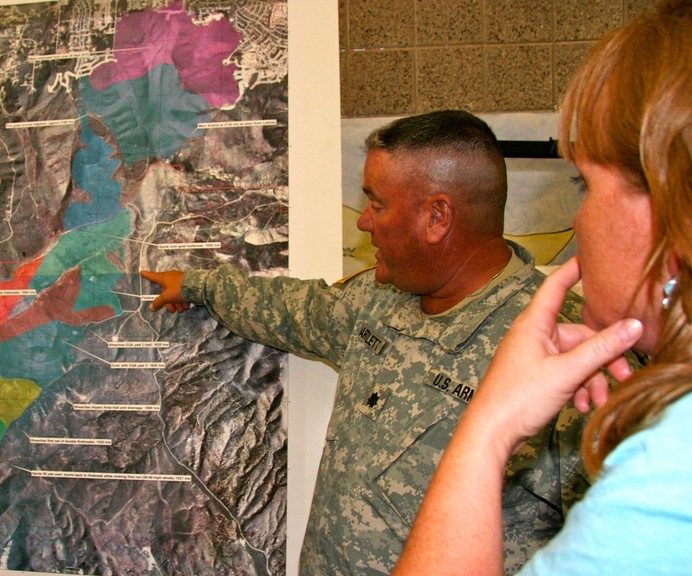 Take time to review actions at the end of project or events. This action enables leaders apply lessons learned the next time. The military thoroughly reviews and documents actions after every key event. As they begin their next planning cycle, leaders revisit those reviews to identify how to apply lessons learned to repeat effective actions and avoid repeating mistakes. Learning to analyze an event and gather important lessons is easy.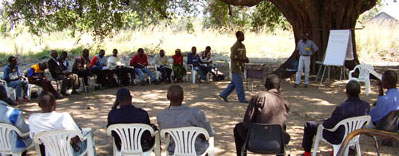
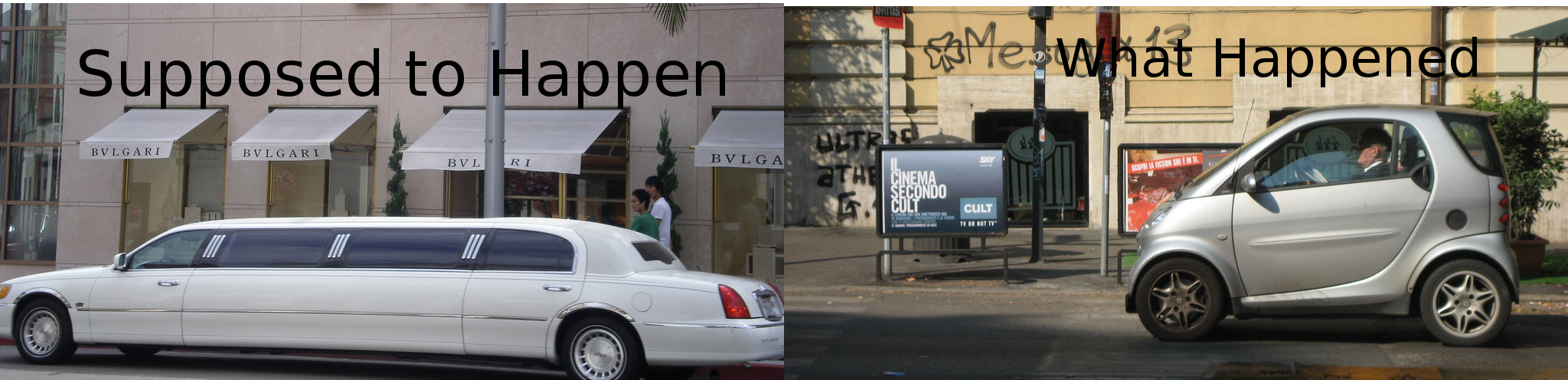 Things may have gone well in their part of the project because the logistics section fixed a problem before others know about it. If others did not see it, the problem still existed and should be documented and analyzed.
 Focusing on why the leader made the decision allows him to learn from mistakes, identifies potential problems in processes outside that leader’s control and reduces defensiveness improving learning.

 Companies carefully develop and vigorously safeguard their corporate logos and trademarks because the leaders understand the importance of brand. Logos speak for the company, what it makes, and stands for. Some trademarks become terms for common items, actions, or a range of products. Years ago people would Xerox a copy when they wanted a photocopy. Everybody had a Frigidaire even if their refrigerator was a Whirlpool. Today if you want to find out some piece of information, you Google it. Mention these names or show their logos and people create a vision of excellence in each of those industries. The trademark is the company and people know the values of each. Artifacts, such as logos and trademarks, are the visible representations of an organization’s culture and values. Other aspects of artifacts include customs, traditions, celebrations, buildings, and attire. Leaders can use artifacts to change behaviors of stakeholders to align with desired values.

 Rules tell each employee what to do and what not to do in a given situation. The problem with rules is no organization can write a rule for every situation, and organizations like the VA have tried. Often rules conflict in a given situation. When faced with a situation not covered by a rule, or one where the rules provide conflicting guidance, people have to make decisions. That is why guiding principles are necessary.
 instead of rules that fence in options. Guiding Principals develop effective organizations. They create a climate for employees and junior leaders to safely take risks within established areas. Leaders use mistakes as learning opportunities for the employee and others. Employees respond to increased trust by finding improved ways to accomplish the organization’s mission. All stakeholders receive the results they expected. By using guiding principals, people find their own route to success within establish boundaries. Now is a great time to review your organization’s principals and determine how you can improve them for increased success in the coming year.
