 Decision making is a critical leadership skill. Use your decision making abilities in and out of the office to improve both your work and personal lives. People making good decisions inside and outside the office derive many benefits. Learning to make good decisions is a first step to becoming a well respected leader.
There lots of benefits of being more decisive. Making conscious choices allows you to shape your life path reflecting your values and priorities. Without taking action, you find yourself drifting through whatever circumstances come along. Learn to set goals and develop action plans to achieve those goals. Writing down a plan of action for a goal is easy. Choosing to implement the action steps is what make your dream reality. There is lots of information available in the internet about setting and achieving goals. I contributed some of that content by sharing things I do to accomplish my goals and dreams. Here is a link. https://christopherstcyr.wordpress.com/2014/01/01/time-to-reflect-plan-act/.
 Some decisions should be delayed, but most can be made quickly. Making decisions at the correct point frees the time by avoiding waffling that robs not only your valuable time, but also energy. Avoid going back and forth over the same options. Making a decision at the appropriate time eliminates stress, confusion and anxiety you feel about making mistakes. Most decisions fail to work out as planned requiring adjustments along the way. Taking greater control builds your trust with others and your confidence to make good decision. Decision-making skills are like exercise. When you exercise more, you develop fitness factors that increase your physical ability. Making decisions increases your self-confidence and your ability to make better decision. You create positive momentum because it’s easier to make decisions when you believe in yourself and your abilities.
Every time you make a decision, you learn. You learn about how your decision affects others. You learn what information is important when making future decisions. You identify sources for help and advice. Your choices reveal your character to yourself and others. A big lesson learned is how your willingness to learn from adversity provide valuable feedback about areas you can improve.
Becoming more decisive is simply a decision, your first important decision to be more decisive. The most difficult time in any moment of decision is the space between deciding to do something and making the first step. Law enforcement calls this space the Fatal Funnel. It is that space between being outside of a key engagement area such as a room, and being in the engagement where you gain control. It is like being in the doorway. You are neither in the room or out of the room, but that space is the most dangerous because you are completely exposed. As soon as you step left, right, or move forward, the danger decreases. Motivate yourself because once you take action, you recognize more opportunities. You can only see the doors in the next room by fully stepping through the door directly in front of you.
Generally one makes a decision because a problem or opportunity comes into your awareness. Do your research. The first step to making a good decision requires properly identifying the problem or opportunity. You requires the correct information to properly frame the situation. Obtain facts and figures researching on your own or consulting those with the relevant expertise.
You will never have all the relevant fact and figures available in a moment of decision. Learn to analyze the available information to develop reasonable assumptions. Plenty of analytical tools are available to reach reasonable conclusions. Learn what tools are available. Identify which ones work best in different situations. Each situation requires a unique solution, but frequently problems and opportunities fall into five categories; simple, complected, complex, chaotic, or disordered. Different skills are required for each category. Developing skills and understanding for each category is easily each a topic for additional blogs.
Start with small, simple decisions in areas where you feel confident and where the consequences are relatively minor. I encourage those who follow me to be brave, make a decision and learn lessons from the consequences good and bad. I frequently have new employees come to me with their tails between their legs because a decision they made went wrong. My first question always is, “Did someone die, become seriously injured, or did something blow up or become seriously damaged?” Most of the time the answer is no. That means we have time to figure out what went wrong and how to fix it. This allows employees to practice and work their way to more significant decisions. Working through the problem or opportunity with them builds their confidence. Trust your judgment and accept any consequences or criticisms that may arise in order to learn important lessons for future decisions.
Making timely decisions is important. Give yourself a timeline, but do not make it artificially short. If you have 12 months to find a speaker for a training conference, identify when you need to make that selection. Speaker bureaus may require three to six months notice for most speakers. That provides you up to nine months to complete your research which includes the perimeters such as cost, expertise, and other requirements for the speaker. In fact, the first step in your research requires you to identify what information you need to gather to decide who your speaker should be. That means you probably should not select the speaker in the month following the date you were assigned to make a selection. Use the time to gather facts and information. However, do not put off a decision of little consequence that can be made today, such as the pattern of the paper plates for the snack table. Use more time to make a choice for those decisions of great consequence.  Do not waste time with decisions of little consequence. Learn the difference between the two.
Face your fears. You will make mistakes. Baseball players who only hit a base hit three times for every ten times they face a pitcher receive large paychecks. They fail 70% of the time! There was a time Babe Ruth held the record for the most home runs batted in Major League Baseball. He also held the record for the most strike outs. Tim Ferris claims to periodically go without food for days while sleeping in a tent at night to remind himself that if a decision he makes results in the loss of all his wealth, he can still survive even if it means not having food for several days and sleeping on the ground. Fear of making mistakes is a barrier to becoming more decisive. Mistakes are a part of life. Unfortunately people often learn more from failures than from victories because they analyze what went wrong when they fail, but rarely analyze what went right when they succeed.
The best way to become decisive is to decide to make decisions. Decision making is a skill required of all leaders. Leaders who make decisions develop a reputation as being decisive. Every time you make a decision, you learn from your mistakes and successes. Making decisions is simply learning a process then accepting the results of the process and acting on them. Decide to be a respected leader by making decisions.
Photo Information
All photos from pxhere.com used with a 0CC license.
The Cynefin Model graphic was created by the author and is based on the work of David Snowden and Mary Boone. For more on this model read A Leader’s Framework for Decision Making at https://hbr.org/2007/11/a-leaders-framework-for-decision-making.


 He told his classmates he devised a simple system using spreadsheet software to track employee issues. Every morning he made a list of people to contact to follow up on those issues ensuring they were addressed. His actions allowed employees to focus on their work, not their problems. His habit of tracking people’s problems and checking with them periodically, resulted in a reputation of being a compassionate leader. He only spoke with others who had a reason to know about the problem in order to provide support to the employee or help resolve the problem. He did not gossip. His habit of keeping his mouth shut gained him the reputation of being trustworthy. His habits and actions told others the story of how he felt about resolving people’s problems, not a speech delivered from a soapbox about being there to help his people. His character was defined by what he did, not what he said.
 Power is commonly obtained in one of a few ways. The first is positional power, that which an organization give an individual in supervisory positions. Another is expert power. If you are an expert by means of knowledge on a topic, or possess a critical skill that you use and share. You sway others by your expertise. A third source of power is attraction. That ability some people have to draw the positive attention from others and to make others want to be liked by them. Often called charisma, it enables those endowed with it to influence people by bestowing attention on those seeking their approval. A final source of power is reward and punishment. This sounds like something a boss can do, such as providing a wage increase, or dismissing an employee. In this example it is not someone in a position of authority. People who use rewards and punishment for power include people like playground bullies, or a grass roots community activist. Each finds ways to reward and punish people they influence outside traditional organizational structures. Some example include using force in the case of the bully, or endorsing a political candidate in the case of the activist. These rewards and punishments lack official sanction. The power comes from the personal traits of the individual such as strength or speaking ability.
  Learning to develop power across several sources is a skill necessary to influence others. Each has benefits and limitations depending on the skill of the wielder, the situation, and the audience. Each is a tool. One cannot build a house only using a saw; likewise, one cannot lead well with only one source of power.
 This story illustrates the importance of knowing your audience and the message they need to hear. As the instructor pointed out, if the message is what the candidates needed to request to install a flagpole, the communication is different than directing a Soldier to emplace the flagpole. Of course if the Soldiers were less experienced than the Platoon Sergeant, the instructor needed to provide more direction. The senior person in the story understood he was directing another experienced person to complete a task. Detailed instructions were not required.
 confronting unacceptable behaviors and addressing uncomfortable truths, such as failures to reach revenue expectations. Setting standards is action. Leaders execute by jumping in, getting their hands dirty and shoes messy. Doing something dirty is action. Leaders develop power and influence by doing things; acting, not just talking and planning. If you are not doing, you are not leading. Leading is a verb. Verbs are action. Actions, executed properly at the right time by the right right people result in success. You can plan. You can talk. You can be virtuous. You accomplish nothing until you act.

 Assign a protegee to the mentor who is dealing with performance problems. Often we think of performance problems as coming from problem employees. Frequently though performance problems come from inexperienced people, or people assigned new tasks without appropriate background or training. Use your subject matter expert to teach this person how to improve. As they work with the newer person, they may find a need to refer back to their original class notes. Good thing they typed them so they are legible! Because you modeled goal setting with your employee, they use that skill to help their protegee set goals. Your newer, inexperienced person benefits from the training provided to the mentor weeks or months ago, another return on your investment. Instead of sending this person to the same training to learn the basics, you book them for something different. When they return, repeat the process and you have a new expert on a different topic.
 When setting goals, task steps are the pavers on your path to accomplishment. Accomplished goals are the cobblestones of your road of life-time achievements. Your achievements define who you are as a person.
 Next, figure out what you desire to accomplish in your life. Stephen Covey talks about what you want your obituary to say. Unless you have reason to believe it is likely you will die in the next three to five years, perhaps thinking about what you want people to say about you in five years may be a better example. As you think about your accomplishments remember the many facets of your life. The facets in your life cause you to focus on events and opportunities in different ways. Some facets of life include personal, family, spiritual, health, community, and professional. A goal that covers multiple areas of your life will feel more fulfilling when accomplished. General people can only focus on fewer that four big goals at anytime. Aligning large and small accomplishments in each area helps improve opportunities for success.

 You wonder where you went wrong. The truth is you did a great job. Your boss understands the importance of asking critical questions about everything in the organization. The knows to verify things that appear to be one thing to ensure they are not something else. With experience, the boss learned the right questions to ask related to a host of issues and situations.
 Socratic questions that stimulate discussion and analysis may include:
 Whether you are developing a course of action to market a new product, or deciding where to go on your next vacation, learning to ask the right questions helps you make better decisions. Questions that challenge conventional thinking allow decision makers to identify alternative courses of action and determine if they would be effective. Allowing others to challenge your conclusions with Socratic questioning improves your logical thinking. As you step into your next leadership position, or prepare a briefing for the boss, take time to think about questions to uncover the best solution to any situation.
 Trainers and leaders need to measure success. Measures of success demonstrate the organization does things correctly and does the correct things. Trained tasks support the organizational mission, the organization’s why. Trainers measure performance and leaders measure effectiveness. Understanding the difference ensures organizations correctly apply the correct measures to tasks by the right people.
 Reflecting on past mistakes and successes teaches leaders how to adjust behaviors improving successful. Few new leaders understand the importance of reflection. As a result they do not understand which traits lead to success so they can repeat them, nor which actions impede them preventing them from avoiding similar actions in the future. Leaders achieve effective reflection by following some easy steps.
 Periodically review your reflections to adjust your course. Taking time to figure out where you are is an important step in the goal achieving cycle. Reviewing things you allows you to consider the path to achieve a goal. You may see a lesser traveled trail is more effective. You may realize a new behavior provides access to the express lane. Either way failing to apply what you learn unnecessarily lengthens time of achievement.
 Take time to review actions at the end of project or events. This action enables leaders apply lessons learned the next time. The military thoroughly reviews and documents actions after every key event. As they begin their next planning cycle, leaders revisit those reviews to identify how to apply lessons learned to repeat effective actions and avoid repeating mistakes. Learning to analyze an event and gather important lessons is easy.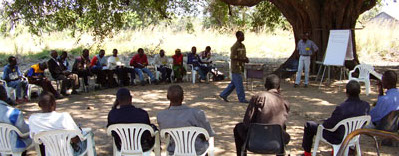
 Things may have gone well in their part of the project because the logistics section fixed a problem before others know about it. If others did not see it, the problem still existed and should be documented and analyzed.
 Focusing on why the leader made the decision allows him to learn from mistakes, identifies potential problems in processes outside that leader’s control and reduces defensiveness improving learning.

 Companies carefully develop and vigorously safeguard their corporate logos and trademarks because the leaders understand the importance of brand. Logos speak for the company, what it makes, and stands for. Some trademarks become terms for common items, actions, or a range of products. Years ago people would Xerox a copy when they wanted a photocopy. Everybody had a Frigidaire even if their refrigerator was a Whirlpool. Today if you want to find out some piece of information, you Google it. Mention these names or show their logos and people create a vision of excellence in each of those industries. The trademark is the company and people know the values of each. Artifacts, such as logos and trademarks, are the visible representations of an organization’s culture and values. Other aspects of artifacts include customs, traditions, celebrations, buildings, and attire. Leaders can use artifacts to change behaviors of stakeholders to align with desired values.

 Rules tell each employee what to do and what not to do in a given situation. The problem with rules is no organization can write a rule for every situation, and organizations like the VA have tried. Often rules conflict in a given situation. When faced with a situation not covered by a rule, or one where the rules provide conflicting guidance, people have to make decisions. That is why guiding principles are necessary.
 instead of rules that fence in options. Guiding Principals develop effective organizations. They create a climate for employees and junior leaders to safely take risks within established areas. Leaders use mistakes as learning opportunities for the employee and others. Employees respond to increased trust by finding improved ways to accomplish the organization’s mission. All stakeholders receive the results they expected. By using guiding principals, people find their own route to success within establish boundaries. Now is a great time to review your organization’s principals and determine how you can improve them for increased success in the coming year.
 Developing employees into leaders prepares organizations for both attrition and unexpected opportunities. Both Bill and Sally understood the importance of developing their next leaders for continued organizational growth and sustainment of excellence.
 One up and coming leader recognized the importance of developing young leaders. He examined everything the new guys and gals needed to know. He recognized it would take hundreds of hours to teach them everything. He faced a choice to move forward teaching a little at a time, or to become overwhelmed by the size of the task and quit. He decided to start small, directing three of his proteges to read an article on leadership. The following week he brought them to lunch to discuss what they learned and what ways they could apply those lessons to their own activities.
 There is more to wandering than aimlessly walking around. For LBWA to be effective you have to wonder around the areas and among the people least likely to otherwise have access to you or that you would ordinarily see. People only bring problems to accessible leaders. You have to be accessible to hear people’s concerns.
