Positive Peers

OldWatch.C.Guthier   In the last year I have had the honor of attending several retirement ceremonies for people I consider to be friends and great leaders. As I listened to my friends’ remarks during their retirement speeches, I realized how important peer leaders are to those who strive for continuous improvement and change. With the proper spirit of competition, support and cooperation, quality peers encourage you to become better than you are. It is easy to point to a current or former boss who provided a few words of wisdom, spent some time mentoring you or introducing you to some powerful people as sources of inspiration. Often we overlook the inspiration provided by those we work with and against every day. John Maxwell has long endorsed the 360 degree leader. Many have written about competition improving results. In many ways peer leaders may be more important in our personal growth as leaders than our bosses.

One common area peers are recognized as improving other organizational leaders is through competition. The peer may be your equal in another organization in the same industry courting the same customers, or within your organization leading a similar group. Their accomplishments provide inspiration to improve your own performance. Keeping up with or staying ahead of the competition, especially a friendly competition, encourages people to evaluate what the competition does well, which practices we can adapt and adopt, and identify improvements for performance ahead of them. Such continuous improvements start the momentum Gary Collins talks about in his book, Good to Great.Peers
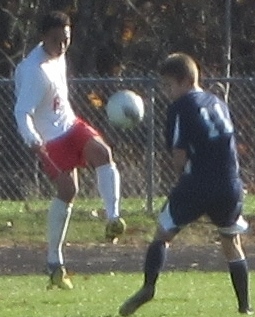
Another area peers help fellow leaders improve is by providing support. Support may come in a variety of ways and reasons. You may find a former competitor now works for your organization and understands the importance of your success because it translates into success for everyone. Your peer may have moved on to another organization working in a completely different field; however provides support because of your past relationship. Other members of your network maybe able to point you to an expert or service that meets your needs. Sometime their support results in a mutual benefit, many times there is no directly benefit.

Your peers may find they need your cooperation to accomplish their mission or you need theirs. Cooperation requires trust and confidence in the skills of the other. Completing a project together improves relationships and greases the wheels for future ventures. When two or more people or groups of people work to develop something new, and all the players do their part, the completed product often exceeds the quality for the same product produced by an individual. You have a good idea to make something work. Your peer adds to the idea and makes it better. Through cooperation both win and the organization completes its mission.

Developing a network of peer leaders helps you improve in many ways. Associating with other successful leaders improves your attitude, expands your sphere of influence, increases available resources and inspires you to accomplish more than you could on your own. Developing positive relationships with others allows each to provide support and cooperation today, yet compete against each other tomorrow. Developing positive relationships with peer leaders is its own reward. Acrimonious relationships make for a lonely retirement. Positive relationships fill your life with good friends and good times. The next time the guy running the shop across the hall knocks on the door looking for help, or stops to brag about his latest accomplishment, take the opportunity to improve yourself and become a better leader.

Thanks to those of you who have helped make me a better leader and a better person.


Photo Credits:

Watch photo:  Christian Guthier from flickr.com Creative Commons License

Soccer photo: author

Suggested Reading:

The 360 Degree Leader by John Maxwell,

Good to Great by John Collins

Oh No! Mandatory Training!

Mandatory refresher training…the bane of every instructor. Frequently the trainer is provided a lesson plan and a slide deck, a period of time to fill and appropriate training facilities (maybe). The instructor is expected to stand before the group of experienced students and present the material determined by management as essential. The result one to four hours of heavy eyelids, sore bottoms and the sending and receiving of text messages on mobile devices by distracted employees who fail to pay attention. They learn nothing. You can improve the situation by recognizing that the occupants of the room possess hundreds of collective hours of experience; many more qualified to teach than you. Developing methods to engage, entertain and focus students during mandatory training separates the run-of-the mill instructor from the master trainer. Nothing that follows is new, but I challenge you to adopt one or two of these ideas for your next refresher training and take your first step down the road to become a master trainer.M.CoghlanGpDisc

Facilitation is a training process that focuses on the student rather than the instructor. Generally facilitate means to make easier, to promote or to serve as a catalyst (Google 2014). An instructor who engages in facilitation recognizes the expertise of the students and develops a learning environment that permits those with various experiences on a given topic to share what they know allowing the rest of the students to assimilate those experiences into new ideas on their own. This process allows the students to come to conclusions on their own.

Instructors are reluctant to conduct facilitated discussions for fearing accusations they did not follow the program of instruction required by management. A well thought out training event covers all the points required by management. The difference between an interesting, facilitated training event and being buried by slides is how the material is presented. The traditional, well-known, boring method of lecturing while showing a slide deck echoing everything the presenter says only ensures the required material has been presented. It does nothing to demonstrate knowledge transfer, but does provide coverage for the tushy if ever called to task for providing training on a given topic. A facilitated training however requires student participation during a guided discussion about the same points made in a lecture. In order to participate effectively, instructors must possess complete understand the topic, and students should have some knowledge.

Preparation for and conduct of a facilitated training event requires greater preparation and execution time. To prepare for a facilitated discussion,

  • Review and understand key learning points of the lesson,
  • Convert learning points into discussion points,
  • Prepare questions to requiring discussions to answer, and
  • Prepare to guide student discussion by infusing information and making corrections,
  • During the conduct of class,
  • Ask students questions that require thought and development of opinions,
  • Ask students what they think of points made by others during the discussion,
  • Require students to justify opinions based on facts or prior learning,
  • Ask students if they agree or disagree with other students points and explain why or not.

As the class demonstrates understanding of each point, the instructor segues into the next discussion point by either asking a pre-planned question, or taking advantage of a point raised by a student. Ensuring many students participate. Use the following formula to include all students:

  • ask the question,
  • pause to wait for students to think about the answer,
  • call on a student to answer.

When attempting to pull in the quieter students, it is important to ensure to ask them something there is no wrong answer. By doing so, you allow them to participate without loosing face. As the discussion moves along, show the required slides and let them speak for them selves allowing students to integrate the information from the slides into what they learned in the discussion.

A quality facilitated discussion during mandatory training improves student participation. Increased participation improves information retention. Increased participation permits the same idea to be expressed more than one way improving understanding by less experienced students. Engaged students are less likely to allow their minds to drift and learn more. Students pay attention when they know anyone can be called upon to answer questions. The slide deck re-enforces points made by the students.

Using a facilitated discussion during mandatory in-service training allows for management and instructors to cover important learning points. A good guided discussion covers all required points by allowing students to express their knowledge of the topic and identifies areas requiring more discussion or information. With more discussion the same idea is expressed in different words increases understanding of the concept. Students become responsible for their learning, more engaged in the process and focused on the class. For your next training event, implement some of these ideas to generate a guided discussion on one or more points. You may be surprised at what YOU learn in the class you are teaching.

—————————

References

Google Search Results “define facilitate” https://www.google.com/search?q=define+facilitate&ie=utf-8&oe=utf-8&aq=t&rls=org.mozilla:en-US:official&client=firefox-a&channel=sb retrieved 4/26/14

U.S. Army. 157-ABIC-3.0 / Army Basic Instructor Course (ABIC) (2011) Army Training Support Center, Ft Eustis, Va

—————————

Photo Credit:  Michael Coghlan.  flickr.com CC license

Check Your Map…Achieve Your Goal

At the beginning of the year I pitched a way to achieve your New Year’s Resolutions. (https://christopherstcyr.wordpress.com/2014/01/01/time-to-reflect-plan-act/) 0322141247One of the steps I suggested was to periodically check your list to measure your progress and adjust your course. That time is upon us. I know because the reminder I set in my calender alerted me to check my progress on my goals.

I use a goal setting check list to help me focus on task steps and measures for success. I used to keep them on paper, but as time and digitization have progressed, I have found using a word processor or even better, the task list on my email client work great. Your worksheet does not have to be fancy. I combined the format I learned in the Army to evaluate training with some of the great ideas Ken Blanchard pitched in his book, The One Minute Manager with a couple of theories I have learned about SMART goals. If you did not put your New Year’s Resolution in writing in January, you still have time to do so. The benefit of having your goal in writing is being able to sit down periodically (like now) to review your progress.

For those of you who did make some notes, dig them out and lets check your progress. I have learned several things throughout the years I have used this process. Your work sheet is like a map. As you travel you find roads exist not appearing on your map, and some roads on your map are more like mountain foot paths. For goal setters that means you may have found some of the steps you planned to take were not required, however things you did not know when you began the journey require you to complete tasks you did not anticipate, and that is okay. Just like our journey on an previously unknown but shorter or better road, as one works towards a goal and finds a shorter or better way to complete the task, you do. Note the changes on your map during your review. Enter comments about the progress of each task and check off completed steps. Open your calender and schedule time to complete the next series of activities on your journey to completing your goal.

An important question to ask as you check your progress is, “How will I recognize success?” The answer to this question becomes the measures of the success for your journey. If you goal is to improve your health (a common New Year’s Resolution) how will you know you are healthier? Some metrics may include a target weight, the ability to lift an amount of weight, the ability to be able to run a certain distance in a given amount of time, the measurement of your waist so you can once again fit into your High School jeans, your blood pressure number or the levels of cholesterol. What ever standard you select, make it specific and measurable by some recognizable value.Image

Checking the progress of your goals on a regular basis is important to your success. By having a map in the form of a goal checklist you improve the chances of your arriving at your intended destination, your goal. Your check list should include the route of travel and measures of attainment so you stay on track, or recognize when you have to adjust course. If you don’t know where you are going, it is impossible to know when you have arrived. Take a few minutes today to review and update your goals. For those of you who have yet to do so, set ONE goal today and develop your route and metrics. I have posted a sample goal setting worksheet on SlideShare. Check it out and use, change and adapt it to your needs. Move forward by taking that next, charted step to your personal success.

Photos by author

Better Presentations

Last week I had the opportunity to attend a terrific training presented by Jon Blum of Force Concepts. One thing that set his training apart from others I have attended was his slide deck. He followed two simple rules to keep his slide simple and effective. With some thoughtful planning, a little research and some practice with layout your next presentation can benefit from the same principals Jon employed. The first principle is minimize text. The second is maximize images. Image
The original popular presentation software PowerPoint was named so to help presenters make the points of their presentations powerfully. They were intended to be short and sweet. A common rule is to limit the text on a slide to six words per line and no more than six lines per slide. Often presenters read their slides verbatim which defeats the point of inserting the bullet point on the screen. The audience can read. They came to your presentation to hear what you have to say. If the only thing you say is what is written on your slides, they could have stayed in their offices and read your work. I suggest that you tell your group what your want to say, pause then show the slide and allow them to read the text on their own. The points on your slide should emphasize what you said.
Another great thing Jon did in his presentation was the way he presented the text on the slide. First he discussed the point. Next he showed the text and led a discussion about the point. Upon conclusion of the discussion on that point, he introduced the next point and then revealed the text. The previous line remained visible, but the font was in a light shade of gray drawing the viewer’s eye to the current point. Identifying the few simple words that effectively communicate the idea behind the point of discussion requires you to identify the principals and key points of your presentations.
How many times have you said or hear that a picture is worth 1,000 words; at least a thousand? How many pictures have you seen in a slide presentation? I would guess the answer is few. Today images are inexpensive and plentiful. Choices include charts, graphs, clip art and photographs. Websites such as flickr.com, gettyimages.com and shutterfly.com have a large selection of photos to purchase, within the public domain or under the Creative Commons license. Sometimes finding the right photo or image on line is time consuming, but with the advent of digital photography and paint software you can create your own images that convey your message. The images I use to attract readers to my blog are my own creations or images I found on line available under the Creative Commons license for use by only providing attribution to the person who took the photo.
When selecting an image, pick one that communicates your message. You may use a few words to ensure your point is understood or to ask a question to start a discussion. If you use text with your image, keep it shorter than the suggestions offered above.
Following simple rules improve the slides you use in your presentations. Reduce the text on your slide. Use pictures and communicate 1,000 words without uttering a syllable. It may not always be possible to limit your idea to six words or to one picture, but with practice implementing these principals becomes second nature. As you prepare your next presentation, add a few extra pictures and subtract some words. Your audience will be grateful.

For a more detailed disucssion about improving your presentations, check out my Prezi at http://prezi.com/uaxckg-4fkkn/using-media/. Another great resource is http://www.slideshare.net/ArtilleryMarketing/you-suck-at-powerpoint-12040413.  Update 3/15/14:  57 slides in 18 minutes…exact amount of text during the presentation…zero!!!! http://www.youtube.com/watch?v=bOYIKJho18I&feature=youtu.be

Photo credit: Kei Kondo add.me flickr.com

AW…do we have to plan AGAIN?!

“Plans are nothing; Planning is everything.” Dwight D. Eisenhower. Planning is one of the fundamental functional areas of management. Leaders at all levels plan. Depending on the event and their level in the organization determines how they plan, but the planning process should remain the same. Whether you want to develop a new vision for your organization, or you are putting together a small meeting for your staff, planning is the process that identifies the needs for what is desired in the future, the resources necessary to accomplish the task, actions requiring completion, controls and guide posts to watch for along the way and a statement of success. One of the reasons planning is valued more than the finished plan is understanding that no battle plan ever survives past first enemy contact, but in the planning process, key leaders have opportunities to evaluate different courses of actions allowing them to change course as the situation evolves. This topic deserves more than the few hundred words dedicated here, however my intent is to provide readers a general direction for their own planning processes.Image
The first step in any plan in to identify the objectives. Plans are only required if there is difference between the current situation and what you expect in the future. The purpose of the plan is to change the future. At the strategic level, leaders develop mission statements, share their vision and establish guiding principals. At the operational level, leaders develop work processes, gather resources, train workers and establish goals and task steps.
Once the object is identified, develop alternative actions. Often this is done during brain storming sessions although other idea generating activities also work. Ideas do not have to appear practical or traditional. The important action at this stage is to developing ideas. You may find that some of what originally appear to be flaky ideas in the beginning, when paired with other ideas may work the best.
Now that you have several alternatives, take time to evaluate them whether alone or in a group. Identify their efficiency, alignment with organizational guiding principals, likelihood of success and other factors selected by the group’s leaders. During this stage you should start to develop the measure for success. As alternatives are eliminated the better ideas become evident. The completion of this step should involve a completed written plan. The plan does not have to answer all questions but should provide enough information for those charged with implementing understand the intent. Remember the old saying, “An imperfect plan delivered on time trumps the perfect plan delivered a day late.”
Action is the next step in the planning process. A complete plan is not required to begin action. The great thing about mission and vision statements are they provide everyone an idea about which direction they should be traveling even if they lose the directions to the final destination. Once the decision has been made to move towards a certain goal, action can begin. Starting movement is the hardest part of any change. Starting movement is they only way the plan will succeed.
Once things begin to move it is important to monitor progress. The plan should include specific check points where staff gather to report progress. Like any journey, if you don’t take the time to check your compass and read the road signs you may find you took a left when you should have turned right in Albuquerque. These controls may include checks on spending, use of resources, percent of quality improvement, number of units sold or any other metric that measures progress.
A final and critical step in the planning process is obtaining commitment from stakeholders. Too many projects fail for lack of this important support. Ensure the key leaders understand the resources requiring commitment for success. Obtain contracts from customers if necessary. Lock in resources from suppliers early.
A finished plan may not be fancy. It may not be complete. What matters is the process used to arrive at the plan. Follow these steps and you increase your plan’s success. Start by determining the objective. Identify alternatives to reach the objective. Evaluate the alternatives selecting the one most in line with organizational values and vision. Begin action as soon as there is commitment. Obtain commitment from key stakeholders. Check your progress regularly and plan those check-ups. As your project rolls along, you may find success lies off the road you selected to reach your destination, but through your planning process you identified detours and side trips. In the end you will find your planning helped you make small adjustments along the way and reach your destination.


Photo by author

Leaders Training Future Leaders

ImageAll trainers are leaders because they influence people in their organizations to accomplish the mission. The flip side to that thought is that all leaders are trainers. In too many organizations however leaders are selected based upon their ability to accomplish tasks more than their ability to influence others and too many organizations fail to train their highest performers to become leaders. Possession of influence is more important to a leader than possessing an ability to complete a task skillfully. Learning how to engage others to influence them to perform is more important skill for leaders than the task to be performed. Teaching the leaders to teach becomes that challenge for the middle and senior leaders of organizations, one that is poorly executed. Consistent leader training and development is critical to any organization’s long term success. Four simple, repeatable steps separate are the foundation of an enduring leadership training program. Those steps are telling, demonstrating, practicing and correcting.

Telling. The quickest way to transfer information is to tell the other person. When sending a message you want the receiver to remember ensure the receiver has a method of recording the information, whether it is a notebook, a voice recorder or a note on their device. Unrecorded information is sure to be forgotten. When someone writes, they remember better in the future and create a record for future reference when the teacher is absent. During the review of the lesson, the teach can have the student read back the notes ensuring all important details were discussed.

Demonstrating. You demonstrate the task. In this blog, demonstration is listed as the second step, but in practice, it is the first. When others work for you, you demonstrate leadership for them daily. When you take time to counsel the new leader, you demonstrate the importance of counseling. Your methods become the lesson as the techniques and practices you expect them to employ in their leadership role. Counseling is just one area, but the example crosses many such topical areas.

Practicing. At first you may be inclined to linger. This may not always work well. For the same reasons it may not be practical for your trainee to sit in on a counseling session with a fellow employee with a family problem, it probably is just as likely you should not sit in on similar situations unless you are invited. The senior leader has other duties. If she spends all her time overseeing one new supervisor, she ignores other areas of responsibility. It is not unreasonable to follow up by asking to see documentation of a process or to check progress of employees. This lets both the employee and their supervisor know you are paying attention to important aspects of their work and lives.

Correcting. Do this as close as possible to the performance of the activity. Often in performance oriented training we ofter students feedback in the form of an after action review within a few minutes of completing the activity. There is no reason to not apply the same practice. If you are invited to observe a process improvement meeting, plan on five or ten minutes after the meeting to review the supervisor’s performance.

When you have completed all the steps, repeat them until the leader performs them nearly perfectly. As they improve, you allow them to tell you how they can improve their performance instead of providing feed back from you. As you do so, you prepare them for increasing levels of leadership and improve the organization.

Good leaders are also trainers. They set the standard by telling, They live the standard through demonstration. They allow others to try to practice and correct mistakes so success is achieved. These steps train and develop leaders follows the same model. Tell them what the expectations are, demonstrate the way you expect them to behave, allow them to perform, make corrections and repeat. Leaders who practice these steps increase their sphere of influence, allow others to see he uses power to make the organization better, has concern for the future of the group and its people and is willing to e what he knows. Observers recognize the spark and passion of the leader doing the training and the overall success of the organization. Take the first step today with your young leaders.

Photo Credit:  tanakawho from flickr.com creative commons license

Why Run Alone?

Seems about this time of the year dues for many of the organizations I belong to are due. Each year I use the opportunity to decide what associations are important to me and my future by deciding which dues bills I pay. A couple decades ago I remember thinking it was a waste of time for one of the fraternal organizations I belonged to to send representatives to either the state or international conferences believing they were little more than a fun-filled weekend away at the organization’s expense. As I’ve grown I have learned the importance of associating with others. Leaders interested in continued improvements benefit from rubbing elbows with leaders from other communities and fields. These associations keep their perspectives fresh by infusing their network with people who possess different skills, learning about industry trends and expanding their sphere of influence.

If leadership is about influencing others to accomplish things while continually improving, it makes sense to consisteImagently meet new people. When one meets people with different backgrounds, skills and experiences one no longer needs to develop that particular skill; at least not alone. At some point you will find a situation where the skill of the person you met at one of these meetings, conferences or conventions is necessary to solve a problem your, your organization or someone you know needs. By contacting them, you solve the problem, expand your influence and allow others to expand their influence.

Breaks and social events during conferences provide opportunities to meet with the movers and shakers on the cutting edge. Conversations often revolve around trends that may not have hit popular industry media. Having such information provides you and your organization an opportunity to react before bad things happen, or develop strategies for positive outcomes.

Developing and using your network creates opportunities you never have running alone. Many Americans imagine success as something obtained by an individual struggling on his own to meet daunting challenges. In reality, most successful people are surrounded by smart people offering a helping hand here and a leg up there. Occasionally they slip and fall, but because of they are working with a net, bouncing back is easier.

As you connect people, expand your skills and network and develop the reputation as all-around helper, more people inside and outside your organization turn to you when seeking information, skills and services. Each contact may not result in a direct benefit for your organization. Working with others cooperatively helps them successful. They in turn find ways to help your organization succeed. Your greater sphere of influence puts more people indirectly to work for your organization improving the likelihood of mission accomplishment. The choice is yours; you can strike out alone and figure things our for yourself or you can run with the pack using the energy, skills and wisdom of the group to push you to succeed.

Photo by author.

Creative Commons License
Why Run Alone by Christopher St. Cyr is licensed under a Creative Commons Attribution-NonCommercial-ShareAlike 4.0 International License.

Disruptive Students

Recently I was demonstrating the proper technique to accomplish a defensive tactic according to the organization that certified me to teach. During the demonstration, I talk through each step working slowly so that the students see the hold and understand the correct form. I have selected one of the students in class as an assistant. As I talk through the steps, the student pulls his hand out of my grip and laughs. I can only believe it is because he showed the teacher that his tactic doesn’t work, but his resistance is outside the parameters for application of this maneuver. I attempt to use this as a teaching moment explaining to the class that this is only one way to confront a potential adversary and is intended for use on one who appears compliant and follows directions. I start over. The demonstrator pulls away again. Repeat one more time. Now it is obvious my student is disrupting the class and interfering with the learning. Instructors and teachers often have to deal with disruptive students in a classroom environment. Strategies for dealing with these students are widely available in text books, journals, and internet sites. No one talks about the disruptive student in the practical exercise environment. Over the years I have had many disruptive students in practical activities session who have challenged me, my skills and my techniques. How the instructor handles the disruptive student establishes his future credibility. Handled well and students learn the instructor is knowledgeable and respectful and gains the attention and respect of the class. Handled poorly and the students learn the instructor is self-centered, egotistical and is just as likely to treat them with contempt if they fail to live up to his standards resulting in lack of attention or respect.

Image

Attempting to address the misbehavior based on your perception of the student’s motivation you attract attention to the misbehavior and away from the lesson. Redirect the attention of all the students to the task at hand by acknowledging the slight and explain that this portion of the lesson is limited to the topic you are introducing. Use this as an opportunity to explain that there is more than one way to accomplish the task and this application has limitations that do not invalidate its use in the correct situation.

Keep your cool. I learned this rule the hard way. Anger about the student’s behavior manifests as a personal attack. Too often the anger results in the demonstration being completed at 100% force without proper preparation resulting in personal injury or property damage. Instead, stay calm, redirect the students attention, explain the parameters for the skill you are teaching and continue the lesson. A successful method is to change demonstrators.

Explain to the class as one instructor I watched. The instructor introduced information that was contrary to prior learning in another course. The instructor replied to the effect, “What I am teaching is a way to accomplish this task. It is not the only way.” Often when doing hands on work it is impossible to teach students the best options for every situation because the “What ifs” pile up in a hurry. Using the “A way” response validates the student’s position while maintaining your credibility.

Hands on training is an effective method to ensure students develop skills required to complete certain tasks. Unlike the lecture where the instructor controls the flow of information, during performance oriented training, students will often share what they know about the topic from prior experiences. Sometimes this is helpful, but often is is disruptive. Effectively keeping the class on topic builds your credibility as an instructor and subject matter expert. Validate the students point of view if valid in some cases if there is more than one way. Delineate the conditions for the task you are training. Keeping control of your emotions shows you are an expert deserving their continued attention and trust. When you follow these steps, you ensure students receive quality, consistent information, develop skills to accomplish the task in the given conditions to performance standards and increase the probability they will complete the task appropriately in a stress filled field environment.

Photo Credit:  U.S. Navy photo by Ensign Lily Daniels under Creative Commons License Share-alike and Attribution, Commander U.S. Navy 7th Fleet

2/1/14 I just posted a companion slide deck on SlideShare.  Check it out at http://www.slideshare.net/ChrisStCyr1/disruptedpractice

Time to Reflect, Plan & Act

It is common at this time of the year to reflect on the past and look ahead to the future. People will establish a list of resolutions and many will moan about the resolutions they failed to complete from last year. Others look back, pat themselves on the back for what they have accomplished. So why the difference? The answer is simple, those who succeed approach the resolution process and establish personal, documented steps and goals. What follows may seem like a long lost secret to some, but much of the content I first read about over 30 years ago (when I was v e r y young) and has been reinforced with more recent reading.

The first step is to reflect on what went well, what you need to improve and what is not as important as once you thought it was. Of those things that went well, identify what actions to carry over into the new year. Also identify skills that were used to achieve those successes and how you can use those skills for future success. On the improvement side, focus only on the things that cause failure. None of us can do everything perfectly. Life is too short to fix everything, so instead work on your strengths and only those weaknesses that directly contribute to failure. Everything in the middle somehow works.

Photo by Reg

Photo by Reg

Identify goals and achievements you accomplished. Too often we dwell on failures. People rarely fail at everything every time. You probably achieved some successes. Concentrating on what you have achieve builds confidence to move forward. Enumerating skills you have overlooked in the first step helps you focus on your strengths.

After you have reflected on your successes and failures, your achievements and accomplishments it is time to decide where you want to go. The first two steps helped you identify where you came from, and where you are. This step sets your course for the coming year. In this process determine not only what goals and accomplishments you seek to achieve, but also task steps for each activity. In that process think about who you need to reach out to for help and what resources you need to assemble to be successful. There is no point developing a network if you fail to call upon them for help. The most important activity in this step is to write down your goals and action steps. At this point the most important thing to do is document each task step for every goal. As you work on this portion, it is important to write down action steps for every goal (see my blog about the Three Pitch Rule).

The final step is to schedule time periodically to check your progress. Grab your check lists in what ever format works for you and compare your progress against your checklists. Identify tasks on your list you can complete before your next check up and put them on your calendar. By scheduling task steps you give them a level of importance that increases the likelihood they will be completed.

Now is the time to act. At the end of year, when you sit down to make your 2015 resolutions you will find you kept your 2014 resolutions if you follow these simple steps. Seize the day, New Year’s Day to accomplish this simple task. There is no requirement to have dozens of resolutions. Focus on the one or two or three goals that will really impact your life and document them. Do it now. Perfection is not required for your plan. Do it now and adjust along the way. In the end you may find you accomplished more than you imagined, but only if you take the time to follow these steps. Really, do it now! Happy New Year.

I just posted a short slide deck on SlideShare.  Check it out:  http://www.slideshare.net/ChrisStCyr1/achieve-29982036

Leadership Vision; A Requirement for All Leaders

vision

Leadership vision helps leaders look ahead to prepare and avoid obstacles, allowing their organization to achieve its mission.

Several years ago I attended a leadership seminar taught by Richard Ayres, a retired FBI leadership trainer, who coaches leaders from all walks of life. He was not the first to discuss the importance of leadership vision, but he was the first who caused me to reflect upon the importance of leadership vision at every level within an organization, whether they are the CEO, or a brand-new front line supervisor with only one direct report. Often leaders on the line or somewhere in the middle think their slice of the organization is so small they have no effect on the course of the organization. Without vision, the small groups these middle and front line supervisors lead will drift in the wind and drag on the success of the larger organization. There are ways non-executive leaders can develop a small group vision for their sections that complement the larger organization and inspire employees.

Lower level leaders are the people that get things done in organizations. An organization can survive without a CEO or miss several VPs. Run an overnight shift with poor leadership and before long everyone knows who the important leaders are; the local leaders who interact with employees daily.

Developing a vision is not difficult. Focusing on what is important and communicating your vision to your leaders, peers and followers is another story. When you announce, “Go west young man!” others may not understand why. New leaders who learn to successfully identify key tasks and direction have the edge. Many issues, problems, and people compete for their attention. They do not know what is important and what is window dressing. Experienced leaders develop skills to help them focus on the real issues quickly. New front line leaders lack this background, but a good mentoring program helps them by providing tools and strategies to focus their attention quickly.

Assessments are one tool. Start by assessing yourself. Identify your core values. Ask how these align with the principles of the organization. What strengths and weaknesses do you bring to your new position? Take time to write these down. Assess your people, not only your direct reports, but as deep as you can reasonably dig. Identify their strengths and weaknesses, skills and passions. Learn by talking to each of them one-on-one. Document what you learn.

Examine the environment. Determine how your section supports the organizational mission. Identify the guiding principles of the organization. Learn about your leaders’ vision for the people they lead. Identify opportunities and threats to your small group and the organization, both internal and external. This may be the most difficult portion of the assessment because obtaining accurate information about the intentions and actions of competitors, collaborators and regulators is difficult for many reasons.

Use this information like a jigsaw puzzled. As you work on analyzing the information you will notice that the pieces come together revealing a map that shows where you and the organization has been and where it is now. You also see the goal or destination desired by those who lead you. Like early explorers learned, maps are only an image of what the cartographer thought the world looked like at the point in time it was created and may not reflect reality. The process provides ideas of where your slice of this organization should be headed to support the larger group.

This becomes your vision, tell your employees where they are going, show them what your group will become. Schedule resources, plan for training, develop a plan and mark your route. Your map also serves as ammunition to argue for resources. Your vision is not only a rosy only picture, but illustrates the rough roads and alternative paths. With this information in hand, prepare your followers and leaders for the curves, potholes and slippery spots on the road ahead.

Vision is critical for leaders at all levels. Front line supervisors’ vision while limited by their location on the organization’s ladder is pivotal to their success. Leaders must create the time to map out the territory allowing them to see where they have been, where they are and where they are going. Their map provides primary routes and detours to arrive at the end point. Traveling along the path, they recognize sign posts and mile markers to measure progress. Whether you are a newly assigned rookie leader or a grizzled leadership veteran, having a vision for your organization improves organizational performance. Dig out your binoculars and climb on the roof. Find out where you have been and most importantly, where you go from here!

————————————————

Photo credit: Klearchos Kapoutsis some rights reserved Creative Commons Attribution 2.0 Generic

http://www.flickr.com/photos/klearchos/4541701032/sizes/l/in/photolist-7Vkpud-7Zz91R-9Uwxxs-bQGaiB-9XpiD3-5xhA3q-hAsUt7-ehvoLf-HtFik-9p5PM2-bXfqDC-dvWd8u-NgUKM-7B7xCj-58ayC9-khcgo-hJnvz-8pcL3G-XY2DB-dT5Yfm-dZMiF9-ctk3m5-6mNWbw-7ekpic-9DdSAN-7A3dvw-7LFrio-9nRYzW-4CYTmR-5KGg5B-buvfKc-5Cpqwz-asyX89-9vQUT3-6kYiBz-aSKrMn-4gX3v-e3d3jE-aCMtE3-7FbnVz-onMv1-52hjw8-5dPFT2-bn6iPb-7u6hjK-5xKhH6-8WR3XM-8rhBvX-cpfj3-fr4gn7-6Kg4w/

Practice, Practice the Practical Exercise

One of the joys of being Chief Instructor at a military school house is the time I shared with instructor trainees during their final presentations becoming qualified Army Instructors. During one memorable presentation, the student instructor engaged classmates with two practical exercises. The first allowed students to work in small groups discussing how to apply lessons learned upon returning to their units. In the second, students developed a presentation for their commanders for adoption of principals of this lesson in their units. Both effectively ingrained important points of the lesson by allowing the students integrate what they prior knowledge with newly acquired information to develop their own ideas and reinforced what the instructor taught. This presentation raised several questions including why instructors choose to lecture instead of facilitate, use presentation software instead of practical exercises and how can instructors develop effective exercises to reinforce learning points.

Inexperienced instructors often choose lecture based training because they have the knowledge the students need, lack the skills to develop training that is learner based. They feel more comfortable talking than showing. Developing lecture based training is easy and the least time consuming. Lectures ensure presentation of important information, adhere to time constraints and repeatedly provide the same information during every presentation. Unfortunately, most adults do not learn well with the lecture style and many will leave forgetting most of what was said, defeating the purpose of the training.

Slide decks have become the standard to accompany the lecture method. Pictures, text and video supposedly stimulate the learner’s verbal and auditory centers improving retention from lectures alone, but one phrase says it all, “Death by PowerPoint.” An unfortunate reality, PowerPoint and other presentation software alone fails to engage learners as a result, some organizations forbid use. When used well, they amplify important instruction points, but most of the time slide are used as a crutch. Plenty of books, blogs, articles, TED Talks, comedy skits and ,yes, PowerPoints have been created to improve presentations and truly Impress (an open source alternative to PowerPoint).

ImageDeveloping practical exercises requires genuine understanding of the concepts and principals supporting training, information and task steps. Understanding allows the instructor to identify the basic knowledge required to achieve success. Basic actions required to complete the task create the practical exercise the same way that learning goals are the basis for test questions. Often people are selected to provide organizational training because the have a history of providing great training or are the most educated on the topic within the organization. Lacking expert wisdom, the instructor parrots what he was taught, but their lack of understanding of the concepts and principals prevent development of practical exercises. Students are denied the opportunity to experiment and discover how to use the ideas to improve their performance.

Good practical exercises achieve several objectives for adult learners. They allow the a review of new information learned during class increasing retention. They require learners to integrate new knowledge with what they all ready know. They permit students to teach and learn from each other. They require back briefs allowing peers to learn from their challenges and successes. Each step is a repetition of the information provided in class. Each iteration, embeds knowledge and skills learned increasing the likelihood of desired change.

Lecturing and showing slides permit training to check boxes. Lectures poorly translate knowledge into desired behaviors. Practical exercises allow trainees to practice what they have been taught. They provide opportunities to repeat key points. Repetition increases recall and creates deeper understanding of the material. Creating practical exercises requires the instructor to understand the concepts and principals of the task being trained. Development requires greater time and effort by the instructor but payoffs include increased student understanding, performance and changed behavior on the job. Next time you conduct training, create and conduct at least one practical exercise.

– – – – – – – – – – – – – – – – – – –

I have prepared and posted a slide deck on SlideShare supporting this blog. 

I look forward to feedback.  Please take a moment to let me know how this blog has helped with your training and leadership activities.  I am also interested in know what other topics you are interested in reading.

← Back

Thank you for your response. ✨

Two Things Leaders Care About

Funny thing about leaders…even when they lack a title, they still influence others to become better people and improve their organizations. Former followers seek out the leader months and years after their formal leader-led relationship ends. The best leaders often find themselves providing purpose, direction and motivation to former followers who have exceeded the leaders success. Identifying everything that goes into long-term leader-follower relationship can and has filled many pages. This blog will hardly scratch the surface and instead of providing proven, empirical data about the qualities of great leaders, it seeks to encourage readers to evaluate their own leader-follower relationships to identify ways you each can become better, non-titled leaders.

There are two areas that great leaders concern themselves; caring for people and achieving results. They know that in order to make the organization successful, they need quality people who are dedicated, knowledgeable, skilled and motivated. The leader communicates the organizational goals and his or her vision for the future and turns the followers loose to use their skills and abilities to accomplish great things that move the organization in the direction of success. Once success is achieved however, the leader sets a new course, but only after acknowledging the work and sacrifices of those who followed. Along the way, the leader creates opportunities to become familiar with employees, their families, their dreams and hopes, their needs. The leader develops ways for his followers to align their personal aspirations for growth with the growth of the organization. As the organization achieves success, so does the employee encouraging greater dedication.

Each great leader develops her personal style to learn about their followers and to communicate how their desires and abilities intertwine with those of the organization. Some leaders throw parties for their employees on their birthdays. Others use group training activities. Some dedicate a few moments each day to speak to their people and ask about important personal and professional issues. In every case, the interaction between the leader and follower is personalized in some way. The follower comes to believe the leader personally cares for them and their situation. If faked the facade quickly tumbles causing major problems for the organization.Image

After the American Civil War, Robert E Lee returned to the south to live a quite life. He was one of the best loved military commanders in the Nation’s history. Throughout the war he showed concern for his soldiers at all levels. For years after the war his followers sought him out for letters of reference, financial assistance and inspiration. It is said that he never refused a request of a veteran of his Army if he could fulfill it. Lee’s obligation to his men ceased the day he surrendered and dismissed the troops. His caring continued until he died.

Great leaders have two important concerns. Success of their organization and success of their people. They understand that unless the aspirations of employees are tied to the vision of the organization, neither will be truly successful. Leaders inspire their employees to succeed by learning their dreams, concerns and desires and find ways to align them with those of the vision and mission of the organization. When employees achieve success in their positions within the organization, the organization become more successful. Great leaders extend their influence long after formal relationships end because they genuinely care for the people they lead.

Photo Credit:  National Archives.  Retrieved from:  http: // www. flickr. com/photos/usnationalarchives/4176668765/sizes/o/in/photostream/ 10/29/13