Depth on the Leadership Bench

Everyone recognized Sally and Bill were great leaders. Sally led of her group for six years. Bill ran his group for two years under Sally’s leadership. Sally groomed Bill in the preceding year to replace her. After she moved on, Bill easily assumed the leadership position and started looking for his replacement.teambench-fraser-mummery Developing employees into leaders prepares organizations for both attrition and unexpected opportunities. Both Bill and Sally understood the importance of developing their next leaders for continued organizational growth and sustainment of excellence.
Many supervisors are managers rather than leaders. They are not entirely to blame. Often they were never taught how to be leaders. Why should anyone expect them to be able to teach others how to lead. Managers manage resources; leaders lead people. If an organization only views their employees as resources, they manage rather than lead them. The result is poor performance, crisis after crisis, failure to complete projects, customer dissatisfaction, and lack of growth. Failing to groom today’s managers to become leaders begins a downward spiral in leadership. Supervisors who are not exposed to leadership principals cannot pass them down to their rising stars and the bench becomes weaker.

Organizations choosing to develop leaders sometimes loose rising stars to other organizations because of the lessons they learned. Often those leaders stay even when offered more money or other incentives. They recognize organizations that value leadership through training have more to offer than money. When one star moves on, the boss turns to the bench to replace the loss. Organizations that teach leadership never have a shortage of qualified leaders. They are always looking two or three levels down selecting and training their future leaders. They have depth on the bench so the loss of one quality person does not cripple the rest of the organization. These organizations recognize developing future leaders is the most important thing they do.

leaderropes-nelohotsumaOne up and coming leader recognized the importance of developing young leaders. He examined everything the new guys and gals needed to know. He recognized it would take hundreds of hours to teach them everything. He faced a choice to move forward teaching a little at a time, or to become overwhelmed by the size of the task and quit. He decided to start small, directing three of his proteges to read an article on leadership. The following week he brought them to lunch to discuss what they learned and what ways they could apply those lessons to their own activities.

At the end of the meeting, the manager handed out three copies of the latest book on leadership theory. He challenged them all to read it in a month and gave them a date for their next lunch together. He assigned one of the younger rising stars to facilitate the next discussion. Over the course of the month, the manager met with the young woman to check her reading progress. He taught her how to facilitate the discussion at the next meeting. She did a great job resulting in the other two employees begging for a chance to run the next session. Before long, the manager’s leader development program was recognized across the organization as a model for success. Soon the leader and his followers each were selected for other leadership assignments. The big boss looked at the bench and picked someone to replace each of them and continue the cycle one little step at a time.

Leadership development can be as simple or complected as one wants to make it. Starting slowly allows the organization and its current leaders to find what works. Whether you train your people or not, some stay and some accept other opportunities. Training your future leaders today ensures your bench has depth for the future. When one person leaves, you can bet there will be someone waiting to step up to the challenge knowing they will have the training and support necessary to succeed. In order to experience continued organizational growth and sustainment of excellence, organizations must develop their next level leaders’ skills to develop depth on their bench.

 – – – – – – – – – – – – – –

Photo Credits:

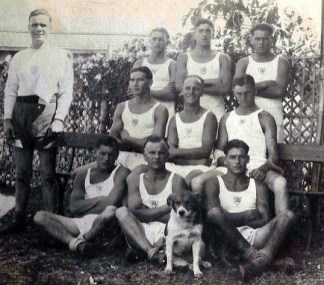
1BN Boxing Team-Fraser Mummery from http://www.flickr.com/photos/73014677@N05/8491853894/in/photolist-dWoYj3-nP6dus-eTVQZn-nFA2Z9-88jr2T-8TLXPF-dUdUqs-9LsNd7-dU8iYa-dUdQwC-n5kvSj-8YcqLU-a1YCNe-dU8cMD-4n4HcF-4CPZhg-eaFCpK-dPgkkg-fCdH6m-fEfvJu-nFFVgg-5KAmwB-8ktTwC-e36jea-hE5oza-49HGS-fAzYDB-4CUy9J-bempLr-8kqWBn-nP7dAM-f7HJ24-8RF5To-rv5yd-dU8jjk-a2QE3r-8tihQC-GYc1M-9uwcTm-dUdQ5Y-oL3fTH-dU8hia-8ku5Rw-8kqUgt-ahCwjp-aVheZ-dM7t9r-Bo2Y4E-fCWz4n-deEtb9 cropped by author


Both photos used under Creative Commons license

Respect & Forgiving Misteaks

Leaders in learning organizations demonstrate two critical qualities: respect and forgiveness. Most people learning new skills make mistakes. People stop creating in organizations lacking tolerance for honest mistakes. Respect instills confidence for people to try new things. They their first attempts result in failure, yet respect acts as a safety net encouraging more attempts. As workers gain courage and skill, eventually succeed. Respect allows forgiveness; forgiveness spins the safety net of success.

spilled.milk-elycefellzForgiveness is often seen as a weak, outward display directed at those who offend us. Unlike respect, viewed as strong, outward behaviors directed towards others, forgiveness is a strong, inward action directed towards ourselves. Holding grudges does little to change someone’s behavior. Instead, grudges harm the holder, preventing him from developing better relationships.

Years ago two people worked together in difficult circumstances. The leader treated him well and thought he earned the other’s respect. One day the leader became aware his previous employee blamed him for many things that occurred on the job. The employee held that hatred for years. The employee’s hatred of the leaders offenses did nothing to harm the leader who was unaware of his offenses. The hate attacked the employee everyday, preventing him from achieving greater successes in life. The leader moved on in life, building new and better relationships and increasing his successes. The leader was was hurt after learning of the grudge because he believed he did the best I could do at that time with his skills, knowledge, and abilities. He reached out seeking forgiveness from his former employee bur received no response. I suspect the employee still blames his former boss for many of the bad things that occurred during the time they worked together. The boss offended and was offended by others during that time. He carried grudges against some people for a while. He forgave some people and some people forgave him. One day the boss met one of those who offended him and realized they were clueless he was angry with them. He noticed the person moved on and felt no pain from his lack of forgiveness. In a period of reflection the leader realized forgiveness was not about the other person, but rather about him. Once he learned to forgive, life improved.

No matter how hard we try, offending others is inevitable. Often we do not realize our faux-pas and therefore see no reason to say, “I’m sorry.” For those who do not understand forgiveness carry their hate while the offender remains blissfully ignorant of their mistake. Forgiveness is a vital part of respect because acting respectfully to those we hate is hard. Forgiving requires releasing hatred.

Without respect, others lose confidence, fail to grown, or learn new skills. It is equally difficult to hold a grudge against someone we respect. Leadership is about influence. There are plenty of examples of leaders applying influence motivated by hate. History views those leaders as failures. People who learn to lead from a positive influence motivated by respect gain more power permitting even greater influence and success.

Many of the problems facing our nation and the world revolve around forgiveness and respect. Examples of extreme grudges include mass police murders in Baton Rouge, people protesting police violence coming under fire in Dallas as officers protect the crowd, terrorism in France, a military coup-d’etat in Turkey, Islamic extremism in the Middle East, Muslim against Muslim, Christian verses Christian, Jew fighting Jew, and each against the other because of hate and disrespect.

Violence is not an answer for past slights, insults, past violence, or perceived disrespects. Jim Collins talks about the fly-wheel effect in his book Good to Great. Acts of violence begin a downward spin of of the violence fly-wheel; every additional act increasing the fly-wheel’s momentum. Forgiveness acts as a break on the violence fly-wheel.

Treating followers respectfully creates a positive position for the leader to gain increased influence. Good leaders recognizes everyone makes mistakes. Instead of being offended by a follower’s error, a good leader forgives, respectfully corrects, and allows the person to try again. This cycle allows growth and improves the organization. Grudges hold back offended parties. Offended parties may seek to retaliate through acts of violence. Recognizing most people do not intend to offend us with their actions allow us to forgive. Forgiveness stops grudges and restores peace. Respect is the greatest gift we offer others; forgiveness is the greatest give we give ourselves.


Photo from elycefellz on flickr.com  Creative Commons License https://creativecommons.org/licenses/by-nc-nd/4.0/

Everyone Needs a Mentor

“Every Soldier needs a Sergeant.” is an old Army adage based on the traditional role of Noncommissioned Officer taking care of their men. More senior sergeants use the phrase to encourage new platoon sergeants to look out for their young lieutenants with the understanding that the lieutenant is in charge, but the sergeants know what needs to be done, why it needs to be done, and the correct way to do it. Smart lieutenants understand the wisdom of their sergeant’s advise and follow his lead.

TelemachusMentor

Career progression outside the military is less clear. What works in one company or organization does not work in the next. Even if you are the boss, like that young lieutenant, you need a trusted, wise guide to show you the path to success no matter how you define success. Like the old Army saying above, everyone needs a mentor.

It can be difficult to find a good mentor. Mentors are trusted guides. Typically mentoring relationship occur voluntarily between a person with less experience and another who has accomplished similar goals as the protege. The relationship is characterized by mutual trust and respect. Frequently these relationship occur outside supervisory channels.

Good mentors are interested in the success of others. They help their protege gain confidence and encourage growth. Mentors serve as role models. Mentors help their protege develop achievable goals, identify steps required to accomplish those goals, and as a result increase the likelihood of success.

Next time you take on a new task, think about finding a mentor to guide you along the way. You may find their experience leads you down paths you never would have found and methods to overcome obstacles. Every journey is an adventure, but with a mentor to guide you along the way, you improve your chances of reaching the end of the road and achieving the success you envisioned at the beginning of the trip.

http://www.12manage.com/methods_mentoring.html

Overcoming Hurdles to Change

I recently listed to a short piece on my local public radio station from the TED Hour (http://www.npr.org/2015/02/06/379184277/what-s-the-antidote-to-political-apathy). The speaker talked about getting people to the polls and ways to overcome apathetic voters. As I listened, a light bulb appeared over my head about a way to improve training. If you want to changed behaviors based on what you train, you need to issue a call to action to the participants. When students leave, they need to know what to do, the excitement to change, and ways to find help when they run into road blocks.

hurdle.melinda.huntlyIn this TED talk, the speaker noted in an unscientific study he conducted that in local publications, the editors would include information about how to contact a local charity, the hours of a new eatery, or the the phone number to the box office of a show they reviewed. The reader know how they could learn more.

When the local periodicals ran political pieces they often present information in a fair and balance way. They explained the issues about the topic. They did not include information about websites, phone numbers for involved organizations, or other information to make the reader take action on that subject.

Often trainers and leaders behave the same way. They call for changes. They show people one way to do something that works in the classroom. They may even provide some sort of high energy event that fires up the students and employees so they feel motivated. When they return to their cubical, they hit road blocks and because the trainer or leader provided no information about where seek help, the change they and their proteges hope for starves on the vine.

The fix is easy. After providing students their call to action, provide resources to use for follow up. When students return to their offices and run into a roadblock, they know where to find more information to help overcome the road block and successfully implement the desired change.

Provision of follow up resources requires more than a short bibliography at the end of your note-taking guide or a sheet tucked into the back of a participant folder. The trainer should call attention to the resources. He should provide screen shoots of the websites. He should point out email addresses and phone numbers of people who are willing to help. He should also provide a short sales pitch for each of the follow up resources provided so the student understands help really is there.

At they end of your next training, issue a call to action for change. Motivate students to implement what they have learned. Sell them on the resources available to help them over hurdles after the training ends. When you do, change will happen.

————————–

Photo credit: Melinda Huntley, flikr.com  https://www.flickr.com/photos/piratepix2/4540203839/in/photolist-7VcJqx-GY8o3-8hDo4J-z3Akfw-7Laq5N-7VfYnb-84VQLx-eonsYx-bER96W-rkfoWv-9HcTG2-fEQaXu-4gXG8H-aoi8Ah-fdTQxU-82taWc-dgMHan-bmHArb-bzCtcn-6SH1c9-dAxF2t-9MMqtH-dAxEk4-bTKTPZ-rhcUEV-m5EDBX-xmhWs9-84VWcY-8hDfW9-H9y4B-8hDpi3-dAxExk-8hA7mV-8dTP4e-dAxEqM-r3PBRy-r3NJrC-rkfqt8-rkfpsF-8hA6ZV-82LnjE-my6DVw-eefeA1-6EPXjR-2AwKvD-rtAXvb-7Aw3ZS-ie4JrZ-7Aw4sU-pyEHWJ

Doing Leadership

Many definitions of leadership include a phrase about process or action. Many leadership trainers authors and leadership gurus talk about the qualities of leaders. They discuss the importance of integrity, decisiveness, knowledge of people, processes, candor and character. What all of these boil down to however is action. The U.S. Army uses three words in its leadership doctrine, “Be, Know, Do”. Of these, doing is the most important is Do.

Emanuel_Leutze_(American,_Schwäbisch_Gmünd_1816–1868_Washington,_D.C.)_-_Washington_Crossing_the_Delaware_-_Google_Art_ProjectSteven Covey talks about emotional bank accounts in his books and blogs. He teaches that behavior results in either a deposit or a withdrawal into the account of another. The more deposits, the greater the credit and influence. An old friend, Gerry Berry, often noted that people always make time to do what they really believe is important. What we do, repeated over time becomes who we are.

Descriptions of good leaders include words like honest, decisive, loyal, serving, respectful and smart. Some say these traits describe the leader must be. To become those things you must do those things. To be considered honest, one must act truthful in word and deed. A loyal person stands behind, beside or in front of the one they are loyal to depending on the need. As one repeats these behaviors, one eventually becomes known as an honest person or respectful or loyal, but only through repeated behavior, action, doing.

In a recent leader seminar I attended, we discussed the trait of caring. One leader stood and shared a story of how he regularly learned about and addressed the needs of those who worked for him. He commented that he really did not care about most of the problems, but took notes and set reminders in his calendar to check back with each one on the progress of the problem. He made referrals and ensured junior leaders helped employees navigate available services. He commented he felt like he was faking it. When he was promoted out of his job, he was surprised the employees characterized him as a caring leader.

The reality is this leader may not have felt an emotional bond with his followers problems, but he did things to ensure their needs were met. Yes he used tools like calendars and notebooks to remind him of employee issues. These actions showed he cared. He could easily have told everyone he would help, that he cared, then forget. He showed them he cared by doing what he did, taking action.

Leaders know lots of things. One only gains knowledge by learning. Learning again is an action one does. There are generally three ways to learn. One is through a formal education system. Another is through self-development. The third is through experience. Learning requires action, doing.

So you want to be a leader. If you accept that leadership is a process then you understand that leadership is action. When you repeat certain behaviors, those behaviors become your character, a character of action. When you attend classes, read books and accept stretch assignments you learn, knowledge of action. If we study the leadership doctrine of, “Be, Know, Do,” understand the greatest of these is Do. What are you going to do today to do leadership?

_____________

Image credit:  “Emanuel Leutze (American, Schwäbisch Gmünd 1816–1868 Washington, D.C.) – Washington Crossing the Delaware – Google Art Project” by Emanuel Leutze (German-American, Schwäbisch Gmünd 1816–1868 Washington, D.C.) (1816 – 1868) (Artist, Details of artist on Google Art Project) – KAHKUjVORM5STw at Google Cultural Institute, zoom level maximum. Licensed under Public Domain via Wikimedia Commons – http://commons.wikimedia.org/wiki/File:Emanuel_Leutze_(American,_Schw%C3%A4bisch_Gm%C3%BCnd_1816%E2%80%931868_Washington,_D.C.)_-_Washington_Crossing_the_Delaware_-_Google_Art_Project.jpg#mediaviewer/File:Emanuel_Leutze_(American,_Schw%C3%A4bisch_Gm%C3%BCnd_1816%E2%80%931868_Washington,_D.C.)_-_Washington_Crossing_the_Delaware_-_Google_Art_Project.jpg

Positive Peers

OldWatch.C.Guthier   In the last year I have had the honor of attending several retirement ceremonies for people I consider to be friends and great leaders. As I listened to my friends’ remarks during their retirement speeches, I realized how important peer leaders are to those who strive for continuous improvement and change. With the proper spirit of competition, support and cooperation, quality peers encourage you to become better than you are. It is easy to point to a current or former boss who provided a few words of wisdom, spent some time mentoring you or introducing you to some powerful people as sources of inspiration. Often we overlook the inspiration provided by those we work with and against every day. John Maxwell has long endorsed the 360 degree leader. Many have written about competition improving results. In many ways peer leaders may be more important in our personal growth as leaders than our bosses.

One common area peers are recognized as improving other organizational leaders is through competition. The peer may be your equal in another organization in the same industry courting the same customers, or within your organization leading a similar group. Their accomplishments provide inspiration to improve your own performance. Keeping up with or staying ahead of the competition, especially a friendly competition, encourages people to evaluate what the competition does well, which practices we can adapt and adopt, and identify improvements for performance ahead of them. Such continuous improvements start the momentum Gary Collins talks about in his book, Good to Great.Peers

Another area peers help fellow leaders improve is by providing support. Support may come in a variety of ways and reasons. You may find a former competitor now works for your organization and understands the importance of your success because it translates into success for everyone. Your peer may have moved on to another organization working in a completely different field; however provides support because of your past relationship. Other members of your network maybe able to point you to an expert or service that meets your needs. Sometime their support results in a mutual benefit, many times there is no directly benefit.

Your peers may find they need your cooperation to accomplish their mission or you need theirs. Cooperation requires trust and confidence in the skills of the other. Completing a project together improves relationships and greases the wheels for future ventures. When two or more people or groups of people work to develop something new, and all the players do their part, the completed product often exceeds the quality for the same product produced by an individual. You have a good idea to make something work. Your peer adds to the idea and makes it better. Through cooperation both win and the organization completes its mission.

Developing a network of peer leaders helps you improve in many ways. Associating with other successful leaders improves your attitude, expands your sphere of influence, increases available resources and inspires you to accomplish more than you could on your own. Developing positive relationships with others allows each to provide support and cooperation today, yet compete against each other tomorrow. Developing positive relationships with peer leaders is its own reward. Acrimonious relationships make for a lonely retirement. Positive relationships fill your life with good friends and good times. The next time the guy running the shop across the hall knocks on the door looking for help, or stops to brag about his latest accomplishment, take the opportunity to improve yourself and become a better leader.

Thanks to those of you who have helped make me a better leader and a better person.


Photo Credits:

Watch photo:  Christian Guthier from flickr.com Creative Commons License

Soccer photo: author

Suggested Reading:

The 360 Degree Leader by John Maxwell,

Good to Great by John Collins

Check Your Map…Achieve Your Goal

At the beginning of the year I pitched a way to achieve your New Year’s Resolutions. (https://christopherstcyr.wordpress.com/2014/01/01/time-to-reflect-plan-act/) 0322141247One of the steps I suggested was to periodically check your list to measure your progress and adjust your course. That time is upon us. I know because the reminder I set in my calender alerted me to check my progress on my goals.

I use a goal setting check list to help me focus on task steps and measures for success. I used to keep them on paper, but as time and digitization have progressed, I have found using a word processor or even better, the task list on my email client work great. Your worksheet does not have to be fancy. I combined the format I learned in the Army to evaluate training with some of the great ideas Ken Blanchard pitched in his book, The One Minute Manager with a couple of theories I have learned about SMART goals. If you did not put your New Year’s Resolution in writing in January, you still have time to do so. The benefit of having your goal in writing is being able to sit down periodically (like now) to review your progress.

For those of you who did make some notes, dig them out and lets check your progress. I have learned several things throughout the years I have used this process. Your work sheet is like a map. As you travel you find roads exist not appearing on your map, and some roads on your map are more like mountain foot paths. For goal setters that means you may have found some of the steps you planned to take were not required, however things you did not know when you began the journey require you to complete tasks you did not anticipate, and that is okay. Just like our journey on an previously unknown but shorter or better road, as one works towards a goal and finds a shorter or better way to complete the task, you do. Note the changes on your map during your review. Enter comments about the progress of each task and check off completed steps. Open your calender and schedule time to complete the next series of activities on your journey to completing your goal.

An important question to ask as you check your progress is, “How will I recognize success?” The answer to this question becomes the measures of the success for your journey. If you goal is to improve your health (a common New Year’s Resolution) how will you know you are healthier? Some metrics may include a target weight, the ability to lift an amount of weight, the ability to be able to run a certain distance in a given amount of time, the measurement of your waist so you can once again fit into your High School jeans, your blood pressure number or the levels of cholesterol. What ever standard you select, make it specific and measurable by some recognizable value.Image

Checking the progress of your goals on a regular basis is important to your success. By having a map in the form of a goal checklist you improve the chances of your arriving at your intended destination, your goal. Your check list should include the route of travel and measures of attainment so you stay on track, or recognize when you have to adjust course. If you don’t know where you are going, it is impossible to know when you have arrived. Take a few minutes today to review and update your goals. For those of you who have yet to do so, set ONE goal today and develop your route and metrics. I have posted a sample goal setting worksheet on SlideShare. Check it out and use, change and adapt it to your needs. Move forward by taking that next, charted step to your personal success.

Photos by author

AW…do we have to plan AGAIN?!

“Plans are nothing; Planning is everything.” Dwight D. Eisenhower. Planning is one of the fundamental functional areas of management. Leaders at all levels plan. Depending on the event and their level in the organization determines how they plan, but the planning process should remain the same. Whether you want to develop a new vision for your organization, or you are putting together a small meeting for your staff, planning is the process that identifies the needs for what is desired in the future, the resources necessary to accomplish the task, actions requiring completion, controls and guide posts to watch for along the way and a statement of success. One of the reasons planning is valued more than the finished plan is understanding that no battle plan ever survives past first enemy contact, but in the planning process, key leaders have opportunities to evaluate different courses of actions allowing them to change course as the situation evolves. This topic deserves more than the few hundred words dedicated here, however my intent is to provide readers a general direction for their own planning processes.Image
The first step in any plan in to identify the objectives. Plans are only required if there is difference between the current situation and what you expect in the future. The purpose of the plan is to change the future. At the strategic level, leaders develop mission statements, share their vision and establish guiding principals. At the operational level, leaders develop work processes, gather resources, train workers and establish goals and task steps.
Once the object is identified, develop alternative actions. Often this is done during brain storming sessions although other idea generating activities also work. Ideas do not have to appear practical or traditional. The important action at this stage is to developing ideas. You may find that some of what originally appear to be flaky ideas in the beginning, when paired with other ideas may work the best.
Now that you have several alternatives, take time to evaluate them whether alone or in a group. Identify their efficiency, alignment with organizational guiding principals, likelihood of success and other factors selected by the group’s leaders. During this stage you should start to develop the measure for success. As alternatives are eliminated the better ideas become evident. The completion of this step should involve a completed written plan. The plan does not have to answer all questions but should provide enough information for those charged with implementing understand the intent. Remember the old saying, “An imperfect plan delivered on time trumps the perfect plan delivered a day late.”
Action is the next step in the planning process. A complete plan is not required to begin action. The great thing about mission and vision statements are they provide everyone an idea about which direction they should be traveling even if they lose the directions to the final destination. Once the decision has been made to move towards a certain goal, action can begin. Starting movement is the hardest part of any change. Starting movement is they only way the plan will succeed.
Once things begin to move it is important to monitor progress. The plan should include specific check points where staff gather to report progress. Like any journey, if you don’t take the time to check your compass and read the road signs you may find you took a left when you should have turned right in Albuquerque. These controls may include checks on spending, use of resources, percent of quality improvement, number of units sold or any other metric that measures progress.
A final and critical step in the planning process is obtaining commitment from stakeholders. Too many projects fail for lack of this important support. Ensure the key leaders understand the resources requiring commitment for success. Obtain contracts from customers if necessary. Lock in resources from suppliers early.
A finished plan may not be fancy. It may not be complete. What matters is the process used to arrive at the plan. Follow these steps and you increase your plan’s success. Start by determining the objective. Identify alternatives to reach the objective. Evaluate the alternatives selecting the one most in line with organizational values and vision. Begin action as soon as there is commitment. Obtain commitment from key stakeholders. Check your progress regularly and plan those check-ups. As your project rolls along, you may find success lies off the road you selected to reach your destination, but through your planning process you identified detours and side trips. In the end you will find your planning helped you make small adjustments along the way and reach your destination.


Photo by author

Leaders Training Future Leaders

ImageAll trainers are leaders because they influence people in their organizations to accomplish the mission. The flip side to that thought is that all leaders are trainers. In too many organizations however leaders are selected based upon their ability to accomplish tasks more than their ability to influence others and too many organizations fail to train their highest performers to become leaders. Possession of influence is more important to a leader than possessing an ability to complete a task skillfully. Learning how to engage others to influence them to perform is more important skill for leaders than the task to be performed. Teaching the leaders to teach becomes that challenge for the middle and senior leaders of organizations, one that is poorly executed. Consistent leader training and development is critical to any organization’s long term success. Four simple, repeatable steps separate are the foundation of an enduring leadership training program. Those steps are telling, demonstrating, practicing and correcting.

Telling. The quickest way to transfer information is to tell the other person. When sending a message you want the receiver to remember ensure the receiver has a method of recording the information, whether it is a notebook, a voice recorder or a note on their device. Unrecorded information is sure to be forgotten. When someone writes, they remember better in the future and create a record for future reference when the teacher is absent. During the review of the lesson, the teach can have the student read back the notes ensuring all important details were discussed.

Demonstrating. You demonstrate the task. In this blog, demonstration is listed as the second step, but in practice, it is the first. When others work for you, you demonstrate leadership for them daily. When you take time to counsel the new leader, you demonstrate the importance of counseling. Your methods become the lesson as the techniques and practices you expect them to employ in their leadership role. Counseling is just one area, but the example crosses many such topical areas.

Practicing. At first you may be inclined to linger. This may not always work well. For the same reasons it may not be practical for your trainee to sit in on a counseling session with a fellow employee with a family problem, it probably is just as likely you should not sit in on similar situations unless you are invited. The senior leader has other duties. If she spends all her time overseeing one new supervisor, she ignores other areas of responsibility. It is not unreasonable to follow up by asking to see documentation of a process or to check progress of employees. This lets both the employee and their supervisor know you are paying attention to important aspects of their work and lives.

Correcting. Do this as close as possible to the performance of the activity. Often in performance oriented training we ofter students feedback in the form of an after action review within a few minutes of completing the activity. There is no reason to not apply the same practice. If you are invited to observe a process improvement meeting, plan on five or ten minutes after the meeting to review the supervisor’s performance.

When you have completed all the steps, repeat them until the leader performs them nearly perfectly. As they improve, you allow them to tell you how they can improve their performance instead of providing feed back from you. As you do so, you prepare them for increasing levels of leadership and improve the organization.

Good leaders are also trainers. They set the standard by telling, They live the standard through demonstration. They allow others to try to practice and correct mistakes so success is achieved. These steps train and develop leaders follows the same model. Tell them what the expectations are, demonstrate the way you expect them to behave, allow them to perform, make corrections and repeat. Leaders who practice these steps increase their sphere of influence, allow others to see he uses power to make the organization better, has concern for the future of the group and its people and is willing to e what he knows. Observers recognize the spark and passion of the leader doing the training and the overall success of the organization. Take the first step today with your young leaders.

Photo Credit:  tanakawho from flickr.com creative commons license

Why Run Alone?

Seems about this time of the year dues for many of the organizations I belong to are due. Each year I use the opportunity to decide what associations are important to me and my future by deciding which dues bills I pay. A couple decades ago I remember thinking it was a waste of time for one of the fraternal organizations I belonged to to send representatives to either the state or international conferences believing they were little more than a fun-filled weekend away at the organization’s expense. As I’ve grown I have learned the importance of associating with others. Leaders interested in continued improvements benefit from rubbing elbows with leaders from other communities and fields. These associations keep their perspectives fresh by infusing their network with people who possess different skills, learning about industry trends and expanding their sphere of influence.

If leadership is about influencing others to accomplish things while continually improving, it makes sense to consisteImagently meet new people. When one meets people with different backgrounds, skills and experiences one no longer needs to develop that particular skill; at least not alone. At some point you will find a situation where the skill of the person you met at one of these meetings, conferences or conventions is necessary to solve a problem your, your organization or someone you know needs. By contacting them, you solve the problem, expand your influence and allow others to expand their influence.

Breaks and social events during conferences provide opportunities to meet with the movers and shakers on the cutting edge. Conversations often revolve around trends that may not have hit popular industry media. Having such information provides you and your organization an opportunity to react before bad things happen, or develop strategies for positive outcomes.

Developing and using your network creates opportunities you never have running alone. Many Americans imagine success as something obtained by an individual struggling on his own to meet daunting challenges. In reality, most successful people are surrounded by smart people offering a helping hand here and a leg up there. Occasionally they slip and fall, but because of they are working with a net, bouncing back is easier.

As you connect people, expand your skills and network and develop the reputation as all-around helper, more people inside and outside your organization turn to you when seeking information, skills and services. Each contact may not result in a direct benefit for your organization. Working with others cooperatively helps them successful. They in turn find ways to help your organization succeed. Your greater sphere of influence puts more people indirectly to work for your organization improving the likelihood of mission accomplishment. The choice is yours; you can strike out alone and figure things our for yourself or you can run with the pack using the energy, skills and wisdom of the group to push you to succeed.

Photo by author.

Creative Commons License
Why Run Alone by Christopher St. Cyr is licensed under a Creative Commons Attribution-NonCommercial-ShareAlike 4.0 International License.

Leadership Vision; A Requirement for All Leaders

vision

Leadership vision helps leaders look ahead to prepare and avoid obstacles, allowing their organization to achieve its mission.

Several years ago I attended a leadership seminar taught by Richard Ayres, a retired FBI leadership trainer, who coaches leaders from all walks of life. He was not the first to discuss the importance of leadership vision, but he was the first who caused me to reflect upon the importance of leadership vision at every level within an organization, whether they are the CEO, or a brand-new front line supervisor with only one direct report. Often leaders on the line or somewhere in the middle think their slice of the organization is so small they have no effect on the course of the organization. Without vision, the small groups these middle and front line supervisors lead will drift in the wind and drag on the success of the larger organization. There are ways non-executive leaders can develop a small group vision for their sections that complement the larger organization and inspire employees.

Lower level leaders are the people that get things done in organizations. An organization can survive without a CEO or miss several VPs. Run an overnight shift with poor leadership and before long everyone knows who the important leaders are; the local leaders who interact with employees daily.

Developing a vision is not difficult. Focusing on what is important and communicating your vision to your leaders, peers and followers is another story. When you announce, “Go west young man!” others may not understand why. New leaders who learn to successfully identify key tasks and direction have the edge. Many issues, problems, and people compete for their attention. They do not know what is important and what is window dressing. Experienced leaders develop skills to help them focus on the real issues quickly. New front line leaders lack this background, but a good mentoring program helps them by providing tools and strategies to focus their attention quickly.

Assessments are one tool. Start by assessing yourself. Identify your core values. Ask how these align with the principles of the organization. What strengths and weaknesses do you bring to your new position? Take time to write these down. Assess your people, not only your direct reports, but as deep as you can reasonably dig. Identify their strengths and weaknesses, skills and passions. Learn by talking to each of them one-on-one. Document what you learn.

Examine the environment. Determine how your section supports the organizational mission. Identify the guiding principles of the organization. Learn about your leaders’ vision for the people they lead. Identify opportunities and threats to your small group and the organization, both internal and external. This may be the most difficult portion of the assessment because obtaining accurate information about the intentions and actions of competitors, collaborators and regulators is difficult for many reasons.

Use this information like a jigsaw puzzled. As you work on analyzing the information you will notice that the pieces come together revealing a map that shows where you and the organization has been and where it is now. You also see the goal or destination desired by those who lead you. Like early explorers learned, maps are only an image of what the cartographer thought the world looked like at the point in time it was created and may not reflect reality. The process provides ideas of where your slice of this organization should be headed to support the larger group.

This becomes your vision, tell your employees where they are going, show them what your group will become. Schedule resources, plan for training, develop a plan and mark your route. Your map also serves as ammunition to argue for resources. Your vision is not only a rosy only picture, but illustrates the rough roads and alternative paths. With this information in hand, prepare your followers and leaders for the curves, potholes and slippery spots on the road ahead.

Vision is critical for leaders at all levels. Front line supervisors’ vision while limited by their location on the organization’s ladder is pivotal to their success. Leaders must create the time to map out the territory allowing them to see where they have been, where they are and where they are going. Their map provides primary routes and detours to arrive at the end point. Traveling along the path, they recognize sign posts and mile markers to measure progress. Whether you are a newly assigned rookie leader or a grizzled leadership veteran, having a vision for your organization improves organizational performance. Dig out your binoculars and climb on the roof. Find out where you have been and most importantly, where you go from here!

————————————————

Photo credit: Klearchos Kapoutsis some rights reserved Creative Commons Attribution 2.0 Generic

http://www.flickr.com/photos/klearchos/4541701032/sizes/l/in/photolist-7Vkpud-7Zz91R-9Uwxxs-bQGaiB-9XpiD3-5xhA3q-hAsUt7-ehvoLf-HtFik-9p5PM2-bXfqDC-dvWd8u-NgUKM-7B7xCj-58ayC9-khcgo-hJnvz-8pcL3G-XY2DB-dT5Yfm-dZMiF9-ctk3m5-6mNWbw-7ekpic-9DdSAN-7A3dvw-7LFrio-9nRYzW-4CYTmR-5KGg5B-buvfKc-5Cpqwz-asyX89-9vQUT3-6kYiBz-aSKrMn-4gX3v-e3d3jE-aCMtE3-7FbnVz-onMv1-52hjw8-5dPFT2-bn6iPb-7u6hjK-5xKhH6-8WR3XM-8rhBvX-cpfj3-fr4gn7-6Kg4w/

Two Things Leaders Care About

Funny thing about leaders…even when they lack a title, they still influence others to become better people and improve their organizations. Former followers seek out the leader months and years after their formal leader-led relationship ends. The best leaders often find themselves providing purpose, direction and motivation to former followers who have exceeded the leaders success. Identifying everything that goes into long-term leader-follower relationship can and has filled many pages. This blog will hardly scratch the surface and instead of providing proven, empirical data about the qualities of great leaders, it seeks to encourage readers to evaluate their own leader-follower relationships to identify ways you each can become better, non-titled leaders.

There are two areas that great leaders concern themselves; caring for people and achieving results. They know that in order to make the organization successful, they need quality people who are dedicated, knowledgeable, skilled and motivated. The leader communicates the organizational goals and his or her vision for the future and turns the followers loose to use their skills and abilities to accomplish great things that move the organization in the direction of success. Once success is achieved however, the leader sets a new course, but only after acknowledging the work and sacrifices of those who followed. Along the way, the leader creates opportunities to become familiar with employees, their families, their dreams and hopes, their needs. The leader develops ways for his followers to align their personal aspirations for growth with the growth of the organization. As the organization achieves success, so does the employee encouraging greater dedication.

Each great leader develops her personal style to learn about their followers and to communicate how their desires and abilities intertwine with those of the organization. Some leaders throw parties for their employees on their birthdays. Others use group training activities. Some dedicate a few moments each day to speak to their people and ask about important personal and professional issues. In every case, the interaction between the leader and follower is personalized in some way. The follower comes to believe the leader personally cares for them and their situation. If faked the facade quickly tumbles causing major problems for the organization.Image

After the American Civil War, Robert E Lee returned to the south to live a quite life. He was one of the best loved military commanders in the Nation’s history. Throughout the war he showed concern for his soldiers at all levels. For years after the war his followers sought him out for letters of reference, financial assistance and inspiration. It is said that he never refused a request of a veteran of his Army if he could fulfill it. Lee’s obligation to his men ceased the day he surrendered and dismissed the troops. His caring continued until he died.

Great leaders have two important concerns. Success of their organization and success of their people. They understand that unless the aspirations of employees are tied to the vision of the organization, neither will be truly successful. Leaders inspire their employees to succeed by learning their dreams, concerns and desires and find ways to align them with those of the vision and mission of the organization. When employees achieve success in their positions within the organization, the organization become more successful. Great leaders extend their influence long after formal relationships end because they genuinely care for the people they lead.

Photo Credit:  National Archives.  Retrieved from:  http: // www. flickr. com/photos/usnationalarchives/4176668765/sizes/o/in/photostream/ 10/29/13