Powering the Leadership Spotlight

Wise leaders understand and obtaining power at many levels. While the opening statement may sound Machavellian and turn away, power is necessary to influence others to accomplish tasks that grow and improve the organization. Leaders set agendas. Without power, organizations deteriorate or cease to exist. Leaders do not work alone. If you want to lead you need to acquire and harness power.

Power focuses organizational energy. Think of power like a spot light. The leader focuses the light in the direction he wants the followers to go, illuminating the objective. Without a power source there is no light to focus, no objective to achieve.light-black-and-white-white-street-night-photography-266526-pxhere.com.jpg

In an organization leaders often have one or more power sources available to accomplish goals of the organization. The common power sources include, referent, expert, coercive, legitimate and reward. A short description of each and their uses follow.

Referent power is likability. A more common word, is charisma. This source of power may get you in the door, but rarely lasts long except with those who are weak.

Expert power stems from one’s ability to do well or have specialized knowledge. This provides power in two ways. The first is like the artillerymen of old who guarded the secrets of their craft so their skills would always be in demand by armies. The second yet potentially fleeting source is through the ability to teach others your skill or knowledge. When you share those secrets that have made you successful, you have the potential to create rivals and replacements. Alternatively, you could also develop collaborators who desire to achieve more than either of you could alone.

Legitimate, reward and coercive often go together but not always. Legitimate power is granted when awarded a leadership position within an organization. CEOs have legitimate power to run their cooperation. They also possesses the ability to dole out rewards such as pay raises, promotions and prime parking spaces. On the coercive side, is employment termination, demotions and selection of another’s pet project. Reward and coercive power does not solely rest with formal leaders. Sales reps can influence behavior by offering a better price or withholding the latest product based on previous purchasing decisions.

Power is a tool. If the only tool you have is a hammer, every problem or opportunity looks like a nail. However the skilled carpenter with a small complement of tools is capable of building beautiful things. Between his experience and tools he can fashion wood into anything he can imagine. Take another person with a workshop full of tools and no skills. This person would have difficulty building a simple wooden box.

Leaders need to develop a full complement of power sources to influence others. They must learn how to obtain, develop and use each tool. As they practice they will find that the tool they used to accomplish a task with one piece of wood, will not work so well with another piece. One version of a tool may not be capable of completing every job much like using a framing hammer to drive a tack. A tack hammer is the better choice.

As leaders practice their leadership skills they increase the power options available. Using a variety of tools shape followers into quality employees, volunteers and future leaders. When they show those future leaders how to use the full spectrum of leadership powers, they prepare the organization for continued success well into the future as new leaders learn to adjust the focus and intensity of the organization’s spotlight.

Training Ethics or Ethical Training?

There are so many ways to approach ethics training that it is unethical to have people sit bored while training ethics. Instructors can conduct ethics training on three levels. ImageThe first is to demonstrate by training ethically. The next is to provide ethical training. The third is to identify organizational behaviors that require changing and provide training that will change that behavior. What follows is a short dissertation how trainer can accomplish each of these goals without having to speak above the din of snoring in the classroom.

Within the realm of training ethically there are three sub-categories; civil liability, ensuring employees are fully prepared to complete their duties and using the time of trainees well. Every organization wants to avoid law suits. Training your employees to do the right things the right way for the right reason ensures tort avoidance better than the coverage from insurance. By training employees well to avoid liability, you create added value by developing better employees who do their jobs well. Trainers have a responsibility to ensure they train employees well and when you do, students’ time is wisely used. Everyone despises the torture known as Death by PowerPoint. The point of presentation software is to help make critical points powerfully. By showing everything you are going to say on the slide the importance of the points are lost. Be prepared to speak ideas, not the slides.

The next major area of ethics training is training ethics. Teach organizational standards, orders, policies or other written documentation governing behavior in your organization. These rules establish expected behavior. Let students know what the maximum and minimum penalties as well as the typical penalty for violating norms. Often these topics are approached by reading each document verbatim. A better idea is to assign the reading to be completed before class, review the material in the form of questions and answers and then use stories as examples of acceptable and unacceptable behaviors. Facilitated classes are great opportunities to share ethical theory with students showing how their biases effect their focus of organizational standards.

The next area is training to change behaviors. Repetition is required for this training to be successful, but do not teach the exact same class to the exact same audience time after time. Both you and your students will become bored quickly. The point of this training is to focus student attention to behave in compliance with the organizational mission, principals, expectations and norms. Use this time to explain what the mission statement means to their section. Talk about how the organizational principals support the mission. Express your vision for the future of the organization. If you are training others, then you have been chosen to lead. Leaders have a better view of what lies ahead. Share your vantage point with others so they understand the importance of doing the right things the right way.

As you develop training for each of these areas, you will soon find you have far more material to cover than the time available. Newer trainers will curse and try to squeeze everything into the allotted time. Experienced trainers recognize the opportunity to provide follow up training without repeating previous classes improving student attention and retention in subsequent classes. Focus on the three areas, ethically train, train ethics and change behavior. When you do, your students will clamor for more.

Inspire Others to Go Forth and do Good

ImageAs the hour draws to a close the speaker comments on what a great bunch your group has been. She was so concerned things would not go well because she was not sure what she had to offer would meet the needs of the rest of the team or that she had enough material for the 60 minutes she was allowed. She asks of there are any questions; there are none, and thanks you all for coming. You stand up hoping to sneak out of the room before your boss has an opportunity to corner you about the poor performance of your direct report during the monthly senior staff training, too late, he yells across the room to meet him in his office in five minutes. What went wrong?

Often employees or outside subject matter experts are asked to make presentations about hot topics. Powerful presentations are not guaranteed just because the presenter possesses expert or referent power and may deny the members of the organization the inspiration to do great things with what they have learned. Even when the person makes a great presentation, they may end up talking about everything except the one or two areas of concern for your organization. Taking the time to identify objectives of what you want participants to learn helps you and the presenter focus on material that will enlighten, educate and inspire. Steven Covey calls it beginning with the end in mind.

It may seem too simple to write out a comprehensive terminal learning objective. Doing so focuses the efforts of the trainer to only that information which will help the audience achieve the final educational goal. The end result is a focused presentation meeting the needs of the audience. Steven Covey covers this principal when he advises his readers to begin with the end in mind.

There are three important parts of every learning objective whether it is the capstone objective, or a smaller piece of the puzzle. The parts are action, condition and standard. The action is what you want the student to learn how to accomplish when they complete the training. An example might be something like, “The clerk will complete a telephonic customer order on the computer.” The conditions for the task or action to be completed should include the environment and any tools or resources available while completing the action. Often training is conducted in a classroom or conference style setting and that should be reflected in the condition statement. Finally spell out how someone will know when the student has achieved success by stating the standard. This can be performance steps, standards for a finished product, a score on an examination or any other means of measuring performance. Often in a classroom this may be as simple as, “The student will respond correctly to questions related to the action.”

This is a sample of a TLO for a classroom setting where there will be no formal testing.

Action: Complete a telephonic customer order on the computer.

Conditions: A classroom environment, a block of instruction and random questions from the instructor.

Standard: Correctly answer questions related to taking a customer order on the phone and entering the data into the computer.

Ideally action statements start with a verb. Conditions describe resources available to complete the action. Standards should be measurable and attainable, very much like setting SMART goals.

Establishing learning objectives when assigning someone to conduct training improves communication and enables the trainer to understand the perceived needs of organization. Given an objective such as the one above instead of some generic statement like, “Hey Smith, I need you to give a class on that new software at the next staff training conference next week.” With the first, employees should walk out of the training understanding how to take customer orders using the new software. Who knows what you will get with the second. When you are tasked to provide training, having an understanding of the process allows you to develop a TLO, run it by the person who assigned it and then help you focus your attention on what is necessary to meet expectations.

Developing training objectives help trainers focus on presenting important information in the time allowed for students to achieve a given task. When assigned, both the manager and the trainer have better expectations of what the finished product includes. Quality learning objectives contain three parts, the action, the conditions, and the standards. When assigned by your manager to train others using a learning goal ensures you and he understand what is expected of you. Don’t let your next presentation flop. Take the time to develop an objective for the time you are given to teach others.

References

Covey, Stephen R. The 7 Habits of Highly Effective People. electronic edition. New York, NY: Rosetta Books, 2012.

Henry, V. E. (2002). The COMPSTAT paradigm: management accountability in policing, business, and the public sector. Flushing, NY: Looseleaf Law Publications.

http://www.grayharriman.com/ADDIE_Writing_Learning_Objectives.htm

Photo by tiffa 130 on flicka  http://www.flickr.com/photos/tiffanyday/4233065842/sizes/o/in/photolist-7s4yZQ-8Wryi-ffna1C-47iP3d-52AQpJ-bGYWzB-4AufPZ-6tcK9H-9TLQ4V-8NuGDD-8Hg5U4-9JMiVv-9JMita-9JgqsL-7YrzMS-dKTJnF-8HpL4e-BFAGU-eNMWSj-eNNwHC-7n4gRh-eNN2rq-bZzNxs-c4SdKS-c5qaBj-c4SXZQ-bZH6nN-bZSrEN-c5EoAW-bZyRyh-5Vc4Mb-5Vc4uY-gx8cF-e4GEBY-dtYtxp-5F11Pu-4gL5v1-4tppYd-Gfs6t-BXKac-c5ECoN-c5Er4b-c5EzqU-c5EtBq-c5Es7u-c5EpMy-c5Ev57-c5EAUf-c5ExWq-bZPjLw-bZPucw/ used with a CC Attribution Licesne.

Focusing on Ethical Lenses

Image

Wall Street struggles with insider trading scandals. Capital Hill drowns in waves of corruption. The military suffers from being blown up by sexual assault after sexual assault. All these organizations have professed values. They have codes of ethics. They investigate allegations of wrong doing daily. In spite of their best efforts the same problems continue to plague them.

Each of these organizations teach ethics. Many of us have sat through classes teaching us what is right and what is wrong based on organizational principles. None of these classes explores the underpinnings of ethical thinking and are therefore doomed to fail.

In their book, When Generations Collide, Lynne C. Lancaster & David Stilman explore the differences between generations based on the differences of the history that defined the moments each grew up with. The thesis of the book is that understanding the forces that shaped each generation allows the others to understand the motivations behind the behaviors of each group of people. Young people are not lazy, but rather value their free time to associate with friends and family. Boomers think globally and act locally. Understanding the forces that shaped the values of others creates harmonious relationships at work and home.

Ethics are the same. When an organization professes to value loyalty, the committee that established that as an important guiding principle envisioned that everyone understands what loyalty means. Everyone does, but brings their own history to the definition. One who has strong family ties is loyal to his family. Another employee who values friendships is loyal to her friends. A third employee is third generation at the company. He benefited from many of the past policies that rewarded hard working employees, his loyalty lies with the company. From different points of view come different views of loyalty each equally valid yet when viewed by the others, bound to create disagreement and tension. A study of ethical theory enables understanding of how others define ethical values such as loyalty, honor or duty.

Four major concepts of ethical thinking include:

  • Seeking to do the Greatest Good for Me,
  • Accomplish My Duties & Safeguard My Rights,
  • Making Choices that are Just and Fair for All,
  • Living Virtuous Life According to a Selected Code of Conduct.

Using a story will help put each theory into perspective. While shopping, a person notices another placing a package of meat into a pocket on the inside of a bulky coat. What is the ethical thing to do?

If we use the first theory, by reporting it he may find he is required to make a written statement, wait for police to arrive and possibly testify in court. This may mean missing time for work and not getting paid. From this point of view, the person may reason the best thing for him to do is nothing.

Using the second ethical view, the shopper may decide that she has a duty to report what she saw to the manager which may require the same sacrifices already described. In addition she has a right to pay the lowest possible prices. People stealing food causes prices to rise so by reporting she fulfills her duty and protects her rights.

Using the third outlook the shopper may take into consideration things like the ability of the thief to pay as well as missing work and going to court. He may reason that overall it is not fair for everyone to pay higher prices, but also that the other should be able to purchase food at a reasonable rate. He may choose not to report, but rather approach the thief and offer to buy the meat for the other.

I the final theory, the shopper decides that virtue requires reporting. She determines that if no one pays for the food than the store goes out of business and there is no place to shop. Stealing is against the law no matter the reason (the selected code of conduct) and must not be tolerated. Additionally if everyone turns a blind eye to theft, stealing will escalate resulting in the store closing. Reporting is the only virtuous thing to do.

As the example shows, the lens of one’s ethical view determines how principles such as loyalty, duty and honor focus actions. Based upon the ethical point of view none of the answers provided are incorrect. Likewise in the workplace, when employees make decisions, they select choices based on their ethical lens changing the focus to actions that match. In order to maximize mission statements, value selection, guiding principals and visions for the future, leaders must not only provide ethics training, but also train understanding which lenses employees use. Failure to recognize employee focal points ensures failure of ethical decision making efforts by leaders. Take the time to teach junior leaders and their employees which lens is used by the key leaders to view the world so they can make better choices.

They’ve Got You Now…

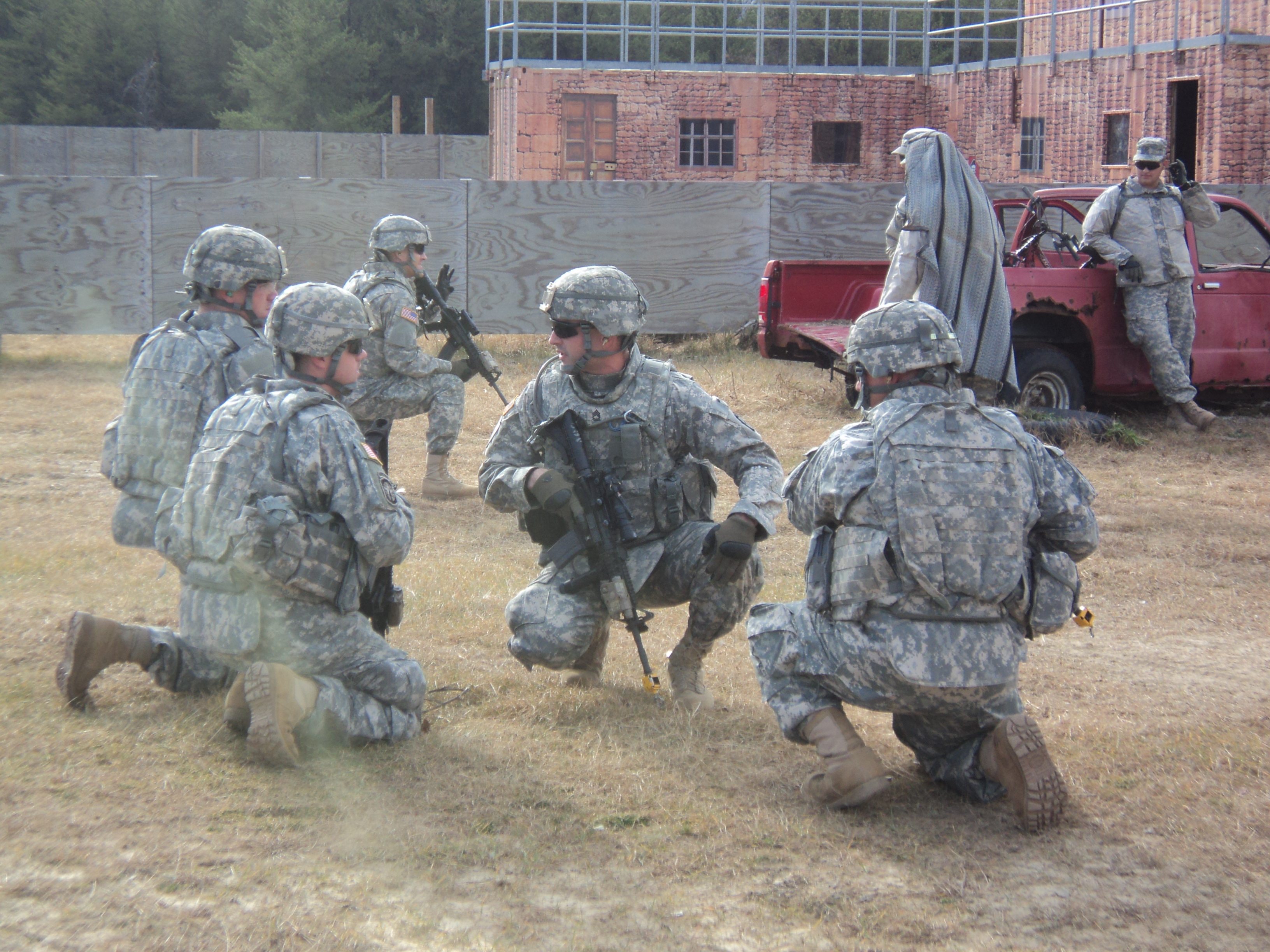
At the end of Heartbreak Ridge, GSG Highway turns to CPL Jones and says something like “They don’t need me anymore, besides they got you now.” This is truly an impressive quote on many levels. Many would argue that the main character in this movie is an not an ideal mentor or role model, but others would argue he is the very definition of as a Level 5 Leader. One of the benefits of this discussion and analysis is that the Gunny is a fictional character and not a real person, but tDSC00585he military is full of commissioned and non-commissioned officers who are less than perfect yet meet the definition of a Level 5 Leader. This article seeks to identify why the military successfully develops so many leaders who meet this definition.

Before looking at the reasons the military generates so many great leaders, a review of Level 5 Leadership in in order. At least two authors have discussed five levels of leadership, Jim Collins and John Maxwell. Collins’ five levels appear to receive the most attention, but a comparison between both author’s writings demonstrate similar ideas for each level.

Level 5 Leaders build enduring greatness by placing the needs of the organization above their own. They blend humility with personal will-power influencing others to accomplish great things. They do the things that need doing establishing demanding standards. They do not expect perfection but rather demand excellence & continuous improvement. They bask in the reflected glory of the spotlight of success focused on those they lead. They create sustainable leadership development programs ensuring organizational success long after they leave. Level 5 Leaders are well respected attracting others who want to follow them.

While purely fictional, the actions of Gunny Highway are exaggerated but typical of many military leaders. They are humble about their achievements by acknowledging the fact they could have only achieved success through the efforts of their followers. They set high standards and expect others to meet them not occasionally, but every day. They accomplish those things that need doing whether pleasant or distasteful. They demand their followers achieve excellence and continuously improve their performance. They provide junior leaders opportunities to lead, allowing them to make mistakes, hold them accountable and permit them to try again until they succeed. These actions set an example for those future leaders to follow when promoted.

Gunny Highway’s first impression of Jones and the other members of the platoon was unfavorable. He established high standards and through his will-power influenced them to achieve those standards and succeed. The platoon went from being the laughing stock of the post to a well-respected organization capable of meeting any challenge presented. He developed other leaders such as Jones and his Lieutenant who tripped when presented problems, but learned the value of adapting, improvising and overcoming to achieve success.

At the end of the day, it was Highway knew his platoon was not prepared. Previous leaders allowed them to slack off becoming regarded as a bunch of out-of-control misfits who could never succeed let alone achieve excellence. Highway knew one day their lives could be at stake and pushed them to achieve and exceed military standards. After an emergency deployment to rescue stranded Americans it was Highway’s platoon on the top of the hill after enduring several battles and receiving the accolades of their commander. In true Level 5 fashion, Gunny denied having accomplished much, but rather thrust his followers into the spotlight. He was humble, demonstrated tremendous will-power, set high standards, developed others, expected continuous improvement from previous excellent results and set up his unit for continued greatness for years after his retirement. Who knows, in 20 years Gunny Jones could be the one leading the charge, achieving success and passing the glory onto a well-mentored Corporal when the Commanding General teleports to that forward position. Hooah!

Trainer = Leader


   The Director of the Training Council opened the instructor development course congratulating the soon-to-be instructors on their selection for attendance. “You have entered a new level of your career. As an instructor, you represent management and to be successful you must be convincing as you present your training material to employees.” The Director could have said as instructors and trainers you are leaders. Even without the title, people selected by any organization to conduct training, whether members of the organization, or outside consultants, are leaders of that organization.  8227072116_e4de7eba30_z


    Training is intended to change behaviors by influencing employees to conduct their activities in accordance with the procedures presented. The best definitions of leadership include descriptions of influencing others, providing motivation, sharing a vision or improving the organization. Trainers do all these things.

    Anytime the official leaders of an organization introduce change they typically provide some sort of training program. The training describes the desired change ensuring employees understand the new philosophy and can complete new processes. Frequently formal leaders, sometimes called managers, are called upon to conduct the training, but not always. How the trainer presents the material will either improve acceptance and success or result in rejection of ideas by employees and failure of the concept in practice. Training presented passionately in favor increases success and the trainer’s profile with senior leaders.

    Selection as an instructor gives line employees on opportunity to develop an appreciation for the vision of the top leaders in the organization. Most employees know where the organization is, but few at the bottom of the organizational chart really understand where the CEO wants to go. Becoming involved in the training infrastructure of an organization requires employees to take a few steps up the ladder improving their view of the destination. Employees who have demonstrated an ability to influence others in a positive fashion are more likely to be selected by managers to conduct organizational change training. Selection as a trainer provides an opportunity to learn more about the organizational culture and help senior leaders determine if those employees demonstrate abilities required to fulfill future leadership positions. Employees seeking ways to open the doors to formal leadership positions look for opportunities to teach and train. Often employees may be unaware their desire to teach mark them as future leaders, and all too often managers overlook those in training roles when leadership positions become available.

    If your eyes are raised higher up the organizational ladder here are several ways you can improve your chances of becoming a trainer and attracting the attention of you bosses. After attending a training, mention to your supervisor you would like an opportunity to present what you learned to others in your section at your next staff meeting. Once you receive approval, mention the training to some of your contacts in other sections or shifts. Their interest may draw them to the meeting increasing your exposure. A successful meeting may result in requests from others in the organization. Think about professional organizations for your career field and material you are qualified to present. Meeting attendance is improved when someone is scheduled to speak about a cutting edge topic. You may not receive any pay for your appearance, but the movers and shakers in the group will recognize your contribution and when the time comes to move along or they need to fill a leadership position you will be recognized as one with expertise.

   Trainers influence organizational culture and behavior. Learning to train others provides junior employees opportunities to show their leaders they possess skills to influence others and an ability to communicate important ideas and concepts. By creating quality training programs, trainers help management introduce important organizational changes focused on improvement. Standing in front of the crowd provides the trainer a spotlight to demonstrate their ability to organization leaders to influence others. As a trainer you are a leader in your organization. Change a life; change your organization; take time to train others and become a leader.

   Photo Credit

Global Integration from flickr.com with CC License = attribution, non-commercial, no derivatives

Improved Communication, Hit a Home Run with 3 Pitches

IMG_0633Three Pitch Rule

Dateline Concord 1991: “Any lesson you want your students to remember needs to be repeated at least three times in different ways.” Linda Lang stands before a class of wanna-be DARE Officers as she introduces the Three Pitch Rule. Fast-forward to 2000 something. Ray Mello, a trainer of police prosecutors introduces one of Ray’s Rules, “Present anything you want the judge to remember at least three times. Fewer than three times and he or she will forget.” During firearms instructor class, Brad Parker, the curriculum development specialist, is presenting tips for teaching adult learners. “Ensure your officer students remember important parts of your class by telling they what you are going to tell them, tell them, and then tell them what you told them. When people hear the information three times, they are more likely to retain the it.” By this point in my career, I figured out anything worth saying is worth saying three times.

Recently I asked my boss for information for a project he gave me to complete. He told me he would take care of it. Several weeks had passed so I asked again. He assured me he would take care of it, “tomorrow.” Several weeks later, I was asking again. After the third request, he gave me what I needed and acted surprised I had not asked him for it sooner. I had asked three times.

Several months ago I gave one of my officers a community relations program assignment. I told him he had four weeks to do the research and put together a rough outline of his proposed presentation. He left excited about the project. Three weeks later I asked him brief me on his progress. I got the deer in the headlights look from him. He had no recollection of our discussion but assured me if he needed to, he could finish one by the end of the week. I asked for an update at the end of the week. Though he remembered the assignment, he forgot some of the details. He did complete it the following week, after I asked the third time.

My wife and I were discussing some vacation plans. I had some questions. The look on her face told me I should have known the answer. She says she told me the answers to my questions several weeks ago while I was working on a home project and on the way to a ball game. She commented that it seems like I never remember anything unless she tells me three times. My wife is right; she does need to tell me three times!

This conversation made me wonder why trainers employ the three pitch rule, quote the three pitch rule and follow the three pitch rule during training yet fail to follow the rule in other areas of their careers and lives. I remember thinking after my second conversation with my direct report that I should only have to tell him once. Likewise I could not understand why the boss couldn’t remember what I asked for after the first time. Obviously my wife thinks when she tells me the departure time of the plane in January for our April vacation, I should remember it. The reality is people need to hear things three times to remember them, whether that person is a supervisor receiving information from an employee, an employee making requests of a supervisor, or a husband talking with his wife, the three pitch rule applies.

The key to using this strategy effectively requires some creativity to avoid hen pecking. Calling an employee into your office and telling him, “I want you to do this, I want you to do this, I want you to do this.” is not effective. How you implement this strategy requires you to identify your communication strengths and how your intended receiver best receives information. Using three different methods increase effectiveness.

Begin by simply telling the other person what you want or expect. You might suggest they take a few notes. Follow up within 24 hours with an email, letter or sticky note. Place a phone call or send a text message two or three days later to see if the other person has any questions and check on preliminary progress. Using this method allows you to pitch your message three times and reinforce the importance of the task or appointment. Each connection allows opportunities for additional information sharing, idea swapping, asking of questions and clarification of expectations improving the quality of the finished product and the employee’s abilities. Using different modes of communication, in person, in writing and by telephone, also improves communication by appealing to different communication styles of others. What they miss in one, they pick up in another. Making your pitch three times means three weeks from now, when you have your follow up meeting, you are more likely to have results.

During this message, the Three Pitch Rule was introduced by a series of three teaching stories about The Three Pitch Rule. In the middle of the article three examples of failure were provided to reinforce the message of the importance of the Three Pitch Rule. The middle of the essay also provided directions to apply the three pitch rule by using three means of communication for each pitch. Here in the conclusion I have mentioned the Three Pitch Rule three times and demonstrated how you can apply it to ensure important messages are received, understood and acted upon. Go forth and start pitching!

Remember

Image

Memorial Day…a time to remember those who sacrificed their lives serving our country.

This weekend there will be plenty of speeches about their sacrifices as they did what others can’t or won’t. When was the last time you thought about the leader that sent those brave Soldiers, Sailors, Marines and Airmen into harms way knowing they probably would not survive?

While taking classes for my degree, we had a discussion about Level 5 leaders, particularly who had known one and what traits and characteristics made that person a leader who builds enduring greatness. To my surprise there were few in the class who had, and that I was the only one who had known more than one. All those I’ve known were military or veterans.

Imagine being a U. S. Army squad leader, serving as Military Police supporting local security forces in Iraq during their first independent elections. You have gunner refusing to enter the turret and are receiving pressure from the commander and platoon sergeant to meet the start time for your joint patrol to collect ballots from the polling places. You cannot guarantee the young man’s safety. How do you accomplish your mission and convince your gunner to do his duty? You accomplish success by showing concern for your people everyday. This squad leader developed relationships with all his Soldiers allowing him to encourage his gunner to overcome his fears, enter the turret and complete his mission. Everyone in the organization would have known if this leader failed. The soldier would have been ostracized. The leader would have been replaced. The mission would have failed. That did not happen.

Being a leader means involvement in the lives of those you lead. Had this leader not cared for minor problems the Soldier had earlier in the deployment the ending may have been different. Several years later I was watching a show on television recounting that election. There was video of the ballot counting where we worked. In the background, a group of soldiers including the squad leader and his gunner. That night they both made a difference in the lives of thousands of people, enduring greatness.

The squad leader’s duties officially ended several weeks after this event. They continue to this day however. I receive periodic status reports from each of my squad leaders about their Soldiers. They remain involved in their lives even though their official duties have ended. Leadership is about influence. To be truly influential one must genuinely care about others. Your people understand you may not always know what to do next. They understand you cannot promise what will happen in the future. They will not tolerate a leader who doesn’t care.

To build enduring organizational greatness, leaders need to care about those who follow them. Caring brings great rewards and sometimes great pain. I once read a comment from a civilian asking why the veterans don’t do as much on Memorial Day as they used to do. The reality is Memorial Day is not for veterans to remember those who have fallen, they never forget. Memorial Day is for everyone to remember. Memorial Day is an example of what combat leaders do to influence non-veterans to remember those who served but did not make it home. They still care.

Photo courtesy of Jon Foote