As the old year passes, reflect on your accomplishments and ideitify how to use them to achieve more in 1025. -Photo by Wendelin Jacober on Pexels.com (cropped by author)
As the year closes, leaders often reflect on the progress of the previous year, both in their personal lives and in their organizations. Goal setting is a common activity Too often many people and organizations set goals but give little thought to how goals work together to create lasting change. Strategic plans organize goals and activities, improving success rates.
While many have participated in strategic planning, rarely do those participants see all the work involved in a strategic plan. They remember SWOT. In addition to Strengths, Weaknesses, Opportunities, and Threats, you need to identify how those relate to your aspirations and desired results. Then, you can create SMART goals to achieve those aspirations and results. This is the first of several articles on strategic planning. The contents here are a preview of what to expect in the following months.
It is pretty easy to think of each of these stages as separate. In reality, planners begin working on areas of the SWOTAR model and identify things they missed in the other areas. Each topic is mutually supporting of the others and should spur, “A-HAs in the other areas.
Strengths are those of you, your team, your organization, and allies. As you list strengths, think about how they leverage your ability to achieve your goals. If a strength is not helpful in achieving your aspirations and desired results, you really have to ask if it is a strength or are you chasing the correct ending?
Weaknesses are those areas that hold us back. Often, people and organizations focus on improving all their weaknesses. Doing so slows you down. Develop those weaknesses that prevent success. Work from strengths while monitoring weaknesses. Only strengthen those that create a vulnerability.
Even if 2024 did not go as expected, you are in a different place. What can you see now you could not at the end of 2023? -Photo by Sasha P on Pexels.com
Opportunities are not always opportunities. Only those opportunities that help you achieve your desired results are opportunities. There needs to be a connection between the opportunity and your aspirations. Without that connection, you will not obtain the results you seek.
Threats are those things that have the potential to derail your efforts to succeed. We commonly explore the competition to identify threats. However, it is important to identify other potential harms. Imagine if a tornado moves your warehouse to another county and your merchandise in the opposite direction. What do you need to do to protect your project from such threats?
Aspirations help mold your vision of a perfect world. They are the way things would be if you are 100% successful with your expected results and goals. Aspirations are the measures of effectiveness of your results.
Results are the changes in people, projects, and patterns to achieve your aspirations. You achieve results by setting a goal, developing a plan of action, and following the steps in your plan in a consistent, disciplined way.
For example, you need a foundation for your new home. There are several styles of foundation you could build. You need to pick the process necessary to have the foundation you want. Identify the people you trust to get the job done. Follow proven patterns for successfully building foundations. When your project is complete, you achieve the results in the end you see in the beginning.
A strategic plan pulls together all the strengths, weaknesses, opportunities, threats, aspirations, and results in one place. Leaders use this information to identify people, projects, and patterns to create goals that lead to success. Every goal in the plan should support the mission and vision. The results should align with your personal and organizational values and principles. Even if you have an imperfect plan, you will move closer to seeing your aspirations realized than proceeding without a plan.
A map is collection of information about an area that helps people move. Your strategic plan is your map for the future. -Photo by Andrew Neel on Pexels.com
This year marks the 404th year of the Mayflower Pilgrims’ landing at Plymouth. Contrary to what you learned in school, not all the travelers were religious pilgrims seeking freedom from an oppressive king imposing his religion on them. Only 50 of 102 passengers were fleeing religious persecution. The majority were crew members, servants, farmers, and apprentices. While these adventurers first feared the natives, they soon became friends, maintaining peace with the locals for decades.
The Mayflower Pilgrims left England because they did not feel included in society. Eventually the King lost all the eastern American Colonies because of his practices of excluding colonists. -Photo by form PxHere
Despite the fact that not everyone in that small group thought a like, they struggled and toiled together. In that first winter, they still lost half of the company. This even smaller band now had to lean on each other even more. They had to be open to interacting and developing positive relationships with the people on the land before them. The likelihood of failure increase if people did not pull together regardless of their political, religious, or social philosophy and outlook.
Success required the leaders to listen to all the ideas. The people had to be willing to share their points of view and experiences so the group could make good decisions. Like Soldiers in a foxhole, they did not have to like each other, but their lives depended on those to their left and right.
If you are a leader, do you surround yourself with others who think only like you do? How do you interject ‘red-team’ ideas to prevent group think? What people in your organization come from different backgrounds but are marginalized and rarely asked for input?
Questioning and standing against the status quo requires a person to speak from a place of confidence. Think about things you have done to create a culture of psychological safety for those who follow you. This is hard work. Even after years of building accepting cultures, I still hear comments from others they did not speak up sooner because they felt they would not be heard, their ideas had little merit, or what they had to say would not be perceived as valuable.
A cornucopia is filled with a variety of vegetables and fruit. The variety is what makes an enduring image of prosperity. Likewise, having a variety of people in your life helps improve your prosperity in many ways. -Photo by Pixabay on Pexels.com
Having a diverse group of people in your life helps make you a well-rounded person. When you only hand out with others who think, talk, and act like you do, you shut out the rest of the world. Yes, it is important to have positive people in your circle because when one of them says, “Hold on, let’s look at that again.”, you need to stop and look at what they see as a problem. There is much more to diversity than skin color or national origin. When you associate with people for different economic backgrounds, who have unique talents, from other part of the world, who possess different points of view, you are better able to understand and influence a wider variety of people. Your circle of influence grows, and with greater influence, more people will trust and follow you.
References
Covey, S. (1990). The 7 habits of highly effective people. Fireside. New York, NY
Bennington Battle Monument. -Photo by Eixo, Public Domain
A few years ago, I picked up a book titled The Battle of Bennington: Soldiers & Civilians by Michael P. Gabriel while visiting the Bennington Battle Monument. While not the most riveting war book I’ve ever read, what impressed me were the number of first-hand accounts of the battle as told by the veterans who fought there. Some of the accounts were official reports by various commanders under John Stark and Seth Warner. Most were personal Soldier accounts, many made years after the battle, to support pension claims.
The Battle of Bennington was not the largest battle in the American Revolutionary War, but it was probably the most pivotal battle. As the British move south from Quebec to link up with forces in New York City, their supply lines were stretched. In order to complete the mission, they required the stores at Bennington. The loss there denied them access to food and ammunition necessary to continue their campaign. Although the British were able to win the first Battle at Saratoga, when counterattacked by American forces, General Burgoyne was compelled to surrender his forces, arms, and ammunition.
As one reads the accounts of the Battle of Bennington, it is hard not to miss the incredible courage demonstrated by the militia forces in that fight. The Soldiers from the New Hampshire militia had only been formed a few weeks before the battle by John Stark. Stark had left the Continental Army after a dispute with GEN Washington but was pressed into service to lead the State militia upon returning to Manchester. Part of that role included helping the Green Mountain Boys from the Vermont militia defend the New Hampshire Grants in what would become Vermont.
Burgoyne sent a detachment of Hessians to seize the provisions if the Continental Army at Bennington. Just outside the town, they established an entrenched defensive position on a hilltop as foul weather moved into the area (I can only imagine what it was like during that night. My first trip to the battlefield was cut short by an incoming storm. The thunder and lightning were terrifying that afternoon, and I had a dry, warm car to keep me safe). Thick woods still surround the encampment, which gives modern visitors a real feeling of what it was like to attempt to assault the redoubt on top of the hill. The only thing missing most days is the slippery mud. In small groups, each unit attacked by different routes. In the days before radios, and with limited visibility to coordinate movement, no unit really knew of the promised support to their left or right would materialize.
At the end of the day, the British lost over 900 men, the rebels 70.
While this was a small battle, it was important. Burgoyne was not able to obtain the supplies he needed to continue his attack. Instead, those same provisions were used to sustain the Americans during the second Battle of Saratoga that led to the British surrender.
The Purple Heart was originally awarded to Soldiers in the Continental Army for merit. In the 20th century, it became an icon of an injury sustained in battle. -USAF photo
As I said in the opening paragraph, the courage displayed by these men was amazing. Another thing stood out to me as I read their accounts, the trouble many of them faced collecting pensions promised them by the Federal Government for their service. Talk to any veteran today about their experience dealing with the VA. Most have at least one story of things the Department messed up. While it is human to err, the theme dating back to the Revolution and veterans is the same, greater struggles to receive the promised care for their wartime, service connected injuries that the actual battles that inflicted those wounds. Sadly, the biggest barrier to veterans receiving care is the very selflessness that runs through many combat veterans, their desire to deny medical treatment in order to continue fighting with their comrades. Claims made in the future are difficult to prove without that medical report at the time of the injury. By choosing to stay in the fight and not have their minor injuries documented, service members deny themselves the opportunity to easily apply for and receive future benefits to receive treatment or payments. Instead, veterans have to find comrades who will step up and verify that their battle buddy was injured in combat. Even when such evidence is available, the VA will often deny that such injuries were all that bad because the service member continued to fight. The bureaucrats do not understand seeking medical treatment is always an option under fire. Many of the accounts from Bennington veterans contain statements about why they were not able to seek medical attention, or how the military lost the records of their participation and injuries.
Veterans who fight our nation’s wars should not have to fight our nation to receive compensation and care for their service connected injuries and disabilities. Perhaps in the next 250 years things will improve. Veterans today have better access to records than those in the past. Still too many fight the same fight their predecessors have to get the government to take ownership of the injuries military service inflicted upon them. However, like the protection of liberty requires constant vigilance, the fight for care and compensation also requires persistence., and has for almost 250 years.
Some of my most read posts read are building trust and developing character as a leader. Now seems like a good time to post some rambling thoughts on character and leadership. Who knows, maybe some of them may be topics for a future series.
No one is born with a sparkling character. It is something you develop over your lifetime. Because a person can always make choices, they can always change their character. I know a number of people who created problems in their community when they were young. As a police officer at the time, we had plenty of encounters. Some of these young people began to understand, if they continued to behave in certain ways, they were going to have a confining lifestyle. Several started behaving differently, in conformity with the criminal laws of the State. Some now even own businesses and have other people working for them. If you did not know them a couple of decades ago, you would be surprised by some of the stories I could tell you about them. These people have become well respected community members.
Some of their peers failed to alter their courses. I still read their names in the POLICE REPORT section of the newspaper from time-to-time. They continue to make bad choices, that sometimes cross the line defining a crime. They struggle to make ends meet, keep a job, and stay in a stable relationship. As a result, they are always at risk of losing food, housing, and other basic life necessities. They cannot borrow money because they cannot be trusted by even close friends to repay loans. They struggle to keep a job because they choose to extend fun into a time that prevents them from performing well at work or showing up on time. However, even these people can choose to behave differently and develop a reputation for having a different character.
What does that mean to the new young leader reading these words? It means that you will make mistakes. Those mistake will cause a temporary lose of trust. What matters is what you do next. You can choose to learn and move forward by selecting behaviors that regain trust and developing character, or you can choose something else. People will more readily forgive errors of competence. They are less likely to forgive errors of character. Most people expect others to make decisions that do not always work out with the best information at hand. Those same people expect others to make the best decision possible, but not to engage in deliberate trustworthy behavior.
As you grow and learn as a person and a leader, you will find that many of the moral dilemmas you used to face melt away. What used to be hard decisions become simple because the right answer becomes more obvious with each choice that ends with positive results. Even mistakes can have positive results.
Something I look for when hiring people is their ability to work independently. I neither want nor will look over someone’s shoulder who is capable. I know I have to train that person, but once they understand the job, they are on their own. That does not mean I stop supporting them. It does mean I am not going to make all the decisions. I would not need that person if I wanted to decide everything.
Know that character is not something you have. It is something you develop. You, repeated choices tell others about your inner beliefs. Based on your choices, others perceive you as trustworthy, competent, and caring, or not. You can choose at anytime to change to behavior to gain more trust, improve your competence, and care more. When you consistently demonstrate trustworthy, competent, caring behavior, others will notice the change in your character. It will not be long before few can remember the old you, but it does take time. Stay the course. Do the right things. People will notice and remember.
So why this reflection on character lately. Lots of things really; many related to politics and some of the lack of character of some of the candidates. However, I often remember I am far from a perfect person. For example, some of you have been reading long enough to remember when I made a promise to post two blogs a month. Other more recent readers may remember a promise I made amending that first promise to once a month. If you look back at my body of work, you see for the most part I have published near the end of every month for eight or so years. This year life has been crazy and I have been off my publishing cycle. Working to return to a once per month routine helps me recenter my focus, and re-establish my trust with readers. I do ask you all to remember that an important leadership task is to prioritize work. In the last year, my writing has been a lower priority than other things happening in life. People are willing to forgive those times when such disturbances occur, but if one never returns to those important habits others rely on, one looses those followers. Thanks for continuing to read my writing.
When I started this blog 11 years ago, I split my posts between training adults and leadership topics. Trainers are leaders, and selecting people as trainers requires current leaders to think about whom the potential future leaders are. Leading by example is one of the best ways to demonstrate to others what your expectations are. However, leaders also need to provide formal training on a variety of topics for everyone in their organization. Ethics is one of those important topics.
I found this post and decided to revisit and update it. Everyone grows over time. They learn things. While the principals in the original post are still valid, this updated version allows me to share lessons I learned in the last decade as a leader.
There are so many ways to approach ethics training that it is unethical to have people sit bored while training ethics. Instructors can conduct ethics training on three levels. The first is to demonstrate by training ethically. The next is to provide ethical training. The third is to identify organizational behaviors that require changing and provide training that will change that behavior. What follows is a short dissertation how trainers can accomplish each of these goals without having to speak above the din of snoring in the classroom.
Training ethically means that you do the right things to prepare for the lesson. Understand how much time you have to teach. Understand who your audience is. Prepare and rehearse your content. Doing these things shows others your value them and their time. I found over time that I do not necessarily need to see someone do these things to know they prepared well. I started working with the Executive Director of another nonprofit after watching a scatterbrained attempt at presenting complicated material in a short period of time. She was given 20 minutes to present but the presentation lasted 90 minutes shortening the time other presenters who were better prepared had to speak. A few weeks ago I had the opportunity to watch her make another presentation. She made the complicated seem simple and hit her time hack on the money.
It was obvious she put in the time to figure out how to simplify her message. She developed a plan to present the most important material. She rehearsed her timing and prepared clear handouts to complement what she spoke about in the presentation. All these things showed she respected the audience. When you do this in an ethics presentation, it shows others you are an ethical person.
The next major area of ethics training is training ethics. Teach organizational standards, orders, policies or other written documentation governing behavior in your organization. These rules establish expected behavior. Let students know what the maximum and minimum penalties, as well as the typical penalty for violating norms. Often these topics are approached by reading each document verbatim. A better idea is to assign the reading to be completed before class, review the material in the form of questions and answers, and then use stories as examples of acceptable and unacceptable behaviors. Facilitated classes are great opportunities to share ethical theory with students, showing how their biases affect their focus of organizational standards.
While understanding rules, regulations, policies, procedures, and laws are all important, also take time to teach people your guiding principles. As hard as organizations try to write rules for every situation, they never can. After 41 years in the Army, I noticed there were lots of times that regulations often gave contradictory advice. When I talked to enlisted leaders, I discussed how to match Soldier’s actions against the Army Values. I told them that if a Soldier’s action did not live up to the Army Values, they likely violated a regulation. If they quote a regulation that says what they did was okay, talk about how the behavior violated the Values and how the values are a higher rule than the regulations. Often, leaders who run a foul of a rule in an effort to live their organizational guiding principles face less or no admonishments.
The next area is training to change behaviors. Repetition is required for this training to be successful, but do not teach the exact same class to the exact same audience time after time. Both you and your students will become bored quickly. The point of this training is to focus student attention to behave in compliance with the organizational mission, principals, expectations and desired norms. Use this time to explain what the mission statement means to their section. Talk about how the organizational principals support the mission. Express your vision for the future of the organization. If you are training others, then you have been chosen to lead. Leaders have a better view of what lies ahead. Share your vantage point with others so they understand the importance of doing the right things the right way.
When you take time to review the meaning of each of your organization’s principals and provide examples of what those behaviors look like you provide better information than if you simply lecture. Tell stories of how people succeeded by following the ideals espoused in your principles. Share why each one important to supporting the mission. Sharing the why and how through stories keeps people’s attentions and offers examples of expected behaviors.
As you develop training for each of these areas, you will soon find you have far more material to cover than the time available. Newer trainers will curse and try to squeeze everything into the allotted time. Experienced trainers recognize the opportunity to provide follow-up training without repeating previous classes, improving student attention and retention in subsequent classes. Focus on the three areas, ethically train, train ethics and change behavior. When you do, your students will clamor for more.
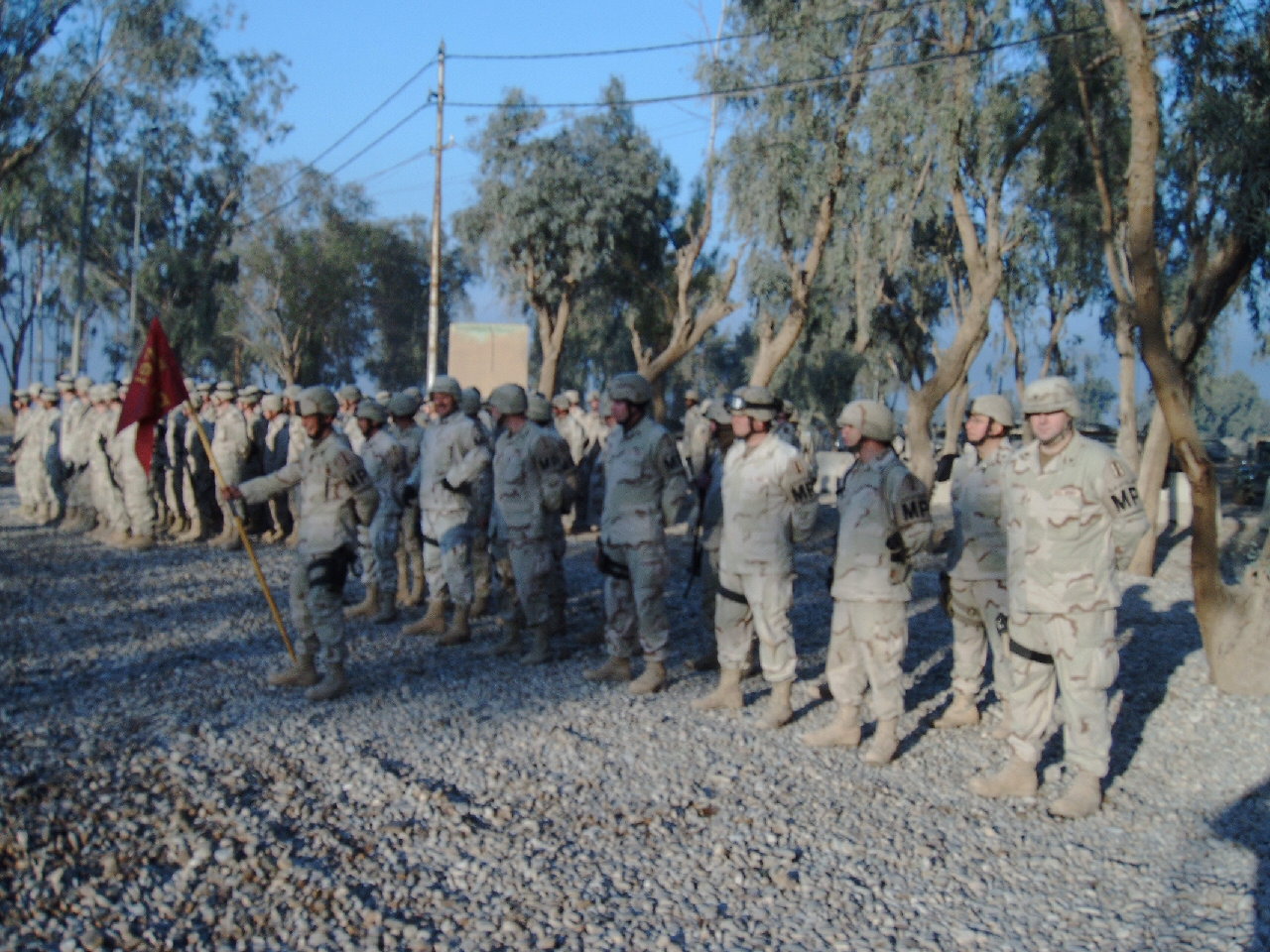
2nd Platoon members in formation to recieve awards – photo by author
This is a true story as I remember it which means what I remember and the way I remember might be different from the way others remember it. October 15, 2004, was a normal day, if a day on deployment could be called normal by US standards. There was occasional gun fire, and the sound of periodic explosions. The streets were full though, the sun was out, and it was hot. However, things would quickly change, as they often did during our 2004 deployment. I was that platoon sergeant of 2nd platoon in HQ Battery (forward), 2nd Battalion, 197th Field Artillery Regiment, deployed as MPs. We also had a headquarters platoon, and three other numbered platoons. Our MP Company was assigned to serve in Baqubah, Tirkrit, and Mosul. While the 15th of October started normally, it did not end that way.
Second battalion was tasked with providing an in lieu of Military Police Company for Operation Iraqi Freedom in 2003 to begin in 2004. MP companies, unlike field artillery batteries, are not all the same. We were tasked to provide a 200 Soldier company. A field artillery battery has about 100 Soldiers. Clearly, our battalion would have to assemble Soldiers from all the batteries to make on MP Company.
A number of Soldiers from my organic field artillery platoon were divided between third and fourth platoons. I had Soldiers mostly from Headquarters Battery and Bravo Battery. Having previously served in Bravo, I knew many of the leaders. Most of the rest of Bravo had also been assigned to fourth platoon. By the end of our mobilization training at Ft. Dix, NJ, everyone had come to know everyone else.
We arrived in theater in February 2004. Each platoon had slightly different missions. By October, each was doing their thing well.
On 10/15, squad from fourth platoon, HQ/2/197 FA (ILOMP) was patrolling the city of Mosul. Having arrived the previous spring and working with the 293rd MP company (they were real, regular Army cops), they had become familiar with the city, its people, and rhythm. This day was not remarkable until the squad found themselves hemmed in, in traffic at a stop light.
At this time of the war, the Army was using unarmored, add on armored, and up armored HMMWVs for much of its patrol work. There were Strikers in Mosul, but there were far more HMMWVs. Our company had up armored HMMWVs. The armor saved Soldiers on many occasions, including Soldiers in second platoon.
Gunners were the most exposed crew members. Machine guns were mounted on the top of HMMWVs on turrets, allowing gunners to traverse 360 degrees. However, they had to stick half their body outside the vehicle to operate the weapon system and turret. Most vehicles did have front shields. Many had also received supplemental side armor as well, but still, the gunner was hanging out in harm’s way every mission.
While true, the gunners were the most exposed, it meant they also had the best view of the surroundings. Many a patrol was able to identify and engage with enemy forces before the enemy was ready to engage the patrol due to the sharp eye of a gunner. However, when your patrol is jammed in traffic, you lose the ability to maneuver and you become sitting ducks. Just the same, the firepower in a mounted MP squad is amazing.
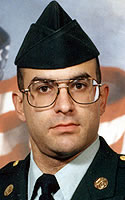
DOD Photo of Alan Burgess
As the fourth platoon patrol sat in traffic, gunners noticed something unusual about a car that had just pulled beside them. It seemed to sag, an indication it might be loaded with explosives, and the driver did not look like he belonged in this part of the city. SPC Alan Burgess started to warn the crew in his vehicle about the danger with the bomb exploded. The HMMWV Burgess was in was the closest to the car bomb. He was gravely wounded. The other occupants were mostly unscathed, a testament to the quality of the vehicle’s armor.
The rest of the squad rallied quickly. They conducted an immediate assessment of the occupants while also scanning for other threats. The squad leader recognized the need to evacuate SPC Burgess to the field hospital at the forward operating base. Shortly after arriving, the medical staff notified the squad leader, Alan died from his wounds.
As was the procedure, all bases in Mosul went into communications blackout. Only official and necessary communications were allowed until next of kin were notified. In Baqubah we heard about the car bomb on the news. We all worried anytime we heard of an attack about our brothers around the country and their safety. By the end of the day, we received word someone in fourth platoon had died. By morning, we learned it was Burgess from family members at home telling unit members in Iraq. The official blackout in Mosul was still in place.
HMMWV on a mission with a second platoon gunner in roof hatch -photo by author
What happens next? The Army wanted us to continue our missions in Baqubah. We were not the first unit in history to lose a Soldier. Sadly, we would not be the last. In fact, three other American Service Members lost their lives that day in actions against our enemies. By that point in the deployment, many of the second platoon Soldiers were seeing mental health professionals at a forward operating base we received logistical support (second platoon operated IN Baqubah at a combat outpost). We asked them for support at our little base in the city, and they came. Even though none of us were at the scene of the attack, many second platoon Soldiers were affected by the results. Having the mental health professionals available during our time of need helped us heal enough to carry on.
Memorial Day is a day to remember people like Alan Burgess who died defending liberty. I have been asked why Veterans do not do more on Memorial Day to remember the fallen. Unlike our non-military fellow citizens, we remember the fallen every day. So on this Memorial Day, take a moment to think about the sacrifice every military member is willing to make to protect you. They make up less than one percent of our population. They do difficult things every day to be ready. Their working conditions are rarely safe or comfortable. Those who gave all deserve to be remembered. On this Memorial Day, take a few minutes to visit a veteran’s monument or the grave of a fallen service member and remember their sacrifice.
Building a solid form ensures a concrete cornerstone is strong when cured. Each side of the form is tied to the other three. -Photo by Rodolfo Quiru00f3s on Pexels.com
Developing trust is the cornerstone of success. Interactions with others become easier when they know they can trust you. We all know when we trust someone else. We think we know what builds trust with others. When asked, however, few people can easily define trust. After some reading and reflecting, I define trust as: a choice to risk something you value to the actions of another based on your belief in their character. In this series, you were introduced to four areas, like the sides of a form for concrete, that helps you build trust with others. Communication was the first side we discussed. People often mistake talking for communication. The next topic was proficiency because when you show you have the ability to accomplish things, others trust you will eventually. Respect and kindness establish credibility with others. Finally, responsibility shows others you will actually do what you say you will do, and care for the things they value. As you work to improve your credibility in each of these areas, others will come to trust you more.
Communication seems simple; it is not. We communicate in many ways with others. Even though electronic communication (like you reading this blog post or any of the comments), seems to dominate modern life, it is not a substitute for face-to-face interactions. When two people interact, there are many levels of communication. Beyond the words spoken, people see and attempt to understand the posture of the speaker, facial expressions, actions with the hands, the tone and speed of the voice. All of these things are part of the communicative experience that is often missing in social media posts. Communication is more than just the words selected, but the words selected are important. In the end, communication often boils down more to how you make the other person feel, rather than the actual message. There are examples of smooth talkers who led hundreds to voluntarily and happily take their lives. Surely there must be ways we can convince others to be happy about cleaning a toilet. We get better at communicating with others by actually attempting to communication with them and seeking feedback. So get out there and talk to another live human being!
Being proficient demonstrates your trustworthiness by showing others you not only know what to do, but you have developed the skills to complete those tasks. Think about when you started your new job. It really did not matter what skills you brought to the job. There were new things for you to learn. It does not matter whether your new job is with a new company or within an organization you currently work; your new job is not the same as your old job, and you have to learn new things. Learn quickly. You will make mistakes. The first step in learning from your mistakes is acknowledging them. Learning is demonstrated when the new mistakes you make are at higher levels of proficiency. While mistakes are expected, trust is built on the idea that a proficient person has systems in place to identify errors and correct them before they become problematic.
To become trustworthy, you create systems to catch your mistakes. You use discipline to work your system. People will learn you are not perfect but because you plan for mistakes and catch them early, they never become problems. You build trust. -Photo by Blaz Erzetic on Pexels.com
Respect is a demonstration of the value you place on another. When you act disrespectfully to others, they will not like you and they will not respect you. Most importantly, they will not trust you to guard what they value. This distrust causes friction that prevents you from successfully working with that person. It is rare for members of the military to be able to select the person who they will share a foxhole, a tactical vehicle, or a tent. There is no requirement to like another person for you to treat them respectfully. As a senior leader, I once had to deal with a problem of gun crews being split up on a transitional military base during an extended convoy. Several leaders approached me about a requirement for males and females to sleep in different tents. Those leaders expressed concerns that they would not be able to look out for each other. I knew that there were problems in some of the crews. They did not like each other. However, they were like a family that resenting someone else telling them they could not be together. Like bothers and sisters, they argued, but they were still family. Respect is the foundations of the trust that brings them together that way.
Finally, be responsible by doing what you say you will do. Others understand that sometimes things happen that prevent you from keeping promises. When you are rarely complete tasks as promised, you gain a reputation of being a failure. People will not trust you to do what you say you will do. If you find you arrive at someone’s house at 6:15 for dinner, and you were told to arrive at 6:00, and dinner is not served until 7:00, it means that the host does not trust you to arrive on time. They give you an earlier time, anticipating you will be late. Doing what you promise is the culmination of communicating well, being proficient, and acting respectfully. If you say you will do something a certain way, by a certain time, with particular materials, at a specified level of quality, then do it. Caring for the property of others is another way of being responsible. While you may not explicitly promise to care for your work computer, everyone expects you will. Doing what you say you will do is one of the fastest ways you can build trust with others. Make small promises and deliver bigger than the promise. Do this regularly, and others will know they can depend on you to deliver as promised.
When you build your relationships on the trust cornerstone, your trustworthiness becomes well know. You will attract increased power and influence that has staying power. Long after you are gone, people will remember you could be trusted. -Photo by form PxHere
Over the last few posts, I covered ways an individual can develop trust. Trust is the cornerstone of success. You reduce friction with others when they know they can trust you. Trust is a choice to risk something you value to the actions of another based on your belief in their character. Four areas of building trust include communicating, developing proficiency, treating others respectfully, and being responsible. These four areas are like the four sides of a concrete form, allowing you build trust with others. As you work to improve your credibility in each of these areas, others will come to trust you more.
References
Brooks, D. (2015). The road to character. Random House, New York, NY.
Covey, S (1989). The 7 habits of highly effective people. Fireside. New York, NY.
Still struggling to achieve your New Year’s Resolution. There is still time. Create a strategy for your gola to nest in. -Photo by Josh Willink on Pexels.com
Author’s Note: So this was supposed to be a bonus edition. It seems fitting that life interfered with my intention to help those struggling to accomplish their New Year’s Resolutions with this extra February post which ended up later than planned. As advised below, I simply continued and accomplished the task. The result is now my regularly planned end of February post is behind. That will be up soon as well, but not until March.
It is the end of February. How’s your New Year’s Resolution going? Many people start the new year with wildly big goals for changing their lives. After a few weeks, the excitement for the change wanes, and they return to their old habits and ways. To successfully implement lasting change, people need three things to help. They need to understand how to change habits. They need written goals. Finally, they need a strategy for their life. Goals support the strategy and help change habits. Habits that support the goals need to be developed and implemented through consistent, disciplined action. Excitement over the potential for a new life wanes because change requires lots of work. When you have a strategy, you understand how your New Year’s Resolution supports that strategy so even on those days when there is little excitement, you can still muster the discipline required to follow through on your action steps and accomplish your goal.
Often people think strategy is only for nations or large businesses. Strategy is important for those organizations, and it is also important for individuals. In his book First Things First, Stephen R. Covey talks about the importance of having a vision for your life that transcends your entire life. He encourages readers to look beyond the Friday night ball game. What to you want people to remember about you on your deathbed? What do you want them to say about you at your funeral? Thinking about what the end of your life will look like helps your focus on the things you need to do today to achieve that vision!
I recently completed a new strategic plan for the organization I lead. I engaged a number of stakeholders over the course of nine months. We talked about our strengths, weaknesses, opportunities, threats, aspirations, and desired results. We clarified our guiding principles, often called values. I talked to lots of people and did lots of research and writing. In the end, we accepted a plan to run our organization for the next five years, only five years. Am I suggesting you spend almost a year figuring out your strengths, weaknesses, opportunities, threats, aspirations, and desired results and also clarifying your personal and family values? No, I am not suggesting that; I implore you to do these things if you really want to change your life.
The strengths, weaknesses, opportunities, threats, aspirations, results model (SWOTAR) focuses your attention. You identify those areas that move you forward, and those that will cause failure if not addressed. Always play to your strengths and work only on improving your fatal flaws. When you start looking forward, remember you really have no idea what the future holds.
People who graduated from school in the 1980s did not know they were at the end of the Cold War and that in the next decade, the Berlin Wall, and Iron Curtain would fall. Many of the jobs that exist today were not even a thing in 1980. None of us really have any idea what January 1st 2025 will look like let alone January 21st 2060. However, with clear personal values, and a vision of your aspirations and desired results, you find your true north.
For example, as a result of going through this process, you discover you really want to find ways to house more people who do not have homes. Based on history, I suspect homelessness will still be a problem in 2060 because it has been a problem for centuries. However, homelessness has been a bigger and smaller problem over time for a variety of reasons. You may not know exactly what will work right now, but using your strengths and skills, you can identify things you can begin today to improve the homeless situation now and for 2060.
Your vision helps you foresee what you will do in the future with the understanding the view might be a little unfocused. -Photo by Mike on Pexels.com
Now that you have your vision for your life, or your life in the next decade, you can pick goals to make your vision a reality. When you work in this way, your New Year’s Resolutions support your vision for your whole life. A lesson I frequently have to remember is that change takes time. You can only harvest apples from an orchard one time each year. It takes the tree a year of changes to create those apples. In many ways, people are the same. We need to grow to make change. As change begins to occur within and around us, we find those changes enable us to do more and different things. Your vision and values remain constant. Just because you failed to achieve your New Year’s goal does not mean it is unachievable; you may need more time to develop the education, skills, or acquire other resources. If that goal supports your life plan, you can find the motivation and discipline necessary to achieve it. You can always begin again.
So here we are at the end of February with a failed New Year’s Resolution. Instead of accepting failure, create a vision for your future. Identify your strengths, weaknesses, opportunities, threats, aspirations, desired results, and personal values during the rest of the year. Figure out what goals you need to accomplish to make your vision a reality. Setting and accomplishing goals is easier when you understand how they support your vision and when they are aligned with your values. I wrote a few posts on goal setting. You can find the links below. The rest is up to you. Create your vision. Set your goals. Achieve your New Year’s Resolution.
As with any goal, disciplined activity is required to accomplish it. -Photo by Pixabay on Pexels.com
Look for the closing article in my series on developing personal trust in the next two weeks. I look forward to being back on schedule by the end of March.
References
Covey, S, Merrill, A, & Merrill, R. (1995) First things first. Fireside. New York, NY
Warren, R. (2002) The purpose driven life. Zondervan. Grand Rapids, MI
Zenger, J, & Folkman, J. (2004) The handbook for leaders. McGraw-Hill. New York, NY
It does not matter how well you communicate, how competent you are, or that you treat others with kindness, if other cannot count on you to be responsible, you will not build trust with them. Responsibility is the fourth side of the Trust Cornerstone. There are several facets of responsibility. The first is doing what you are supposed to do. The second facet is doing what you say you will do. Next, take care of the property and resources entrusted to you. The fourth facet is strengthening the other trust competencies that will cause you to fail. The final facet of responsibility is predictability.
Every child wants a puppy. Most parents worry the child will not be responsible for the young dog’s needs. Pets are one way a child can learn to be responsible. This photo also illustrates the point of why being responsible builds trust. Dogs know who to trust in the family, the person that always takes care of them. People are like that too. They know who they can trust to be responsible and who is not. -Photo by Leah Kelley on Pexels.com
In his book, The 7 Habits of Highly Effective People, the first habit Steven R. Covey discusses is the habit of being proactive. He breaks the word “responsibility” into “response-ability”. In every moment, each of use as the ability to choose our response. In that little space between response and ability, we decide what ability we want to use to respond to what ever faces us at that moment. When others are not around, we can choose to do what we know should be done, or something else. In those moments when no one is watching, you can choose to do the work that is expected of you, or surf the internet reading blog posts or watching random videos. Responsible people, people who build trust with others, complete the tasks that are expected of them. In that moment when they can choose to goof off or complete an expected task, they choose to complete the task.
Following closely on the heels of doing what you are supposed to do, is doing what you say you will do. Completing tasks as promised is also called follow through. Doing what you promise, tells others you can be trusted to help them achieve goals together. Part of this is also acknowledging short falls and accepting the consequences when something prevents you from completing things as promised. Retired Navy SEAL Jocko Willink says that he became a trusted leader because he promised to complete small things and delivered big results.
An important part of trust is to care for things others entrust to your care. The definition I use for trust is a choice to risk something you value to the actions of another based on your belief in their character. Often that ‘something of value’ is a tangible object. How you car the property of others shows respect for them. Taking good care of other’s property shows you are a responsible person who is ready for assignments of greater trust and responsibility.
Being responsible means people are willing to make things they value to the care of another. -Photo by Anthony ud83dude42 on Pexels.com
For example, a grocery store manager asks a new cashier to take a small deposit to the bank. The manger is probably looking for a couple of things. Of course, the first is that all the money is deposited in the account correctly. Additionally, the manage may watch to see how long it takes the employee to complete the task. You can be the manager knows it normally takes 15 to 25 minutes to go to the bank, complete the transaction and return. When the employee returns in 20 minutes with the deposit slip for the correct amount, he created trust with the store manager.
Being a competent person builds trust. When someone is new on the job, they are expected to know little about things. As time passes, bosses expect people to develop proficiency in key tasks. In the previous example of the bank deposit, when the employee returned to the store in a reasonable amount of time, he demonstrated competency in time management. Pay attention to the things your boss or others repeat. People repeat things they consider important. What things does your organization measure? Work on increasing your skills in those areas and you will build trust with your leaders. The stronger you are in the areas the organization considers important, the more you will be trusted. With increased trust comes greater pay, increased privileges, and promotions. While it is always best to build on your strengths, be aware of your fatal flaws. Fatal flaws are those things you really are not very competent but are valued by the organization. Find ways to strengthen those areas to the minimum level of acceptability.
Predictability is an important aspect of trust. As one becomes more disciplined in repeatedly engaging in responsible behaviors, others come to know they can depend on that person. Only through disciplined repetition of responsible behaviors will others come to trust someone can be characterized as responsible. Predictability is a key component of developing a responsible character trusted by others. Discipline requires one to repeat responsible behaviors even on days the person does not feel responsible.
If you are predictable, people will not need a fortune-teller to know if you are trustworthy. Your previous behaviors do the talking for you. Predictability builds trust. -Photo by Anete Lusina on Pexels.com
In your neighborhood, you no doubt have a person who is known as a runner because people see her out several times each week running. Another person is known as the great helper because they always offer assistance. Of course, there is also the neighborhood jerk who never has anything nice to say nor ever lifts a finger to help another. All of these characterizations are from repeated behaviors that result in a level of predictability.
Developing responsible behaviors creates trust with others. You develop a reputation of being responsible by doing what you are supposed to do. Responsible people do what they say they will do. Care for things that are entrusted to you, whether those things are someone ease’s time, money, or other resources. Find ways to increase your competence in areas important in your organization. Be predicable through disciplined responsible behaviors especially when you do not feel like being responsible. All these little steps demonstrate to others you are responsible. Responsible people are trusted by others. You will fail from time-to-time, but as you continue to work on these skills, you find ways to make being responsible, easier. In turn others trust you more. You become responsible simply by deciding you are going to do something a responsible person would do. It is a choice only you can make in any and every situation in life. Make the right choice. Be responsible.
References
Bossidy, L. & Charan, R. (2002). Execution: the discipline of getting things done. Crown Business. New York, NY
Brooks, D. (2015). The road to character. Random House, New York, NY.
Covey, S (1989). The 7 habits of highly effective people. Fireside. New York, NY.
In martial arts, competitors show respect for each other by bowing at the beginning and end of each match. -Photo by RDNE Stock project on Pexels.com
If you want to build trust, treat people with respect, and kindness. These different principles are inseparable. It is difficult to be unkind to someone you respect. It is difficult to be disrespectful when you treat people with kindness. Essentially, follow the Golden Rule of treating others the way you want to be treated. You will build trust.
People recognize kindness and respect through actions, not words. Actions that demonstrate kindness include: holding a door open for someone, offering a positive greeting, writing a short “Thank You” note, speaking respectfully, and listening thoughtfully to another. There are long lists of other kind acts one can perform for others. The point is to be thoughtful in your dealings with others. Try to see your actions through their eyes. Examine how you would feel if someone else treated you the way you treat others.
While actions demonstrate kindness and respect, words have the potential to tell others you do not respect them. For example, you say you are open to having friends from other cultures but everyone in your social circle, looks like you. Your words become suspect. On the other hand, when you say offensive things, you are viewed as an offensive person. The things you say repeatedly reveal your true self. You can never talk your way out of a situation you behave yourself into. However, by changing your behaviors and habits, you may find you also change your thoughts and ideas.
Provide positive feedback to others. Praise demonstrates you value the work and worth of those people. While many argue written thank you cards are history, write one to someone and see where it ends up. I commonly find thank you notes I write to others prominently displaced in their workspace. A multidisciplinary team I belong to, has a practice of beginning meetings by expressing gratitude for work of team members from one discipline. The practice of gratitude opens opportunities you never could envision. People become more receptive when you offer ways they can improve, if most of your communication is otherwise positive.
Treating others kindly creates positive feelings. Positive feelings improve outcomes and results. Quality results build trust with others. -Photo by Anna Shvets on Pexels.com
Respect is a demonstration of concern for the well-being of another. These demonstrations are personal and meaningful to the receiver. For example, as a new employee, your paycheck is two hours short so you talk to your boss. Your boss is polite and promises to take care of it. When you receive your next paycheck, not only did you not receive the two hours from the prior pay period, this check is also two hours short. Your boss treated you politely and kindly, but by cheating you out of four hours of pay, he failed to demonstrate genuine concern for your well-being. You probably are not feeling very respected.
This story shows that respect is more than just being kind or polite. Respect involves taking actions that show concern for others. Examples include things like providing resources to someone who is struggling such as a neighbor with a sick child, giving time to help someone learn a new skill, following up on a promised action to ensure it was completed, and finishing projects on time. All these actions demonstrate concern for other people. There is no requirement to agree with the other person. You do not have to like the other person. Respectful behaviors create space for conversations about differences without creating fear or hate.
Demonstrations of kindness and respect lead to the dignified treatment of others, which builds trust. Many argue that respect is something that is earned, not deserved. A good number of years ago, it was written that everyone was created equal. If you believe Jefferson was right, then it means everyone is entitled to the same level of respect you expect for yourself. When you treat everyone with respect and kindness, you increase the positive responses you receive from others. People will like you more than those who act like jerks. That means you will be trusted more than those that are disliked. The increased level of trust you receive from other people increases the chances you will receive better assignments, more pay, favorable pricing, and other tangible and intangible benefits.
Kind, respectful behaviors build trust with others. When you treat those you dislike with the same level of kindness as those you like, you create a culture of respect which builds trust. -Photo by fauxels on Pexels.com
Once I had a conversation with a senior leader in an organization commenting on how hard it was to get all the other senior leaders to move in the same direction. He replied that it was easier to gain their cooperation when they liked and trusted you. This surprised me somewhat, as that particular organization had a culture that it was better to be respected than liked. He said there were lots of people in the organization he did not like. Still, he had to work with them, so his feelings did not matter. He said if he was doing his job well, no one could tell who he really liked and who he disliked. That is because regardless of whether he liked someone, he treated everyone with respect, kindness, and dignity. Feelings are private. Behavior is public.
Treating people with respect and kindness costs nothing. Given everyone is created equal, everyone deserves to be treated with respectful kindness. Even though your respectful behavior cost nothing, the behavior pays dividends. Respect and kindness are the lubricants in human interactions that create a positive environment to achieve great results. Those behaviors tell others you are trustworthy, which in turn creates opportunities not available to those with lower levels of trust. Treating people you do not like with kindness is hard. No great achievement is easy. Do the hard work of treating people with respect and kindness, even those you dislike. Your actions will build trust with them allowing both of you to succeed.
/————– References —————-/
Duhigg, C. (2014). The power of habit. (Kindle Ed.) Random House Trade Paperbacks.
Kristenson, S. (2022). 13 ways to show respect for others in your everyday life. Happier Human webpage. Retrieved from: https://www.happierhuman.com/show-respect/ on 12/19/23
Maxwell, J. (2005). 25 ways to win with people. Thomas Nelson, Inc. Dallas, TX.
Tilley, J [12thSMA]. (December 15, 2023, 9:29 am). The timeless ideology of Commitment vs Compliance. For me, the difference between compliance and commitment is straightforward. FaceBook post. Retrieved from https://www.facebook.com/12thSMA on 12/20/23
Vago, S. (2009). Law and society (9th ed.). Pearson, Prentice, Hall.
Practice results in proficiency. -Photo by Yuting Gao on Pexels.com
The director stood before the audience and introduced the next number. “Music requires practice and precision. Many never realize the effort that goes into creating an error free musical performance. In this next number, each musician has selected one part to insert an error. None of us know when any of those errors will happen. Notice the difference the errors make in this well known favorite.”
As promised, the song began and three horns were in the wrong key and missed their attack. Every missed note, extended rest, and bad timing demonstrated the effort required for the band to sound good. The perfection of the next song was appreciated by the crowd.
Group competence only happens when each individual on the team develops minimum levels of proficiency. Proficiency at a skill creates an environment that promotes trust. The more proficient one becomes, the more trust others place in that person. In turn, that allows the others to focus on their tasks and complete their work well.
If you are a young person, or remember what it was like to first enter the job market, you know the frustration of seeing the job ads that required a million years of experience even for entry level positions. You wondered how you were supposed to gain experience if no one would hire you. Employers want experienced people because they think that experience translates into a known level of proficiency. There is an old statement that dispels this belief, “Does the person have ten years of experience, or one year of experience ten times?” The point of this quote is to question whether someone with a larger work history has grown in the position or simply learned enough to get by. Smart leaders want people interested in learning and growing.
The balance of this paper is based on the idea a notional person received basic education in the topic they seek proficiency. Receiving the foundational education required to complete the tasks you want to learn is essential. There are reasons colleges and universities exist. The military has basic training to teach new recruits the fundamentals of military life. The trades have apprentice programs. Education is the first step in becoming proficient.
The easiest way to develop proficiency is through repetition. As a young cannoneer in the 1980s, I learned one way to emplace towed howitzers. Since then, the Army has fielded newer cannons, however the method I learned in the 80s still works today; only the knobs and buttons have changed. As my proficiency grew as a cannoneer, my leaders provided me opportunities to serve in roles with greater responsibility. Sadly, too many organizations expect others to train people and then cherry-pick the best. Few stay long, as they realize growth and learning opportunities are limited.
Firing a cannon requires each member of the crew to be proficient in their job. If one person misses a step, the cannon may not fire and the round will not land where it should. -Photo by author.
There are ways you can get your reps and sets and increase your proficiency in tasks. A common way is to volunteer for an organization that does something similar to what you want to do. For example, you want to enter the world of bookkeeping, but everyone wants their entry level people to have two years experience using QuickBooks or similar accounting software. Join the local animal club, you know Moose, Lion, Elk, Eagle, etc. Volunteer to keep their books or serve as treasurer. They probably use some accounting software, providing real world experience to add to your resume.
Find a mentor, someone who has done what you want to do. Work with them to improve your skills on a task. There are many benefits to having a mentor. If we continue the bookkeeper example, you’ve completed your degree in accounting. You volunteered at the local club to keep books. Now reach out to someone in a firm that is helpful. Tell them what you are doing and you need their help. Ask them for one or two sessions a month, about an hour each. Have a plan for each of those sessions. Your mentor provides much more than advise and asking questions to help you understand the practical applications of concepts learned in the classroom. Your mentor also is your “In” into organizations that want to hire qualified people. As you work with your mentor, she notices your skill level. She helps you find opportunities that might otherwise be hidden. This person becomes your cheerleader when you need a recommendation, but only if you listen, learn, and grow in the skill you seek to develop.
Make and learn from your mistakes. No one is perfect. Even after years of working on cannons, I would sometimes complete my pre-fire checklist only to find my crew made an error during our emplacement drill. After every exercise, we would take a few minutes to review what happened; what went well that we need to repeat, and what was less than ideal that we can improve. Taking time to reflect on these things helps you become more proficient, but ONLY if you actually apply the lessons.
Always continue learning. Join a professional organization. Read their journal to keep current on trends. Read books in your field to improve your depth of understanding. Attend training events and professional conferences. As you develop a wider and deeper understanding of topics in your area of interest, you are able to determine gaps in your skills. This knowledge allows you the opportunity to find ways to develop and improve your skills so you remain relevant and trusted.
Keep the basic in mind. As we grow, it is easy to forget the foundations of our skills. Review the basics periodically and compare them to your behaviors. One night I was at the police station working on a criminal complaint and arrest warrant. One of the patrol officers I supervised as Sergeant came into the office. He noticed I had the Criminal Code out and became excited about the big case I was working on. His enthusiasm disappeared when I told him it was a basic Simple Assault case. “Well why do you have out the Criminal Code?” he asked. “I’ve heard you quote the Simple Assault from memory.”
Writing is an example of a skill requiring practice to develop proficiency. Good writing allows one to communicate better. It helps to begin by understanding yourself what you want to say. That is why I always read the law before writing affidavits. -Photo by Min An on Pexels.com
I explained, “I’m not wiling to bet my house on my memory of what the statute said and charge someone incorrectly.”* I always opened the book when every I wrote charges to ensure I checked every box. As a result of this and other practices that focused on basics, I completed a 32-year law enforcement career without being sued. That young officer eventually became Chief of Police and managed to never be sued. He learned the lesson of securing advanced learning and skill development to the basics learned early.
Developing proficiency in the skills required for your work increases the trust others are willing to place in you. When everyone in an organization knows their part, they create the wonders like those of a well practiced band. It only takes one or two mistakes by someone in an organization for stakeholders to lose trust. However, mistakes are not inherently bad. When you show others how you learned from mistakes, trust increases. You develop competence by acquiring basic education in the skill or topic. Next, gain experience through repetitive practice. As your skills improve, take time to continue to learn by adding to your breadth and depth of knowledge. Find a mentor. Join a professional organization. Attend training events. Read journals and books. In time, you develop the skills that demonstrate you can be trusted because you are proficient.
*Police officers are subject to lawsuits if they do not do their jobs correctly. If they are found in a civil trial to have violated someone’s civil rights, they may be required to sell their homes and other property to pay damages ordered by the court.
Communication is the first wall of the Form of Trust. That is because communication is the most important, and most difficult skill to learn and master. You will be more successful as a communicator if you remember the basic principle, repetition through more than one source said in more than one way. A simple formula is tell them what you are going to tell them. Tell them. Summarize what you told them. Sending a message is only half the work. Receiving and responding to feedback is the second half of the work, and often most overlooked. It is in the second half of the work that chances of successful message transfer occurs. By being open to the feedback to your message, you begin to understand how your message was received, other people’s reactions to your message, and if it was understood the way you wanted it understood.
Like this painting, images can be used to communicate messages. Like the bank on the river shown here, there are barriers in communication as well. -Claude Monet, Public domain, via Wikimedia Commons.
Take a look at Claude Monet’s painting On the Bank of the Seine, Bennecort. Really, stop reading now and look at the details in the painting. Determine what message the artist was trying to convey. What does his choices of objects, lighting, paint, brush strokes, angles, people, and colors tell viewers? In 1868, few people had the ability to express themselves using images, either paintings, drawings, or photographs. Today, almost anyone can and does use images and video to communicate. These opportunities add to the complex nature of communication. To quote an old expression, “A picture is worth 1000 words.” When communicating with others, you want to paint a picture for them with words understanding that even then, they will put their twist on the image requiring you to ensure they understand your meaning.
In previous essays, I discussed communication from a leadership or supervisory perspective. One earns the right to lead others by developing the characteristic of being a good communicator. Like the game of chess, the basic moves of communication are simple. Mastering those basic skills takes a lifetime and requires constant work, practice, and willingness to learn. Some readers will wonder why communication is the junior person’s responsibility. Simple, you are the person trying to create trust and credibility with your boss, supervisor, or other leader.
A reliable model for effective communication is sharing the message three ways and asking effective questions. In the simplest form, tell the other person what you are going to tell them, tell them, and tell them what you told them. You will notice in classes that instructors offer a preview of what the class. They transition to the teaching portion. At the end of the class, they summarize the lesson in a variety of ways.
An example of the way this might work well for you is to send your boss, or other person you need to communicate with, an email asking for a meeting about the topic. As a result of your email, you receive a meeting date and meet face to face, via phone, or some sort of video option and talk about the topic. Following the meeting, write a quick note that summarizes your takeaways from the meeting. This really could be a sticky note you leave on the person’s door or cubical, or perhaps a text message, Slack post, or similar means, but not a means you used already.
Leaving a note after a conversation is one way to follow up and let others know you heard them. -Photo by author.
As you change the way you communicate professionally, you will find barriers to overcome. There are three types of barriers, physical, psychological, and technological. Physical barriers include those you can actually reach out and touch, such as a wall between you and another person. Physical barriers also include the noise occurring around you that prevents another person from hearing you, or perhaps part of a page in a set of written instructions that are missing from a document. It seems such barriers are easy to overcome, but if people fail to recognize the barriers, they do nothing to bring them down. An example is a war veteran I know who is hard of hearing, even when wearing his hearing aids. His wife will frequently ask him questions or tell him things when he is on the other side of the house. Both feel frustrated that messages are not received and acted upon.
Psychological barriers are harder to identify. Such barriers include things like people not speaking the same language, one of the people lacking education or training to understand concepts expressed, people who are over tired, or distracted by other things. The language thing seems like a simple thing to identify. How many times have you gone to a doctor’s office and asked him to explain your diagnosis to you in English? It is very likely much of what the doctor said included English words, but because you were not familiar with the words, it was still a foreign language. Similarly, a master carpenter can look at a piece of wood and toss it into the discard pile, knowing it will not work for the application. When an apprentice asks why, the master not only has to point out the defects, but also the concepts that support why that board fails to meet the needs of the project. Such psychological barriers are more difficult to identify, so the person sending the message must have some strategies to ensure the message was actually received.
When I first learned about communication barriers, there were the two we just discussed. As I write this, on a word processor on a cloud-based application that did not exist in the early 1980s, I realize that we now have a new barrier in the mix of communications, technology. Who has not had the experience of starting your video conference application a few minutes before your virtual meeting only to receive the message that your application will take a few minutes to update before it can run? Emails dissolve into cyberspace. Hackers sync a different voice over your orientation video. Voice are garbled as your internet connection becomes unstable. All these problems with technology and more are barriers that interfere with communication.
Questions are one way to improve the chances of understanding and overcoming all these barriers. Ask questions during the conversation or email in ways that open dialog. Avoid questions that can be answered with yes/no, or other short answers unless the point is to collect or confirm a specific piece of information like a time or location. Questions like, “What will a successful project you describe look like?”, or “How will I know if I met your intent?”, are excellent questions to expand discussion. Ask Powerful Questions by Will Wise, and Chad Littlefield is a great book to explore different types of questions. Their overall thesis is to ask questions of others from a place of curiosity.
Keep your work conversations focused on useful work. Asking about family and similar topics helps build relationships however everyone has a job to do. -Photo by EKATERINA BOLOVTSOVA on Pexels.com
Asking questions from a place of curiosity tells others you are interested in them and what they have to say. Such questions sound sincere because they are sincere. Sincere questions help build trust by improving communications. People are more likely to trust someone they like. Remember, if the point of the conversation is a specific topic or project, focus your curiosity and questions on that topic. General conversation questions help build relationships, but if you are talking to others at work, the majority of your discussions should be related to work that helps your organization accomplish its mission, less on who is sleeping with whom.
Developing trust as a new or junior person in an organization can be difficult. Communication is the first wall of the form to pour your trust cornerstone. Learning to communicate better with others demonstrates your trustworthiness. Use a variety of methods to communicate and follow up with other means of communications so your message is not forgotten. Letting your boss know you are making progress on an assignment means you are less likely to be micromanaged. Modes of communication include speaking to someone, sending a note, letter or email, using a video, or some sort of image. Be aware of the physical, psychological, and technological barriers that interfere with communication. Learn to ask powerful questions that show others you care about what they say and ensure what you said was understood. These simple changes in behavior will help make you a better communicator.
References
Davies, P., Hofrichter, F., Jacobs, J, Roberts, A, & Simon, D. (2009). Janson’s basic history of western art. (8th ed.). Pearson – Prentice Hall