Building Character on the Cornerstone of Trust

A strong cornerstone supports the foundation of character.
-Photo by Charles Parker on Pexels.com

Last year, I published a series of articles on developing trust as a leader. But what if you are new in your organization, or you are not in a leadership position, is trust still important? Yes it is. Remember, leadership is not about positions. Leadership is about influence. You earn supervisory positions by demonstrating you are a person of character who possesses an ability to influence others positively. In turn, those people accomplish things that help your organization succeed. In the Cornerstone series, I outlined six areas leaders work on to build trust; only two of them were specific to leaders. The other four apply to anyone trying to build trust. Think of those four areas like the sides of a concrete form. If one is missing, the form fails. The four sides of the form are communication, proficiency, respect, responsibility.

Trust is easy when you meet people you do not know. It is harder when someone comes along with a poor reputation. Trust is also hard to regain when lost. Think about the ancient fable of the scorpion and frog. The scorpion wanted to cross a brook and asked the frog to help. The frog was leery, but the scorpion convinced the frog to trust him. The scorpion said that if he stung the frog in the water, both would die. Part way across, the scorpion stings the frog. When the frog asked why, the scorpion replies stinging is what scorpions do.

Some argue that it is better to live without trusting others. Nothing great ever would have happened without trust between people. Trust is the cornerstone that supports great things. This is the first in a series on developing trust for everyone. There will be one post for each side of the form, and another on regaining trust that was lost. Of course, the series will close with a summary and conclusion.

Communication

Communication is the first side of trust cornerstone and the concrete form. It is such an important skill, I wrote a series on how to improve communication. You can find it here. However, I will also boil down the important points you need to know. Use simple, short sentences with short words. Follow up with others a short time later to ensure they remember what was said.

When people tell you something, ask appropriate questions to ensure you understand what they are saying. I once asked a Soldier I led to light up some people. It was dark and I could not see them. He understood my instruction to apply large quantities of fire to kill those we assembled. He questioned my order, allowing me to clarify my meaning. Soon the people were bathed in the glow of HMMWV headlights I once heard someone say (if I remembered who, they would be credited below), “The problem with communication it people think it happened.”

Proficiency

Work to be the best every day to build trust
-Photo by Budgeron Bach on Pexels.com

Proficiency is simply the measure of how well someone does something. For years, I was a police firearms instructor. Being a firearms instructor requires one to be able to shoot well. Not everyone who shoots well can teach. To be a trusted firearms instructor, a person must be able to both shoot well, and teach others to shoot well. You might be a great teacher, but if you cannot show others how to do the task, they will not trust you.

You gain proficiency by doing things over and over. Having a mentor helps. Many building trades have an apprentice system, where the master teaches the apprentice the tricks of trade. Eventually the skilled apprentice becomes a master and the cycle continues to turn.

This quality is in very short supply today. Treating others respectfully is an element of trust known for thousands of years. Most of us learned the golden rule as children, “Treat others the way you want to be treated.” A newer version is to treat others the way they expect to be treated.

Respect

As the executive director of a small non-profit, I often have a new staff member or intern help me prepare the meeting space before a board meeting. The new person will ask why I take the time to ensure there is a bottle of water, pad of paper, writing implements, and printed handouts at each seat. Interns especially point out that as students, they are expected to bring those things with them to class. I respond that I expect the board members to bring all those things with them also. However, each is a volunteer. Each leads another organization and has lots of other things to think about each day. Providing the little extras each meeting shows respect and gratitude for each board member’s time they dedicate to our cause.

Interns are also prohibited from bringing staff coffee and doing menial tasks other staff are not asked to do. We find meaningful work for our interns that helps them grow and develop the skills to work with us in some capacity.

Responsibility

Responsibility closely parallels proficiency. As one becomes proficient, one become more responsible. A responsible, proficient person requires less supervision because the boss trusts their ability and responsibility. Responsible people ensure they take care of things they promise. They respond to others thoughtfully rather than snapping all the time.

Learning to develop trustworthy habits creates a strong foundation of character that holds up under pressure.
-Photo by Leo Woessner on Pexels.com

A popular way responsibility is measured today is through credit scores. Each of the big credit reporting agencies have their own formulas for weighting your credit worthiness. Each is tied to certain behaviors, such as how timely you pay your bills and your debt to income ratio. Credit reporters scores are nothing more than a numerical system to tell others how responsible someone is with money.

Conclusion

Trust is the cornerstone of character. How you behave tells others how trustworthy you are. You can pour a solid cornerstone by building a strong form with four sides. These sides show others how well you communicate, how proficient you are, how you respect other people, and whether you are responsible. Each of these areas are a matter of disciplined behavior. Jock Willink’s mantra on discipline is simple and true, “Discipline equals freedom.” The more disciplined you are in each of these areas, the stronger your finished cornerstone of trust. With increased trust, you gain influence, allowing you to start to learn to lead others. Use the cornerstone of trust to build your character. Others look for strong character when they want to build great teams. With a strong, trustworthy character, you will always be in demand.

Three Pitches of Communication Wrapped Up

Over the last few months, I posted essays expanding on my thesis about the importance of communicating important messages to others using three separate and different methods. This series focused on three broad categories of communication, in-person, written, and electronic, each with a few subcategories and some overlap. Ken Blanchard talks about the importance of spaced repetition in his book, Know, Can, Do. The book talks about how advertisers use spaced repetition to make people take action and buy their products. The Three Pitch Rule builds on this idea as a way for leaders to ensure they build relationships and achieve results. This month, I will wrap up and review the previous articles and use some real-life stories to show how to maximize your communications efforts using the Three Pitch Rule. Some of the details in each story are changed to protect the privacy of individuals.

In-person communication can be the most effective and the most challenging. It requires you to think ahead about the message you want to communicate without knowing how others will react. Rehearsing your message is one way to ensure you are effective. Another is planning a series of questions to ensure both you and the others understand what was really said and what others really commit to doing.

In-person communication helps build strong relationships that achieve results when done well. I think we all know the results of poor and ineffective in-person communications. While relationships are important for leaders, so are results. In-person communication helps ensure leaders build solid relationship that achieve results.

It is difficult to anticipate every reaction every person will have to your message, Therefore one of the challenges of verbal, in-person communication is knowing what the right thing to say is for any situation. Talking through the tough stuff becomes easier with more experience. Not talking simply builds walls, making the conversations harder in the future. As Teddy Roosevelt said, “In any moment of decision, the best thing you can do is the right thing, the next best thing is the wrong thing, and the worst thing is nothing.” Talking about difficult things is the same; it is better to open the conversation and completely botch it than to do nothing about the situation.

Writing is a critical leadership skill. While you do not have to be an Ernest Hemingway, or Jocko Willink, you do need to express yourself well in written documents. Advantages of writing include being able to refine, edit, and tweak your message better. Writing allows the author time to think about what elements are the most important about the idea. Written documentation provides a document trail for a variety of reasons. Often leaders only think of using document trails to punish others. Those same document trails can be used to justify a host of other positive and negative actions for employees, vendors, and customers. The two best ways to learn to write better are by reading, and actually writing.

Electronic communication is the modern means of sending messages to others using electrically connected devices. Examples include telephones, social media, email, and video conferences and calls. A telephone call is not the same as being in person with another, but many of the same rules apply. Likewise, an email or social media instant message is writing, but it is not the same as writing a policy document. Each has nuances users need to learn to use them effectively and professionally. Most of us have probably inadvertently sent the REPLY ALL flaming email. Breath before clicking send on any form of electronic communications.

In the Three Pitch thesis, one should use three different methods to communicate important messages to others. A recent example is welcoming a new member to your Board of Directors. Even if you are the Board President, you are not that person’s boss, but you still must lead them. If you are the CEO, that Board Member is your boss and you still must lead them! In this case, I had a Board Member who had been serving for about six months. I wanted to encourage this person to become more involved is one of our projects, so I called him to ask for a meeting. Of course, the call went to voicemail, requiring me to leave a voice message. Before placing the call, I understood I might have to leave a message. I planned what I would say if that happened. The message for the Board Member told them I wanted to meet and the topic. I asked for an email with some dates and times over the next two weeks that worked for him, the first pitch. I did not hear from him by the next day, so I followed up with an email and the same request, the second pitch. No reply was received the following day, so I sent a text message, the third pitch. The Board member responded to the text message. He was on vacation the week I was trying to connect. He would call when he returned.

In another example, I connected with a vendor about upgrading a service. I called and made an appointment to talk to my representative, the first pitch. We conducted a video call to discuss the issues, the second pitch. After the call, I emailed the representative summarizing what we discussed, and expected follow-up actions, the third pitch. I received a favorable proposal from the vendor.

In an employee example, I met with a person to discuss a project. I asked the person in a regular staff meeting to connect with me after to set up another meeting, pitch one. We made an appointment and met the following day, pitch two. A week later, I sent the employee an email asking for a status update on the project. This ensured she remembered to work on the project, and provided an opportunity to open a channel of communication to clear up any misunderstandings, pitch three.

I introduced the Three Pitch Rule by telling a story about Linda Lang, a DARE Instructor Trainer with Illinois State Police. In my DARE Officer Training, she told us to tell students what we were going to tell them in class, tell them in the instruction, and end by telling them what we told them. When people hear a message three times, they are more likely to remember and understand. The Three Pitch Rule builds on this classroom method by allowing leaders to connect with those they lead to ensure communication actually happened. Be like the classroom teacher when you are leading. Tell people what you need, arrange some sort of meeting discussion platform discussed in this series, and follow up by re-vowing what you discussed after the meeting. Following this simple model improves communication. The next time you have something important to communicate, develop a plan to pitch the message three times to make sure it is received, understood, and acted upon.

References

I really do not remember where I found the Teddy Roosevelt quote years ago. I typed it onto a word processing document, printed and framed it to always remember to be decisive even in the face of uncertainty.

(c) 2023 Christopher St. Cyr

How to Improve Electronic Communications

The previous two posts examined writing and verbal communication. This post focuses on communicating through social media, email, and telephonic means. This seems repetitive, however, leaders need to adjust their communication style to each of these means of communication to be effective. Given the thesis of this essay series, repetitive communication delivered through more than one means, this part started to tie elements of effective communication together. We will start with a short definition of each form of communication, followed by a discussion of how to obtain better results with each. 

Social media is a rapid way to stay in touch with others. It is not always the best way for leaders to communicate.
-Photo from WordPress free image library

Social Media

FaceBook, Instagram, TikTok, Reddit, Digg, Twitter…yes all these are forms of social media. Instant messaging in the form of SMS text, Signal, Messenger, LinkedIn, Slack and other options are also social media. Some of the earliest forms of social media were public bulletin boards offered by dial up information service providers like CompuServe, America On-Line, and Prodigy. Social media is a very informal way to communicate with others. It involves lots of lingo, images, and non text images (emojis) to send messages. It is quick and easy to post a thought or idea before comprehending the significance of the words on others.

Email

Email goes back to the birth of the internet and was one of the primary means of communication in the days DARPA connected to selected universities. More formal than instant messaging, it is more disposable than traditional written correspondence, yet it is a level up from social media. Email often involves more thought than social media. Users generally communicate in complete sentences, even when they do use acronyms and jargon. 

Telephone

Telephones were the original person-to-person electronic instant messaging system. Phone calls outside your local area were very expensive so leaders planned calls to ensure the conversation was worth the investment. That lesson is still true even if calls are included at no cost in your current plan.
-Photo by cheptu00e9 cormani on Pexels.com

The old telephone is the second generation of electronic messaging, coming right after the telegraph. Few of us today can translate Morse Code, but the telegraph is still used around the world. Telephones have evolved much since those early days. You can make a call without even using the native phone app on your phone. Many social media platforms offer both voice and video calling options today. Just this morning, I engaged in a conversation with another leader seven time zones away on a different continent using Signal. It was still a phone call. Voice and video communication share commonalities. Unlike email and social media, you have access to more cues about a person’s state of mind during the communication. However, given the spoken words are nearly instantaneous, thinking of appropriate, instant responses presents challenges.

With all these options and challenges to communicate electronically, people often wonder how it was possible to complete tasks or make decisions without them. All these methods improve communication with those we lead. If someone is in a different time zone, you can shoot a text, Signal message, or SMS at any hour. They can respond at a reasonable hour for them. In the past, phone calls and letters were the only options and phone calls were very expensive.

Using these Tools Effectively

Begin by understanding you there are different rules for communicating with those you lead and your pals. You can OMG, LOL, BRB, and AFK all you want with your pals. When communicating in a leadership role, formality is more important using any of these means. Now that phone calls can be made over the web, talk is cheap. Remember that if you talk cheaply, you receive cheap results. Just like writing, think about the message  you want received before dialing, or asking your digital assistant Siri, Alexa, or Google to dial for you

Be clear in your communication, whether by phone, social media, or text. Be specific about your expectations. Given the nature of these communications, it is not uncommon to communicate with people in different time zones. The military does everything on Zulu or universal time. I drove my Operations people nuts when I specified local times for people across different time zones. My thought was if I did the math, I knew it was right. If a leader wants people on a virtual meeting across different time zones, the leader has the responsibility to specify the local times. Yes, it is harder on you. However, if someone misses a time hack, they cannot use the excuse they did not understand what time to join the meeting. You provided the local time for them!

Develop protocols establishing what information to communicate by what form of electronic means. For example, you have an employee flying cross-country to meet an important client. You may want to keep track of their travel. Decide ahead of time if you want them to send a text when they board and disembark from the plane, and arrive at the meeting. A quick SMS is all that is needed and is likely to be seen more quickly than an email. Phone calls may not be convenient as the traveler moves through the airport or tried to flag a cab. 

There are times messages need to be delivered in person, at least over the phone. Electronic means makes communicating faster, but not necessarily easier. The method you select to send a message is a message as to how important the message is.
-Photo by Seven 7 on Pexels.com

Alternatively, text messages, or other electronic media, probably are not the right form of communication, to deliver unexpected bad news such as, “You’re fired,” or, “The factory is burning down.” Even in today’s fast-paced digital world, nothing shows caring and compassion like in person, verbal communication for news like this. As a leader, building relationships is critical to achieving results. Showing compassion for other’s suffering goes a long way to building relationships that attains results.

On the other hand, a phone call followed by an email or text is probably the preferred method of communication to report the results of the communication, or as a reminder and answering questions. The call allows a discussion between the leader and the other person. The email serves as an enduring document memorializing the other person’s understanding. That email may be necessary to clear up confusion and misunderstanding later with others.

One of the problems with electronic communications is the ability to respond quickly. Quick responses are not always well reasoned, respectful responses. Probably everyone reading this has sent or received a hasty, poorly worded, disrespectful, angry response to another. In fact, many probably hit REPLY ALL so many people saw the judgement error. Think before hitting send. Like all ‘written’ communication, have a trusted person look it over to ensure you are using appropriate words. Make sure your position is logical. Provide information where the receiver can look for information that supports your position. Doing these things improves the likelihood your message will be received in the way you intended. It provides additional information from resources you cite without having to do all the research and typing. In turn, this allows the other person to become knowledgeable as well.

Electronic communication is fast, easy, and full of opportunities to be misunderstood. While electronic communications have increased since Bell made the first phone call and email became available to the masses 30 years ago, none of these means of communication are the right answer for every message. Electronic communication allows for quick responses, even if the original message is hours or days old. Compared to slower means of communication, using electronic communication exposes us to the risk of sending unskillful messages to influence them in a way we desire. Flaming someone is fast and easy. It puts someone in their place quickly. It also burns and causes injury to the relationship. Those wounds require more skill and time to heal compared to the skill and time required to compose and send a thoughtful, respectful, influential response in the first place. Use electronic communications well by learning the pros and cons of each. Know what messages are right for the media. Plan your message before hitting send, and your ability to provide appropriate leadership influence with others will grow.

Like a network box, electronic communications can be very clear and easy to follow, or a tangled mess. Ensure your message is heard by using the right tool, the right way.
-Photo by Pixabay on Pexels.com

References

Dans, E. (2021). Sometimes, a good old-fashioned phone call is more than enough. Forbes. Retrieved from: https://www.forbes.com/sites/enriquedans/2021/03/30/sometimes-a-good-old-fashioned-phone-call-is-more-than-enough/?sh=3988b0ee17c5. On 6/23/23

LinkedIn. (2023). How do you assess and develop your social media communication skills and competencies?. LinkedIn.com. Retrieved from: https://www.linkedin.com/advice/0/how-do-you-assess-develop-your-social-media-communication. On 6/23/23.

Su, J. (2021). How to write better emails at work. Ascend Business Communications Section. Harvard Business Review. Retrieved from: https://hbr.org/2021/08/how-to-write-better-emails-at-work. On 6/23/23

(c) 2023 Christopher St. Cyr

Other articles in this series:

The Three Pitch Rule Expanded: https://saintcyrtraining.com/2023/02/

Ten Ways for a Leader to Write Better: https://saintcyrtraining.com/2023/03/

Better Verbal Communication for Leaders: https://saintcyrtraining.com/2023/04/

Memorial Day 2023

Military ceremonies remember fallen comrades.
-USDOD Photo by SGT Mark Hayward

George Washington said something like you can tell much about a nation by the way they treat their veterans. Sadly, with less than 25% of our population qualified to serve, and less than 1% stepping up to serve, most Americans have no idea about the sacrifices required to protect liberty. Twice each year, I divert from my usual talks on leadership to discuss veteran topics. Those occur on Memorial and Veterans Days. I feel, as a combat veteran, it is my obligation to share some thoughts on veteran issues during this time. Too many citizens offhandedly thank veterans here and there for their service without truly understanding the sacrifice. I hope each essay brings a measure of understanding for those support our troops but never served.

On Memorial Day you will hear combat veterans use the phrase, “All gave some; some gave all.” How do you give all you may ask? Every veteran contributes to the cause in some way. It does not matter whether you serve as an Infantryman, a fighter pilot, a safety officer on a carrier, unit clerk, or truck driver; every person has an important position in the military. Each thinks, and rightly so at times, their job is the most important. You see without the supply clerk to load the truck, and without the driver to drive the truck, or the MP to guide and secure the truck, the ammunition would never arrive at the firing battery, foxhole, or airfield for the cannon cockers, grunts, and flyboys to close with and destroy the enemy. Someone has to make sure all these people are paid and medically ready. Somebody has to tell their story. Every Soldier, Marine, Sailor, Coastie, and Airman is potentially a target for the enemy. As you can see everyone gives something to the cause. None are ever sure when they will be asked to give everything, including their lives, to the cause. All are at risk. Members of every branch and career field have died serving their country. That is why we have Memorial Day, to remember their sacrifices.

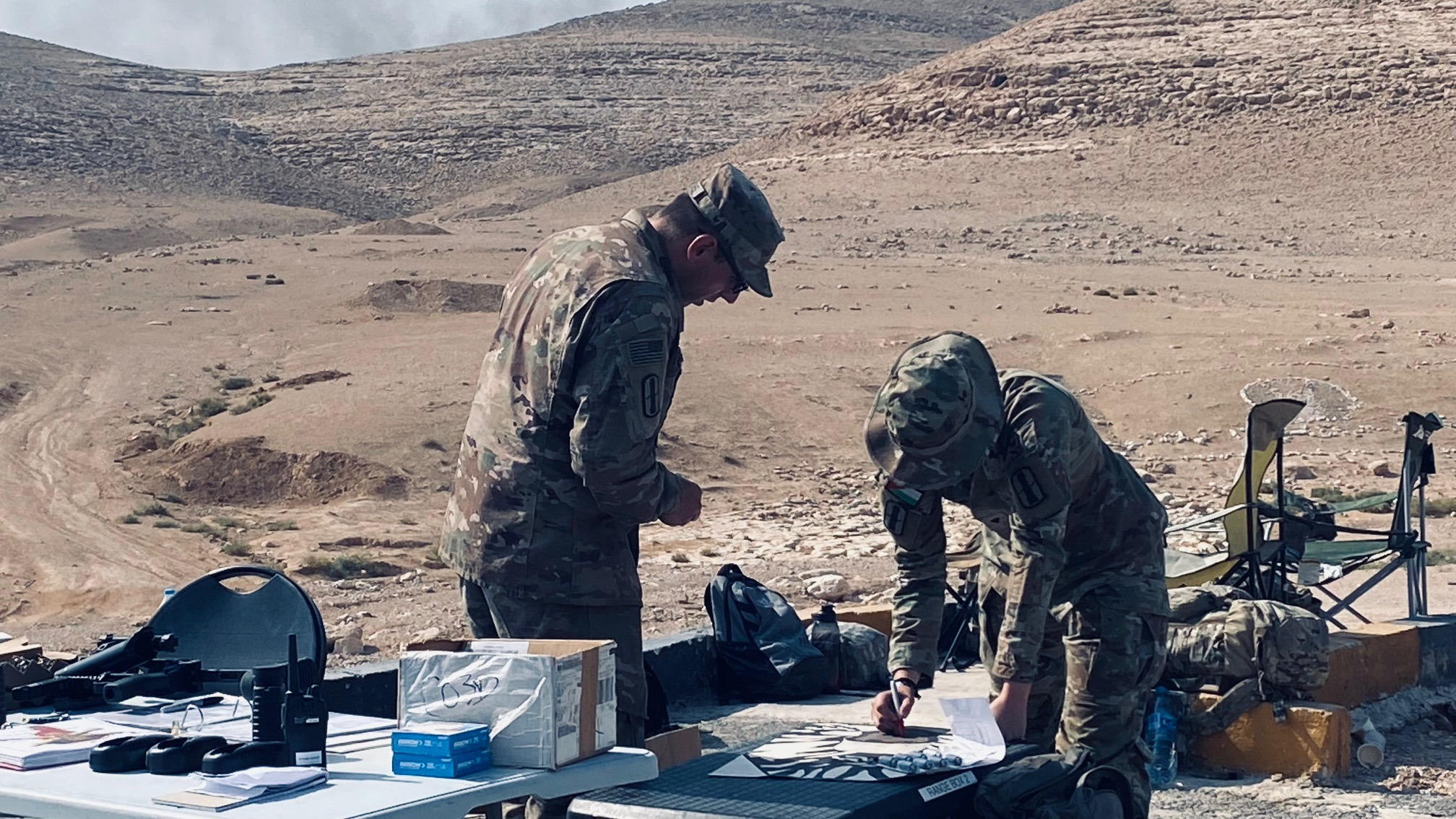
Service members do lots of different jobs in all kinds of terrain, weather, and environments.
-Photo by author

Not all combat related deaths occur on the battlefield. With today’s modern medicine, and forward deployed combat lifesavers, combat injuries are more survivable. Those injuries are still traumatic, preventing some individuals from fully recovering. Many die earlier in life than would be expected. Those deaths are not counted as combat deaths, even though the injuries that caused those deaths happened on the battlefield. We must remember them as well.

Not all military injuries are visible. Traumatic brain injury came into the spotlight as a result of the Global War on Terror. Like other combat injuries, this one also has the potential to shorten service members’ lives in two ways. The first is the lingering injury causes the death, as it may never fully heal. Additionally, those suffering from TBI may turn to another veteran cause of death, suicide.

On an average day, 22 service members and veterans commit suicide. I saw a statistic over the winter that claimed more service members have died from suicide since 2001 than died in all the fighting in Iraq and Afghanistan. You’ll note, there is no reference because I could not find it in time for my deadline. However, 22 suicides per day spread out over 22 years comes out to over 170,000 deaths. Iraq and Afghanistan account for under 10,000 combat deaths. I believe the number without having to find the original reference.

Military operations occur around the clock in peace and war, increasing the danger of death.
-Photo by author

Veteran suicide remains a big problem. Learn ways you can help a veteran in crisis. Recognize when someone is struggling. For a long time, the Army used the ACE model to help service members remember how to render mental health first aid. Ask the person if they are thinking of killing or hurting themselves. I am assured by mental health professionals that your asking will not put the idea in their head, so ask. Call for help. Depending on the circumstances, you should call 911 if there is already a life-threatening situation. If the veteran is expressing suicide ideation, call 877-4AID-VET ((877) 424-3838), or 988 the nationwide suicide hotline. E stands for escort, which means staying with the person in crisis until you arrive at an appropriate treatment facility, or the help you called for arrives. Following these simple steps will make you a hero for our heroes.

As the unofficial start of summer arrives, take time to gather with family and friends to attend a Memorial Ceremony or Parade. Really look at the names of the real people who appear on those war monuments. Each was a son, daughter, brother, sister, father, or mother and certainly someone’s battle buddy. If you thank a vet, ask an appropriate question about his or her military service, such as, “What was the best part of serving?”, “What is your best memory?”, “Why did you decide to serve?”, or something similar. Then listen to the story and ask suitable follow-up questions. If you are particularly attentive, you might actually hear things veterans rarely tell others. It will help you understand the saying “All gave some; some gave all.”

A Decade of Writing

Ten years and 135 posts later, some thoughts and reflections…

Welcome to my blog.” That was how I started my first post ten years ago. You are still welcome here. You will find much more to read than was available then. Browse around. You will note that early on, my posts were more frequent and shorter. As I developed as a writer, I learned two things. I wanted to write in greater depth on each topic than 500 words, my target for each post. I also wanted to post less often, devoting more time to each subject. When I started, I alternated between a post on leadership, and one on developing training for adults. About the time I started writing longer, I realized those who counseled focusing on one thing were right, so I focused on leadership. This allows me to do things like create a series of essays on a single topic. The introduction and conclusion each stand alone as a thesis. The material in between is available for those seeking to dive deeper.

When I started writing, I had over 30 years of leading police officers and Soldiers with some volunteer experience. I’ve since retired my police leadership roles, and will soon retire from the military with a lifetime of experience. I worked with great leaders all over the world in many nations. My work now is leading in the nonprofit sector now. I serve as an Executive Director for one nonprofit, and serve on the board of directors of two others. The principles of leadership apply equally whether leading Soldiers, negotiating with partner nation military leaders, working with legislators, mentoring young police officers, developing a vacant lot into a memorial park, or leading a multidisciplinary team that responds to cases of child abuse. The tactics for each situation change, but the principals are universal. The essays you find here are all based on those universal leadership principals.

If you have been reading my posts for a long time, or this is your first, thank you. Please enter your email in the subscribe field, and my newest monthly posts appear in your inbox. While I may return at some point to publishing more than monthly, I promise I will not sell your email address to others or spam you with frequent, unwanted sales pitches for products or services. My web host offers ways to unsubscribe if you change your mind and no longer want to receive quality leadership lessons from someone tested in combat. You have nothing to lose.

Doing series allows me the ability to plan my writing better, allows me to learn more about the topics, and present information on those topics better. This post interrupts my series on the Three Pitch Rule for communicating as a leader. While I will apologize for the interruption, this seems like a good point in life to stop and reflect on my writing over the last ten years. Reflection is an important leadership and personal growth habit.

The series on communication continues in June. There are three segments remaining, using text and social media in June, communicating with that app on your smartphone that allows you to make voice or video calls, and the wrap reviewing how to use more than one means to communicate with others improving your effectiveness.

I will start a series on strategic planning and execution. Successful organization do more than create strategic plans; they execute those plans and change to meet current needs. Creating an effective strategic plan is not easy. I think I am pretty good at it, but at the end of every cycle, I find how little I really know. Each plan is better than that last. As Eisenhower once said something like, “Plans are nothing, but the planning process is everything.” While there is lots of truth to that thought, plans and planning are useless without action. Strategic thinking, and action are the two things that cause change.

Change is a constant for all leaders. Without change, there really is no need for leaders. Strategic planning ensures your organization remains relevant when everything around it changes. Even if you want your organization to remain unchanged, you need a plan to maintain stability in the face of change.

Few people like change. I offer the following thought on change: would you rather be known in five years as a leader with five years of experience because you grew and changed, or someone with one year experience, five years in a row?

Please continue to read, learn, grow. I always look forward to your feedback in the comments and the contacts. Note that I try to read the real messages in between the tons of spam, but it might be a few days before I see your message. Thanks for your patience.

I enjoyed writing for you over the last ten years. Thanks for reading. I look forward to continuing to provide quality, personally written lessons on leadership, i.e. not ChatGPT. Most of all, I hope readers take something from each essay and implement one thing in their leadership practice. It’s been said that leadership is the most important thing on the battlefield. It is also the most important thing in every other walk of life. Be bold, try something from one of these lessons, learn what works as you lead from the front.

All photos by the author.

(c) 2023 Christopher St. Cyr

Better Verbal Communication for Leaders

Leaders must communicate well verbally. It is a skill we develop at an early age, making it easy to overlook. Developing your verbal communication skills enhances your leadership influence.
-Photo by Mikhail Nilov on Pexels.com

Whether you are on a phone call, a video meeting or chat, in a face-to-face meeting, or simply ordering a coffee, most of our communication is verbal. Therefore, to communicate effectively as a leader, you require good verbal communication skills. Given that most people develop enough vocabulary by their second birthday, a leadership lesson on verbal communication almost seems silly. Given all the variables that go into transmitting a verbal message to another, and all the variables required to receive it as intended, it is amazing any of our conversations come close to actual communication socially, let alone professionally. Everything from the intended definition of a word, to cultural filters, real noise, the noise in the other person’s head, and a ton of other variables all act in concert to prevent the real message from being received. I read somewhere (if I remembered where, it would be in the references below) that one of the biggest problems with communication in the workplace is the impression that it happened. This essay examines issues with verbal communication and offers suggestions to improve leadership verbal communication.

Non-verbal cues

In his book Signals: How to Use Body Language for Power, Success and Love, Allan Pease says about verbal communication, “The total impact of a message is about 7 percent verbal (words only) and 38 percent vocal (including tone of voice, inflection and other sounds) and 55 percent non-verbal.” (Pease, 1984, P. 6). Pease cites research for his book dating back to the 1800s related to verbal communication and all its non-verbal complexities. Clearly there is more to verbal communication than just words.

Tone is the quality of a person’s voice that communicates, wit, sorrow, compassion, intensity, and sarcasm. I worked for a person who used a sarcastic tone in most of his verbal communication. It was not uncommon one week to be reprimanded for failing to do something he told you to do which seemed strange, and delivered in his normal sarcastic tone. As a result, the next time you received direction to do something that seemed odd, delivered in the sarcastic tone, you did it. Imagine the surprise when you were called on the carpet for doing what you were told to do. As a mid level leader in that organization, it sucked never knowing what the boss really expected because of his sarcasm.

When you speak, monitor your tone. Look for other non-verbal cues for the person you are speaking to ensuring they understand the importance of the message. Remember, sometimes just because of your position, people will likely place greater urgency on your comments even when you state an observation or make an off handed remark.

I had occasion to conduct a sight visit for one of my subordinate military units. Things were jacked up and no matter how hard I tried to find something to praise, every request resulted in uncovering another issue. I pulled the senior noncommissioned officer to the side and calmly asked about the situation. I told him that as the senior leader on the ground, it was not his job to actually do all the work. There were other NCOs present and junior enlisted all watching him work. I told him to look around and determine what needed to be done. I wanted him focusing his attention on the most important task and delegate the others to junior NCOs.

I later learned the leader felt he had been chewed out. He was a new senior NCO and never had the experience of interacting with a leader at my level in the field. This individual and I had known each other for several months. We had a number of leadership development sessions. However, it was his first time as a Senior NCO leading troops in the field. What was intended to be a simple coaching session, was perceived as a reprimand. Reactions can show you how the other person perceives what you say. The example show it is not always easy for leaders to perceive.

Barriers

There are two types of barriers to verbal communication, physical and psychological. Of the two, the first is easiest to recognize and overcome. The later applies to the sender and receiver. Physical barriers are things we can see and hear that interfere with the transmission and receiving of messages between people. Examples include, things we recognize as barriers such as walls, and divider. It helps to be in the same room to be on the same page. Noise in the area is another common barrier. We have a white noise machine to help mask confidential conversations in my office. Sometimes, they mask the conversation between two people who should be talking. In our modern age, technology also inserts physical barriers. If you are engaged in a phone call or video conference and the system has problems, it is often difficult to understand what others say. Most of these barriers can be overcome. Genrally the means to fixing them is evident.

Physical barriers are easy to recognize. Solutions to overcome physical barriers are simple. Psychological barriers are harder to recognize and overcome.
-Photo by Arantxa Treva on Pexels.com

Psychological barriers are not so clear. There are two parts to psychological barriers; those of the sender and those of the receiver. There are a variety of causes, including lack of trust, the most common. Additional barriers include lack of confidence of the sender or receiver, overconfidence, and stuff happening outside the conversation such as problems at home or with other co-workers. Google found that overcoming psychological barriers is the single biggest thing leaders can do to develop winning teams. Unlike physical barriers, leaders cannot see psychological barriers, but with careful listening, you may hear the other person’s barriers in their responses. However, recognizing and overcoming your own psychological barriers is an even bigger challenge.

Process

Process is the actual act of communicating. It begins when you recognize want to send a message to others. You develop the message through encoding, selecting the timing, words, and tone. Transmitting the message is the act of speaking. The next step is receipt by the other. Remember, the other begins receiving the message as soon as they detect your non-verbal cues that a message is coming their way.

Within receiving, there is a subcategory of listening. As a leader, you should consider the four levels of listening. Listening from habit for information confirming what you know. Listing from outside when you notice differences from what you know and what is new. Listening from within the other develops empathy. Listening from the source when you connect to the future and generate new ideas (Scharmer, 2020).

The first step in decoding is listening. Listening influences how messages are decoded. Decoding also has to overcome physical and psychological barriers. Decoding and barriers interfere with how the intended message is heard and understood. Therefore, you need to seek responses and feedback.

Responses and feedback provide you information about how well the message you intended to send were received. This provides you the opportunity to clarify what you said. Correct misunderstandings. The other may have questions. If you do not receive feedback, it is your responsibility to seek it. Just saying something to someone else does not mean you communicated. Only when you have confirmation the message was received and understood, have you communicated.

Good listening skills improves proper decoding. While listening, notice whether you are confirming, identifying differences, being empathetic, or generating ideas for the future.
-Photo by Markus Spiske on Pexels.com

Verbal communication is a common leadership activity. Because it is so common, people barely think about it. Whether you are ordering coffee, conducting a one-on-one, or in a virtual meeting, leaders (including me) say things without thinking. The result is hurt feelings, broken trust, and lack of understanding. All result in reduced productivity and organizational growth. Responsible leaders understand and learn how to use non verbal cues to determine how others receive messages. They recognize barriers and find ways to reduce the impact. They understand the process of transmitting a message and ensuring it is received and understood. Reflect on your intended messages and select impactful words. Observe to determine if your message resulted in the necessary change. Verbal communication is an activity that seems easy on the surface because we have done it for so long. We fail to recognize how hard it is to do well. Take time to learn how to talk better to people so you have greater influence to help them grow and accomplish your organization’s mission.

References

Beebe, S. and Masterson, J. (2000) Communicating in small groups; Principles and practices. (8th Ed.). Pearson. Boston, MA

Duhigg, C. (2016) What Google learned from its quest to build the perfect team. New York Time Magazine. Retrieved from: https://www.nytimes.com/2016/02/28/magazine/what-google-learned-from-its-quest-to-build-the-perfect-team.html?searchResultPosition=1 on 4/26/22.

Oshry, B. (2010) People in context: Part I. The Systems Thinker. Pegasus Communications. Vol. 21, No. 4, May 2010.

Pease, A. (1984). Signals: How to use body language for power, success and love. Bantam Books, Inc. New York, NY.

Scharmer, O (2020) Levels of listening. Handout from Leadership Exchange and Coaching, Cohort 12.

Wickham Jr., J. and Joyce, R. (1983) FM 22-100, Military leadership. Department of the Army. Washington, DC

(C) 2024 Christopher St. Cyr

Ten Ways for Leaders to Write Better

Learning to write well allows leaders to communicate effectively.
-Photo by cottonbro studio on Pexels.com

Writing effectively is a critical leadership skill. Leaders concerned with liability issues recognize that the written word provides a level of protection. Documents demonstrate that management issued guidance on a particular topic at a specific time so after that, everyone should know. However, if the only reason you are writing is to cover your ass, then you have lots of other leadership issues to deal with. Writing is one means of communication with others. It should be part of a system of communication in toolbox. Writing complements other forms of communication and should never be the only means used by leaders. Effective writing requires practice, a clear understanding of the message by the leader, simple words and sentences (unlike this one), and revision.

Effective writing communicates a clear message to the reader after the first reading, and is generally free of errors. There are a ten principles good writers use to communicate effectively. The first and most important principle is to clearly understand your central message. The central message for this essay is how to communicate through writing as a leader. I can communicate that with one sentence, as I just did, but one sentence fails to provide enough information for you to write more effectively. The main message requires supporting points; do not confuse the main message with supporting points. Each sentence and paragraph supports your central message.

Like any skill, the more one writes, the better one writes. However, like other skills, writers need feedback from others, so they understand how to improve their writing skills. In my work, I wrote thousands of reports, proposals for programs, grant applications, press releases, training material, personnel evaluation reports, memorandums on a wide variety of topics, and other documents. Every product was reviewed at least by the intended audience. Most were proofread and edited by someone else before the intended audience read them

Reading is another way to learn to write better. Read a variety of things, fiction and non-fiction books, newspapers, professional journals, and manuals. Each genre expands your understanding of what works and what does not. The examples you understand best serve as a model to follow.

Active voice tells readers who does what. Readers follow understand the message better when it is active.
-Photo by Jill Wellington on Pexels.com

Use active voice. Active voice shows the subject completing an action. For example, “Managers file bad weather reports with the Safety Department when it snows.” In this sentence, the reader knows who completes the action, when, and with whom. “Bad weather reports are to be filed with the Safety Department when it snows by Managers.” In the passive voice example, the important person required to file the report is the last word of the sentence. The active voice sentence is 25% shorter. It is easier to read and understand.

Organizations often write policies and procedures in passive voice. People fail to understand who does what, when, where, how, or why. If you write to cover your ass, and your writing fails to communicate who is responsible to act, are you covered? Use active voice when writing to improve clarity.

Be concise. I read somewhere Thomas Jefferson began a letter to a friend apologizing for the length of the letter. He confessed he lacked time to make it shorter. While this idea sounds backwards, it applies to the first principal I introduced of clearly understanding your central message. Jefferson is well known for writing the Declaration of Independence. The ideas in the Declaration are clear and concise. Once you really understand what you want to say, you can say it in fewer words.

Be specific in your writing. If you want the shift supervisor to do something, say, “The Shift Supervisor does the following things…”. Specificity requires authors to understand their message. Are you starting to understand why the first principal is so important?

Use the right words without unnecessary repetition. The right words are short. I learned this lesson in a class on documenting force taught by John Blum. As we went through his writing class, he frequently stopped and edited the text on his slides to match what he was teaching. If I found a one syllable word to replace a longer word on the slide, he replaced it in class. We were not John’s first or last class; again, the importance of revision.

Keep your sentences short. I recently proofread an award application. I found a problem with the subject-verb agreement in the first sentence of a paragraph. As I tried to figure out what who in the sentence was acting, I realized the paragraph was one sentence. I broke down the points and ended up with five, shorter sentences. The subject verb problem disappeared.

Arrange your supporting points logically. The Declaration of Independence and Gettysburg Address are memorable. Both use relatively short, supporting points presented logically. You must understand what you want to say before you can tell others. Use outlines and revision to logically arrange your supporting points.

Revise and edit your writing. Revision starts by creating an outline. Outlines help you understand what thoughts are your main message and which are your supporting points. Outlines also help create the logical order for your document. Write your first draft. Put it away. Sometime later, return to your draft, revise and edit it. Begin revising by ensuring your main message is clear and supporting points support that idea in a logical order. Identify ways to say something better, shorter. Look for gaps in your logic. Check spelling, punctuation and grammar. Use software for this task. Skipping the revision step results in confusion, unnecessary errors, and failure to effectively communicate with readers.

Write something people want to read. Retain readers attention even when writing policies and instructions by writing well and introducing action.
-Photo by Suzy Hazelwood on Pexels.com

Leaders must write well. Writing is only one means of communication. Writing supports other methods of communication. Communicate one idea in your writing, so readers easily understand your message with one reading. Using active voice improves understanding of who does what. Short words and sentences communicate ideas better. Clearly specify details. Choose the right words and avoid unnecessary repetition. Present your supporting points logically. Revise, revise, revise. Follow these steps to improve your writing as a leader.

References

  • Axelrod, R. & Cooper C. (2008). The St. Martin’s guide to writing. (8th Ed.). Bedford/St. Martin’s. Boston, MA.
  • Bates, J. (2000). Writing with precision: How to write so that you cannot possibly be misunderstood. Penguin Books. New York, NY.
  • Blum, J. (2014). Documenting police use of force. Seminar. Orleans, VT.
  • Shinseki, E. (Army Chief of Staff). (2002). Preparing and managing correspondence. Department of the Army. Washington, DC.

(c) Christopher St. Cyr 2023

The Three-pitch Rule of Communication Expanded

The post Say It Three Times if You Want Them to Remember has been very popular for the last several months. Communication is essential for leaders. If you search for COMMUNICATION on my page, you will find a number of posts on the topic. As a leader, communication is the base of the cornerstone of trust. You must consistently communicate well, verify people understood what you intend, be honest with people, and communicating often. This series covers how to communicate better in writing, such as letters and e-mail; verbally in-person, one-on-one, in small groups, and large; through text messaging and social media; and by phone. The thesis of Say it Three Times is simply to use three forms of communication to repeat important messages to those you lead if you want them to remember it. Learning to effectively use the five methods of communication listed above helps you influence others better so your organization, those you lead, and you succeed.

Pitching your message three times using three different means of communication improves the likelihood your message will be received and acted up appropriately.
-Photo by form PxHere

Writing ensures what you tell others is memorialized. Often leaders think a document is necessary to demonstrate they told someone to do something with the idea they will fail to comply. The document provides proof of their follower’s insubordination. There are merits for this, but if you are only providing written direction for the purpose of playing ‘Gottcha’, then you really need to work on all your leadership skills.

Written direction provides a reference for others to use as they complete the work. Without a document, those people must come back to you for instruction when ever they forget what you told them. Your document should serve as a guideline of the expectations and specifications of the work. Avoid passive voice as; it confuses readers. Active voice writing tells the reader who does what. Provide the reason for the task or a particular step to improve understanding. Remember, follow up to ensure the intended audience understands what you wrote. It is not enough to write it down, send it along, and assume the receiver read it, understood it, or understands why it is important. Written communication includes letters, memorandums, orders, emails, and instructions.

The bulk of leader communication is verbal. Most of us have been talking for longer than we can remember, yet not everyone we talk to uses the same language, even when it is all English. The listener may not understand unusual terms or jargon. A simple example is ordering lunch across the United States. In some part of the country, you order a grinder and a Coke. In other places, the same items are called subs and soda. Ensure people understand the terms you use in your verbal communication.

Communicating verbally to one person is different from communicating in small groups and large. In one-on-one conversations, you judge from how the other person reacts whether they understand what you said. Such judgments are harder in small groups. Large groups are extremely difficult. Leaders speak to individuals and groups regularly, so it is important to develop your skills in each area.

Yes, Virginia, you can really use your smartphone to make a phone call, and there are times you should.
-Photo by author

In the early days of social media, much of the communication was short text messages. With the addition of pictures and video, social media has changed the way we communicate with others electronically. Text messaging, regardless of the platform, is written communication. A big difference with text messages is its informal nature. Shortcuts are acceptable, including use of emojis. Use an emoji in your next job application cover letter and see if you ever receive a request for an interview. Yet in text messages and on social media, both text based and graphical based characters are acceptable and expected. Text messaging is much more like verbal conversation than formal written communication. Use caution communicating in text and on social media.

There was a time when phones tied you to your desk due to the cord. Now things are different. Even thought most smartphones provide an opportunity with apps to communicate by video, some people still prefer only voice. In a video chat, your observations of the other’s reactions allows you to judge understanding. Using the traditional voice application removes that feedback. While not as difficult as one-way written communication, voice only communication reduces the feedback to people on both end of the conversation.

You will find on most smartphones an app that allows you to communicate verbally with others in real time. This might be a messaging app or, wait for it … a phone app. It may allow a video connection of simply voice.

In the next few months, there is lots of ground to cover regarding improving communication skills as a leader. Learning to communicate better helps you become a better leader. Understanding the strengths and drawbacks of each medium helps you better apply practices to improve communication outcomes. The more methods you use to communication with others, the more likely you are to successfully transmit your idea, desire, or instructions to other people. Take time to send the message clearly with one form of communication. Use another to verify the message was received. Follow up a few days later with a third method to answer any questions the other person generated. Using three methods of communication improves understanding by the other and provides increased opportunities to engage with questions. Use the three pitch rule to improve your communication with others.

Reviewing Three Leadership Conversations

Taking time to counsel, coach, and mentor others improves performance. These behaviors build trust and demonstrate you value relationships and results.
-Photo by Christina @ wocintechchat.com on Unsplash

This article wraps up the series on using counseling, coaching, and mentoring; three ways to lead others ethically and effectively. These methods of communication develop people in positive ways. Perfection of this skill is not required for others to benefit from your efforts. Using these communication methods reduces the need for difficult conversations because most people come to work with the intent of doing good work. Counseling is a process to improve performance and raise awareness of followers. Mentoring is a voluntary relationship outside the ordinary lines of authority, in which a trusted guide helps another grow. Coaching is an approach common to both processes. People working in organizations that provide positive counseling, coaching, and mentoring perform better, improving the success of those organizations.

These three conversations fall on a supervisory spectrum from more to less supervision.
-Diagram by author

Counseling is often used as a tool to correct poor performance. This is an appropriate use of this tool, however, leaders who fail to counsel people performing well miss opportunities to reinforce positive performance. Counseling others is probably more important when people are performing well because they know you are paying attention and what they are doing meets expectations. People walk away from these discussions energized, knowing their efforts are appreciated.

Counseling is a behavior exercised by supervisors leading others. It is a discussion that focuses on performance behaviors and outcomes. When used well, it develops positive relationships and results. It is not therapy. Most organizational leaders are not mental health professionals. If you determine problem performance behaviors are the result of mental health issues, you should refer the person to your employee assistance program or other mental health service provider.

Often leaders only use counseling as an influence tool when others are performing poorly. Counseling is most effective when used to reinforce positive behaviors. Reinforcing positive behaviors prevent slides into poor performance. With fewer issues of poor performance, there is less need for difficult conversations all leaders dislike.

During counseling sessions, leaders have the opportunity to review organizational vision, goals, and values. Structure your discussions about observed behaviors around how well or poorly those behaviors conform to the vision, goals and values. Using this approach reinforces those governing ideas, and ensures others understand how those ideas should influence their decisions and behaviors.

Mentoring is the process of an experienced guide helping another find the path to success. Ideally, this happens outside supervisory channels. Doing so allows the protégé to candidly admit mistakes that potentially violate organizational rules, resulting in exposure to punishment.

Mentors are trusted guides. Ideally, mentors are not in the supervisory channel.
-Photo by Andrew St. Cyr

Mentoring relationships are voluntary. Typically, they span an agreed period of time for the purpose of helping the protégé achieve a particular goal. While the last sentence implies the relationship is temporary, that does not have to be the case. A mentor can be someone known by the protégé for a long time. They may continue to associate after reaching the desired achievement. The mentoring part of the relationship ends with the achievement.

Mentoring relationships are structured by each participant to meet their needs. Typically, the first meeting or two sets out the expectations, and the goal. Participants agree to how frequently they meet and how meetings will be conducted. Each typically has some assignment to complete before the next meeting.

Coaching is a skill of helping others in counseling and mentoring processes of finding ways to solve their own problems. Through the use of skilled questions, the coach guides the other to examine knowledge about the topic to reach a decision. Sometimes the decision is the need to find more information about the topic or a requirement to develop a skill. Coaching continues in both processes as appropriate.

While leaders should work to be more coach like in their mentoring and supervisory sessions, they must also understand that professional coaching is hard work. The intent for most leaders is to be more coach like, helping people use what they already know to improve.

Workplace coaching commonly revolves around quality questions. Avoid why questions. They are frequently translated as casting blame. Better questions begin with what and how. Some include:

What is on your mind?

Questions allow the other person to identify what they already know.
-Photo by author.

What is going on when ______ happens?

What behaviors have you found effective/ineffective when ____ happens?

How do you like to be approached when ____ happens?

How can you communicate this preference to others?

What do you hope to achieve?

What are some solutions you already consider?

What do you need from me to move forward?

While not a question, “Tell me all about…”, or “Tell me more about…”, are two comments that help the other person expand on areas of the conversation. Asking for more allows them to make connections to issues they may not realize have important implications. They also help you understand more about the person’s responses.

Counseling, coaching, and mentoring are three conversations leaders can use to create positive performance and improve results. Leaders avoid difficult conversations because they are hard. Taking time to engage in activities that reinforce and promote positive behaviors reduces the number of hard conversations required. Realize, most people show up everyday expecting to do good work that provides some sort of meaning in their lives. Counseling, coaching, and mentoring conversations help people grow, including the leader. They provide leaders opportunities to communicate organizational goals, values, and its vision for the future. The mindful application of these leadership behaviors influences others in positive ways. That does not mean you need to spend days planning for the conversation. As you start using these conversations more, you grow as a leader and allow those you lead to grow as well. Start using counseling, coaching, and mentoring to influence others and fertilize growth to the fullest potential.

Buil, I., Martinez, E, & Matute, J. (2019) Transformational leadership and employee performance: The role of identification, engagement and proactive personality. International Journal of Hospitality Management. Vol. 77, PP 64-75.

Fitch, B. (2011). Focus on supervision; The two roles of supervision in performance counseling. FBI Law Enforcement Bulletin, March 1, 2011.

Hannang. A., Salju, and Qammaruddin, M. (2020). The effect of supervision levels on employees’ performance levels. Advances in Social Science, Education, and Humanities Research, vol 477. Atlantis Press.

Stanier, M. B. (2016). The coaching habit. (Kindle Edition). Box of Crayons Press and Bright Wing Books. Toronto, ON

Wise, W. (2016). Ask powerful questions; Create conversations that matter. Audiobook. CreateSpace Independent Publishing Platform.

3 Types of Questions to Become More Coach-like

I started exploring coaching as a leadership habit about ten years ago. I saw a need for mentoring and coaching of junior leaders in my team. Other senior leaders and I developed a coaching program for mid-level leaders. Coaching is about helping others achieve goals, so please take time to read the post on teaching others how to set goals.

Coaching is an important leadership skill because it allows those you lead to learn to solve their own problems. It takes longer in the beginning than giving advice or solving other people’s problems. Coaching reduces the number of problems you need to solve. Use coaching when counseling or mentoring others. Coaching others requires study and practice. Use this post as a starting point.

When I say coaching, I mean: the process of helping another discover things they know to help make betters decisions, solve problems, and grow as a person and leader. Amplify counseling & mentoring using coaching skills. Coaching identifies gaps in knowledge, skill and resources while creating motivation. Their learning sticks better when they are motivated to study. As a supervisor, when you do all the problem-solving, every problem becomes yours to solve. Instead, ask coaching questions when employees bring you problems.

As a mentor, it is easy to start offering advice in sessions. While this seems like the job of a mentor, it really is about helping the person discover things on their own. Coaching questions help identify what your protégé knows what they need to learn, and provides motivation to seek to acquire necessary skills and knowledge.

A few years ago, I took advantage of a leadership coaching exchange offered to members of a professional. It helped me understand how powerful coaching could be. My coach, Martha, was full of questions. Early in the process, I thanked her for her on issues. She always reminded me that I developed the answers to my problems; she simply facilitated the development. Martha may have been technically correct in her observation, however her skillful application of questions and bits of information were essential to that discovery.

Sometimes the only way to the top is to climb. A coach helps the climber see what is possible and allows the other person to make the journey.
-Photo by Allan Mas on Pexels.com

Good coaching questions are important for the process. As I researched coaching questions, I found three types: starting questions, process questions, and achievement questions. Starting questions help you find out about the problem, why it is a problem, and if it is within the control of the person to fix it (hint: there are lots of ways to fix a problem and that person probably has an answer to fix it). Examples include:

  • What’s on your mind?
  • It seems you need a hand; what are you expecting from me?
  • And what else? (forces them to talk about what they did not want or think to discuss).

Process questions can be used at different points in the coaching relationship. In the beginning you can use process questions to identify options the person already considered. Ask questions about how the process is working. Identify how well the results meet expectations. Other process questions include:

  • What is one thing you could change right now that would make a difference? (gives them control).
  • What is your biggest hang up (challenge, barricade, or similar word) about…?
  • Whose support do you need to change things? (helps them identify allies).
  • So you said…tell me all about that. (okay, not a question, but it requires the person to focus on issues).

Achievement questions are those that help the person have a better vision of success. These questions help the person begin with the end in mind, as Steven Covey discusses in his works. These questions help the person ensure they are solving the right problem.

A successful combination for almost any coaching situation is;

  • So, what’s on your mind?
  • I hear you saying…, tell me all about that.
  • What is your biggest challenge with this? And what else?
  • How can I help?

There are two measures to consider when evaluating success: process and effects. A coach helps establish measures for both. Process measurements deal with how well the person is applying the process, ensuring they understand the steps, and when to apply them; are they doing things the right way. Effects measurements determine if the process results in the desired outcome.

An example of process measurements is losing weight to improve overall fitness. You develop an eating and exercise plan. When you measure process, you compare how well your eating and exercise activities matches the plan. If you determine to eat 1800 low fat calories per day and alternate strength and aerobic exercise for 30 minutes for six days every week, you measure, or count, the number of calories and how many minutes of exercise you complete. Determine if you are meeting the steps in the process. Failing to accomplish the steps requires reviewing whether the process is possible to complete. This ensures you are doing things right

-Photo by form PxHere

Effectiveness measures how well the process is working to achieve the desired outcome. If you determine you are eating less than 1800 low fat calories every day and completing the exercise, you would expect to see weight lose. When your behavior matches the progress steps, but outcome measurements are not being met, it generally means the process is flawed; you are not doing the right things. A great effectiveness measures coaching question is, “How will you know you achieved what you envision?”.

When coaching, rather than give advice, ask questions. Approach failures and successes in process and effectiveness from a position of curiosity. Avoid offering advice. Instead, ask good questions. Dig deeper by asking them to tell you more about the topic.

I find conducting a coaching session with food and beverage is ideal. I can ask a question and stuff my face. While I chew on the food, the other can chew on an answer to my question. Neither of us can speak until we are done chewing, and I can chew a long time! Often coaches ask a question, hear silence, and then offer an answer to the question. Allow the silence to last. It forces the other to speak.

Coaching is a useful leadership skill. Great coaches learn the skill well and practice all the time. Most leaders do not have time to be full time coaches, however learning to be more coach like improves outcomes. Learn to ask questions to start a coaching session, develop understanding, establish a process and measures for success, and determine what the other really needs from you. Asking who, what, and how questions requires the person to examine knowledge they possess to determine how best to solve their own problem. When used with counseling and mentoring, coaching becomes a powerful leadership skill that achieves great results.

References

Covey, S. (2004) 7 habits of highly effective people. Simon & Schuster. New York, NY.

Elsey, E. (2021). 10 of my all-time coaching questions and why. The Coaching Tools Company. https://www.thecoachingtoolscompany.com/10-time-best-coaching-questions/. Retrieved 12/26/22

Hutchinson, D. (2022) Personal interview.

Lask, M. (2020) Leadership exchange and coaching. Cohort 12. Northeast Regional Children’s Advocacy Center, Philadelphia, PA

Orechwa, J. (n.d.). Effective coaching: Tips for coaching that works. IRI Consultants.https://projectionsinc.com/Effective Coaching Tips for Coaching that Works.htm. Retrieved12/10/22

St. Cyr, C. (2020). Leading others to success in four easy steps. Saint Cyr Training. https://saintcyrtraining.com/2020/03/31/leading-others-to-success-in-four-easy-steps/

Stanier, M. B. (2016). The coaching habit. (Kindle Edition). Box of Crayons Press and Bright Wing Books. Toronto, ON

Wise, W. (2016). Ask powerful questions; Create conversations that matter. Audiobook. CreateSpace Independent Publishing Platform.

Mentor; His Name Became Synonymous with Leading

In Homer’s classic tale, King Odysseus leaves on a quest, placing his son, Telecachus, in the capable hands of Mentor. As the boy grows, Mentor provides guidance on a variety of topics, often on things the boy could never ask, or discuss with his father. As a result of this ancient legend, a modern day leadership skill was created, mentoring.

Mentoring in today’s age means a person with greater experience guides a person of lesser experience. Like Mentor in the story, the guide is trusted but not someone the follower answers to, like a parent or boss. This misconception about mentorship results in potential proteges to regard appointed mentors with suspicion, reducing their growth.

Organizations encourage supervisors to mentor their direct reports, however, the best mentoring relationships happen outside supervisory channels. One of the reasons Telemachus was able to confide more in Mentor than his father was simple; Mentor was not his father. Likewise, employees get more out of this developmental relationship with someone not in a position to judge and evaluate performance, mentees execute new practices and fail.

Just because mentoring relationships occur outside the supervisory channel does not mean organizations cannot implement mentoring programs. Instead, they pair a protégé with someone who will not have a negative impact on employment for failing. Organizations accomplish this by aligning mentees with a mentor in a different department. It is vital that the mentor accomplished similar tasks as the person seeking a mentor.

There are times a mentoring relationship could occur in a supervisory chain. An example is a C-Suite executive mentoring a front line supervisor with several layers between them. After all, the mentee may not be directly supervised by the Vice President of Marketing, but if his boss is, then the relationship will be viewed suspiciously by the person in the middle.

Voluntary Relationship

Those in a mentoring relationship can use a variety of means to communicate to help the protégé accomplish the goal.
-Photo by Vanessa Garcia on Pexels.com

The relationship between the protégé and mentor should be voluntary, even in a work situation. A person may be directed to participate in a mentoring program, but both parties should have a say in the relationship to achieve best results. Many times others understand the need for a mentor when the program is explained well. Some people still participate unwillingly. A good mentor can bring positive change to reluctant mentees. Sadly, some still fail to see the opportunity mentoring offers, reducing the effectiveness of the program.

Mentoring relationships are voluntary. The terms of the relationship can be negotiated. The first meeting should establish the terms of the mentoring relationship. Both parties agree

  • how long the relationship will last,
  • how often meetings will occur,
  • boundaries expected by both,
  • how to deal with issues between meetings, and
  • handling confidentiality concerns.

In some workplace directed programs, some of these terms may be dictated.

It is nice to create a new friend in the mentoring process, but the purpose of the relationship is to help the protégé achieve a particular goal. Therefore, it is important for the guide and the person seeking a guide to understand what to look for in the other. Both the potential protégé and mentor should evaluate if the other has the skills to fulfill their role.

A mentor is only a trusted guide if they have done something similar as the protégé seeks to accomplish. Potential mentors should honestly assess their ability to dedicate the time & effort required to help guide the protégé. Determine if the mentor previously demonstrated the capacity to help others grow and learn, and accept that as they guide the protégé, they also learn and grow. Has the person shared experiences with others that helped them grow or avoid mistakes? The more skills possessed by the mentor in each area improves success rates.

Selecting the right person to mentor you is important. What proof exists demonstrating the protégé is committed to learning and achieving their goal? As a protégé, clearly articulate what help you seek from your potential mentor. Good mentees ask good questions about feedback provided by mentors. They complete tasks as promised. They show up at meetings ready to address the issues on the agenda, and they show up on time, whether it is a phone call, a video meeting, or emailing a report for review.

Mentors and proteges should seek these qualities in the other. Not every mentor – protege relationship works. Understanding this allows each person to know they can walk away on good terms. You may need that person in the future.

Process of Mentoring

Use the opening meeting to get to know each other, negotiate the terms of the relationship, and identify the goal of the relationship. Use this meeting to identify how each person is accountable to the other; wait, you mean the mentor is responsible to the protégé? Yes! If the mentor promises to provide something, they are accountable to the protégé to provide that resource. Figure out when future meetings will occur and how frequently you will meet. Most importantly, identify the conditions that signal the end of the mentoring relationship.

I suggested a few times that this relationship is about the goal, implying your mentor is a stranger. That is not always true. During my studies in the U. S. Army Sergeants Major Course, I had two mentors. The first retired halfway through my attendance. I had relationships with both of them before starting the course. I still have a social relationship with both of them, years after completing the course. Our mentoring relationship ended when I graduated, but not our person relationship.

Social relationships may continue after the mentoring relationship ends.
-Photo by fauxels on Pexels.com

There are many ways people can meet today. If possible, to meet face-to-face. You can use technology, just remember, relationships are better in person. Emails, video and voice calls, and in-person meetings are all good ways to check in and follow up on progress. Timing depends on the needs of the protégé and the availability of the mentor. Always follow up. Schedule your next meeting before ending the current meeting.

Closing mentoring relationship

Close the relationship when you achieve your goal. If you select a new goal and wish to re-establish a mentoring relationship with your current mentor, ask. If you are the mentor, be clear when you are done providing guidance to your protégé. Failing to do so ensures they will continue to think you are.

Mentor was a trusted guide for Telecachus. He set an example of how those with more experience can guide those with less experience. Ideally, mentoring relationships occur outside the organization’s supervisory channel. This allows the protégé to confess errors without fear of retribution. Mentoring relationships are voluntary. They have a beginning, middle, and end. Either party may terminate the relationship even before the protégé accomplishes his goal. The mentor and mentee agree how the relationship will work, the timeline to accomplish the goal, frequency of meetings, how each is accountable to the other, and the conditions that signal the goal is accomplishment, ending the mentoring relationship. Anyone seeking to accomplish tough things should have a mentor. Likewise, make yourself available to those seeking a trusted guide to success. Today, start the process to find a mentor, and someone to mentor. It is a great way to learn from others in both roles and is an important leadership skill.

References

  • Abbajay, M. (2019). Mentoring Matters: Three Essential Elements Of Success. Forbes (on-line edition). Retrieved from forbes.com on 11/28/22.
  • Doby, J. (2022). Task force Spartan mentorship network. Task Force Spartan. Camp Arifjan, Kuwait.
  • James, F. (2016). Becoming a mentor. Leadership Development Workshop at New Hampshire National Guard.
  • Martin, T. (2022) (CG). Developing leaders; FM 6-22. Headquarters, Department of the Army. Washington, DC

On Veterans Day, a Discussion on One Tradition; Fiddler’s Green

Traditions are an important part of military service. Every Veteran has a story about a rite or ritual. The Change of the Guard at the Tomb of the Unknowns in Arlington National Cemetery is such a tradition.
-Photo from PXHere.com, no other attribution information available.

The military is full of old war stories, ancient traditions, wild legends, and lots of faith in the ever after. Each branch uses their traditions to induct recruits, new noncomms, and junior officers into their ranks. Yesterday, November 10th, was the long celebrated Marine Corps Birthday. Celebrated with music, dance, cake, and drink, there is nothing quite like a Marine Ball on its Birthday. The Navy has rituals for first timers crossing the equator. Eventually, the Space Force will be around long enough to have traditions and legends but until then, they suffer the baby service tradition of being the object of ridicule and jokes. Even within the branches, each service has traditions for every skill. The Infantry, Queen of Battle, wears a light blue cord on their dress uniform. They are protected by their patron St. Maurice. Those that ride to battle in hulls of steel on endless tracks in the Calvary wear spurs and cowboy hats to remind them of the softer steeds from much earlier in their history. The mounted warrior, St. George, looks after other’s fighting from live and steel warhorses. The cannoneers, rocketeers, archers, stone slingers, and catapulters in the Field Artillery are a special bunch. Those Kings of Battle are watched over by St. Barbara, they also have a special place in the afterlife called Fiddler’s Green. Fellow Redlegs and other Veterans, enjoy your free lunches today.

Imagine, if you will, a battery gathered ‘round the fire shortly after the end of the Civil War. The cannoneers feed their horses, clean the bore, and head for chow. It is likely one or two of the section chiefs uncork a canteen of every Redleg’s favorite elixir, Artillery Punch. Number one places another log on the fire as the evening wears on. Talk turns to those comrades lost in the last few years.

As Chief of Smoke, the senior enlisted leader in any field artillery battery, walks the line of steel, he hears a tenderfoot talk of the hell that awaits all Redlegs given the effectiveness of each cannon in battle. Smoke stops, turns, and eyes the powder monkey with curiosity.

-Photo by Army CPL Davis

“Why, young lad, have you never heard of the place reserved for St. Barbara’s finest? It’s part way past the road to heaven on the road to hell. Fear not the eternal fire. The gun guide will always meet every section and lead them to their designated position. Before final entry, each shall report their names to compare against the roll of those acknowledged as members of the Honorable order of St. Barbara. You see, legend has it…”

Halfway down the trail to hell, In a shady meadow green,

Are the souls of many departed Redlegs camped near a good old-time canteen.

And this eternal resting place is known as Fiddler’s Green.

Though others must go down the trail to seek a warmer scene,

No Redleg ever goes to hell, Ere he’s emptied his canteen.

And so returns to drink again, with friends at Fiddler’s Green

(Poem from the U. S. Field Artillery Association)

As Smoke finishes the poem, number one stokes the fire. The cannoneers crawl in their bedrolls and softly fall to sleep, comforted by the dream that one day they will be reunited with their comrades on Fiddler’s Green.

Now dear readers, some of you may be Sailors, and there might be a Marine who is non Artillery. Perhaps you heard Fiddler’s Green was reserved for you, or maybe the Infantry of Calvary. ‘Tis not true. Only those Kings who know the smell of propellant, or the ink from a TFT, who’ve slammed a finger in a breach, or spotted rounds to save the Queen have space reserved on Fiddler’s Green. This story is recreated from best I can recall from when I heard it from my Smoke, who shared it with us all. As Smoke, this tale I’ve told, to newbies and occasionally those who reclassed to Artillery. Often, as suggested by tradition, the tale is shared over the universal bore cleaner, emergency liquid propellant, and the sure cure for what ever ails you, Field Artillery Punch. Mind you this is not that sissy Chattem Artillery punch for which you might find a recipe on the Food Channel Website. No, dear readers, this is the stuff aged under a tree out back since the last St. Barb’s Ball and used to charge the next bowl, a secret not shared here in view of the uninitiated, and for fear the Russians might use it against us.

-Photo by Army SPC Bowling

To my Veteran comrades, enjoy your day. Accept the gratitude of our nation. Remember, with your comrades, the good times and bad, those who are gone and with us still, over those free coffees, breakfasts, and lunches.

For those who have not served, that would be more than 98% of you, thank that old dude wearing the KOREAN WAR hat. Ask the lady in the MP tee shirt about her service. Attend a Veteran’s Ceremony. And if you want your very own holiday, call a recruiter to see if you qualify to serve in our nation’s military. No matter which service or branch you choose, you’ll have adventures you can tell your grandchildren about before you journey off to Fiddler’s Green or other places where non Artillerymen go before getting to hell!

Fiddler’s Green poem from the U.S. Field Artillery Association

All photos from DVIDS, the Defense Virtual Information Distribution Service (unless oftherwise noted), https://www.dvidshub.net/search?q=artillery&view=grid