Strategic Assessments; Identifying and Defining Results

Rocket taking off at night demonstrating that you don't succeed on the first attempt, but with repetition you can succeed to achieve desired results.
Shooting a rocket to the moon successfully on your first attempt is very unlikely. It takes several attempts. Likewise, finding the key activities that lead to achievement of strategic goals takes more than one attempt.
-Photo by SpaceX on Pexels.com

The purpose of creating a strategic plan is to achieve results benefiting stakeholders. While it might be possible for a brand-new organization to build a rocket and put a person on the moon in their first year of existence, it is very unlikely. Leaders need to select the results they want to achieve in the next 3–10 years based on what they find reasonable from their assessments of the Strengths, Weaknesses, Opportunities, Threats, and Aspirations. While this post presents measures in the reverse order, discussing lag measures first, they represent the indications of final results. Leading measures are the most important These are the actions required to perform regularly, are hardest to identify, and are often counterintuitive.

Lag Measures = Measures of Effectiveness

Lag measures are the results you expect to see if your selected change actions are effective. In some circles, lag measures are called measures of effectiveness because changes made in process should result in the effective results envisioned by leaders. For example, a nonprofit sets a goal to increase its unrestricted reserve. A lag measure would show an increase on the balance sheet and in the check book of unrestricted funds raised. This measure means the processes to change your fundraising efforts are being effective, so it is a measure of effectiveness.

Lag measures indicate that the organization is making progress on its strategic goal. Progress is not the same as achievement. Lag measures typically show successful results weeks, months, or years after a change occurred. Some time ago, I was chatting with the owner of a car dealership. He shared that every year they support the local agricultural fair. They offer large discounts on cars during the fair and for four weeks after the fair closes. This is fourth generation family dealership providing the owner the wisdom of his ancestors. The family found they sell very few cars at the fair. Interest in car buying picks up the week following the fair. Many fair goers stop by the dealership to have a second look at cars they saw at the fair. In the next few weeks, they sell 45% of the cars they sell all year. Attended the fair is a leading performance measure. Selling cars is a lagging effectiveness measure.

Leaders need to understand the delay between process changes, and effective results. Understanding the delay creates the discipline to continue processes, identified by lead measures, for an appropriate period of time after the change or event.

Lead Measures = Measures of Performance

A computer displaying charts and graphs symbolizing the results of activities.
Measure performance and effectiveness. Share results of both with dashboards or scoreboards. Such products help people understand how their efforts move the organization closer to its strategic goals and desired results.
-Photo by Pixabay on Pexels.com

Lead measures, also called measures of performance, determine how well chosen activities are being completed. In our nonprofit example above, the Executive Director determines raising awareness of the organization and the issue it champions will help raise unrestricted fundraising. She decided one way to do this is post to social media platforms every day alternating between the organization and the cause. The performance measures are pretty simple. The ED can go to the selected social media sites to see the daily postings. In this example, if staff are failing to post daily, they are failing to meet performance objectives that in theory undermine the strategic goal of raising more unrestricted revenue, the measure of effectiveness.

Identifying lead measures is not easy. As a leader works through the process, they may find activities they thought should produce effective end results are different from their expectation. That means they need not only to regularly measure performance of lead measure activities, but monitor the measures of effectiveness as well. You may learn what you thought were important activities are less important to the results desired. Reevaluate your leading activities and performance measures.

Keeping Score

Identifying what leading activities influence effectiveness measuring performance. Report measures to the doers. There are a variety of ways to track progress. Engage the doers when developing methods of reporting.

When I served as a Command Sergeant Major, there was a section that wanted to have the highest physical fitness test results in the command. The hard part was the section was divided into two shifts to cover time in the operations center. When I stopped in to visit during the night shift, I saw a new ‘scoreboard’ on the wall showing the number of push ups, sit ups, miles run by the night shift. One of the Specialist told me it was their challenge to the day shift to match their activity so their section could achieve their goal. The next day, I noticed the day shift added their own score board, and they were slightly higher in ‘points’ than the night shift. I pulled the section sergeant aside and asked how he thought of the scoreboard and how he motivated his section to attempt to achieve this goal. He laughed and said, “Sargent Major, we were just talking smack about having the best PT score one day. Next thing I knew, it was a thing. The night shift came up with the score board. I’m just trying to keep up!”

While the sergeant’s reply was a little modest, I knew he had a desire to achieve the highest section PT score. His section picked up the idea and made it better. They created the standard. They identified the leading actives required to achieve it. They developed the methods of measuring. That section did achieve the best PT score in headquarters battery.

Score boards are important. They must show the progress of the leading measures. They should be developed by those doing the work and displayed so everyone knows where they stand.

A rainbow at the end of a path symbolizing achievement of strategic results.
By measuring the results of your processes and effectiveness, you are able to determine progress on achieving strategic goals. Identify these measures during the strategic planning process. Adjust activities to ensure the organization continues to move in the correct direction.
-Photo by Frans van Heerden on Pexels.com

As you identify results desired for your strategic plan, also identify the performance processes required to achieve those results. Select lead (performance) and lag (effectiveness) measures. Create scoreboards sot those completing the work know where they stand. Make the process fun so people want to participate. Evaluate if the lead activities are moving you in the right direction. If not, find out if that is because performance is not what is expected, or because you picked the wrong actions. Make changes and continue to measure. Selecting the right leading activities will ensure you achieve the results you desire by the end of the strategic plan.

References

Bossidy, L, & Charan, R. (2002) Execution: the discipline of getting things done. Crown Business. New York, NY.

George, M, Rowlands, D, Price, M, & Maxey J. (2005). The lean six sigma pocket toolbook. McGraw Hill. New York, NY

Lab, S (2007) Crime prevention: approaches, practices and evaluations. Mathew Bender and Company.

McChesney, C, Covey, S, & Huling, J. (2012) The 4 disciplines of executions: achieving your wildly important goals. Free Press. New York, NY

Strategic Assessments of Your Organization’s Aspirations

As I worked on my first draft of this post, two close family members fell ill, and died. This caused me to reprioritize actives and reflect deeper on the importance of strategically analyzing aspirations. After all, organizational aspirations are those things the leaders envision as the legacy of the organization in the months and years after they are gone. Those organizational aspirations should be tied to individual leaders’ personal aspirations. In my family member’s case, I am sure they had some regrets, but overall, I think they are happy with the legacy left behind. Each has a long list of accolades, accomplishments, family connections, achievements, and impact on the future. At the end of your life in your organization, will you be happy with the accomplishments, achievements, and impact of you and the people you lead in the organization?

Shoot for the moon. Even if you miss you will land among the stars. Norman Vincent Peale.
-photo created by Gemini.
While my writing is still created using natural intelligence, I struggled to find an image that embodies Dr. Peale’s idea and asked Gemini to help.

In his book, 7 Habits of Highly Effective People, Seven Covey challenges readers to envision their funeral. He asks them to think about what the reader wants people to say about them after they passed. Joan Garry in a recent podcast recommended a similar exercise for new organizational leaders. She suggests that the new leader write the press release announcing their departure. What will people say about you, your character, accomplishments, relationships, and legacy? How will they remember your actions? Few will remember everything you said, but all will remember how you made them feel. Either exercise will better help you understand how your aspirations inspire those you lead. 

At the organizational level, the aspirations of the organization should inspire all their stakeholders. Before your aspirations can inspire others, you and the other leaders in the organization must identify those aspirations that are common across the leadership. Those aspirations should also support the reason for your organization’s existence.

Leaders should evaluate the aspirations of employees, volunteers, clients, and customers. This evaluation helps in two ways. First, you retain quality people. Second, you attract new talent and clients. When the organization’s aspirations are aligned with leader, employee, and customer aspirations, great things happen. Gaining alignment happens when leaders collect the aspirations from people at every level of the organization. That collection provides information identifying common aspirations, fueled by their passions. You will find building on these common passions creates support for the organization’s aspirations.

In his book Good to Great, Jim Collins talks about three factors that make a company great. One of those is identifying passions. As a leader, you may find some of those you lead have passions that are not aligned with the organization’s. They might be great people, hard-working, honest; but they may need to find work in a different organization if their aspirations are out of alignment. As their leader, you can help them move in a direction that will help them feel fulfilled in another organization, and remain a champion of yours.

Aspirations are the foundation of the future. That is why they are an important part of any strategic assessment. When aspirations align, great things happen.
-Photo by Amina Filkins on Pexels.com

An organization’s aspirations become the launching pad for inspiration. In the 1980s, the US Army recruiting slogan was “Be all that you can be.” It was the beginning of the all volunteer Army, an army that was shaking off years of frustrating jungle fighting in a war that had poorly defined mission parameters. “Be all you can be”, is an inspiring aspiration. The Army promised to help every individual become the best possible version of themselves, and in turn expected those high quality people would make the Army the best it could be. In 2025, the US Army is in a similar position. After even more years of fighting two wars with poorly defined mission parameters, recruiting was falling. The Army returned to the “Be All That You Can Bel slogan. Recruiting is soaring. If the Army actually helps people be the best version of themselves, the Army will remain the best army in the world. People are always inspired to belong to an organization that seeks the best in their people so they can be the best organization. 

A short time ago, I worked on a strategic plan with a nonprofit. They worked hard to create an inspiring plan for the future and wanted to celebrate. The Executive Director held a statewide video pep rally to introduce the leadership’s vision for the future. Selected members of the Board of Directors presented parts of the plan to the membership, explaining how each goal benefited the membership. At the end of the hour, the membership was excited about the future. They could see the growth from the previous plan. The rally helped them focus on the most important things, so everyone could serve better. It was inspiring.

Inspired people work with a sense of purpose and belonging. Aspirations, become the foundation to potential new hires. Leaders determine if new business opportunities will help reach organizational aspirations. Use aspirations to improve staff evaluations. 

Aspirations provide inspiring stories of the future. Steve Jobs regularly used aspirations to motivate people to be part of the Apple story. Sharing stories of the organization’s aspirations,  inspires great work and involvement from all stakeholders. People want to belong to something that makes a difference. Meaningful work provides fulfillment and builds lasing trust. Stories help employees and other stakeholders connects their work and involvement with their dreams for the future.

Aspirational alignment across the organizaton, at all levels, ensure things mesh and inspire others to be the best they can be.
-Photo by Miguel u00c1. Padriu00f1u00e1n on Pexels.com

Aspirations are those big dreams we all have as children. Involvement in organizations what have similar aspirations provides people opportunities to grow and achieve meaningful accomplishments. Begin by identifying the aspirations of the organization by finding the aspirations of stakeholders. Work to align organizational aspirations to individual aspirations. Once identified, aspirations become the foundation to evaluate behaviors, and identify potential staff, volunteers, and board members. Use stories to tell about an improved future for the organization and people in it. Assessing, identifying, and documenting aspirations during a strategic assessment helps organizational leaders ensure alignment across the strategic plan. When you shoot for the moon, when you miss, you still shine with the stars1.

References

Collins, J. (2001). Good to great: Why some companies make the leap… and others don’t. HarperBusiness.

Sinek, S. (2009). Start with why: How great leaders inspire everyone to take action. Portfolio.

Vago, S. (2009). Law and society (9th ed.). Pearson.

Wick, D. ( 2018). Strategy: What is your winning aspiration? Positioning Systems. https://strategicdiscipline.positioningsystems.com/blog-0/strategy-what-is-your-winning-aspiration. Retrieved 8/15/2025

Zimney, S (2024). Speaking story. WiseInk

Strategic Assessment of Future Threats

ocean wave crashing
Assessing threats helps leaders and organizations plan for congingencies. You may leave port in the morning with smooth waters, but by noon, you may face rough seas. Identifying potential threats makes them less scaryl
-Photo by Emiliano Arano on Pexels.com

While there are a variety of areas an organization can look at while assessing strategic threats, one will quickly find threats often parallel opportunities. Like opportunities, assessing strategic threats is an exercise in evaluating external factors impacting your operations, funding sources, liabilities, or prevent your ability to take advantage of opportunities or create a competitive advantage. While strategic assessments do not occur in any specific order, evaluating threats after identifying strengths and opportunities helps an organization focus on threats targeting potential directions identified when assessing strengths and opportunities. Areas to examine during this part of the analysis include:

  • Government regulatory changes
  • Changes in the marketplace
  • Price trends on sources of revenues
  • Changing costs of resources
  • Emerging technology and scientific advances, and
  • Competitor activity, and
  • Industry trends.

While the US Government is currently going through tremendous change and is making daily headlines, it is nothing new. Changes in government anywhere in the world are common. In this analysis, examine the negative impacts on current and potential future operations. For example, by identifying changes in tax policy that increases your tax liability, you can identify changes addressing those issues.

Consumer demand is always changing. Thirty years ago. Sears was the unchallenged leader in direct sales. With a history of selling remotely directly to consumers through their catalogs (everything from house kits and tractors, to toys, and clothing), they were in a perfect position to take advantage of new internet technology. If their leaders recognized the opportunity on-line shopping offered, people would still be buying Craftsman tools from Sears. Instead, the internet became a threat to their continued existence as Amazon boldly filled the void. The Sears story is a perfect example of how closely tied, opportunities and threats are associated and related. For Sears, on-line shopping was an opportunity missed that became their greatest threat.

Retailers that failed to understand the opportunites presented by the internet soon found brick and mortar stores challenging. Still, many prevail because they have found a way to provide customers what on-line shopping cannot.
-Photo by Min An on Pexels.com

Likewise, just before the rise of Amazon, came the collapse of Thee Phone Company. Consumers wanted new ways to co communicate. They wanted less expensive options. Small technology companies were being stonewalled by Ma Bell and eventually they, with the help of the government, prevailed in court for changes that led to our modern internet and communications. Bell Labs could have done more to build mobile phone technology, and provide cellular data. Instead, they chose to use their monopoly on communication to keep the competition at bay. No longer is there a single phone company because the only phone company never understood the threat of litigation, changing technology, and consumer demands.

Pricing and revenue generation are often linked. If you hold the patent on a product, you can charge top dollar for it. What happens when the patent expires? Does your product offer enough value to continue to justify high prices? When competition enters the mix, prices often become lower. However, if your product is of a quality, people will still be willing to pay more. One can buy and woodworking hand plane on-line for under $30. However, there are companies that still sell enough hand planes priced over $300 that they turn a profit. You have to know who your clients are. There are enough people still willing to purchase and tools even though power tools are faster and often more accurate.

Analyze the future cost of resources. Include all resources, ranging from the cost of wages for the people who make your organization what it is, to the raw material required to do what you do, as well as internet, computers, vehicles, fuel, property and everything else. Evaluate how changes in these costs impact or threaten the future of your organization.

Sears failed to recognize the opportunity the internet presented for on-line sales. Understand how changes in technology threaten your organization as well as the opportunities technology presents. It was not that long ago that television, magazines, and newspapers were the primary means of staying informed and entertained. Now, for little money, anyone can start a YouTube channel, write and publish a book, or start a blog. An example is my blog, written every month with naturally inspired intelligence. I need to understand the potential impact artificial intelligence has on the future of my writing and training. While I do not intend to substitute AI for my NI (both artificial and natural intelligence are both flawed, regardless of what many AI detractors say), I recognize the demand for my writing may decrease as AI writing demand increases. I will need to implement changes to remain relevant in a changing world.

man looking at charts taped to wall
Threats are only scary if you do not recognize them soon enough to create a plan. Even if a threat fails to develop as envisioned, the plan may be perfect for an different threat.
-Photo by Startup Stock Photos on Pexels.com

Examine your competitor’s operations and plans. I ran a nonprofit for several years that provided services to sexually abused children. Through our work, those abusing kids would be charged criminally. It was important for us to understand the changing arguments made by defense attorneys in court and adapt your practices to stay aligned with expectations of the courts while continuing to use evidence based practices that are trauma focused. Not only was it important to hold alleged offenders accountable, improved practices also increased the probability we were collecting evidence that supported charging people appropriately. If the wrong person is arrested, the person committing those crimes is still free to continue abusing other children, and that is a big threat.

This list is not exhaustive. It is an example of topics any organization conducting a strategic threat analysis. Identify those threats that have the potential to impact your plan for the future. Find ways to mitigate those threats. Find opportunities that make those threats irrelevant. Failing to identify potential threats to your proposed future plans creates false hope for success. Knowing possible threats and having options allows you and your organization to adapt quickly and remain relevant. Doing so ensures threats are not scary, rather just part of the future.

References

  • Collins, J. (2009). How the mighty fall. HarperCollins, New York, NY
  • Roger Williams University Executive Development Seminar

External Strategic Assessments: Our Opportunities

Karns show hikers the path in the absence of landmarks. Like analyzing opportunities, karns provide possible paths to achieve your objectives.
-Photo by Pixabay on Pexels.com

Assessing potential opportunities is the first of two external assessments in the strategic assessment process. The reason for having a strategic plan is to allow everyone in the organization to focus on the most important things that help achieve the mission and vision. There are lots of shiny objects to chase. Only a few moves you in the direction you want to go. Avoid Shiny Object Syndrome by assessing available opportunities early in the strategic planning process. This helps organizational leaders identify which opportunities to pursue, which ones to leave behind, and create peace with those choices.

When I first became an Executive Director of a small nonprofit several years ago, I expected to be given a list of priorities to pursue. The direction I was given from the Board Chair was, “Go down there and take charge. I’m sick of hearing about all the problems!” The only direction I could find from reading Board minutes was to move the organization to national accreditation. I recognized this void of strategic direction as an opportunity to meet recognized industry standards, and improve the way we worked. There were lots of directions I could have led the organization, so knowing this goal was important. Accreditation provided a clear framework, allowed me to ignore those shiny distractions, and recognize real opportunities. While not a formal strategic plan, accreditation was our strategic goal. Opportunities are everywhere, but they are not all created equal. Knowing which ones help achieve organizational goals is important for success.

While you may find hundreds of opportunities during your strategic assessment, think about where those opportunities begin.
-Photo by Gerard Vila on Pexels.com

Sources of opportunities

During this assessment, look everywhere for opportunities. Remember, as you develop your strategic plan, opportunities will present themselves in the future you cannot even foresee today. Many of the jobs today didn’t even exist a generation ago. Capture those opportunities that are easy to see and also stretch yours and other’s imaginations about opportunities you can create or may exist in the future.

When Bill Bratton became Police Commissioner for New York City, he created a system to identify crime hot spots and focus police efforts in those areas (yes, eventually COMPSTAT became synonymous with racial profiling, but Bratton began the program looking at crime data and patterns, not race. He worked with marginalized populations because they were the most affected by crime). The impact COMPSTAT had in reducing crime in NYC caused the trend of violent crime across the nation to decrease. When he became Commissioner, he promised to reduce crime. He found his opportunity in instant crime data, something that really did not exist at that time. He created his opportunity.

In his book, Good To Great, Jim Collins talks about three areas organizations can mine for opportunities. The first area is identifying what things your organization does that are great. Next, identify passions of the organization. Finally look at the activities that provide your operating revenue.

How to narrow opportunities

If you lead discussions about opportunities well, you will find you have far more opportunities than ability to follow. Collins discusses examples of companies redefining themselves broadly or more narrowly. Use the opportunities you identified in the three areas exercise, create a Venn diagram, one circle for each area. The opportunities that overlap are likely keys to achieving your organizational values, vision for changing the world, and achieving your strategic goals. The opportunities that are common to each of the three circles is the starting point for developing your strategic opportunities and goals.

Narrowing down your opportunities to a a strategic few helps everyone focus on the most important things to achieve success.
-Photo by Ethan Sees on Pexels.com

Refine your opportunities to match current or future strengths. As you look at opportunities for the future, identify strengths are you lacking and how you will fill those need. Identify the current strengths you do have to leverage, acquiring those you need. As you match strengths to opportunities, find those that create synergy. Synergistic connections excite your client base, your employees, and your investors.

Narrowing the field of opportunities is important because chasing too many, causes the organization and the people in it to lose focus. Depending on the length of your timeline, you should limit your strategic goals, based on opportunities, to one to five. More than five, and everything seems important. When everything is important, then there is no focus on what actions, tasks, purchases, training, hiring, and similar activity has the priority. You end up chasing every shiny object and fail to make progress on any of your goals. One big goal that is achieved, is better than five super sized goals that never become reality.

Narrowing down your opportunities to a strategic few helps everyone focus on the most important things to achieve success.

Review

Identifying opportunities is one half of an external assessment in a strategic evaluation. In this process, examine lots of opportunities. Use the model of your passions, greatest qualities, and revenue drivers to list opportunities. Narrow your list by finding common opportunities in each of the three areas. One to five opportunities are ideal to pursue. These become your strategic goals. Failing to focus on only a very few opportunities causes people in the organization to be confused about priorities. Not every opportunity is right for your organization. What you will find, with disciplined focus and priorities, is you will easily recognize strategic opportunities that emerge along your path and propel you forward, passing shiny objects become easier. Successfully completing this part of your strategic assessment improves focus and success.

References

Good to Great

Flawed

Turnaround

Roger Williams University Executive Development Seminar

Strategic Assessments; Turning Weaknesses into Strengths

Soldiers take Army fitness test.
Strengths and Weakness assessments are internal examinations of an organization, much like a military fitness test. Identify both in the same process. If your weakest event is passing, focus on strengths. If you fail an event, strengthen it.
-Photo by author

As a young Soldier, I struggled with the Army’s physical fitness test. It was not the whole test. I generally maxed or came close to maxing the push-up event. I did pretty well in the sit-up event. The run however was a different story. I often failed the run, even when I had been running regularly. It was a weakness that could derail my military career. I could carry projos up and down the gun line all day. I always scored high on the written gunner’s safety exam. Evaluators would give me the most difficult missions for the hands on test. Regardless of how refined my artillery skills were, I would be put out of the Army if I did not find a way to pass the run. While I always encourage others to lead from their strengths and find others to fill voids, there are some personal or organizational weaknesses that leaders must recognize, acknowledge, and strengthen to avoid failure in an otherwise successful venture. For me, that was my run.

Assessing weakness is an important part of the strategic planning process. Understanding vulnerabilities allows leaders to create plans for those areas that will cause failure by developing procedures to monitor them, or finding another way to look after them. People and organizations should always play to their strengths. However, failing to recognize critical areas of vulnerability can cause failure. Identifying these critical weaknesses is the second internal evaluation an organization conducts during a strategic planning assessment.

Look for weakness in the same areas you look for your strengths. Conducting your weakness assessment at the same time as your strength assessment saves time. Remember, some of the areas to consider include:

  • Processes and operations
  • Human Resources
  • Communications
  • How your weaknesses are amplified by industry trends
  • Quality controls
  • Leadership and leader development
  • Safety, and
  • Employee training.

Over the years, I served, and continue to serve, on Boards of Directors and Advisory Boards for nonprofits. A number of years ago, I served on an Advisory Board of a prevention program for one nonprofit. This program existed for about eight years, when the second chief executive decided it was time to retire. The Board of Directors hired a new CEO who was overwhelmed, and paid little attention to the prevention program. The Advisory Board made several attempts to engage the new CEO. They were ignored. Members approached the BOD Chair, who in turn raised the issue with the CEO. The success of the prevention program was part of his overall job.

Sadly, the program failed in less than two years of the new leader taking charge. Many at-risk youth served by the program ended up becoming involved in criminal activity. In time, the Board of Directors challenged the leader’s lack of success in other areas. The Board Chair communicated to the CEO that if he did not implement change, he would be dismissed. The CEO could not see how the prevention program fit into the over all operational scheme the Board viewed as essential. His blind spot for prevention was a glaring weakness he would not address. The CEO left the organization before e was fired, but not before causing grave damage in other areas of this previously thriving organization. It took his replacement more than three years to repair the damage. The CEO failed to recognize his weakness in operating the prevention portion of his program. Their people ready to accept the challenges of running the program and fill the CEOs lack of experience in running prevention programs, but instead, he would not allow people to take action. He wanted total control, which was ultimately caused the problems in other areas. His failure to fill that void was a fatal weakness.

The number of cords in a rope add to its strength. However, a two strand rope may be more than enough so focusing on adding a third may distract from building other strengths.
-Photo by Barnabas Sani on Pexels.com

While evaluating weaknesses, remember not all weaknesses are equally threatening. Focus on fixing those that will cause you to fail so you can dedicate the greatest number of resources to building your strengths. Going back to the opening story, my run was not my only weakness as a leader, but it was a fatal flaw if I did not address it. When examining weakness, look for those that will cause complete failure if not addressed.

When I retired from the Army, my run had become one of my strongest events on the physical fitness test. I found people to coach me. I changed habits. Even as I grew older, my running scores continued to improve without sacrificing push up and sit up scores. People actually started calling me a runner! I also continued to build on my other strengths, like becoming a more coach-like leader year after year. Allowing people to understand the task and letting them execute within the established limits, even if the way they accomplished the task was not the way I would do it.

When examining your organization’s weaknesses, identify your fatal flaws. Plan to fix or fill those gaps so that weakness does not crush your organization. Continue to build your strengths. At the end of your strategic plan life, you may find your weakness has become a strength instead of your downfall.

References

Collins, J. (2001). Good to great; why some companies make the leap…and others don’t. HarperCollins Publisher. New York, NY

Kinicki, A. & Williams, B. (2008). Management; A practical introduction. (3d Ed.). McGraw Hill Irwin. New York, NY.

Morreale, S (October 21, 2009). Executive Strategic Thinking. [Training Presentation] Command Training Series: Executive Development Course. New England Association of Chiefs of Police. Held at Roger Williams University, Bristol, RI

(c) 2025 Christopher St. Cyr

SWOTAR your Mission and Vision

grim reaper appearing at the end of the year.
As the old year passes, reflect on your accomplishments and ideitify how to use them to achieve more in 1025.
-Photo by Wendelin Jacober on Pexels.com (cropped by author)

As the year closes, leaders often reflect on the progress of the previous year, both in their personal lives and in their organizations. Goal setting is a common activity Too often many people and organizations set goals but give little thought to how goals work together to create lasting change. Strategic plans organize goals and activities, improving success rates.

While many have participated in strategic planning, rarely do those participants see all the work involved in a strategic plan. They remember SWOT. In addition to Strengths, Weaknesses, Opportunities, and Threats, you need to identify how those relate to your aspirations and desired results. Then, you can create SMART goals to achieve those aspirations and results. This is the first of several articles on strategic planning. The contents here are a preview of what to expect in the following months.

It is pretty easy to think of each of these stages as separate. In reality, planners begin working on areas of the SWOTAR model and identify things they missed in the other areas. Each topic is mutually supporting of the others and should spur, “A-HAs in the other areas.

Strengths are those of you, your team, your organization, and allies. As you list strengths, think about how they leverage your ability to achieve your goals. If a strength is not helpful in achieving your aspirations and desired results, you really have to ask if it is a strength or are you chasing the correct ending?

Weaknesses are those areas that hold us back. Often, people and organizations focus on improving all their weaknesses. Doing so slows you down. Develop those weaknesses that prevent success. Work from strengths while monitoring weaknesses. Only strengthen those that create a vulnerability.

view of mountains
Even if 2024 did not go as expected, you are in a different place. What can you see now you could not at the end of 2023?
-Photo by Sasha P on Pexels.com

Opportunities are not always opportunities. Only those opportunities that help you achieve your desired results are opportunities. There needs to be a connection between the opportunity and your aspirations. Without that connection, you will not obtain the results you seek.

Threats are those things that have the potential to derail your efforts to succeed. We commonly explore the competition to identify threats. However, it is important to identify other potential harms. Imagine if a tornado moves your warehouse to another county and your merchandise in the opposite direction. What do you need to do to protect your project from such threats?

Aspirations help mold your vision of a perfect world. They are the way things would be if you are 100% successful with your expected results and goals. Aspirations are the measures of effectiveness of your results.

Results are the changes in people, projects, and patterns to achieve your aspirations. You achieve results by setting a goal, developing a plan of action, and following the steps in your plan in a consistent, disciplined way.

For example, you need a foundation for your new home. There are several styles of foundation you could build. You need to pick the process necessary to have the foundation you want. Identify the people you trust to get the job done. Follow proven patterns for successfully building foundations. When your project is complete, you achieve the results in the end you see in the beginning.

A strategic plan pulls together all the strengths, weaknesses, opportunities, threats, aspirations, and results in one place. Leaders use this information to identify people, projects, and patterns to create goals that lead to success. Every goal in the plan should support the mission and vision. The results should align with your personal and organizational values and principles. Even if you have an imperfect plan, you will move closer to seeing your aspirations realized than proceeding without a plan.

A map is collection of information about an area that helps people move. Your strategic plan is your map for the future.
-Photo by Andrew Neel on Pexels.com

Read More:

Giving Thanks in a Land of Assortment

This year marks the 404th year of the Mayflower Pilgrims’ landing at Plymouth. Contrary to what you learned in school, not all the travelers were religious pilgrims seeking freedom from an oppressive king imposing his religion on them. Only 50 of 102 passengers were fleeing religious persecution. The majority were crew members, servants, farmers, and apprentices. While these adventurers first feared the natives, they soon became friends, maintaining peace with the locals for decades. 

A close up of Plymouth Rock where the Pilgrims Landed is 1620. The rock is carved to read 1620, the year the landed in a land of variety and diversity.
The Mayflower Pilgrims left England because they did not feel included in society. Eventually the King lost all the eastern American Colonies because of his practices of excluding colonists.
-Photo by form PxHere

Despite the fact that not everyone in that small group thought a like, they struggled and toiled together. In that first winter, they still lost half of the company. This even smaller band now had to lean on each other even more. They had to be open to interacting and developing positive relationships with the people on the land before them. The likelihood of failure increase if people did not pull together regardless of their political, religious, or social philosophy and outlook.

Success required the leaders to listen to all the ideas. The people had to be willing to share their points of view and experiences so the group could make good decisions. Like Soldiers in a foxhole, they did not have to like each other, but their lives depended on those to their left and right.

If you are a leader, do you surround yourself with others who think only like you do? How do you interject ‘red-team’ ideas to prevent group think? What people in your organization come from different backgrounds but are marginalized and rarely asked for input?

Questioning and standing against the status quo requires a person to speak from a place of confidence. Think about things you have done to create a culture of psychological safety for those who follow you. This is hard work. Even after years of building accepting cultures, I still hear comments from others they did not speak up sooner because they felt they would not be heard, their ideas had little merit, or what they had to say would not be perceived as valuable.

A cornucopia is filled with a variety of fruits and vegetables.
A cornucopia is filled with a variety of vegetables and fruit. The variety is what makes an enduring image of prosperity. Likewise, having a variety of people in your life helps improve your prosperity in many ways.
-Photo by Pixabay on Pexels.com

Having a diverse group of people in your life helps make you a well-rounded person. When you only hand out with others who think, talk, and act like you do, you shut out the rest of the world. Yes, it is important to have positive people in your circle because when one of them says, “Hold on, let’s look at that again.”, you need to stop and look at what they see as a problem. There is much more to diversity than skin color or national origin. When you associate with people for different economic backgrounds, who have unique talents, from other part of the world, who possess different points of view, you are better able to understand and influence a wider variety of people. Your circle of influence grows, and with greater influence, more people will trust and follow you.

References

Covey, S. (1990). The 7 habits of highly effective people. Fireside. New York, NY

Duhigg, C. (2016). What Google learned from its quest to build the perfect team. The New York Times Magazine. Feb 25, 2016 ed. Retrieved from https://www.nytimes.com/2016/02/28/magazine/what-google-learned-from-its-quest-to-build-the-perfect-team.html on 4/11/2022

 Who Was On the Mayflower? — Mayflower Passenger List, Manifest, and Crew (N.D.). American History Central.  Retrieved from https://www.americanhistorycentral.com/entries/who-was-on-the-mayflower-known-passengers-crew/ on 11/26/24

(c) Christopher St. Cyr 2024. Permission to use material from this post is granted under the Creative Commons Attribution License.

Small Adjustments, Like Compound Interest, Equal Big Change

Looking before leaping ensures you have a good understanding what lies under the surface. This understanding allows you to make small adjustments to meet conditions and improve success.
-Photo by Lucas Allmann on Pexels.com

As a young man, I was approached by an insurance salesman about the miracle of compound interest. The theory is sound. With a little discipline, a little luck, the right investment vehicle, and the right advisor, saving a little on a regular basis with the compound interest added over a period of time, one ends up with a good-sized bankroll. In an earlier post, I introduced the concept of the ten-minute rule; taking ten minutes each day to dedicate to an activity that will make tremendous improvements in your life. The discipline required to dedicate to ten minutes every day is the same as that for saving. Six Sigma and Total Quality Improvement both tout the importance of making small changes to make products and services better. Do you remember the old adage, “Look before you leap”? Small steps may be a better, safer way to descend from or climb up a mountain.

Change is coming. We all know it. Change is at the very heart of leadership. Without change, there would be no need for leaders. Too often organizations make broad, sweeping changes. We all know that a new broom sweeps clean but how many new brooms can an organization afford to buy, use, store, and maintain? Sometimes sweeping changes are necessary like when a wildfire burns down your whole town, your biggest customer goes bankrupt, or your CFO suddenly resigns to move to his new home in the Caribbean purchased without authorization from your company’s funds. Those kinds of changes are rapid and wide-spread. The stimulus for those kinds of changes are difficult to predict. Good leaders should look to the future in order to make predictions and decisions about the future. With a vision toward the future, leaders develop plans to implement changes preparing for the future. People adapt to smaller changes easier. Smaller changes allow leaders to observe responses before fully committing to bigger changes. Small changes are the little peeks before the big leap.

When implemented well, little changes result in big differences that are not often understood at the time of the change. Small, successive changes help leaders understand if their theory is valid. It is easier to take a few steps down a path to see what lies ahead than to blindly start off only to learn you are going the wrong way. Incremental changes allow us to do just that.

Small decisions frequently make the difference between success and failure. The decision by Stark to attack surprised the British defenders near Bennington, VT. Few recognized the importance of this small engagement at the time it occurred. It became the turning point in the American Revolution.
-Engraving of a painting by Alonzo Chappel – http://digitalgallery.nypl.org/nypldigital/id?808641, Public Domain,

An example of small decisions that lead to big results is the battle that occurred outside Bennington, VT in August 1777. The British were attempting to cut off the New England Colonies from the rest of the rebels. Armies were to march north from New York City and south from Canada. The General in NYC thought he had an opportunity to fix and destroy George Washington’s main army after the isolation plan started. He started moving his army to close with Washington without consulting the army from Canada. British and Colonial forces clashed at Saratoga, NY.

Facing dwindling supplies and seeking a way around the Continentals, the British commander sent a small party towards Bennington. The commander knew the rebels established a base of stores there. Additionally, this course presented a possible route around the opposing forces. Word reached the militia commanders John Stark and Ethan Allen. Both independently sent small detachments to Bennington. Stark found the British forces on a hill west of Bennington and defeated them. After a rapid march from New Hampshire, a soggy night, and a muddy, bloody battle, his men were spent. Instead of pursuing the beaten British, Stark reassembled his men to return to New Hampshire.

About that time, Col Seth Warner showed up with his regiment of Green Mountain Boys. After exchanging information with Stark, they decided to pursue the enemy. Instead of finding a bunch of stragglers, the Green Mountain Boys encountered fresh British troops sent to reinforce those sent to Bennington. Warner had the element of surprise and defeated those reinforcements. This small skirmish was later recognized as the turning point of the Revolutionary War. The war moved south, but the Brits never were able to pin down the Americans to obtain a decisive blow.

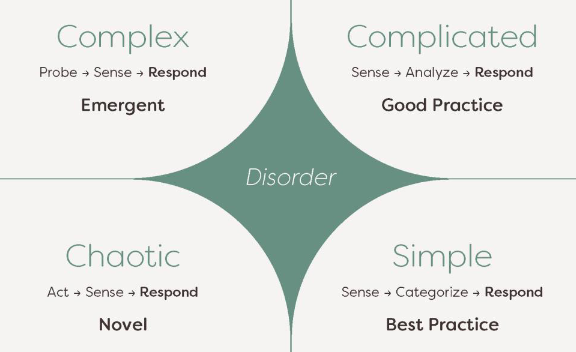
Understanding levels of complexity helps leaders make incremental changes that allow them to determine if those changes affect the problem in the desired fashion.
-Cynefin Model from Clear Impact Consulting Group.

If we relook at Cynefin Model of understanding problems, we find that simple problems are the only kind that call for the application of best practices. The others call for examination and exploration in order to determine what practices to apply. Complected, Complex, and Chaotic problems require leaders to analyze situations, probe for causes, or take novel action to gain a sense of the problem. In each case, taking small steps allow leaders to determine if they are moving in the right direction or if they have yet to establish a good understanding of the problem and require a different solution. Even when it seems everything is falling apart, small incremental changes allow leaders to test solutions, looking before they commit fully to a course of action. Yes, the time may be short and leaders may only be able to test one or two possible solutions, but they can determine if those actions will work, or if they need to continue to identify better answers.

The world can be a big, scary place, even with today’s advanced technology. Not all problems and change are easy to anticipate and respond. Leaders who understand the principal of compound interest know that series of small actions help determine if something will work or if they need to look for other solutions before committing to a particular course to deal with change. Small steps taken at the beginning of the problem-solving cycle gives leaders opportunities to look on the other side of the wall before jumping over the wall. As a result, s/he knows whether there is a little ledge or a huge drop off on the other side. Change is ever present. It is the key reason organizations need leaders. Most change is incremental, therefore, so should the leader’s response to change also be incremental. Learning these skills helps leaders make better decisions when rapid change occurs. Do not knuckle under the pressure to make a big decision up front. Find ways to make a series of little decisions when confronting a problem. Doing so puts the power of incremental change to work for you and your organization.

References

Clear Impact Consulting Group (2018). Complexity theory: The cynefin model. Clear Impact Consulting Group. Edmonton, AB.

Friends of the Bennington Battle Monument (N.D.) The battle of Bennington: the turning point of the American revolution. The Battle of Bennington Monument, https://benningtonbattlemonument.com/battle.html. Retrieved 25 August 2021

National Park Service (2018). Burgoyne’s campaign: June-October 1777. Fort Stanwix National Monument. https://www.nps.gov/fost/learn/historyculture/1777-campaign.htm. Retrieved 26 August 2021

(c) 2021 Christopher St. Cyr

Viruses, Riots, and Bears, Oh My! Providing Inspiration in Uncertain Times

That last few months have been trying for everyone around the world. The threat of plague, interpersonal violence, lack of certainty, economic collapse, and possibly war in particular regions cause many to lose sleep and suffer anxiety. If ever there was a time for leaders to step up, provide hope, instill trust, and inspire all of us to be better, it is now. There are no secrets about the actions leaders need to take to restore confidence, peace, and stability. They are the same principals leaders have used for ages.  Leaders need to assess the situation and how each crisis affects her team, identify a course of action to address the threats and seize opportunities, and communicate the plan to followers in such a way to reduce fear and create inspiration. There are no easy answers to any of the problems currently facing the world but leaders can still do things to make the situation better by following those simple steps.

In times of uncertainty, leaders create plans that allow others to begin to sort our the pieces and restore order. from pxhere.com

The most important thing leaders do in times of crisis is provide calm, calculated responses. Before selecting a direction leaders assess what is happening. During times when we are in an economic downturn, facing a pandemic, open violence in the streets, and complete uncertainty about how long each of these crisis will last, a calm response provides reassurance that at least there is stability in one part of the world. In addition to conducting a hasty Strengths, Weaknesses, Opportunities, and Threats (SWOT) analysis figure out what kind of problem you are facing from the Cynefin model.

The Cynefin model introduce in 1999 by David Snowden and Mary Boone breaks down problems into five categories, Simple, Complicated, Complex, Chaotic, and Disorder. Identify simple problems as those whose cause and effect are known. Apply best practices. If you have a problem whose cause and effect can be discovered with some analysis categorize it as a complicated problem. Apply good practices to complicated problems. The cause and effect in complex problems can only be identified in retrospect. Apply emerging practices to complex problems. If the cause and effect cannot be perceived, you are facing a chaotic problem. Novel practices are best for these situations. In the case of disorder, leaders must do something to restore some level of order before applying any solutions. Understanding the type of problem you face helps identify the best approach to that problem (click here for an infographic). 

In our current state, it appears the problem leaders appear to face a chaotic or complex problem because the cause and effect may be discovered with some probing or not perceived at all. However, leaders currently face several separate problems. True some of them are related such as the downturn in the economy caused by the pandemic. However, the economy was also affected by the riots. Each problem must be analyzed separately with an understanding of the cause and effect each has on the other. The most important assessment is the impact each problem has on your team.

Leaders find ways to navigate in uncertain times and inspire others. From pxhere.com

Once leaders identify the problem or problems, they need to develop ways to address the problem. Leaders do not have to come up with the solutions on their own. Turn to your people. If you are a smart leader, you surround yourself with people who are smarter than you in different areas of expertise. Rely on them to help find some ways to deal with the problems you face.  An example from a gun cleaning kit manufacturer is that they switched from making gun cleaning kits and accessories to creating protective masks, face shields, and hand sanitizer. They have been able to keep many of their workers employed and meet a growing demand for such products. Those leaders identified a threat to their current product line and an opportunity for a new product line and took action to keep their company viable until demand for their primary products return. 

Often in times of unrest, leaders do not know any more than their followers about what their followers know. However, those same followers turn to their leaders for messages of hope, reassurance, and inspiration. Communication during times of uncertainty is critical. Be honest. Many members of the press have pressured government officials to identify when life will return to normal. The best leaders honestly say they do not know. However, they also establish courses of action to begin the return to normalcy. They use milestones measured in data rather than time to trigger certain easing of restrictions. They tell people what is coming next and what the standard is for that next action to happen.

As a leader in your organization you should be doing the same thing. Tell your people the problems facing your organization. Tell them the steps you are taking to return to normal and what metrics serve as trigger points for those actions to begin.  You cannot take away the current pain people are feeling. If people know there is a path ahead and you are scouting that path, they will be inspired and follow you.

Leaders work with others to solve problems one step at a time. Before long all the pieces of the puzzle fall in place. Photo by Willi Heidelbach form PxHere

The current problems we face create difficult leadership challenges. During such times good and great leaders assess what is happening, identify a way to resolve the problem, and communicate their plan with others. As leaders deal with difficult situations in a calm fashion, they reassure their followers that things will become better. People who follow such leaders are better able to respond in bad situations because they know what happens next and can plan appropriately. Uncertainty becomes less scary. They know the night might be dark and stormy, but their leader goes before them making the path safer to travel.

Leading During a Crisis: Ensure Your Organization Survives COVID-19

Leadership is the most important thing right now for organizations. It doesn’t matter if you are a leader in a governmental organization, a non-profit, leading in the private sector, health care, or even a volunteer leader in a local club. Leadership during these rapidly changing times will be the difference between the organizations that thrive after COVID-19 runs its course and those that collapse during or shortly after things return to “normal”. 

The Corona Virus Pandemic is forcing leaders to rapidly implement changes in their organizations. Those who lead effective change will have advantages once the virus passes. Credit: Fusion Medical Animation from unsplash.com unsplash license 2020.

Change is inevitable. I have posted several blogs on leading change. Good leaders understand change is always happening and look to the future to ensure those they lead are ready when change happens. Most of the time that means change is gradual and like the hands on a clock, the changes are barely perceptible.  Sometimes, like the events surrounding the COVID-19 response, change is rapid and requires leaders to accelerate their leadership processes.

Joan Sweeney, Ph.D teaches there are five elements that need to be present for change to success fully happen. Those elements are vision, skills, motivation, resources, and plans (Sweeney, 2009). If any of these elements are missing effective change fails to happen. Whether you find yourself leading gradual change, rapid change, or in a crisis, you as a leader need to ensure each of these elements are in place to lead change.

SWOT

Start by assessing the situation. A SWOT analysis is common method of assessing. SWOT stands for Strengths, Weaknesses, Opportunities, and Threats. There are plenty of documents, books, and websites discussing the subtleties of conducting SWOT analysis. If this is the first time you heard this term, head to your favorite search engine. I provide a short answer about what SWOT is here. Divide a sheet of paper into four quadrants.  Label each Strengths, Weaknesses, Opportunities, and Threats. Individually or with your team identify each area. Ask the simple questions of, “What are our Strengths, Weaknesses, Opportunities, and Threats?” Use these answers to work on the five elements of change.

Vision

Most leaders understand the need to have a vision. In times of crisis, the vision is not about the distant future. The vision is about the days, weeks, and months ahead. The vision shares with your stakeholders your view of how the organization navigates the turbulent waters of the crises, in this case getting through the COVID-19 Pandemic. This element is essential so examine your strengths and opportunities so others have hope.

Leaders ensure the organization has people with the necessary skills to implement change and the motivation to use those skills. Credit: Allie Smith from unsplash.com with an upnplash license 2020

Skills

Take a look at the skills you listed in your strengths. Determine how you can use them to address the threats posed by the situation to create opportunities. Include this assessment in your vision statement. Doing so provides hope which is the basis of motivation.

Motivation

I learned on Jocko Podcast 207, that the root of the word motivation means to move (Willink, 2019). When you motivate others, you cause them to begin movement. To sustain movement, it is important for leaders to align resources with action plans. This alignment demonstrates to followers that the proposed action and change is both viable and attainable.

Resources

There is an old saying in the Army, “We the willing have done so much for so long we are now qualified to accomplish the impossible with nothing.” In times of crisis resources become scarce. If you have tried to by bathroom tissue or hand sanitizer in the last few days you know that is true in this current crisis. You may not be able to acquire the ideal resources is times of crisis so leaders need to be creative. What resources do you have that can be repurposed safely to accomplish the same thing? What resources can you obtain that come close to doing what you need done? What do you really need?

Leaders need to provide resources to implement change whether it is responding to Corona Virus or any other change in the organization. Photo by author.

In a TEDTalk in 2006, Tony Robbins encountered former Vice President Al Gore while discussing the importance of resourcefulness. He told the former VP that had he been more resourceful during the campaign he would not have needed to have his case heard by the Supreme Court. Rather he would have received an overwhelming number of votes to win the election without having to resort to a Supreme Court case. Leaders always have to figure out how to use the resources available to accomplish their organization’s mission.

Planning

Plans in crisis are important. Looking ahead and creating plans before crisis helps move that process along quicker. Even if you lack a plan for dealing with a pandemic, you probably have some emergency plans you can adapt. In the non-profit I run, we have plans to continue operations in the event of a disaster like the building burning down or other cataclysmic events. We did not have one for dealing with COVID-19. As the crisis escalated, I found it easy to re-examine our emergency plans and take relevant parts, piece them together to develop a plan that, so far, ensured we were available and able to continue to provide services to our clients.  Planning occurs rapidly in a crisis. Your plan must support your vision. You need to communicate so everyone remains motivated to apply their skills to overcome the crisis. The plan must include how to use existing resources and how you will find other resources necessary to survive the crisis.  Your plan does not have to be perfect.  Theodore Roosevelt said,

In any moment of decision, the best thing you can do is the right thing. The next best thing is the wrong thing. The worst thing you can do is nothing.

Conclusion

In this current crisis, leadership is critical to meet the changes required for organizations to survive.  Leaders must ensure they communicate a vision, coordinate the skills of stake holders, provide motivation and resources, and create a plan that effectively coordinates the actions of the organization. Leaders everywhere are faced with important decisions during this pandemic. Following the basic principles of change management will ensure your organization prepares and responds effectively to this crisis and emerges ready for the future as things subside.

References

Robbins, T (2006). Why we do what we do. TED: Ideas Worth Spreading. retrieved from https://www.ted.com/talks/tony_robbins_why_we_do_what_we_do 3/18/2020

Roosevelt, T (n.d.). Unknown publication. retrieved from https://www.brainyquote.com/quotes/theodore_roosevelt_403358 3/18/2020.

Sweeney, J. (2009). Organizational culture and change management. Command Training Series: Executive Development Course. Bristol, RI: New England Asc. of Chiefs of Police, Roger Williams University.

St. Cyr, C. (2019). Leading change. Little Leadership Lessons. Blog. available at https://saintcyrtraining.com/2019/07/

Willink, J (2019). Podcast 207: Live a life worth fighting For. Medal of honor recipient, Kyle Carpenter. Jocko Podcast. retrieved from https://jockopodcast.com/2019/12/11/207-live-a-life-worth-fighting-for-medal-of-honor-recipient-kyle-carpenter/ 3/18/2020.

Leading Change

“Tis impossible to be sure of anything but death and taxes.” (Bullock, 1716), everything else is subject to change.

Change is certain. Be a leader of change.

I wrote this article on the weekend of the 50th anniversary of man landing on the moon. It caused me to think about how that happened. There are lots of examples of leaders creating great things in government, business, and in social services after creating a vision of what could be dating back to the beginning of recorded history. As I study and apply leadership lessons, I found there are five principals of leaders who effectively lead change within their organizations. Those leaders set examples by living and enforcing organizational guiding principals, communicating a clear vision for the future, establishing goals and benchmarks, taking disciplined action to accomplish required tasks, and possessing humility.

Leaders establish guiding principals through their behavior. The old maxim, “Actions speak louder than words,” says it all; leaders who say respect is important and treat others respectfully are more convincing that those who treat others disrespectfully. Whether you are new to the organization, in a new position, or a veteran in a leadership role, you choose your values. Ensure they are aligned with the organizational principals, or advocate to changing them. It takes time to establish character, but even if you have been an angry, disrespectful, fly-off-the handle kind of a leader, you can change. Others will notice and your character will change.

In addition to behaving in accordance with your professed and the organization’s values, leaders ensure others also develop character. You cannot ignore a direct report’s violation of an organizational principal and fire a more junior person for the same behavior. If your organization values people’s time, then the person who is consistently two minutes late for work, meetings, and leaves five minutes early needs to be held to account. Not every offense requires firing. Not every offense requires a written reprimand or other disciplinary action. Often pulling a person aside and pointing out their faux-pas is enough to gain compliance. When misbehavior is displayed by otherwise compliant people it may signal trouble. Pulling that person aside presents an opportunity to address the trouble and become aware of their problem.

A few years ago I gave in and went to the eye doctor because I noticed road signs were not as clear as I remembered them. I needed glasses. Over time my vision dulled and I needed someone to help me see clearly again. An organization’s vision is the same. In the beginning everyone knows why they belong, where they are headed, what they are doing, and how to do it. As the organization grows older, the vision fades, just like people’s eyesight.

Help other people see your vision of the future.

Leaders often think they only need to cast their vision before their followers once and they are good for life. They are wrong. There is a reason all major religions have services on a weekly basis. That reason is to refresh the soul. Face it, after ten years of church going, you probably have heard all there is to hear. Services keep your faith fresh.

Likewise leaders need to continually project their vision for the organization. Those who work in the organization need to see it so they can properly care for clients and customers. Clients and customers need to see it so they understand why you do what you do; it builds brand loyalty. Vendors and contractors need to see it so they are on the same page. Leaders, from each member of the Board of Directors, to the shop foreman, need to see it so they can magnify and amplify the vision for their followers.

Vision statements are not one and done. Leaders constantly need to proclaim their vision to inspire everyone they encounter. Leaders develop credibility when they not only talk about their vision, but take action to make it a reality.

Based on the leader’s vision, the leader and junior leaders establish goals to accomplish the mission and vision. Goals should be specific, measurable, attainable, relevant, time bound, and task oriented. Many of you will recognize the SMARTT goal setting model. I added and extra tee for the task steps.

Task steps are important. They provide the directions to achieve the goal. The goal is your What. The task steps are the How.

Use your vision of the future to establish goals.

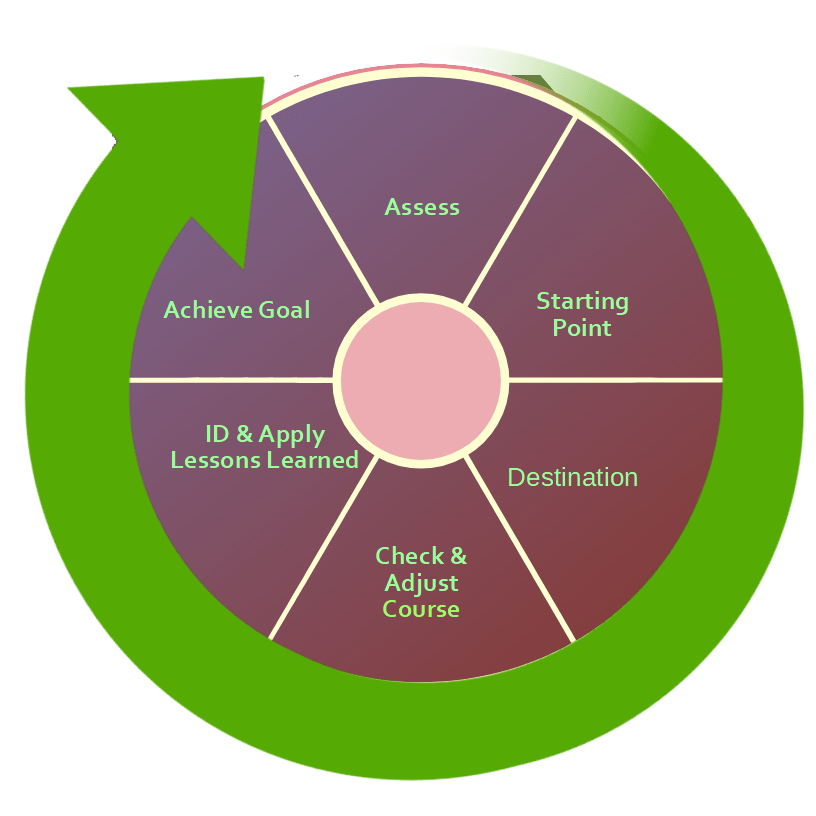
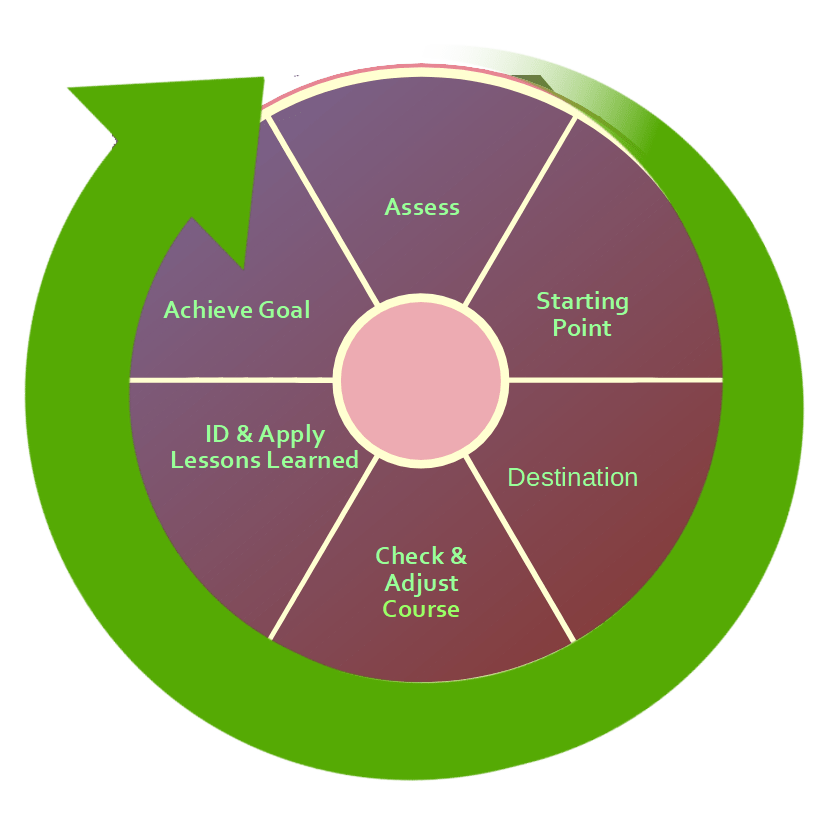
Leaders should establish a plan for goal setting. Good goal setting happens in cycles. The first step is to assess. Your assessment establishes your starting point and destination. As you walk your selected path, you will encounter life and may find you stray from your planned path. Periodically check your progress and adjust course as necessary. As you move along, you learn; apply those lessons along your journey. As you near the end of your journey, it is time to assess again and establish new goals. Click here http://bit.ly/2YfQH0Y for a short lesson on the goal setting cycle.

Disciplined action ensures accomplishment of critical tasks for mission success. Discipline has several meanings. In this case I intend it to mean controlled behavior resulting from training (adapted from https://www.thefreedictionary.com/discipline). Action means activities required to complete the mission. Disciplined actions are planned and controlled activities that are scheduled, measured, supervised, and coordinated across all teams in an organization.

To be effective, organizations must plan. Planning includes scheduling, measuring, supervising and coordinating actions. Planning requires discipline. Planning also identifies key performance indicators. Controls are necessary to establish measures of performance and effectiveness (insert link to that blog). Supervision is only effective if supervisors know what they are looking for in performance and effectiveness. Coordination ensures things are going according to the plan across all teams. Coordination communicates the plan and status of activities to everyone.

An example of disciplined action are the steps required to make a widget and ship it to a customer. In the planning stage, leaders determine what needs to be done, what resources are required, what will be measured, how often, by whom, and how to coordinate across all the teams. The organization identifies the material, machines, and people required to make the widget. They order material and hire people. They schedule activities such as when raw material should arrive, when workers need to be at their machines, when product will be shipped, and the means for delivery to customers. Coordination is required so there is material on hand to manufacture widgets when workers are available; trucks are available when enough widget are ready to ship, and adequate capacity exists to meet deadlines. Coordination is an on going process. For example, if machine operators are sick, it causes reduction in production. The shipping team needs to know so they can adjust shipping schedules.

Disciplined action requires advanced planning to accomplish leader goals.

Much of this step is as much management as leadership. Management is an important leadership skill. People are involved in each part of disciplined action and that is where the leadership comes into play. Fail to lead disciplined action, and your organization may achieve a task, but it will not remain successful.

I remember reading in Seven Habits that Stephen Covey claimed to have studied great people for years before boiling down their secret of success to seven habits. I thought, “Why would anyone dedicate themselves to such work?” I found myself reviewing Good to Great a short while ago and read Jim Collins’ assertion that Level 5 Leaders are humble. That was not the first or last place I encountered that idea, but it struck me then how many times I learned that point from so many other sources including people I chose to follow. I now wonder if Covey stumbled across those seven habits the same way I found the five principals of leading change.

Humility is an important trait for being a good or great leader. Great leaders do all the things I present in this article, but they also recognize they lack certain skills, lack knowledge, lack connections, and other important resources to make things happen. Great leaders recognize they need to rely on others to help them accomplish the organization’s mission. If they are the smartest, fastest, most skilled person in the organization, they are leading the wrong group of people, and they know that. They seek out people who are smarter they them. They hire others with greater skills. They know these others are their superiors and they are blessed to lead them, or put another way, they know they are blessed those high speed individuals choose to follow them.

You can develop humility. It is a skill that can be learned. I saw it in action during my first General Staff meeting. In a General’s staff meeting there are standard scripts everyone follows to ensure the General receives the information he needs to lead the force and make important decisions. According the script, other staff sections presented their canned information to the General. Then it was my Colonel’s turn to present.

At the time, Colonel Shawn was the Director of Logistics. On schedule, the slides with the logistics information were projected on the screen. COL Shawn hardly noticed. Instead he looked at the General and said, “Sir, I know you’ve seen my slides and our information is pretty good this month. If you don’t mind, I want to tell you about the great work that Kris Skinner has done this month with our surface maintenance program.” The Colonel went on about LTC Skinner’s accomplishments that month. At the end of the story COL Shawn asked the General if he had any questions about his directorate’s data. When the General said he did not, Shawn introduced the next staff chief.

I was impressed. I thought it was a one time thing to bring some attention to the boss about good work done by his followers. The following month however, COL Shawn had another story about the good work another member of the section. Again at the end, instead of getting into the data on the slide he moved onto the next speaker. COL Shawn had someone every month he highlighted at the staff meeting. Now of course none of those workers acted independently. Col Shawn knew what each was doing and used all his leadership ability to encourage them to do the greatest job they could do. Each individual responded by regularly exceeding the standards and expectations.

Disciplined actions result in desired change.

COL Shawn was promoted to Brigadier General. He is a confident and competent leader. He accomplished plenty of big things in his own right. Yet when ever he talks with someone, he learns about them. He shares what he learned in a recent book he read. He asks what he can do to make things better for lower-level leaders. He practices humility.

Change is inevitable. Leaders must navigate future changes. Even choosing to maintain a certain level or quality of business without growth or shrinkage requires organizational change. Laws change. Customers change. Demand for products changes. Organizational staff change. Leaders who do not lead change will find there is no one left to lead. Leaders effect change by creating a desired vision of the future. They set and help followers set specific, measurable, attainable, relevant, time bound goals with task steps. They plan and manage disciplined action to accomplish the mission and change. They are humble people who understand they still have much to learn. Change is coming. Are you leading to adapt to that change?

/ —- Photo Credits —-/

  • Coins by Steve Buissinne from Pixabay using pixabay license.
  • Eyeglasses by Skeeze ibid
  • Fortune Telling by Tumisu ibid
  • Agenda Calendar by Rawpixel.com from http://www.pexel.com using pexel license
  • Man Outdoors Snow no attribution available from pxhere.com using 0CC license

/ —- Reference —-/

Bullock: https://www.mightytaxes.com/death-taxes-quote-history/ retrieved 7/31/219

Maximize Return on Investment for Training

Companies spend large sums of money to sending employees for training to improve performance. When employees return, they resume ineffective habits. Ken Blanchard says in his book, KNOW, CAN, DO, that he is frustrated people do not implement the changes he teaches. The point of leaders sending employees to training is to develop to new, effective behaviors in employees and become better people. Here are some ideas how leaders effectively help employees implement behaviors learned at training increasing their return on investment (ROI) on training.Man_taking_notes-PXHere.jpg

Require employees to take notes during class. Note taking improves retention. Hand written notes are better than typed notes in the classroomi. When they return to work make them then sit down and type those notes. Typed notes are better than handwritten notes after the class. Typing notes requires the student to revisit the material again providing an additional opportunity to learn improving training ROI. It also provides a readable copy of the notes which will be more useful a few years from now. They understand the type written notes better than their hieroglyphs taken in class. Typed notes should include the title, location, and date(s) of the training, the name of the employee completing the notes, the name of the presenter, and a website for additional information. Typed notes are necessary for a later step in this process, sharing learning with others.

Once your employee has completed their note typing, have them report to you the big concepts taught in the class. Ask them the one or two take always they think are most important to implement in their work behaviors. Work with them to develop an action plan or goal. There are a few other blogs here on goal setting and developing personal improvement plans. As the leader, you have the responsibility to periodically check in with the employee to monitor progress. Employees require your guidance to overcome obstacles and provide encouragement. Set aside 30-60 each week in the first few weeks after class to meet with the employee and measure progress.

One great way to improve learning is teaching. Have the employee present what they learned at your next staff meeting. There are several advantages to having employees present after training. One is you increase your return on the investment you made on that training event. Every employee learns something new, not just the employee who attended the training. Second, the employee becomes the teacher and for a short time, the subject matter expert. This puts them in the spotlight. Everyone craves recognition. This is a great method allowing employees to shine in front of their peers. Third it provides you an opportunity to discuss why the behaviors learned in that training are important. You reinforce for staff what new behaviors you expect from all of them. The message about expected new behaviors comes from a peer. Peer pressure is strong. Use it to your advantage.

Remember those typed notes? Copy and distribute them during the short training session. The notes should include the name and email address of the employee who took the notes. Having the employee’s name and email on the notes provides contact information for others. When other employees have questions, they are able to contact the company’s subject matter expert and receive answers; another opportunity for the subject matter expert to shine.

It may sound a bit overboard to provide all kinds of recognition to an employee returning from training. In some organizations, training is viewed as punishment. People in those organizations think the only reason the company would send someone to a training event is because they messed up something. The training is the company’s way of telling the employee and others about your mistake. Highlighting the positive impacts from training encourages others to want to attend and learn. It is the basis of a learning and improving organization.

Since your employee returned from training, you worked hard to groom him or her into a subject matter expert. You allowed them to share their new knowledge with others. You developed a plan encouraging them to implement changes in behavior learned at the training. Now reap the rewards. Appoint your self-grown expert as a mentor. trusted_rock_guide-andrew.PNGAssign a protegee to the mentor who is dealing with performance problems. Often we think of performance problems as coming from problem employees. Frequently though performance problems come from inexperienced people, or people assigned new tasks without appropriate background or training. Use your subject matter expert to teach this person how to improve. As they work with the newer person, they may find a need to refer back to their original class notes. Good thing they typed them so they are legible! Because you modeled goal setting with your employee, they use that skill to help their protegee set goals. Your newer, inexperienced person benefits from the training provided to the mentor weeks or months ago, another return on your investment. Instead of sending this person to the same training to learn the basics, you book them for something different. When they return, repeat the process and you have a new expert on a different topic.

As time passes, you find many of your people have gone to a wide variety of training. Some learned to become effective leaders. Others learned how to improve customer service. All attend regular training about advances in your company’s field of expertise. Every employee is up on the latest in each area because they benefit from the micro trainings each new subject matter expert provides after an off-site training opportunity. Your people acquired lots of information boiled down in carefully typed class notes. Many have become strong leaders. Eventually people move on to other activities in life. Because you took the time to train everyone about a wide variety of issues from leadership, to cutting industry trends, and building strong networks ensuring customer needs are met, you have no problem replacing leaders. Someone is ready to step into the role. This is the final pay off from that training investment perhaps years ago. You have the right people in the right places with the right training and experience so when someone leaves, no one misses a beat.

Sending employees to an off-site training is a big investment. Good leaders understand how to leverage the learning of one person so that everyone on the team learns. Using these skills the ROI on your training investment. Employees use a training event to help other employees develop goals changing behaviors, the objective of training. Good leaders spotlight the employee’s learning and behavior changes by helping them become subject matter experts. Good leaders set the stage for people to want to go to training because they understand you want them to stick around for a while. You developed a library of knowledge in the typed class notes which is available for everyone. Employees have contact information for subject matter experts. Employees mentored others learning to lead. You influenced change. You influenced others to effectively improve behaviors and accomplish the organizational mission. You maximized the return on the company’s investment on training. Next time someone comes back from training, put them to work so everyone becomes better and maximize ROI on your training investment.

References

i Doubek, James , and NPR Staff. “Attention, Students: Put Your Laptops Away.” Weekend Edition Sunday. April 11, 2016. Accessed March 09, 2018. https://www.npr.org/2016/04/17/474525392/attention-students-put-your-laptops-away.,

and

Mueller, Pam A. “Take Notes by Hand for Better Long-Term Comprehension.” Association for Psychological Science. April 04, 2014. Accessed March 09, 2018. https://www.psychologicalscience.org/news/releases/take-notes-by-hand-for-better-long-term-comprehension.html.

Helpful Links

For coaching skills from Ken Blanchard Companies: https://resources.kenblanchard.com/whitepapers/coaching-skills-for-leaders-the-missing-link

Good SlideShare summary of Know, Can, Do:

https://www.slideshare.net/ramadd1951/know-can-do

For more information on goal setting:

https://www.slideshare.net/ChrisStCyr1/goal-achieve-cycle

For a goal setting worksheet:

https://www.slideshare.net/ChrisStCyr1/sample-goalsworksheet.

Photo Credits

Note taker from pxhere.com.

Climbers by Andrew St. Cyr used by permission