
-Photo by Eixo, Public Domain
A few years ago, I picked up a book titled The Battle of Bennington: Soldiers & Civilians by Michael P. Gabriel while visiting the Bennington Battle Monument. While not the most riveting war book I’ve ever read, what impressed me were the number of first-hand accounts of the battle as told by the veterans who fought there. Some of the accounts were official reports by various commanders under John Stark and Seth Warner. Most were personal Soldier accounts, many made years after the battle, to support pension claims.
The Battle of Bennington was not the largest battle in the American Revolutionary War, but it was probably the most pivotal battle. As the British move south from Quebec to link up with forces in New York City, their supply lines were stretched. In order to complete the mission, they required the stores at Bennington. The loss there denied them access to food and ammunition necessary to continue their campaign. Although the British were able to win the first Battle at Saratoga, when counterattacked by American forces, General Burgoyne was compelled to surrender his forces, arms, and ammunition.
As one reads the accounts of the Battle of Bennington, it is hard not to miss the incredible courage demonstrated by the militia forces in that fight. The Soldiers from the New Hampshire militia had only been formed a few weeks before the battle by John Stark. Stark had left the Continental Army after a dispute with GEN Washington but was pressed into service to lead the State militia upon returning to Manchester. Part of that role included helping the Green Mountain Boys from the Vermont militia defend the New Hampshire Grants in what would become Vermont.
Burgoyne sent a detachment of Hessians to seize the provisions if the Continental Army at Bennington. Just outside the town, they established an entrenched defensive position on a hilltop as foul weather moved into the area (I can only imagine what it was like during that night. My first trip to the battlefield was cut short by an incoming storm. The thunder and lightning were terrifying that afternoon, and I had a dry, warm car to keep me safe). Thick woods still surround the encampment, which gives modern visitors a real feeling of what it was like to attempt to assault the redoubt on top of the hill. The only thing missing most days is the slippery mud. In small groups, each unit attacked by different routes. In the days before radios, and with limited visibility to coordinate movement, no unit really knew of the promised support to their left or right would materialize.
At the end of the day, the British lost over 900 men, the rebels 70.
While this was a small battle, it was important. Burgoyne was not able to obtain the supplies he needed to continue his attack. Instead, those same provisions were used to sustain the Americans during the second Battle of Saratoga that led to the British surrender.
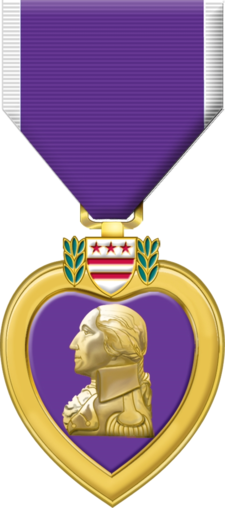
-USAF photo
As I said in the opening paragraph, the courage displayed by these men was amazing. Another thing stood out to me as I read their accounts, the trouble many of them faced collecting pensions promised them by the Federal Government for their service. Talk to any veteran today about their experience dealing with the VA. Most have at least one story of things the Department messed up. While it is human to err, the theme dating back to the Revolution and veterans is the same, greater struggles to receive the promised care for their wartime, service connected injuries that the actual battles that inflicted those wounds. Sadly, the biggest barrier to veterans receiving care is the very selflessness that runs through many combat veterans, their desire to deny medical treatment in order to continue fighting with their comrades. Claims made in the future are difficult to prove without that medical report at the time of the injury. By choosing to stay in the fight and not have their minor injuries documented, service members deny themselves the opportunity to easily apply for and receive future benefits to receive treatment or payments. Instead, veterans have to find comrades who will step up and verify that their battle buddy was injured in combat. Even when such evidence is available, the VA will often deny that such injuries were all that bad because the service member continued to fight. The bureaucrats do not understand seeking medical treatment is always an option under fire. Many of the accounts from Bennington veterans contain statements about why they were not able to seek medical attention, or how the military lost the records of their participation and injuries.
Veterans who fight our nation’s wars should not have to fight our nation to receive compensation and care for their service connected injuries and disabilities. Perhaps in the next 250 years things will improve. Veterans today have better access to records than those in the past. Still too many fight the same fight their predecessors have to get the government to take ownership of the injuries military service inflicted upon them. However, like the protection of liberty requires constant vigilance, the fight for care and compensation also requires persistence., and has for almost 250 years.
References
American Battlefield Trust (2002). Bennington. American Battlefield Trust.https://www.battlefields.org/learn/revolutionary-war/battles/bennington. Retrieved 11/10/24
Gabriel, M. (2012). The battle of Bennington: Soldiers & civilians. History Press. Charleston, SC.
National Park Service (N.D.). The Battle of Bennington: An American victory (Teaching with historic places). National Park Service. https://www.nps.gov/articles/the-battle-of-bennington-an-american-victory-teaching-with-historic-places.htm. Retrieved 11/10/24


