Leading with Appreciation

Not all bosses are leaders. Bosses are, well, bossy and ungrateful. Leaders express thanks. Leaders create safety. Leaders seek input. Leaders provide and willing receive feedback.
-Photo by Lukas on Pexels.com

For too long the image of a boss has been a person who expresses little appreciation for the work of their employees and barks orders expecting immediate compliance. These bosses are not well respected, are marginally effective, and frequently lose people to others. Sometimes well respected leaders act bossy. However, they can do it because of the respect and influence developed by showing gratitude for their before critical situations happen. Leaders that regularly show appreciation they set an important example, achieve better results, retain team members longer, and develop those they lead to become leaders.

In my Trust is the Cornerstone of the Leadership Foundation series, Setting the Example is one of the facets of that Cornerstone. When leaders influence from a place of gratitude, they begin the process of changing the way their brain functions. In turn, when they praise the work of others, and express appreciation for accomplishments, they become known as a positive influence. Others want to work for and follow leaders like this. According to John Antal in Leadership Rising, people who find reasons to be thankful are 25% happier than those who are resentful (page 107). As you publicly express your gratitude to those you work with, bosses, peers, and your team, not only do you become happier, those around you become happier. Publicly praising others increases your influence, which improves your leadership power.

Like any skill offering apprciation and gratitude rquires practice. The more you practice thanking others for their work and contributions, your offers of praise improve. You help create a culture of gratitude and begin the process of developing the next generation of leaders.
-Photo by Mikhail Nilov on Pexels.com

Feedback helps those you lead to grow. This means you need to speak with your people about the quantity and quality of their work on a regular basis. Waiting for an annual review is too late to praise or correct. I once had a subordinate leader who was struggling to influence his team to accomplish assigned tasks. I am often in the spaces where people work in order to watch and learn. During several of my walk abouts, I noticed a particular leader provided information to his team well. He failed to assign tasks to team members, or seek input when possible about ways to accomplish the tasks assigned to his team. When I brought this to his attention, he said they should just know what to do. I asked him how they were supposed to know what to do unless he told them what parts of the task were their responsibilities. He stared at me. We discussed the importance of not only directing the overall work to be done, also assigning parts of the task to an individual so they would know what was expected of them. We also reviewed the importance of checking back to ensure people were meeting the expectations. I worked with this leader for a few weeks, but it wasn’t long before leaders senior to me noticed the team’s lack luster performance in a fast-paced operational environment, and he was terminated. People only know what to do and how well they are doing when we provide feedback as leaders. Opportunities exist to express gratitude every time leaders offer feedback for observed improvements.

Leadership is influencing others to implement behavioral changes to accomplish the organization’s mission. Leaders who lead well surround themselves with quality, motivated, competent, but imperfect people. Too many conversations about improvement begin from a position that something is wrong. Using an appreciative inquiry model allows leaders to acknowledge the great things people do. Appreciative inquiry recognizes all individuals and organizations have room to improve. Start improvement discussions by appreciating what people accomplished and express gratitude for their efforts. This creates safety, allowing them to consider what changes improve the good they accomplished to something better. Asking appropriate, probing questions to identify shortfalls and possible improvements provides personal investment for the changes the leader seeks. This process reduces resistance to change and improves outcomes because those creating the change, developed the plan. Gratitude is the foundation of the process and provides physiological safety required for effective teams. Appreciative inquiry also develops the next generation of leaders as they learn how to identify and fix problems.

Giving thanks to others develops leadership influence. Asking appreciative questions allows others to solve their own problems. Offering gratitude builds a foundation to build your team.
-Photo by Pixabay on Pexels.com

Expressing gratitude is an effective way to lead others because it builds trust and safety for your team. When you express appreciation for the good things others do, you set an example for others to follow and establish a positive culture. From this foundation, you become known as a thankful leader which provides you greater influence with those you lead, your peers, and your leaders. Appreciative feedback ensures those you lead know what is expected of them, they will be recognized for the efforts, and are more likely to produce effective results consistently. Effective leaders use appropriate, probing questions. Those questions help establish what things are going well and allow followers to identify improvements. Followers discover for themselves how they can implement effective changes that improve success for them and the organization. Through these appreciative practices, people are more effective, create positive change, increase leadership power, and help the next generation of leaders develop from their leader’s example. In this season of thanksgiving, think of ways you can improve your gratitude practice with those you lead, reap the rewards of improved effectiveness, and empower your people. Thanks to all my faithful and regular readers.

References

Antal, J. (2021) Leadership rising. Casemate Publishers. Havertown, PA

Bushe, G.R. (2012) Appreciative inquiry: Theory and critique. In Boje, D., Burnes, B. and Hassard, J. (eds.) The Routledge Companion To Organizational Change (pp. 87-103). Oxford, UK: Routledge.

Duhigg, C. (2016). What Google learned from its quest to build the perfect team. The New York Times Magazine. Feb 25, 2016 ed. Retrieved from https://www.nytimes.com/2016/02/28/magazine/what-google-learned-from-its-quest-to-build-the-perfect-team.html on 4/11/2022

Giuliano, G. (2024) Coaching for (a) change: How to engage, empower, and activate people. (1st Ed.) Wren House Press. E-Book.

Lask, M. (2020) Frameworks for leadership development. Leader Exchange and Coaching Seminar, Cohort 12, Northeast Regional CAC, Philadelphia, PA

Miller, C, Aguilar, C., Maslowski, L, Et al. (2004) The nonprofits’ guide to the power of appreciative inquiry. Community Development Institute. Denver, CO.

(c) 2025 Christopher St. Cyr
Always written with natural intelligence, no matter how flawed!

Veterans Day: The Challenges and Coins

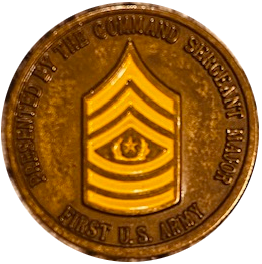
a picture of the challenge coin from the first army command sergeant major.
This is the coin I received from the First Army Command Sergeant Major in 1998. This and a five dollar bill will get you a cup of coffee at Starbucks or Dunkin, and in some circumstances, maybe a free beer at the enlisted club. While the coin may lack monetary value, it has a great deal of sentimental value for this old Soldier.
-Photo by author

April, 1998, I found myself attending drill in Orlando, FL with the New Hampshire National Guard State Command Sergeant Major. On this drill weekend, the rest of my battery was in Jericho, VT shooting howitzers in the snow while I enjoyed beer in a hot tub in Florida. I had been selected as the 1997 Noncommissioned Officer of the Year for the New Hampshire Guard. The eastern regional competition was in Orlando that year. Someone else won the competition at this level, but all the competitors received a challenge coin from the First Army Command Sergeant Major, CSM Kenneth Cummings. This was my first, but not the last, challenge coin I received in my military career.

Challenge coins are an old military tradition. If you research internet sources, you will likely find versions of three stories about the origin of challenge coins. The first dates back to Roman times, when the leaders of Roman Legions had coins minted with the Legion emblem. They were awarded to Legion Soldiers for honorable actions. The next is a story of a World War I pilot who feared he or members of his unit would be shot down behind enemy lines and then shot by allied forces while attempting to cross into friendly territory. He had tokens minted with the unit heraldry and issued them to all the pilots for proof of identity. A third common story dates back to watering holes in Vietnam. Soldiers who lacked some memento to prove they had engaged with the enemy in close combat were required to buy everyone in the club a round.

However, there are two other stories I know related to challenge coins. The first is from an episode of Turn, a television series about GEN Washington’s spy network. In this episode, one of the characters is challenged to prove he is a member of the network. He produces a coin, mixed in with other coins of the land, to show he works for Washington. Another story is in the book written by COL (r) David Hackworth, About Face: The Odyssey of an American Warrior. I would cite the page of this story, but I am not digging back through a 900+ page book to find it! COL Hackworth tells a story about issuing every Soldier in his Battalion a card with his personal and operations center’s contact information. Every Soldier was required to carry the card with them at all times. If they found themselves in some sort of trouble, they could call for help. This card was an inspectable item. Members of the Battalion were often challenged to produce their card.

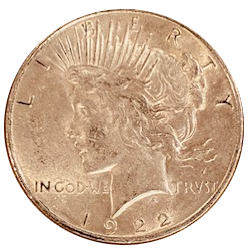
picture of a silver dollar presented to the author by second lieutenant Krauklin when he was commissioned.
This is the siler dollar presented to me by then 2LT Krauklin. He still serves as a commissioned officer today. We worked together again after his commisioning.
-Photo by author.

Another coin tradition is that of the First Salute. Upon receiving his or her commission as a Second Lieutenant, Officers give a silver dollar to the first enlisted Soldier to render them a salute. Today that tradition is built into the commissioning ceremony. Near the end of the ceremony, each new 2LT is called forward to receive his or her first salute. The enlisted person is selected by the new Officer and is commonly a person who had a positive influence in their life.

In 2004, I was deployed to Baqubah, Iraq along with about 100 other American Soldiers at a downtown Police Headquarters. SGT Peter Krauklin was one of the Soldiers who worked in our operations center, the vital communications link between the Soldiers guarding our tiny perimeter, out on patrol, and with our higher headquarters. Krauklin was a last minute addition to our unit when it was activated. He had zero friends or acquaintances when he arrived. While I cannot say I went out of my way to make him feel part of the team, that is my method of operation. After my second deployment, I was promoted to Master Sergeant and reassigned to the Modular Training Company,195th Regiment (NH Reg Tng Inst) as the Chief Instructor. I was required to complete several training programs to be qualified, including the Platoon Leader Trainer Qualification Course, conducted by the 195th’s OCS Company. A student in that class was OC Peter Krauklin. When OC Krauklin completed OCS the following September, he selected me to present his first salute at his ceremony. Of the many coins I have, the silver dollar I receive from 2LT Krauklin is one of my most cherished.

Photo of the 42nd Infantry Division Command Team coin which shows 1/2 of a rainbow representing the loss of 1/2 of the Soldiers in World War I
This coin from the 42nd Infantry Division was awarded to me by both the Commanding General during a visit to our unit in 2022, and his Command Sergeant Major in 2023 at his Change of Responsibility Ceremony. I told the CSM his CG had already given me one.
-Photo by author

I often encourage others to do more than thank service members and veterans for their service. Instead, ask them to tell a story about a memorable time from their service. One way to get a vet to open up is asking if they ever received a coin. Ask if they have it with them and to tell the story of how they received it. Many times military members, past and present, have official awards and medals, but for personal reasons, they may not want to talk about them. Coins however are unofficial awards, or sometimes personal purchases to remember a place or event. Soldiers want to talk about those situations. Asking about their coin is one way to better understand the service and sacrifice of those serving or served in the military.

Units will often mint coins for their members to memorialize specific events. The coins will be available for members through purchase or provided by leaders with their own funds. One of the most common reason for every unit member to receive a coin is deployment. A company or battalion will design a coin that is specific to service in that period of time. Such coins are completely appropriate with the history of challenge coins, as the only way to receive a copy of that particular coin is to belong to the unit at the time of issue.

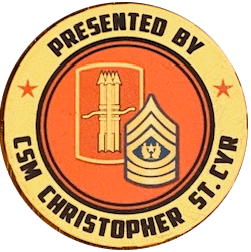
This picture shows a coin the author had made to present to Soldiers. It features the 197th Field Artillery patch consisting of five arrows joined together representing each of the original five counties in New Hampshire, and the rank insignia of Command Sergeant Major.
As the Command Sergeant Major of the 197th Field Artillery Brigade, the Army provided 50 coins for me to award to Soldiers. I did not feel that was enough, so I order my own. The Army also had strong rules about how to present coins that did not apply to the coins I purchased. I know there are Soldiers across the military will tell the story of how they received this coin for years. -Photo by author.

While the origin of challenge coins will never likely ever truly be known, they have become a symbol of belonging. Coins represent the stories of a Soldier’s career. Those small tokens represent their participation in events that become history. Coins demonstrate recognition for accomplishments, belonging, and excellence. Each has its own story of service, sacrifice, honor, and is part of the legend of military service. When you see a current or past service member, after thanking them, ask if they have a challenge coin. Then ask them to tell the story of their coin. You can bet that no matter how few or how many she or he has, they can tell you the story of each of them.

Strategic Assessments; Wrapping up the SWOTAR Model

Hot air balloons soaring through the sky.
SOAR and SWOT are two strategic assessment models that are better together. The SWOTAR model allows leaders to get above the problems of SWOT to really see the landscape. Like hot air balloon, you start on the ground and then look higher returning to Earth at the end of the ride
-Photo by Mikka on Pexels.com

Over the last several months, we have explored strategic assessments using the SWOTAR model. The SWOTAR is a strategic assessment model helping organizations determine where they are, changing environmental elements, and a direction for their future. There are other models, and SWOTAR is a melding of two of those models, SWOT and SOAR. The SWOT model encourages organizations to analyze their strengths, weaknesses, opportunities, and threats. The SOAR model focus on strengths, opportunities, aspirations, and desired results. While the two are very close, both miss important elements the other provides.

SWOTAR combines the two models and creates a better assessment of the environment, and the desires of the leaders. Both are required for an organization to determine what comes next. SWOTAR challenges leaders and stakeholders to assess their internal factors such as strengths and weaknesses; external factors such as opportunities and threats; and to voice their aspirations for the future and identify what results help them achieve those aspirations.

Each assessment is important to complete as an organization develops its strategic plan. SWOTAR identifies where you currently are internally and externally. Use the model to scans internal and external factors impacting change. Finally, it speaks important things necessary to achieve leaders and stakeholder expectations.

Conduct Parallel Assessments

While the SWOTAR model examine six individual areas, assessments of each are all related to the others. Consequently, leaders conduct the analysis of each area concurrently. Done this way, you will find when you identify an opportunity, you will also want to scan for threats, which in turn help evaluate the likelihood of achieving a specific result. As you move through the process, you are looking to match strengths, opportunities, and aspirations. Additionally, you want to identify how those positive attributes compensate for weaknesses and threats so you can achieve desired results.

Not too far from my home was a mill that was famous for making the best wooden cogs in the world. In the 1700s and 1800s, that was great for them. The company manage to stay in business until the 1980s because of the quality of their workmanship.. However, as more manufacturing transitioned away from the use of wooden cogs, demand shrank. A successful strategic assessment may have helped them diversify and skill exist today.

Loop around, but Don’t Swirl around

Colors swirling around representing the difference between looping back and getting caught swirling around the SWOTAR model.
Because the elements of SWOTAR are related, it is important for leaders to loop around again to each. Looping around a few times is okay, but do not start swirling around or you will get dizzy and fail to move forward.
-Photo by Landiva Weber on Pexels.com

One of the problems with the SWOTAR, or any strategic assessment model, is determining when you have completed enough laps. No plan is ever perfect. As GEN Patton noted, it is important to remember with any plan that the enemy always gets a vote. President Eisenhower said that plans were worthless, but the planning process was invaluable. What both of these leaders knew was that there is no such thing as a perfect plan. Likewise there is never a perfect assessment. Taking time to assess strategic issues allows leaders to think about possibilities. As a result, when a government regulation changes, the economy tanks, or your competition beats you to the patent office, your planning probably created some discussion about such eventualities. That allows you to adjust your plan as the world changes in ways you could not expect. However, it is also true that an 80% plan delivered on time is 100% better than a perfect plan completed ten minutes late. Recognize when enough loops of SWOTAR have been completed and move on to the next stage of the planning process. Many people and organizations get stuck in this loop and fail to notice they are swirling around without moving forward.

Selecting Strategic Direction and Goals

Use your assessments to pick a direction and establish goals. Now that you know where you are, and what aspirations and results you want to achieve, decide what direction and what three to five high level goals will help you move in that direction. Writing your plan improves the likelihood of achieving your desired results. Things change over time, so keep your goals and the task steps specifically general and high level.

When developing short term goals, one year or less, I encourage the use of the SMART model. However over the course of three to five years, enough things change and detailed specificity can cause more problems than general direction. So if you select three goals that build on each other to accomplish over five years, apply SMART to the first goal.

For example, a goal you seek to achieve for your nonprofit might be to increase available unrestricted funds by 30%. In the long term, you might have a series of task steps like:

-identify current amount of unrestricted funds

-add 30% to that amount

-identify two fundraising activities in the next two years that will help us raise that amount of money that can be repeated annually.

Future readers understand what needs to be done. When this goal reaching a point of action, increase the specificity of the task steps like:

  • Identify how much has our unrestricted reserve increased since the inception of our strategic plan?.
  • Identify how much more we need to raise to reach our 30% goal.
  • Conduct a key leader retreat on August 15th to identify two fundraising activities to meet these objectives in the next two years that can be repeated annually.
  • Appoint a committee of five members to each activity selected for fundraisers
  • Require each committee to report progress to the BOD each month.
  • Execute each fundraiser in the next twelve months, and follow up with a second event in the following twelve months.

Notice how the details are more concrete when it comes time to begin the action.

Writing your plan is important. There are a variety of ways to write a strategic plan. Use a format that is easy to understand, easy to share with others, and contains enough details so everyone will recognize success. Goals are only one part of your strategic plan. Other important aspects include:

  • Organizational vision
  • Updated mission statement
  • Guiding principles or if you prefer the term, values, and
  • Your timeline for completion.

Each of these elements should be part of your strategic assessment. For example, as the leaders discuss aspirations, you may realize that your past guiding principles and your aspirations are not aligned. Discuss and decide what changes are needed to realign principles and aspirations. In most cases, you may make no changes or small changes to your mission. Sometimes organizations realize the world around them is changing and they need to make major changes to remain relevant. An example of this is Kimberly-Clark’s decision to sell all their paper mills, leaving the coated paper making market, and competing in consumer paper products. When Kimberly-Clark changed their aspirations and desired results, they had to complete a new mission statement.

Change is hard. Without change, there would be no need for leaders or leadership. Strategic assessments help organizational leaders understand where they stand in the world, try and understand what the future looks like, and create changes so their organization remains alive, vibrant, and relevant to their stakeholders. Whether you lead a for-profit, non-profit, governmental, or civic organization, as a leader, you need to always be looking forward. If you drive always looking in the mirror, you will crash. Safe drivers look forward while remaining aware of their surroundings. Strategic assessments help leaders focus on the future and look forward. While there are a number of strategic assessment models. SWOTAR provides organizations the ability to look internally, externally, and examine their greatest dreams. Internally, assess your strengths and weaknesses. Externally evaluate your opportunities and strengths. Identify your aspirations and desired results. Withe these assessments, you can create an inspirational strategic plan that defines your goals, guiding principles, vision, and mission; and creates hope. Take time to dream a little, then begin bold action to move your organization into a bright future with SWOTAR.

References

  • Collins, J (2001). Good to great. Harper Collins Publishers, Inc.
  • Eisenhower, D. (1967) At ease: Stories I tell to friends. Doubleday & Co.
  • Morreale, S (October 21, 2009). Executive Strategic Thinking. [Training Presentation] Command Training Series: Executive Development Course. New England Association of Chiefs of Police. Held at Roger Williams University, Bristol, RI
  • Province, C. (1995). Patton’s one-minute messages. Ballantine Books

If you like this content, subscribe, please. I do not spam your inbox. You will receive the latest posts and a periodic announcement of upcoming in-person and virtual trainings. Several are free, the rest are less costly than similar options because I am simply trying to pay forward lessons taught to me for free or low cost.

(2025) Christopher St. Cyr

Strategic Assessments; Identifying and Defining Results

Rocket taking off at night demonstrating that you don't succeed on the first attempt, but with repetition you can succeed to achieve desired results.
Shooting a rocket to the moon successfully on your first attempt is very unlikely. It takes several attempts. Likewise, finding the key activities that lead to achievement of strategic goals takes more than one attempt.
-Photo by SpaceX on Pexels.com

The purpose of creating a strategic plan is to achieve results benefiting stakeholders. While it might be possible for a brand-new organization to build a rocket and put a person on the moon in their first year of existence, it is very unlikely. Leaders need to select the results they want to achieve in the next 3–10 years based on what they find reasonable from their assessments of the Strengths, Weaknesses, Opportunities, Threats, and Aspirations. While this post presents measures in the reverse order, discussing lag measures first, they represent the indications of final results. Leading measures are the most important These are the actions required to perform regularly, are hardest to identify, and are often counterintuitive.

Lag Measures = Measures of Effectiveness

Lag measures are the results you expect to see if your selected change actions are effective. In some circles, lag measures are called measures of effectiveness because changes made in process should result in the effective results envisioned by leaders. For example, a nonprofit sets a goal to increase its unrestricted reserve. A lag measure would show an increase on the balance sheet and in the check book of unrestricted funds raised. This measure means the processes to change your fundraising efforts are being effective, so it is a measure of effectiveness.

Lag measures indicate that the organization is making progress on its strategic goal. Progress is not the same as achievement. Lag measures typically show successful results weeks, months, or years after a change occurred. Some time ago, I was chatting with the owner of a car dealership. He shared that every year they support the local agricultural fair. They offer large discounts on cars during the fair and for four weeks after the fair closes. This is fourth generation family dealership providing the owner the wisdom of his ancestors. The family found they sell very few cars at the fair. Interest in car buying picks up the week following the fair. Many fair goers stop by the dealership to have a second look at cars they saw at the fair. In the next few weeks, they sell 45% of the cars they sell all year. Attended the fair is a leading performance measure. Selling cars is a lagging effectiveness measure.

Leaders need to understand the delay between process changes, and effective results. Understanding the delay creates the discipline to continue processes, identified by lead measures, for an appropriate period of time after the change or event.

Lead Measures = Measures of Performance

A computer displaying charts and graphs symbolizing the results of activities.
Measure performance and effectiveness. Share results of both with dashboards or scoreboards. Such products help people understand how their efforts move the organization closer to its strategic goals and desired results.
-Photo by Pixabay on Pexels.com

Lead measures, also called measures of performance, determine how well chosen activities are being completed. In our nonprofit example above, the Executive Director determines raising awareness of the organization and the issue it champions will help raise unrestricted fundraising. She decided one way to do this is post to social media platforms every day alternating between the organization and the cause. The performance measures are pretty simple. The ED can go to the selected social media sites to see the daily postings. In this example, if staff are failing to post daily, they are failing to meet performance objectives that in theory undermine the strategic goal of raising more unrestricted revenue, the measure of effectiveness.

Identifying lead measures is not easy. As a leader works through the process, they may find activities they thought should produce effective end results are different from their expectation. That means they need not only to regularly measure performance of lead measure activities, but monitor the measures of effectiveness as well. You may learn what you thought were important activities are less important to the results desired. Reevaluate your leading activities and performance measures.

Keeping Score

Identifying what leading activities influence effectiveness measuring performance. Report measures to the doers. There are a variety of ways to track progress. Engage the doers when developing methods of reporting.

When I served as a Command Sergeant Major, there was a section that wanted to have the highest physical fitness test results in the command. The hard part was the section was divided into two shifts to cover time in the operations center. When I stopped in to visit during the night shift, I saw a new ‘scoreboard’ on the wall showing the number of push ups, sit ups, miles run by the night shift. One of the Specialist told me it was their challenge to the day shift to match their activity so their section could achieve their goal. The next day, I noticed the day shift added their own score board, and they were slightly higher in ‘points’ than the night shift. I pulled the section sergeant aside and asked how he thought of the scoreboard and how he motivated his section to attempt to achieve this goal. He laughed and said, “Sargent Major, we were just talking smack about having the best PT score one day. Next thing I knew, it was a thing. The night shift came up with the score board. I’m just trying to keep up!”

While the sergeant’s reply was a little modest, I knew he had a desire to achieve the highest section PT score. His section picked up the idea and made it better. They created the standard. They identified the leading actives required to achieve it. They developed the methods of measuring. That section did achieve the best PT score in headquarters battery.

Score boards are important. They must show the progress of the leading measures. They should be developed by those doing the work and displayed so everyone knows where they stand.

A rainbow at the end of a path symbolizing achievement of strategic results.
By measuring the results of your processes and effectiveness, you are able to determine progress on achieving strategic goals. Identify these measures during the strategic planning process. Adjust activities to ensure the organization continues to move in the correct direction.
-Photo by Frans van Heerden on Pexels.com

As you identify results desired for your strategic plan, also identify the performance processes required to achieve those results. Select lead (performance) and lag (effectiveness) measures. Create scoreboards sot those completing the work know where they stand. Make the process fun so people want to participate. Evaluate if the lead activities are moving you in the right direction. If not, find out if that is because performance is not what is expected, or because you picked the wrong actions. Make changes and continue to measure. Selecting the right leading activities will ensure you achieve the results you desire by the end of the strategic plan.

References

Bossidy, L, & Charan, R. (2002) Execution: the discipline of getting things done. Crown Business. New York, NY.

George, M, Rowlands, D, Price, M, & Maxey J. (2005). The lean six sigma pocket toolbook. McGraw Hill. New York, NY

Lab, S (2007) Crime prevention: approaches, practices and evaluations. Mathew Bender and Company.

McChesney, C, Covey, S, & Huling, J. (2012) The 4 disciplines of executions: achieving your wildly important goals. Free Press. New York, NY

Strategic Assessments of Your Organization’s Aspirations

As I worked on my first draft of this post, two close family members fell ill, and died. This caused me to reprioritize actives and reflect deeper on the importance of strategically analyzing aspirations. After all, organizational aspirations are those things the leaders envision as the legacy of the organization in the months and years after they are gone. Those organizational aspirations should be tied to individual leaders’ personal aspirations. In my family member’s case, I am sure they had some regrets, but overall, I think they are happy with the legacy left behind. Each has a long list of accolades, accomplishments, family connections, achievements, and impact on the future. At the end of your life in your organization, will you be happy with the accomplishments, achievements, and impact of you and the people you lead in the organization?

Shoot for the moon. Even if you miss you will land among the stars. Norman Vincent Peale.
-photo created by Gemini.
While my writing is still created using natural intelligence, I struggled to find an image that embodies Dr. Peale’s idea and asked Gemini to help.

In his book, 7 Habits of Highly Effective People, Seven Covey challenges readers to envision their funeral. He asks them to think about what the reader wants people to say about them after they passed. Joan Garry in a recent podcast recommended a similar exercise for new organizational leaders. She suggests that the new leader write the press release announcing their departure. What will people say about you, your character, accomplishments, relationships, and legacy? How will they remember your actions? Few will remember everything you said, but all will remember how you made them feel. Either exercise will better help you understand how your aspirations inspire those you lead. 

At the organizational level, the aspirations of the organization should inspire all their stakeholders. Before your aspirations can inspire others, you and the other leaders in the organization must identify those aspirations that are common across the leadership. Those aspirations should also support the reason for your organization’s existence.

Leaders should evaluate the aspirations of employees, volunteers, clients, and customers. This evaluation helps in two ways. First, you retain quality people. Second, you attract new talent and clients. When the organization’s aspirations are aligned with leader, employee, and customer aspirations, great things happen. Gaining alignment happens when leaders collect the aspirations from people at every level of the organization. That collection provides information identifying common aspirations, fueled by their passions. You will find building on these common passions creates support for the organization’s aspirations.

In his book Good to Great, Jim Collins talks about three factors that make a company great. One of those is identifying passions. As a leader, you may find some of those you lead have passions that are not aligned with the organization’s. They might be great people, hard-working, honest; but they may need to find work in a different organization if their aspirations are out of alignment. As their leader, you can help them move in a direction that will help them feel fulfilled in another organization, and remain a champion of yours.

Aspirations are the foundation of the future. That is why they are an important part of any strategic assessment. When aspirations align, great things happen.
-Photo by Amina Filkins on Pexels.com

An organization’s aspirations become the launching pad for inspiration. In the 1980s, the US Army recruiting slogan was “Be all that you can be.” It was the beginning of the all volunteer Army, an army that was shaking off years of frustrating jungle fighting in a war that had poorly defined mission parameters. “Be all you can be”, is an inspiring aspiration. The Army promised to help every individual become the best possible version of themselves, and in turn expected those high quality people would make the Army the best it could be. In 2025, the US Army is in a similar position. After even more years of fighting two wars with poorly defined mission parameters, recruiting was falling. The Army returned to the “Be All That You Can Bel slogan. Recruiting is soaring. If the Army actually helps people be the best version of themselves, the Army will remain the best army in the world. People are always inspired to belong to an organization that seeks the best in their people so they can be the best organization. 

A short time ago, I worked on a strategic plan with a nonprofit. They worked hard to create an inspiring plan for the future and wanted to celebrate. The Executive Director held a statewide video pep rally to introduce the leadership’s vision for the future. Selected members of the Board of Directors presented parts of the plan to the membership, explaining how each goal benefited the membership. At the end of the hour, the membership was excited about the future. They could see the growth from the previous plan. The rally helped them focus on the most important things, so everyone could serve better. It was inspiring.

Inspired people work with a sense of purpose and belonging. Aspirations, become the foundation to potential new hires. Leaders determine if new business opportunities will help reach organizational aspirations. Use aspirations to improve staff evaluations. 

Aspirations provide inspiring stories of the future. Steve Jobs regularly used aspirations to motivate people to be part of the Apple story. Sharing stories of the organization’s aspirations,  inspires great work and involvement from all stakeholders. People want to belong to something that makes a difference. Meaningful work provides fulfillment and builds lasing trust. Stories help employees and other stakeholders connects their work and involvement with their dreams for the future.

Aspirational alignment across the organizaton, at all levels, ensure things mesh and inspire others to be the best they can be.
-Photo by Miguel u00c1. Padriu00f1u00e1n on Pexels.com

Aspirations are those big dreams we all have as children. Involvement in organizations what have similar aspirations provides people opportunities to grow and achieve meaningful accomplishments. Begin by identifying the aspirations of the organization by finding the aspirations of stakeholders. Work to align organizational aspirations to individual aspirations. Once identified, aspirations become the foundation to evaluate behaviors, and identify potential staff, volunteers, and board members. Use stories to tell about an improved future for the organization and people in it. Assessing, identifying, and documenting aspirations during a strategic assessment helps organizational leaders ensure alignment across the strategic plan. When you shoot for the moon, when you miss, you still shine with the stars1.

References

Collins, J. (2001). Good to great: Why some companies make the leap… and others don’t. HarperBusiness.

Sinek, S. (2009). Start with why: How great leaders inspire everyone to take action. Portfolio.

Vago, S. (2009). Law and society (9th ed.). Pearson.

Wick, D. ( 2018). Strategy: What is your winning aspiration? Positioning Systems. https://strategicdiscipline.positioningsystems.com/blog-0/strategy-what-is-your-winning-aspiration. Retrieved 8/15/2025

Zimney, S (2024). Speaking story. WiseInk

Strategic Assessment of Future Threats

ocean wave crashing
Assessing threats helps leaders and organizations plan for congingencies. You may leave port in the morning with smooth waters, but by noon, you may face rough seas. Identifying potential threats makes them less scaryl
-Photo by Emiliano Arano on Pexels.com

While there are a variety of areas an organization can look at while assessing strategic threats, one will quickly find threats often parallel opportunities. Like opportunities, assessing strategic threats is an exercise in evaluating external factors impacting your operations, funding sources, liabilities, or prevent your ability to take advantage of opportunities or create a competitive advantage. While strategic assessments do not occur in any specific order, evaluating threats after identifying strengths and opportunities helps an organization focus on threats targeting potential directions identified when assessing strengths and opportunities. Areas to examine during this part of the analysis include:

  • Government regulatory changes
  • Changes in the marketplace
  • Price trends on sources of revenues
  • Changing costs of resources
  • Emerging technology and scientific advances, and
  • Competitor activity, and
  • Industry trends.

While the US Government is currently going through tremendous change and is making daily headlines, it is nothing new. Changes in government anywhere in the world are common. In this analysis, examine the negative impacts on current and potential future operations. For example, by identifying changes in tax policy that increases your tax liability, you can identify changes addressing those issues.

Consumer demand is always changing. Thirty years ago. Sears was the unchallenged leader in direct sales. With a history of selling remotely directly to consumers through their catalogs (everything from house kits and tractors, to toys, and clothing), they were in a perfect position to take advantage of new internet technology. If their leaders recognized the opportunity on-line shopping offered, people would still be buying Craftsman tools from Sears. Instead, the internet became a threat to their continued existence as Amazon boldly filled the void. The Sears story is a perfect example of how closely tied, opportunities and threats are associated and related. For Sears, on-line shopping was an opportunity missed that became their greatest threat.

Retailers that failed to understand the opportunites presented by the internet soon found brick and mortar stores challenging. Still, many prevail because they have found a way to provide customers what on-line shopping cannot.
-Photo by Min An on Pexels.com

Likewise, just before the rise of Amazon, came the collapse of Thee Phone Company. Consumers wanted new ways to co communicate. They wanted less expensive options. Small technology companies were being stonewalled by Ma Bell and eventually they, with the help of the government, prevailed in court for changes that led to our modern internet and communications. Bell Labs could have done more to build mobile phone technology, and provide cellular data. Instead, they chose to use their monopoly on communication to keep the competition at bay. No longer is there a single phone company because the only phone company never understood the threat of litigation, changing technology, and consumer demands.

Pricing and revenue generation are often linked. If you hold the patent on a product, you can charge top dollar for it. What happens when the patent expires? Does your product offer enough value to continue to justify high prices? When competition enters the mix, prices often become lower. However, if your product is of a quality, people will still be willing to pay more. One can buy and woodworking hand plane on-line for under $30. However, there are companies that still sell enough hand planes priced over $300 that they turn a profit. You have to know who your clients are. There are enough people still willing to purchase and tools even though power tools are faster and often more accurate.

Analyze the future cost of resources. Include all resources, ranging from the cost of wages for the people who make your organization what it is, to the raw material required to do what you do, as well as internet, computers, vehicles, fuel, property and everything else. Evaluate how changes in these costs impact or threaten the future of your organization.

Sears failed to recognize the opportunity the internet presented for on-line sales. Understand how changes in technology threaten your organization as well as the opportunities technology presents. It was not that long ago that television, magazines, and newspapers were the primary means of staying informed and entertained. Now, for little money, anyone can start a YouTube channel, write and publish a book, or start a blog. An example is my blog, written every month with naturally inspired intelligence. I need to understand the potential impact artificial intelligence has on the future of my writing and training. While I do not intend to substitute AI for my NI (both artificial and natural intelligence are both flawed, regardless of what many AI detractors say), I recognize the demand for my writing may decrease as AI writing demand increases. I will need to implement changes to remain relevant in a changing world.

man looking at charts taped to wall
Threats are only scary if you do not recognize them soon enough to create a plan. Even if a threat fails to develop as envisioned, the plan may be perfect for an different threat.
-Photo by Startup Stock Photos on Pexels.com

Examine your competitor’s operations and plans. I ran a nonprofit for several years that provided services to sexually abused children. Through our work, those abusing kids would be charged criminally. It was important for us to understand the changing arguments made by defense attorneys in court and adapt your practices to stay aligned with expectations of the courts while continuing to use evidence based practices that are trauma focused. Not only was it important to hold alleged offenders accountable, improved practices also increased the probability we were collecting evidence that supported charging people appropriately. If the wrong person is arrested, the person committing those crimes is still free to continue abusing other children, and that is a big threat.

This list is not exhaustive. It is an example of topics any organization conducting a strategic threat analysis. Identify those threats that have the potential to impact your plan for the future. Find ways to mitigate those threats. Find opportunities that make those threats irrelevant. Failing to identify potential threats to your proposed future plans creates false hope for success. Knowing possible threats and having options allows you and your organization to adapt quickly and remain relevant. Doing so ensures threats are not scary, rather just part of the future.

References

  • Collins, J. (2009). How the mighty fall. HarperCollins, New York, NY
  • Roger Williams University Executive Development Seminar

Remembering the Manchester Five on Memorial Day

Not too long ago, I read a disturbing post on LinkedIn. The author said spending time at work to excel in order to develop and leave a legacy was a fallacy created to encourage others to work more than they should, or something like that. As proof of this thesis, he offered the fact that few people know the names of their great-grandfather. He concluded that in 100 years, no one will remember you, so it is better to spend your time at home with your family than putting in extra effort at work. 

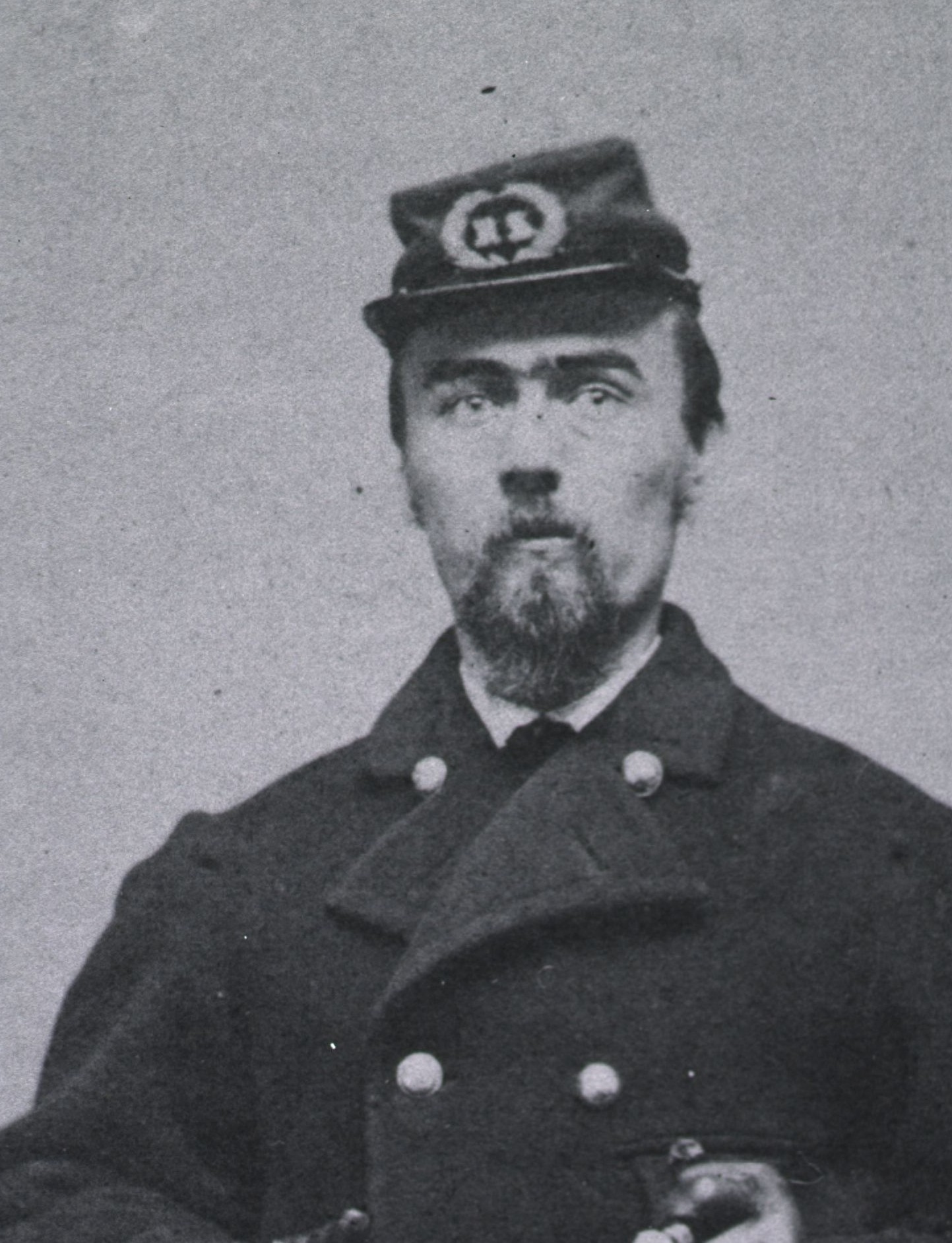
COL Town
COL Town’s legacy remains strong with many children in northern NH. Most have a story about playing basketball in him former home or participating in some other activity in his old backyard.
-Public domain image retreived from the National Library of Medicine at http://resource.nlm.nih.gov/101416449

Later in the day, I read the story of Leonard Crouch who lived in my town. He was a well respected engineer on the Kilkenny Railroad, an old logging railroad that started less than half a mile from my home. Crouch was killed in a train crash on a cold, rainy day when a number of factors converged to overwhelm his skill as a train driver. The Kilkenny Railroad ceased operations in 1894. The fact that Crouch is remembered and still talked about in 2025 shows he left behind a legacy.

A short way in the other direction, there is a community recreation field and field house. The property and an endowment were left to the town by COL Francis Town, a Civil War surgeon who died in 1923. Thousands of people in the area remember COL Town and use his home and backyard every year. Clearly, he left an important legacy. 

In both these stories, neither man have great-grandchildren to remember them. Yet many people do remember them. Your legacy does not have to be work related, but one thing a legacy requires is doing more than is expected to make a difference in the lives of other people. Volunteer coaches, scout masters, 4-H leaders, teachers, and professional leaders all leave some sort of legacy behind. People may not remember the names in 100 years, but they will still talk about the results those people achieved during their life times.

I once read a quote attributed to Ronald Reagan to the effect of, “Most people live their entire lives wondering if they made a difference in the world. Veterans don’t have that problem.” If I remember correctly, it was at the Veterans Memorial in Bethel, ME. 

American Veterans know they make a difference in the world. US Noncommissioned Officers are the envy of military units around the world. Military service in both peace and times of war is difficult. Every member who served, even if others do not remember their names specifically, have a legacy in the units they served. 

There was a time in the Army that senior NCOs would pass a sword back to their Commander upon the end of their tour, and for the Commander to pass the sword to the new senior Sergeant. The sword is a traditional symbol of NCO leadership. A line in the ceremony marking the importance of the NCO’s legacy was, “First Sergeants,” or, “Sergeants Major come and go, but the unit lives on.”

197th FAR unit insignia
Official unit insignia of the 197th Field Artillery Regiment. Units of the 197th FAR trace their linage to the Battle of Bunker Hill. Soldiers of the 197th FAR help create a legacy through their service that will be long remembered after their names are forgotten.
-The Institute of Heraldry

In 1968, 3rd Battalion (BN), 197th Field Artillery Regiment (FAR) of the New Hampshire National Guard was called to serve in Vietnam. The 197th FAR traces its linage to Bunker Hill. While in Vietnam, the battalion became a well respected artillery unit by the line units supported by their artillery fires. In their year of service, the 197th lost nine men, five in one day, who have become known as the Manchester Five. The commander of Bravo Battery, CPT Roland Labonte was one of those killed during that year. There is a small shack in front of the New Hampshire National Guard Headquarters, hidden today by the pine trees growing around it. That building is all that remains of Camp Labonte named after the deceased commander of B Battery. 

If you ever happen to attend a Memorial Day Ceremony (held on 30 May at 1100 every year) at the New Hampshire State Veterans Cemetery, you will find a group of 3d BN veterans at the Vietnam Monument. They are aging and no longer the young Soldiers they once were. If you take a moment to talk to they, you will find they still have a spark in their eye, and the youth returns to their smiles as they share fond memories of their time together.

Not too long ago, 3d BN returned from another one year combat tour in our nation’s continuing fight against terrorists. CPT Labonte’s legacy played an important role in the unit’s success during that mission, and other prior combat missions. Two Command Sergeants Major completed their initial military leadership training at Camp Labonte in 1986 and led the Battalion on two combat missions later in life. Each reinforced the important lessons learned in combat by the Vietnam Soldiers to help the War on Terror Soldiers succeed. The senior NCOs in the Battalion were all led by those Sergeants Major during their career.

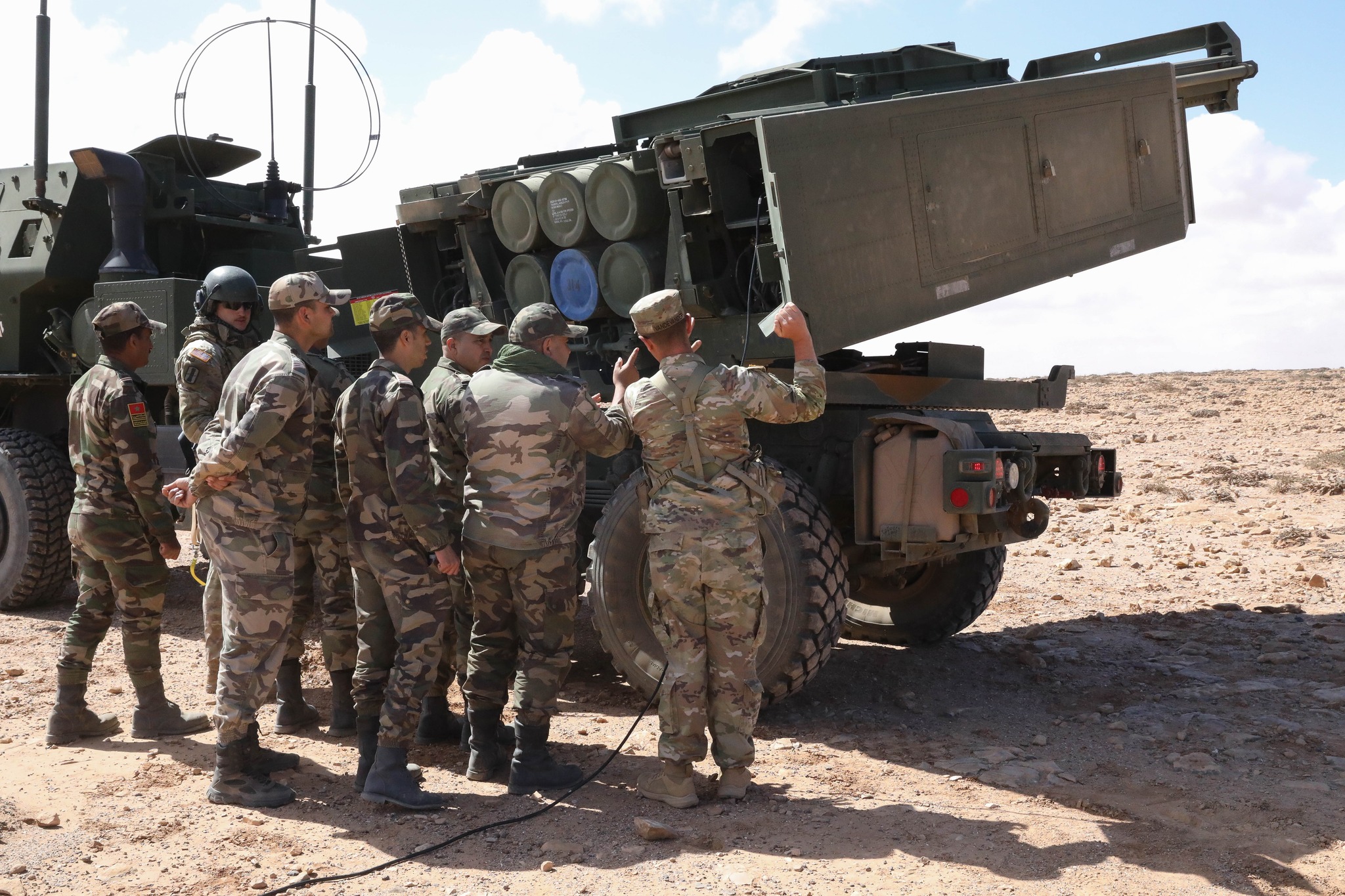
197th Soliders training on a HIMARS
U.S. Army Staff Sgt. Austin Vandevander, a High Mobility Artillery Rocket System (HIMARS) repairer assigned to the 3rd Battalion, 197th Field Artillery Regiment, New Hampshire Army National Guard, instructs Soldiers with the Royal Moroccan Armed Forces on HIMARS rocket capacity, May 14, 2025. Soldiers of the Battalion continue to live up to the legacy of those who served before them in peace and war.
-US Army photo

Legacies are created, not by unnoticed work with stuff. Legacies are created by doing things that make the lives of others better. You actually have to do something for people worth remembering. People who go out of their way to lead are remembered. Those that led have their legacy carry forward, even if their names are eventually forgotten. Their legacy is marked by virtue of the character of those they led. Veterans make a difference, and that is why we take time each Memorial Day to remember those that die defending freedom. They made a difference. Even if the only time we remember their names is when they are read on monuments on Memorial Day, their legacy lives on in the freedom we enjoy every day.

On this Memorial Day, remember the nine Soldiers from the 3D BN, 197th FAR who died in Vietnam:

SFC Raymond Mroczynski,

CPT Roland Labonte,

SGT William Gray,

CPL Mark McManus,

SFC Richard Raymond, 

SSG Richard Genest, 

SGT Gaetan Beaudoin,

SGT Guy Blanchette, and

SGT Roger Robichaud.

References

COL Town Recreation. (ND). COL Town Building Sign. COL Town Recreation Department. Lancaster, NH.

Gove, B. (2010). Logging railroads of New Hampshire’s north country. Bondcliff Books. Littleton, NH.

MacKin, J. (2019). Five national guardsmen from Manchester killed in Vietnam 50 years ago Monday. WMUR. https://www.wmur.com/article/five-national-guardsmen-from-manchester-killed-in-vietnam-50-years-ago-monday/28823220. Retrieved 5/23/2025.

Personal conversations with Soldiers of the 3d Bn 197th FAR

The Virtual Wall, (2019). Roland Charles Labonte. The Virtual Wall Vietnam Veterans Memorial. https://virtualwall.org/dl/LabonteRC01a.htm. Retrieved 5/23/2025

US Army. (ND). Lineage and honors: 3d battalion, 197th field artillery regiment. Army Center for Military History. 

External Strategic Assessments: Our Opportunities

Karns show hikers the path in the absence of landmarks. Like analyzing opportunities, karns provide possible paths to achieve your objectives.
-Photo by Pixabay on Pexels.com

Assessing potential opportunities is the first of two external assessments in the strategic assessment process. The reason for having a strategic plan is to allow everyone in the organization to focus on the most important things that help achieve the mission and vision. There are lots of shiny objects to chase. Only a few moves you in the direction you want to go. Avoid Shiny Object Syndrome by assessing available opportunities early in the strategic planning process. This helps organizational leaders identify which opportunities to pursue, which ones to leave behind, and create peace with those choices.

When I first became an Executive Director of a small nonprofit several years ago, I expected to be given a list of priorities to pursue. The direction I was given from the Board Chair was, “Go down there and take charge. I’m sick of hearing about all the problems!” The only direction I could find from reading Board minutes was to move the organization to national accreditation. I recognized this void of strategic direction as an opportunity to meet recognized industry standards, and improve the way we worked. There were lots of directions I could have led the organization, so knowing this goal was important. Accreditation provided a clear framework, allowed me to ignore those shiny distractions, and recognize real opportunities. While not a formal strategic plan, accreditation was our strategic goal. Opportunities are everywhere, but they are not all created equal. Knowing which ones help achieve organizational goals is important for success.

While you may find hundreds of opportunities during your strategic assessment, think about where those opportunities begin.
-Photo by Gerard Vila on Pexels.com

Sources of opportunities

During this assessment, look everywhere for opportunities. Remember, as you develop your strategic plan, opportunities will present themselves in the future you cannot even foresee today. Many of the jobs today didn’t even exist a generation ago. Capture those opportunities that are easy to see and also stretch yours and other’s imaginations about opportunities you can create or may exist in the future.

When Bill Bratton became Police Commissioner for New York City, he created a system to identify crime hot spots and focus police efforts in those areas (yes, eventually COMPSTAT became synonymous with racial profiling, but Bratton began the program looking at crime data and patterns, not race. He worked with marginalized populations because they were the most affected by crime). The impact COMPSTAT had in reducing crime in NYC caused the trend of violent crime across the nation to decrease. When he became Commissioner, he promised to reduce crime. He found his opportunity in instant crime data, something that really did not exist at that time. He created his opportunity.

In his book, Good To Great, Jim Collins talks about three areas organizations can mine for opportunities. The first area is identifying what things your organization does that are great. Next, identify passions of the organization. Finally look at the activities that provide your operating revenue.

How to narrow opportunities

If you lead discussions about opportunities well, you will find you have far more opportunities than ability to follow. Collins discusses examples of companies redefining themselves broadly or more narrowly. Use the opportunities you identified in the three areas exercise, create a Venn diagram, one circle for each area. The opportunities that overlap are likely keys to achieving your organizational values, vision for changing the world, and achieving your strategic goals. The opportunities that are common to each of the three circles is the starting point for developing your strategic opportunities and goals.

Narrowing down your opportunities to a a strategic few helps everyone focus on the most important things to achieve success.
-Photo by Ethan Sees on Pexels.com

Refine your opportunities to match current or future strengths. As you look at opportunities for the future, identify strengths are you lacking and how you will fill those need. Identify the current strengths you do have to leverage, acquiring those you need. As you match strengths to opportunities, find those that create synergy. Synergistic connections excite your client base, your employees, and your investors.

Narrowing the field of opportunities is important because chasing too many, causes the organization and the people in it to lose focus. Depending on the length of your timeline, you should limit your strategic goals, based on opportunities, to one to five. More than five, and everything seems important. When everything is important, then there is no focus on what actions, tasks, purchases, training, hiring, and similar activity has the priority. You end up chasing every shiny object and fail to make progress on any of your goals. One big goal that is achieved, is better than five super sized goals that never become reality.

Narrowing down your opportunities to a strategic few helps everyone focus on the most important things to achieve success.

Review

Identifying opportunities is one half of an external assessment in a strategic evaluation. In this process, examine lots of opportunities. Use the model of your passions, greatest qualities, and revenue drivers to list opportunities. Narrow your list by finding common opportunities in each of the three areas. One to five opportunities are ideal to pursue. These become your strategic goals. Failing to focus on only a very few opportunities causes people in the organization to be confused about priorities. Not every opportunity is right for your organization. What you will find, with disciplined focus and priorities, is you will easily recognize strategic opportunities that emerge along your path and propel you forward, passing shiny objects become easier. Successfully completing this part of your strategic assessment improves focus and success.

References

Good to Great

Flawed

Turnaround

Roger Williams University Executive Development Seminar

Strategic Assessments; Turning Weaknesses into Strengths

Soldiers take Army fitness test.
Strengths and Weakness assessments are internal examinations of an organization, much like a military fitness test. Identify both in the same process. If your weakest event is passing, focus on strengths. If you fail an event, strengthen it.
-Photo by author

As a young Soldier, I struggled with the Army’s physical fitness test. It was not the whole test. I generally maxed or came close to maxing the push-up event. I did pretty well in the sit-up event. The run however was a different story. I often failed the run, even when I had been running regularly. It was a weakness that could derail my military career. I could carry projos up and down the gun line all day. I always scored high on the written gunner’s safety exam. Evaluators would give me the most difficult missions for the hands on test. Regardless of how refined my artillery skills were, I would be put out of the Army if I did not find a way to pass the run. While I always encourage others to lead from their strengths and find others to fill voids, there are some personal or organizational weaknesses that leaders must recognize, acknowledge, and strengthen to avoid failure in an otherwise successful venture. For me, that was my run.

Assessing weakness is an important part of the strategic planning process. Understanding vulnerabilities allows leaders to create plans for those areas that will cause failure by developing procedures to monitor them, or finding another way to look after them. People and organizations should always play to their strengths. However, failing to recognize critical areas of vulnerability can cause failure. Identifying these critical weaknesses is the second internal evaluation an organization conducts during a strategic planning assessment.

Look for weakness in the same areas you look for your strengths. Conducting your weakness assessment at the same time as your strength assessment saves time. Remember, some of the areas to consider include:

  • Processes and operations
  • Human Resources
  • Communications
  • How your weaknesses are amplified by industry trends
  • Quality controls
  • Leadership and leader development
  • Safety, and
  • Employee training.

Over the years, I served, and continue to serve, on Boards of Directors and Advisory Boards for nonprofits. A number of years ago, I served on an Advisory Board of a prevention program for one nonprofit. This program existed for about eight years, when the second chief executive decided it was time to retire. The Board of Directors hired a new CEO who was overwhelmed, and paid little attention to the prevention program. The Advisory Board made several attempts to engage the new CEO. They were ignored. Members approached the BOD Chair, who in turn raised the issue with the CEO. The success of the prevention program was part of his overall job.

Sadly, the program failed in less than two years of the new leader taking charge. Many at-risk youth served by the program ended up becoming involved in criminal activity. In time, the Board of Directors challenged the leader’s lack of success in other areas. The Board Chair communicated to the CEO that if he did not implement change, he would be dismissed. The CEO could not see how the prevention program fit into the over all operational scheme the Board viewed as essential. His blind spot for prevention was a glaring weakness he would not address. The CEO left the organization before e was fired, but not before causing grave damage in other areas of this previously thriving organization. It took his replacement more than three years to repair the damage. The CEO failed to recognize his weakness in operating the prevention portion of his program. Their people ready to accept the challenges of running the program and fill the CEOs lack of experience in running prevention programs, but instead, he would not allow people to take action. He wanted total control, which was ultimately caused the problems in other areas. His failure to fill that void was a fatal weakness.

The number of cords in a rope add to its strength. However, a two strand rope may be more than enough so focusing on adding a third may distract from building other strengths.
-Photo by Barnabas Sani on Pexels.com

While evaluating weaknesses, remember not all weaknesses are equally threatening. Focus on fixing those that will cause you to fail so you can dedicate the greatest number of resources to building your strengths. Going back to the opening story, my run was not my only weakness as a leader, but it was a fatal flaw if I did not address it. When examining weakness, look for those that will cause complete failure if not addressed.

When I retired from the Army, my run had become one of my strongest events on the physical fitness test. I found people to coach me. I changed habits. Even as I grew older, my running scores continued to improve without sacrificing push up and sit up scores. People actually started calling me a runner! I also continued to build on my other strengths, like becoming a more coach-like leader year after year. Allowing people to understand the task and letting them execute within the established limits, even if the way they accomplished the task was not the way I would do it.

When examining your organization’s weaknesses, identify your fatal flaws. Plan to fix or fill those gaps so that weakness does not crush your organization. Continue to build your strengths. At the end of your strategic plan life, you may find your weakness has become a strength instead of your downfall.

References

Collins, J. (2001). Good to great; why some companies make the leap…and others don’t. HarperCollins Publisher. New York, NY

Kinicki, A. & Williams, B. (2008). Management; A practical introduction. (3d Ed.). McGraw Hill Irwin. New York, NY.

Morreale, S (October 21, 2009). Executive Strategic Thinking. [Training Presentation] Command Training Series: Executive Development Course. New England Association of Chiefs of Police. Held at Roger Williams University, Bristol, RI

(c) 2025 Christopher St. Cyr

Strategic Assessments: Find and Leverage Your Strengths

Over the years, I have participated in a number of leadership assessments. Almost all emphasize the importance of leading from strength. Leaders are taught to find other people or to implement systems to compensate for weaknesses. It is appropriate that strengths are the first thing to be assessed as an organization begins planning for the future. Strengths are internal factors that help achieve success. Strategic planners begin by identifying sources of data. Determine what areas of your organization you seek to examine to find your strengths. Identify measures of strengths. Understand why leading from strength is important. When leaders complete this exercise, they will be in a better place to figure were the organization should head in the future.

image of three chisels resting on a strop.
Chisels are great tools for trimming and paring wood. Their strength is at the tip where the two planes meet creating a sharp edge. Chilsels make poor clamps.
-Photo by author

GEN (R) Wesley Clark said, “I’ve never met an effective leader who wasn’t aware of his talents and working to sharpen them.” (Rath, T. & Conchie, B.). Think about the leading edge of a chisel. A woodworker doesn’t try to cut wood with the sides of the chisel. With enough force, one could certainly cut wood with the side of a chisel, but its strength comes at the leading edge, where the user carefully refines the two planes that intersect at the tip into a fine edge. A well sharpened chisel will cut most wood with simple hand pressure. While it is possible to build furniture with only a chisel, saws, planes, and clamps help the chisel be part of a team of tools that can build many things easily. It cannot hold well. Long cuts are better performed by a saw. Flattening is ideal for the plane. When it comes to trimming away wood from tenons, refining saw cuts, and creating mortises for joints the strength of the chisel’s sharp tip, make it the perfect tool. The chisel is an ancient tool, yet still occupies space in almost every modern wood shop because of its strengths. Like knowing the strengths of your tools, knowing the strengths of you and your organization helps you and other leaders identify your future based on your strengths.

Organizations often begin assessing strengths by asking only the invited planners what they view their strengths to be. Doing that is like asking an employee to write his or her own annual evaluation! Plan time to invite observations of others such as

  • Employees
  • Customers
  • Stockholders
  • Community members where you have facilities
  • Vendors, and
  • Peers.

Each of these groups sees your organization differently. They may see things as strengths you do not recognize yet are very important to your current level of success. Collect these observations as you analyze where your strengths are.

Organizations work in many different areas. I ran a small nonprofit for several years. One of the things I missed from my time in the military was easy access to legal advice. I had two lawyers whose job was to keep the command team out of trouble by vetting their ideas and orders. There were a number of times, in my nonprofit, I worried that there were legal issues I was not aware of in our operations.

Other areas to think about include

  • Operations
  • Human Resources
  • Internal and external communications
  • Industry trends and how your strengths remain relevant
  • Quality controls
  • Leadership now and moving forward
  • Employee education, and
  • Safety

This list could be longer. Adapt it to your organization and your needs. The list should be similar whether your organization is a team of engineers in the automotive industry, or a small nonprofit medical clinic in a remote community. The details however will be different.

As you work through this process, you may notice areas you expected to find as strengths are really weaknesses. Note that, but do not focus on those weaknesses now. Return to them when you get to the part on evaluating your weaknesses.

For example, you recognize in operations, you are the best widget maker in the world. As you analyze your leadership and employee education, you realize your leaders are all older. You have done little to develop the next generation of leaders. Without strong leaders in the future, your organization risks losing the top spot as widget manufacturer. You can say, “Hey, we are working on strengths in this exercise.”, and ignore what you just learned. Instead, not that weakness and evaluate it in the next step.

Anyone can pick up a ruler and tell you the length of an object. The question is what does the length matter? Measuring strengths can be difficult. For example, in the length example, are you measuring in millimeters or inches? Having a common language about the things you measure helps everyone understand the significance of the thing being measured.

photo of the Mars Climate Orbiter
-Using the same units of measure helps leaders develop a common understanding of strengths shown in data. The consequences of using a common means of measurement result in failure.
-NASA Photo

There are a number of ways to measure strengths. Data will play an important role in this respect. Everyone needs to agree on what to measure and what appropriate units of measure are. In 1999, NASA crashed a $125 million weather orbiter into Mars because some engineers uses imperial units rather than metric. It is important that everyone uses the same units of measure as you analyze your strengths.

Organizations use several common means of measuring strengths. Use the scope of your activity to measure ROI, stakeholder satisfaction, staff retention, and other measures. Determine how well is your organization achieving goals. Identify how well your organization uses it guiding principles to accomplish its mission and vision.

The US. Army evaluates leaders in a number of areas. One is how many Soldiers pass an annual fitness test. War is hard work. The Army knows Soldiers must be fit regardless of their job to fit and win our nation’s wars. Use this example as a way to identify what you should measure and what metrics actually identify strengths.

Your organization’s strengths are like the sharp edge of a woodworker’s chisel. Strengths help you cut through resistance and achieve your organization’s mission. As you develop your vision of the future, identifying and analyzing strengths help your organization determine how to apply them to the challenges you face. Strengths are internal factors you control. Data helps identify strengths. Use a common means of measuring so you have universal understanding. Examining strengths is the first step with the SWOTAR model and need to be used with the next step, examining weaknesses. Look for that post next month.

References

– (ND) Some famous unit conversion errors. (PDF) National Aeronautics and Space Administration. https://spacemath.gsfc.nasa.gov/weekly/6Page53.pdf. Retrieved February 28, 2025

Chimonyo, Y. (2024). Organizational effectiveness: A guide to assessing organizational effectiveness. The Human Capital Hub.https://www.thehumancapitalhub.com/articles/organizational-effectiveness-a-guide-to-assessing-organizational-effectiveness- Retrieved February 27, 2025

Kinicki, A. & Williams, B. (2008). Management; A practical introduction. (3d Ed.). McGraw Hill Irwin. New York, NY.

Morreale, S (October 21, 2009). Executive Strategic Thinking. [Training Presentation] Command Training Series: Executive Development Course. New England Association of Chiefs of Police. Held at Roger Williams University, Bristol, RI

Rath, T, & Conchie B. (2008) Strengths based leadership; Great leaders, teams and why people follow. Gallop Press. New York, NY.

(c) 2025 Christopher St. Cyr

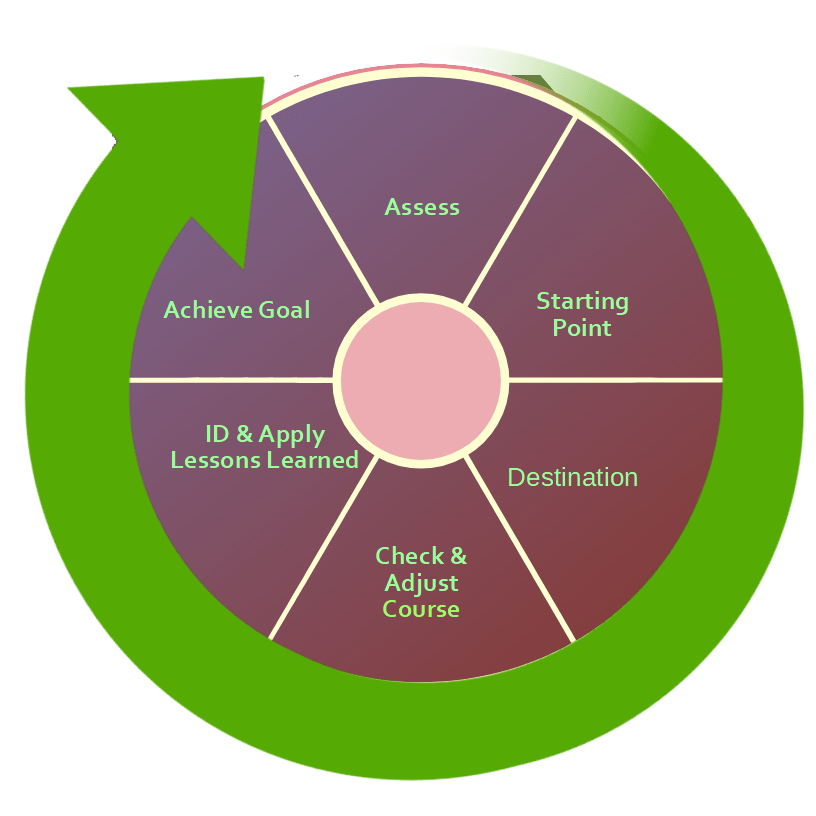
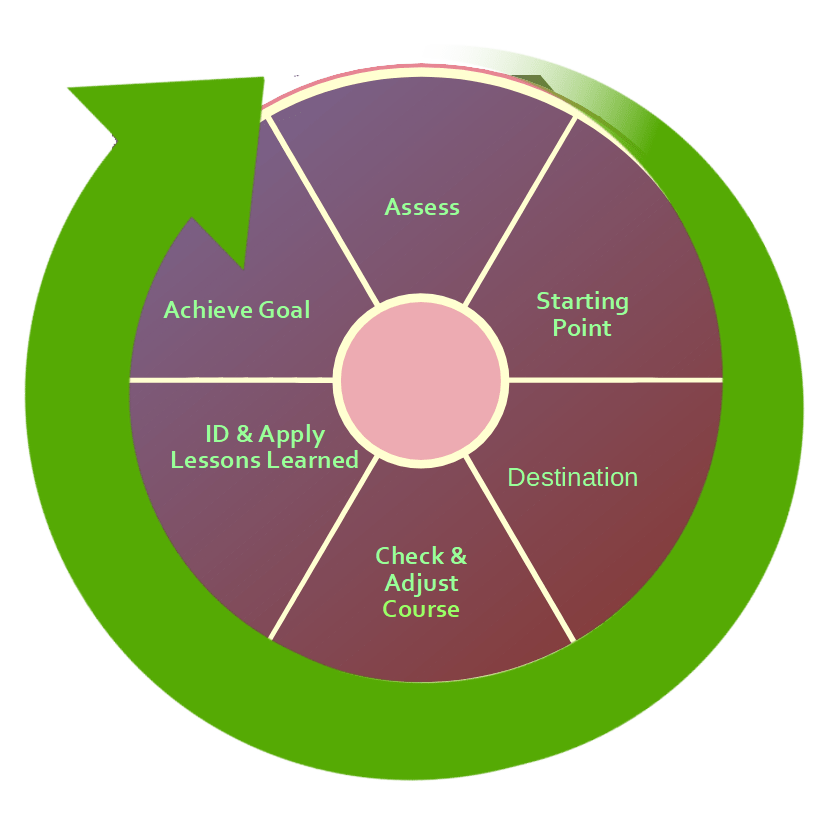
The Strategic Planning Cycle

(Author’s note: this article is the second in a series on strategic planning using the SWOTAR model. This post also shows the importance of getting something done, even if it isn’t perfect. You might notice a spelling error, or perhaps a missing comma or double word. If I waited until this post was perfect, or even better, February might be half over. Given that an imperfect plan delivered on time is better than a late but perfect plan, and this series is about, perhaps an imperfect post delivered on time shows the importance of punctuality, if if the product is not perfect.)
Before diving into the SWOTAR model to collect information to develop a strategic plan, understanding the planning process is important so you execute your collect effectively, with the right people, so you end up with a workable plan in the end. If this is your organization’s first plan, SWOTAR is an great entry point to the cycle. If your organization has had one or more strategic plans that failed to achieve the desired results, this review improves your chances of success. Continuing with the map analogy, left in the glove box, a map is a useless tool to help you find your way. Likewise, a strategic plan set on the top shelf of the Chief Executive’s office bookcase is just as useless. Everyone, yes, EVERYONE in the organization needs access to the strategic plan. Execution of a strategic plan is an organizational, not an individual responsibility.

In the Army, units always attempt to get full size, full color maps for all their key leaders. Every vehicle driver has at least a strip map showing key points along the route and just off the route to help them reorient when, not if-when, they stray from the main route. Senior leaders in effective Army units know that unless every Soldier knows how to go from the current location, to their next objective, not every Soldier will arrive ready to execute the mission. Things happen. Soldiers become separated from the main body, enemy action makes the main route unusable, a driver makes a wrong turn and everyone else follows. If everyone has some access to location finding information, maps, they can find their way using alternative routes to arrive at the objective and provide the commander with enough troops to accomplish the mission.

Likewise, when orders are issued, commanders brief their followers with the objectives of their higher headquarters and tell all their units all the expectations of each with the leaders from each of those units present at the same time. By understanding the whole operation, junior leaders rapidly adjust to changes. Strategic plans work the same way.

Strategic plans are an organization’s military operational order (OPORD). Leaders at every level understand the overall strategy. This helps them create effective plans for their teams to support the big picture. Each individual knows the part they play in helping the organization succeed.

Too often poor leaders justify holding such information from their followers with such arguments as, “they don’t need to know; it will only confuse them,” or “they just need to do what I tell them to do.” Those leaders then wonder why they fail to get results. Remember, few people come to work daily with a desire to fail. Most people want to be successful at their job. They want to know their work has meaning. Helping workers understand what work must be accomplished to make the organization successful, and what quality work looks like enables them to better prioritize the tasks and find ways to improve the execution of those tasks.

Because strategic planning is a cycle, there is no first step, just a next step. However, if your organization has never planned for the future, assessing where you are and where you want the organization to be in the future, is a good place to enter the cycle. SWOTAR is nothing but an assessment model.

Everything else in the strategic planning cycle, figuring out what to do to make your vision of the future a reality. The strategic planning cycle continues with creating a mission and vision for the future. Next you develop steps to enable action that begins to make the vision real. Along the way, measure the success of processes to ensure they are working correctly, and the effectiveness of those processes to move you toward the vision. Because strategic planning is time-bound, the last step before assessing for a new cycle is to evaluate your successes.

In this assessment, determine what you achieved? Ask if your achievements resulted in the end state you envisioned? If your organization made the progress desired, what does the next level look like? All these questions create the data you will need for the next SWOTAR process.

Strategic planning is a continuous process. Identify your strengths, weaknesses, opportunities, threats, aspirations, and results desired. Next create actions plans to determine what actions you need to take to make your aspirations and desired results reality. Take action based on the action plans. Assess your processes and effectiveness. Finally, evaluate if you landed where you planned, then begin again.

SWOTAR your Mission and Vision

grim reaper appearing at the end of the year.
As the old year passes, reflect on your accomplishments and ideitify how to use them to achieve more in 1025.
-Photo by Wendelin Jacober on Pexels.com (cropped by author)

As the year closes, leaders often reflect on the progress of the previous year, both in their personal lives and in their organizations. Goal setting is a common activity Too often many people and organizations set goals but give little thought to how goals work together to create lasting change. Strategic plans organize goals and activities, improving success rates.

While many have participated in strategic planning, rarely do those participants see all the work involved in a strategic plan. They remember SWOT. In addition to Strengths, Weaknesses, Opportunities, and Threats, you need to identify how those relate to your aspirations and desired results. Then, you can create SMART goals to achieve those aspirations and results. This is the first of several articles on strategic planning. The contents here are a preview of what to expect in the following months.

It is pretty easy to think of each of these stages as separate. In reality, planners begin working on areas of the SWOTAR model and identify things they missed in the other areas. Each topic is mutually supporting of the others and should spur, “A-HAs in the other areas.

Strengths are those of you, your team, your organization, and allies. As you list strengths, think about how they leverage your ability to achieve your goals. If a strength is not helpful in achieving your aspirations and desired results, you really have to ask if it is a strength or are you chasing the correct ending?

Weaknesses are those areas that hold us back. Often, people and organizations focus on improving all their weaknesses. Doing so slows you down. Develop those weaknesses that prevent success. Work from strengths while monitoring weaknesses. Only strengthen those that create a vulnerability.

view of mountains
Even if 2024 did not go as expected, you are in a different place. What can you see now you could not at the end of 2023?
-Photo by Sasha P on Pexels.com

Opportunities are not always opportunities. Only those opportunities that help you achieve your desired results are opportunities. There needs to be a connection between the opportunity and your aspirations. Without that connection, you will not obtain the results you seek.

Threats are those things that have the potential to derail your efforts to succeed. We commonly explore the competition to identify threats. However, it is important to identify other potential harms. Imagine if a tornado moves your warehouse to another county and your merchandise in the opposite direction. What do you need to do to protect your project from such threats?

Aspirations help mold your vision of a perfect world. They are the way things would be if you are 100% successful with your expected results and goals. Aspirations are the measures of effectiveness of your results.

Results are the changes in people, projects, and patterns to achieve your aspirations. You achieve results by setting a goal, developing a plan of action, and following the steps in your plan in a consistent, disciplined way.

For example, you need a foundation for your new home. There are several styles of foundation you could build. You need to pick the process necessary to have the foundation you want. Identify the people you trust to get the job done. Follow proven patterns for successfully building foundations. When your project is complete, you achieve the results in the end you see in the beginning.

A strategic plan pulls together all the strengths, weaknesses, opportunities, threats, aspirations, and results in one place. Leaders use this information to identify people, projects, and patterns to create goals that lead to success. Every goal in the plan should support the mission and vision. The results should align with your personal and organizational values and principles. Even if you have an imperfect plan, you will move closer to seeing your aspirations realized than proceeding without a plan.

A map is collection of information about an area that helps people move. Your strategic plan is your map for the future.
-Photo by Andrew Neel on Pexels.com

Read More: