Remember the Fallen

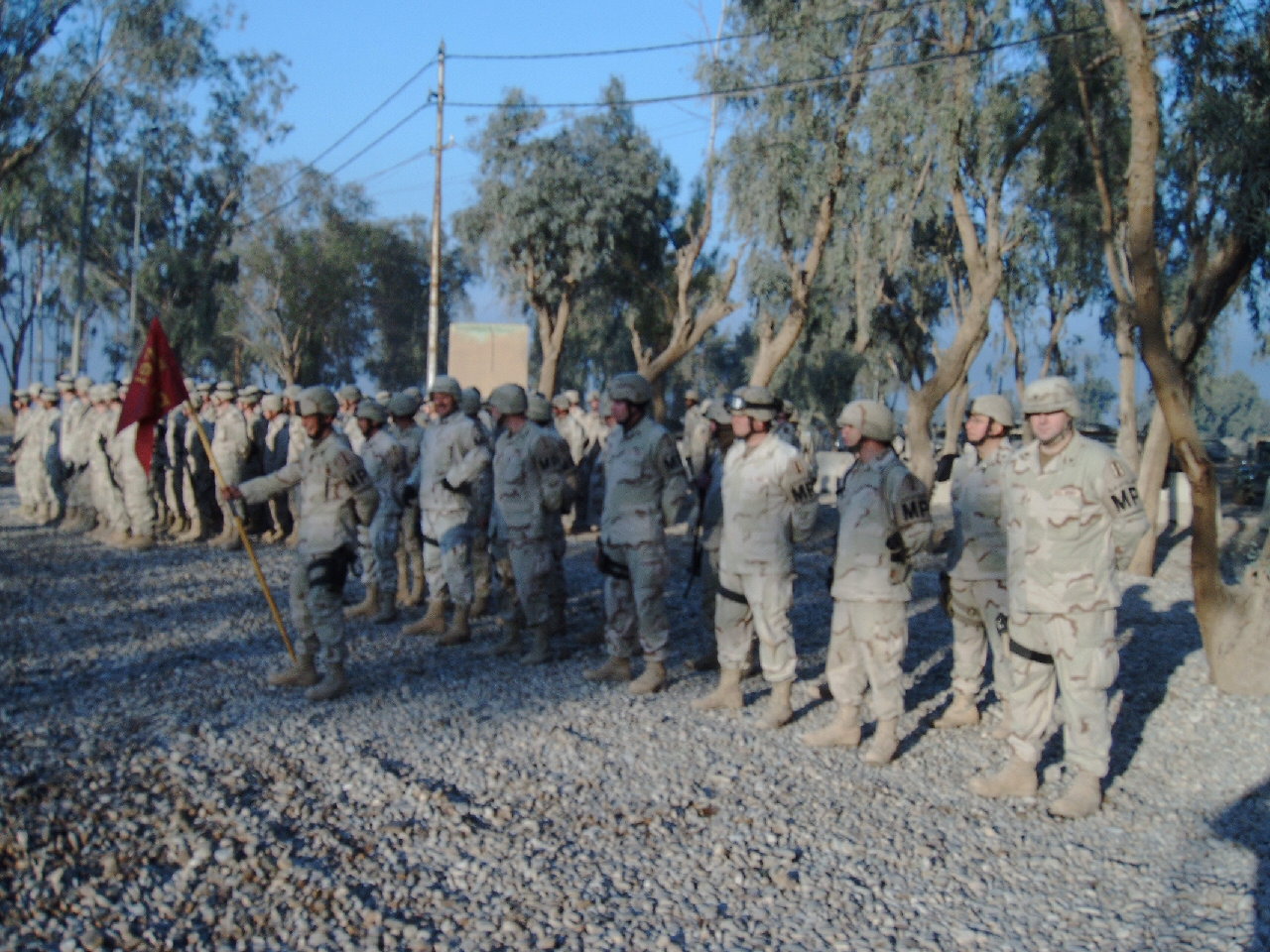
2nd Platoon members in formation to recieve awards
– photo by author

This is a true story as I remember it which means what I remember and the way I remember might be different from the way others remember it. October 15, 2004, was a normal day, if a day on deployment could be called normal by US standards. There was occasional gun fire, and the sound of periodic explosions. The streets were full though, the sun was out, and it was hot. However, things would quickly change, as they often did during our 2004 deployment. I was that platoon sergeant of 2nd platoon in HQ Battery (forward), 2nd Battalion, 197th Field Artillery Regiment, deployed as MPs. We also had a headquarters platoon, and three other numbered platoons. Our MP Company was assigned to serve in Baqubah, Tirkrit, and Mosul. While the 15th of October started normally, it did not end that way.

Second battalion was tasked with providing an in lieu of Military Police Company for Operation Iraqi Freedom in 2003 to begin in 2004. MP companies, unlike field artillery batteries, are not all the same. We were tasked to provide a 200 Soldier company. A field artillery battery has about 100 Soldiers. Clearly, our battalion would have to assemble Soldiers from all the batteries to make on MP Company.

A number of Soldiers from my organic field artillery platoon were divided between third and fourth platoons. I had Soldiers mostly from Headquarters Battery and Bravo Battery. Having previously served in Bravo, I knew many of the leaders. Most of the rest of Bravo had also been assigned to fourth platoon. By the end of our mobilization training at Ft. Dix, NJ, everyone had come to know everyone else.

We arrived in theater in February 2004. Each platoon had slightly different missions. By October, each was doing their thing well.

On 10/15, squad from fourth platoon, HQ/2/197 FA (ILOMP) was patrolling the city of Mosul. Having arrived the previous spring and working with the 293rd MP company (they were real, regular Army cops), they had become familiar with the city, its people, and rhythm. This day was not remarkable until the squad found themselves hemmed in, in traffic at a stop light.

At this time of the war, the Army was using unarmored, add on armored, and up armored HMMWVs for much of its patrol work. There were Strikers in Mosul, but there were far more HMMWVs. Our company had up armored HMMWVs. The armor saved Soldiers on many occasions, including Soldiers in second platoon.

Gunners were the most exposed crew members. Machine guns were mounted on the top of HMMWVs on turrets, allowing gunners to traverse 360 degrees. However, they had to stick half their body outside the vehicle to operate the weapon system and turret. Most vehicles did have front shields. Many had also received supplemental side armor as well, but still, the gunner was hanging out in harm’s way every mission.

While true, the gunners were the most exposed, it meant they also had the best view of the surroundings. Many a patrol was able to identify and engage with enemy forces before the enemy was ready to engage the patrol due to the sharp eye of a gunner. However, when your patrol is jammed in traffic, you lose the ability to maneuver and you become sitting ducks. Just the same, the firepower in a mounted MP squad is amazing.
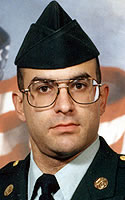
DOD Photo of Alan Burgess

As the fourth platoon patrol sat in traffic, gunners noticed something unusual about a car that had just pulled beside them. It seemed to sag, an indication it might be loaded with explosives, and the driver did not look like he belonged in this part of the city. SPC Alan Burgess started to warn the crew in his vehicle about the danger with the bomb exploded. The HMMWV Burgess was in was the closest to the car bomb. He was gravely wounded. The other occupants were mostly unscathed, a testament to the quality of the vehicle’s armor.

The rest of the squad rallied quickly. They conducted an immediate assessment of the occupants while also scanning for other threats. The squad leader recognized the need to evacuate SPC Burgess to the field hospital at the forward operating base. Shortly after arriving, the medical staff notified the squad leader, Alan died from his wounds.

As was the procedure, all bases in Mosul went into communications blackout. Only official and necessary communications were allowed until next of kin were notified. In Baqubah we heard about the car bomb on the news. We all worried anytime we heard of an attack about our brothers around the country and their safety. By the end of the day, we received word someone in fourth platoon had died. By morning, we learned it was Burgess from family members at home telling unit members in Iraq. The official blackout in Mosul was still in place.

HMMWV on a mission with a second platoon gunner in roof hatch
-photo by author

What happens next? The Army wanted us to continue our missions in Baqubah. We were not the first unit in history to lose a Soldier. Sadly, we would not be the last. In fact, three other American Service Members lost their lives that day in actions against our enemies. By that point in the deployment, many of the second platoon Soldiers were seeing mental health professionals at a forward operating base we received logistical support (second platoon operated IN Baqubah at a combat outpost). We asked them for support at our little base in the city, and they came. Even though none of us were at the scene of the attack, many second platoon Soldiers were affected by the results. Having the mental health professionals available during our time of need helped us heal enough to carry on.

Memorial Day is a day to remember people like Alan Burgess who died defending liberty. I have been asked why Veterans do not do more on Memorial Day to remember the fallen. Unlike our non-military fellow citizens, we remember the fallen every day. So on this Memorial Day, take a moment to think about the sacrifice every military member is willing to make to protect you. They make up less than one percent of our population. They do difficult things every day to be ready. Their working conditions are rarely safe or comfortable. Those who gave all deserve to be remembered. On this Memorial Day, take a few minutes to visit a veteran’s monument or the grave of a fallen service member and remember their sacrifice.

War Stories

Gold stars from the National World War II Monument in Washington DC.

“In any war story, but especially a true one, it’s difficult to separate what happened from what seemed to happen. …there is always that surreal seemingness, which makes the story seem untrue, but which in fact represents the hard and exact truth as it seemed.” ― Tim O’Brien, The Things They Carried

A Gold Star Banner displayed in a home means a family member was killed in action.

A war story is just a war story. There are no true war stories. There are some that are blatantly false and made up, told by posers. Most are are recollections. Sometimes they are embellished, minimized, mixed with other memories, or just misremembered. Many people think veterans tell stories to impart some sort of moral or lesson. However, a war story is told to remember a loved comrade, relieve bothersome anxiety, or to get a rise out of the listener. Sometimes the story teller does not know why he tells the story. He just does.

I want to share two war stories today to remember my comrades in arms who died defending freedom. These stories are told from my perspective, what I remember from the time I learned of each death, mixed with conversations of those closer to the Soldier. Fairy tales begin, “Once upon a time, in land far away…” War stories begin, …

(Once upon a time) I remember watching CNN in the day room (in a land far away) at Diyala Provincial Police Headquarter in Baqubah Iraq in late March. There was a report about recent activity in the increasingly violent insurgency. They were showing images of a bridge just outside Ramadi where a truck from the 744th Transportation Company had been blown up by an IED and tossed over the edge. This attack resulted in the first war death of a New Hampshire National Guard Soldier since Vietnam.

Jeremiah Holmes, Died March 29, 2004.

SPC Jeremiah Holmes died in that attack. I did not know Holmes, but several Soldier from my battery had been assigned to deploy with 744th. Holmes worked with a Soldier who had been a section chief in my first howitzer section for a couple years. Everyone I spoke with who knew and remembered Holmes described him as a great guy. The 744th held a farewell event for family and friends during Thanksgiving weekend 2003. A picture of him kissing his 10 month old son on the day 744th departed New Hampshire appeared in the paper. That young man never knew his father. Soon he will be learning to drive for himself.

744th arrived a few weeks in Iraq before we did. At the time we felt a little safer being in a fixed site rather than traveling the roads as 744th did. Our sense of safety quickly eroded over the next few days. Attacks around Iraq resulted in injuries to other New Hampshire National Guard members. Two Soldiers from our company were wounded in Mosul, but that is a different story for another time. Even though I never met SPC Holmes, his death changed the way I looked at the war. A few days later the insurgents directed their attention to our humble abode.

The 744th nor SPC Holmes had been in Iraq long enough to learn about IEDs. We all grumbled during training about how sneaky the observer controllers (OC) were about hiding those pesky bombs. On this first attack, 744th learned just how easy the OCs were being on us. The insurgents were experts at hiding roadside bombs. Homes death taught us all an important lesson about situational awareness and the danger we faced during our time in Iraq. This lesson was learned well. The reality was even if we detected 99% of IEDs, it only took 1 missed IED to kill us or a comrade in arms; and that is the beginning of my next story.

I remember (once upon another time…) walking into our Tactical Operations Center (TOC) on 15 October 2004 to see if they knew why our internet connections were not operating. We had been in Iraq for several months and little phased us so the look on the faces of the TOC staff however told me something really bad happened explaining the internet interruption. Before I could ask, the senior NCO walked into the room with the phone we used to call home and secured it in a wall locker. We were in a communications blackout. That could only mean someone died. I hoped it was not one of ours. “What’s going on?” I asked. The answer dashed my hopes as I learned SPC Alan Burgess from the platoon our company had in Mosul died.

Alan Burgess died Oct 15, 2004

The day started like every other patrol in the city. The squad departed the forward operating base and found activity on the streets was normal, always a good sign. The squad and its leader always expected attacks and hoped for uneventful trips. Most days they did find enemy and engaged or were engaged. Today they expected no more, no less.

In fact this platoon had several significant engagements with the enemy during their time in Mosul. In fact one Soldier had been shot in the chest the week SPC Holmes died. After being shot, the squad returned to base and drew a new tactical vest for the gunner and returned to patrol the streets of the city. The gunner and driver had changed places on the second patrol Just before sun rise, the patrol located the insurgents that shot the Soldier earlier and again engaged them in a fire fight. The gunner turned driver dismounted from the armored vehicle, to attack the disable vehicle containing the insurgents. He was shot again but this time in the ankle!

Today was different. The streets were busy. People were engaged in commerce. There was nothing to indicate death awaited them. The squad was stuck in the normal traffic of the city with no where to maneuver. This is exactly what the enemy was waiting for, a sitting duck.

What happened next, happened quickly. A vehicle in the opposite lane charged directly toward the patrol. SPC Alan Burgess saw the danger and began to engage the enemy. According to some witnesses time slowed down as the car came to a stop. According to others time accelerated. Each tells the war story the way they remember it. The driver of the attacking vehicle was dressed all in white, a sign of one who is about to be martyred. SPC Burgess recognized that danger, but a moment too late. As he released his machine gun to seek the safety inside the armored vehicle, the car bomb exploded. Burgess and civilians in the area were killed. Dozens were injured. Alan left behind his girlfriend and four year old son.

Alan was a loved and respected member of the unit. His loss effected everyone in some fashion. Like Holmes death, it served as a reminder about the fragility of life.

Neither story has a moral. The heroes do not live happily ever after. These are war stories, not fairy tales. Sharing these stories however provided me an opportunity to remind people that Memorial Day is not Veteran’s Day. It is a day to remember those who gave all defending freedom. These stories are reminders that real people died protecting freedom. They were not statistics. As members of the National Guard, these two Soldiers are part of a tradition older that the U.S. Army, protecting family, friends, and neighbors from the evil in the world.

The poppy was inspired by the poem, Flanders Field, by John McCrae based on his reflections of poppies growing in a WWI cemetery between the white head stones.

As Memorial Day approaches, take time to attend a memorial service. Instead of becoming angry about having to wait for a passing parade, give thanks to those whose sacrifices the parade honors. Ask a veteran to tell you about a lost war comrade. Memorial Day is not about the beginning of summer. It is not about fun and family picnics. It is not a paid, work-free day. It is about remembering those who died so we may live free and enjoy our lives in peace. Remember them.

Photo Credits

  • WWII Memorial Stars: pxhere.com, no other information provided. pxhere.com license.
  • Gold Star Banner: author.
  • Jeremiah Holmes: US Government Photo.
  • Alan Burgess: US Government Photo.
  • Poppy: pshere. ibid.

More Information