Be influenced by Those You Lead

man listening to a papercup phone.
Listening is a leadership trait that open sleaders to the influence of those they lead.
-Photo by Andrea Piacquadio on Pexels.com

Listening is a key leadership behavior that enables improved decision-making at lower levels, develops junior leaders, and opens the leader not only to influence others, but to be influenced. A Soldier I once led lead expressed this best during her promotion ceremony to Warrant Officer One. WO1 Connelly said, “I’m a firm believer that a good leader is equally shaped by their leaders and mentors, their peers, and their subordinates. To explain: While my leaders have mentored and coached me, my radar kids challenged me more as a leader than any mentor ever could, and my peers challenged me and shaped me within the organization because they knew me best.” Those influences helped her grow as a leader because she chose to listen to other’s feedback and input. While we expect to be influenced by our leaders, few ever consider how peers and subordinates also influence them. Those who fail to reflect on the influence of others miss opportunities to lead up and across their organizations. 

Influence from, and influencing your leaders

Influence from our leaders is easy to recognize; every action and statement creates impressions required to accomplish tasks leading to mission accomplishment. Influencing leaders is an important aspect for followers; they know things the leaders do not. You create the ability to influence your leaders through your behaviors. Demonstrate that you are capable, value mission accomplishment, and treat clients, peers, and leaders respectfully. Likewise, listen to the valuable feedback from those you lead.

Influencing your peers

In every organization, there are overlaps of responsibility, authority, and resources. Leaders who influence peers are valued by their leaders. You develop influence with peers by treating them respectfully. Cast a vision demonstrating how both your teams win by working together. Give them credit when discussing successes with anyone. These behaviors will create trust and establish you as a safe working partner.

Being influenced by your followers

Learning to lead by allowing yourself to be influenced by those you lead is the peak skill for high performing leaders. Being influenceable means you listen to input, provide opportunities for others to make necessary decisions appropriate for their level and experience, and require junior leaders to do their own planning that properly supports your efforts. People respect leaders that provide them opportunities for growth. People will push the limits of their decision-making, authority, and policy restrictions. That’s okay because they know only confident leaders would give them space to engage in these behaviors. As the leader, you still have the ability to say no, enforce standards, and suggest alternatives, which means you are not a push over. These actions allow your people to grow and gain confidence.

Openness 

When you start expecting leaders to act responsibly, most will gratefully accept the challenge. Be open about your reasons for loosening the reins. Set clear boundaries and expectations. Establish decision-making authority. You will be amazed at the growth you witness.

a list of limits for safety. such limits allow leaders to feel safe opening up to the influence of their followers
Being open to follower influence requires leaders to set limits and boundries. Restrictions allow followers opportunities to make decisions within their skill range safely and enables growth.
Worcester Bus Depot yard site safety regulations by Jaggery is licensed under CC-BY-SA 2.0

For example, you may have a new front line leader running a team. Tell them as a leader you expect them to make appropriate decisions. You might allow them to plan schedules for their team, decide who can or should attend developmental or remedial training and similar activities. Likewise, clarify what decisions you expect to be briefed on, and which you retain for yourself or more senior leaders, such as approving payroll hours, or ordering durable equipment. Providing this clarity creates openness so people better understand what is wholly theirs, what is shared, and what is out of bounds.

Trust

This openness creates trust and a sense of safety critical to team building. You will need to make corrections along the way as people learn and grow. As their competence grows your trust grows in them allowing you to focus elsewhere. Everything rests on the trust cornerstone. Your people trust you more as you give them reasonable challenges, you trust them more as they successfully accomplish those challenges. Increased trust creates opportunities for you and your team to take on bigger challenges and achieve greater results.

Development 

Creating a culture of influence increases the number of ideas available at any time to solve problems and identify improvements. As you counsel and coach those you lead, you develop better listening skills. You will hear things you did not hear from others before because of your new awareness, and because they will tell you more because they know you hear them. These experiences help them grow, becoming new leaders and better leaders. There is an old saying that the measure of a manager is dollars sold, widgets made, calls answered, or money saved; whereas there is only one measure of a leader, the number of leaders s/he develops.

When you open yourself up to be influenced by those you lead, you create a culture of openness that builds trust and develops future leaders. Just because you are currently in a leadership position doesn’t mean you are the smartest team member, know all the answers, or need to make all the decisions. Being open to the influence of others helps everyone learn and grow. There are few things in life more rewarding than hearing someone you used to lead talk about how they tried what you taught them, succeeded, and then passed that lesson on to another generation of leaders. Ms. Connelly is but one leader I helped on her path (I was not alone guiding her, only a small part of her learning). In a few years, she will be at a promotion ceremony and one of her former followers will have a little leadership lesson they share that will amaze her. You can be that leader too, but only after you are open to your followers’ influence.

References

  • Connelly, N. (2025) Promotion ceremony speech. Concord, NH
  • Covey, S (1989). The 7 habits of highly effective people. Fireside. New York, NY.
  • Matton, J (2025). Here’s why successful leaders embrace bidirectional feedback. John Mattone Global. Retreived from: https://johnmattone.com/blog/heres-why-successful-leaders-embrace-bidirectional-feedback/ on 12/26/2025
  • Willink, J. & Babbin, L. (2015). Extreme ownership. St. Martin’s Publishing Group. New York, NY.

Veterans Day: The Challenges and Coins

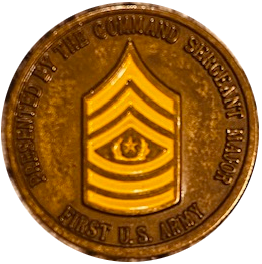
a picture of the challenge coin from the first army command sergeant major.
This is the coin I received from the First Army Command Sergeant Major in 1998. This and a five dollar bill will get you a cup of coffee at Starbucks or Dunkin, and in some circumstances, maybe a free beer at the enlisted club. While the coin may lack monetary value, it has a great deal of sentimental value for this old Soldier.
-Photo by author

April, 1998, I found myself attending drill in Orlando, FL with the New Hampshire National Guard State Command Sergeant Major. On this drill weekend, the rest of my battery was in Jericho, VT shooting howitzers in the snow while I enjoyed beer in a hot tub in Florida. I had been selected as the 1997 Noncommissioned Officer of the Year for the New Hampshire Guard. The eastern regional competition was in Orlando that year. Someone else won the competition at this level, but all the competitors received a challenge coin from the First Army Command Sergeant Major, CSM Kenneth Cummings. This was my first, but not the last, challenge coin I received in my military career.

Challenge coins are an old military tradition. If you research internet sources, you will likely find versions of three stories about the origin of challenge coins. The first dates back to Roman times, when the leaders of Roman Legions had coins minted with the Legion emblem. They were awarded to Legion Soldiers for honorable actions. The next is a story of a World War I pilot who feared he or members of his unit would be shot down behind enemy lines and then shot by allied forces while attempting to cross into friendly territory. He had tokens minted with the unit heraldry and issued them to all the pilots for proof of identity. A third common story dates back to watering holes in Vietnam. Soldiers who lacked some memento to prove they had engaged with the enemy in close combat were required to buy everyone in the club a round.

However, there are two other stories I know related to challenge coins. The first is from an episode of Turn, a television series about GEN Washington’s spy network. In this episode, one of the characters is challenged to prove he is a member of the network. He produces a coin, mixed in with other coins of the land, to show he works for Washington. Another story is in the book written by COL (r) David Hackworth, About Face: The Odyssey of an American Warrior. I would cite the page of this story, but I am not digging back through a 900+ page book to find it! COL Hackworth tells a story about issuing every Soldier in his Battalion a card with his personal and operations center’s contact information. Every Soldier was required to carry the card with them at all times. If they found themselves in some sort of trouble, they could call for help. This card was an inspectable item. Members of the Battalion were often challenged to produce their card.

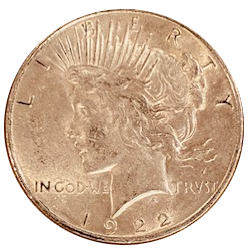
picture of a silver dollar presented to the author by second lieutenant Krauklin when he was commissioned.
This is the siler dollar presented to me by then 2LT Krauklin. He still serves as a commissioned officer today. We worked together again after his commisioning.
-Photo by author.

Another coin tradition is that of the First Salute. Upon receiving his or her commission as a Second Lieutenant, Officers give a silver dollar to the first enlisted Soldier to render them a salute. Today that tradition is built into the commissioning ceremony. Near the end of the ceremony, each new 2LT is called forward to receive his or her first salute. The enlisted person is selected by the new Officer and is commonly a person who had a positive influence in their life.

In 2004, I was deployed to Baqubah, Iraq along with about 100 other American Soldiers at a downtown Police Headquarters. SGT Peter Krauklin was one of the Soldiers who worked in our operations center, the vital communications link between the Soldiers guarding our tiny perimeter, out on patrol, and with our higher headquarters. Krauklin was a last minute addition to our unit when it was activated. He had zero friends or acquaintances when he arrived. While I cannot say I went out of my way to make him feel part of the team, that is my method of operation. After my second deployment, I was promoted to Master Sergeant and reassigned to the Modular Training Company,195th Regiment (NH Reg Tng Inst) as the Chief Instructor. I was required to complete several training programs to be qualified, including the Platoon Leader Trainer Qualification Course, conducted by the 195th’s OCS Company. A student in that class was OC Peter Krauklin. When OC Krauklin completed OCS the following September, he selected me to present his first salute at his ceremony. Of the many coins I have, the silver dollar I receive from 2LT Krauklin is one of my most cherished.

Photo of the 42nd Infantry Division Command Team coin which shows 1/2 of a rainbow representing the loss of 1/2 of the Soldiers in World War I
This coin from the 42nd Infantry Division was awarded to me by both the Commanding General during a visit to our unit in 2022, and his Command Sergeant Major in 2023 at his Change of Responsibility Ceremony. I told the CSM his CG had already given me one.
-Photo by author

I often encourage others to do more than thank service members and veterans for their service. Instead, ask them to tell a story about a memorable time from their service. One way to get a vet to open up is asking if they ever received a coin. Ask if they have it with them and to tell the story of how they received it. Many times military members, past and present, have official awards and medals, but for personal reasons, they may not want to talk about them. Coins however are unofficial awards, or sometimes personal purchases to remember a place or event. Soldiers want to talk about those situations. Asking about their coin is one way to better understand the service and sacrifice of those serving or served in the military.

Units will often mint coins for their members to memorialize specific events. The coins will be available for members through purchase or provided by leaders with their own funds. One of the most common reason for every unit member to receive a coin is deployment. A company or battalion will design a coin that is specific to service in that period of time. Such coins are completely appropriate with the history of challenge coins, as the only way to receive a copy of that particular coin is to belong to the unit at the time of issue.

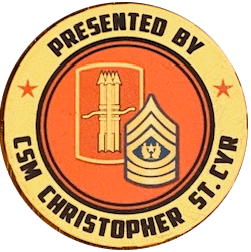
This picture shows a coin the author had made to present to Soldiers. It features the 197th Field Artillery patch consisting of five arrows joined together representing each of the original five counties in New Hampshire, and the rank insignia of Command Sergeant Major.
As the Command Sergeant Major of the 197th Field Artillery Brigade, the Army provided 50 coins for me to award to Soldiers. I did not feel that was enough, so I order my own. The Army also had strong rules about how to present coins that did not apply to the coins I purchased. I know there are Soldiers across the military will tell the story of how they received this coin for years. -Photo by author.

While the origin of challenge coins will never likely ever truly be known, they have become a symbol of belonging. Coins represent the stories of a Soldier’s career. Those small tokens represent their participation in events that become history. Coins demonstrate recognition for accomplishments, belonging, and excellence. Each has its own story of service, sacrifice, honor, and is part of the legend of military service. When you see a current or past service member, after thanking them, ask if they have a challenge coin. Then ask them to tell the story of their coin. You can bet that no matter how few or how many she or he has, they can tell you the story of each of them.

Remembering the Manchester Five on Memorial Day

Not too long ago, I read a disturbing post on LinkedIn. The author said spending time at work to excel in order to develop and leave a legacy was a fallacy created to encourage others to work more than they should, or something like that. As proof of this thesis, he offered the fact that few people know the names of their great-grandfather. He concluded that in 100 years, no one will remember you, so it is better to spend your time at home with your family than putting in extra effort at work. 

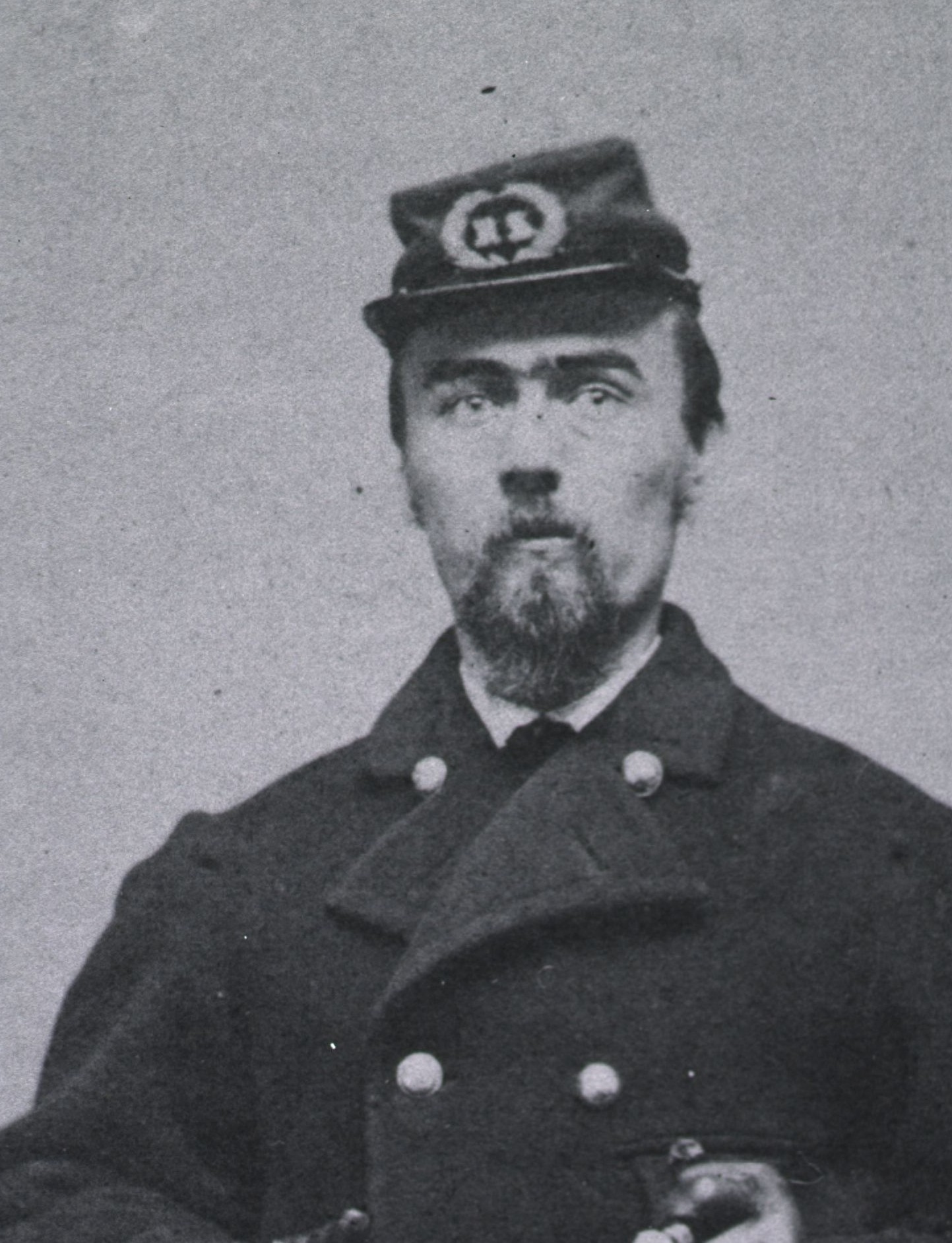
COL Town
COL Town’s legacy remains strong with many children in northern NH. Most have a story about playing basketball in him former home or participating in some other activity in his old backyard.
-Public domain image retreived from the National Library of Medicine at http://resource.nlm.nih.gov/101416449

Later in the day, I read the story of Leonard Crouch who lived in my town. He was a well respected engineer on the Kilkenny Railroad, an old logging railroad that started less than half a mile from my home. Crouch was killed in a train crash on a cold, rainy day when a number of factors converged to overwhelm his skill as a train driver. The Kilkenny Railroad ceased operations in 1894. The fact that Crouch is remembered and still talked about in 2025 shows he left behind a legacy.

A short way in the other direction, there is a community recreation field and field house. The property and an endowment were left to the town by COL Francis Town, a Civil War surgeon who died in 1923. Thousands of people in the area remember COL Town and use his home and backyard every year. Clearly, he left an important legacy. 

In both these stories, neither man have great-grandchildren to remember them. Yet many people do remember them. Your legacy does not have to be work related, but one thing a legacy requires is doing more than is expected to make a difference in the lives of other people. Volunteer coaches, scout masters, 4-H leaders, teachers, and professional leaders all leave some sort of legacy behind. People may not remember the names in 100 years, but they will still talk about the results those people achieved during their life times.

I once read a quote attributed to Ronald Reagan to the effect of, “Most people live their entire lives wondering if they made a difference in the world. Veterans don’t have that problem.” If I remember correctly, it was at the Veterans Memorial in Bethel, ME. 

American Veterans know they make a difference in the world. US Noncommissioned Officers are the envy of military units around the world. Military service in both peace and times of war is difficult. Every member who served, even if others do not remember their names specifically, have a legacy in the units they served. 

There was a time in the Army that senior NCOs would pass a sword back to their Commander upon the end of their tour, and for the Commander to pass the sword to the new senior Sergeant. The sword is a traditional symbol of NCO leadership. A line in the ceremony marking the importance of the NCO’s legacy was, “First Sergeants,” or, “Sergeants Major come and go, but the unit lives on.”

197th FAR unit insignia
Official unit insignia of the 197th Field Artillery Regiment. Units of the 197th FAR trace their linage to the Battle of Bunker Hill. Soldiers of the 197th FAR help create a legacy through their service that will be long remembered after their names are forgotten.
-The Institute of Heraldry

In 1968, 3rd Battalion (BN), 197th Field Artillery Regiment (FAR) of the New Hampshire National Guard was called to serve in Vietnam. The 197th FAR traces its linage to Bunker Hill. While in Vietnam, the battalion became a well respected artillery unit by the line units supported by their artillery fires. In their year of service, the 197th lost nine men, five in one day, who have become known as the Manchester Five. The commander of Bravo Battery, CPT Roland Labonte was one of those killed during that year. There is a small shack in front of the New Hampshire National Guard Headquarters, hidden today by the pine trees growing around it. That building is all that remains of Camp Labonte named after the deceased commander of B Battery. 

If you ever happen to attend a Memorial Day Ceremony (held on 30 May at 1100 every year) at the New Hampshire State Veterans Cemetery, you will find a group of 3d BN veterans at the Vietnam Monument. They are aging and no longer the young Soldiers they once were. If you take a moment to talk to they, you will find they still have a spark in their eye, and the youth returns to their smiles as they share fond memories of their time together.

Not too long ago, 3d BN returned from another one year combat tour in our nation’s continuing fight against terrorists. CPT Labonte’s legacy played an important role in the unit’s success during that mission, and other prior combat missions. Two Command Sergeants Major completed their initial military leadership training at Camp Labonte in 1986 and led the Battalion on two combat missions later in life. Each reinforced the important lessons learned in combat by the Vietnam Soldiers to help the War on Terror Soldiers succeed. The senior NCOs in the Battalion were all led by those Sergeants Major during their career.

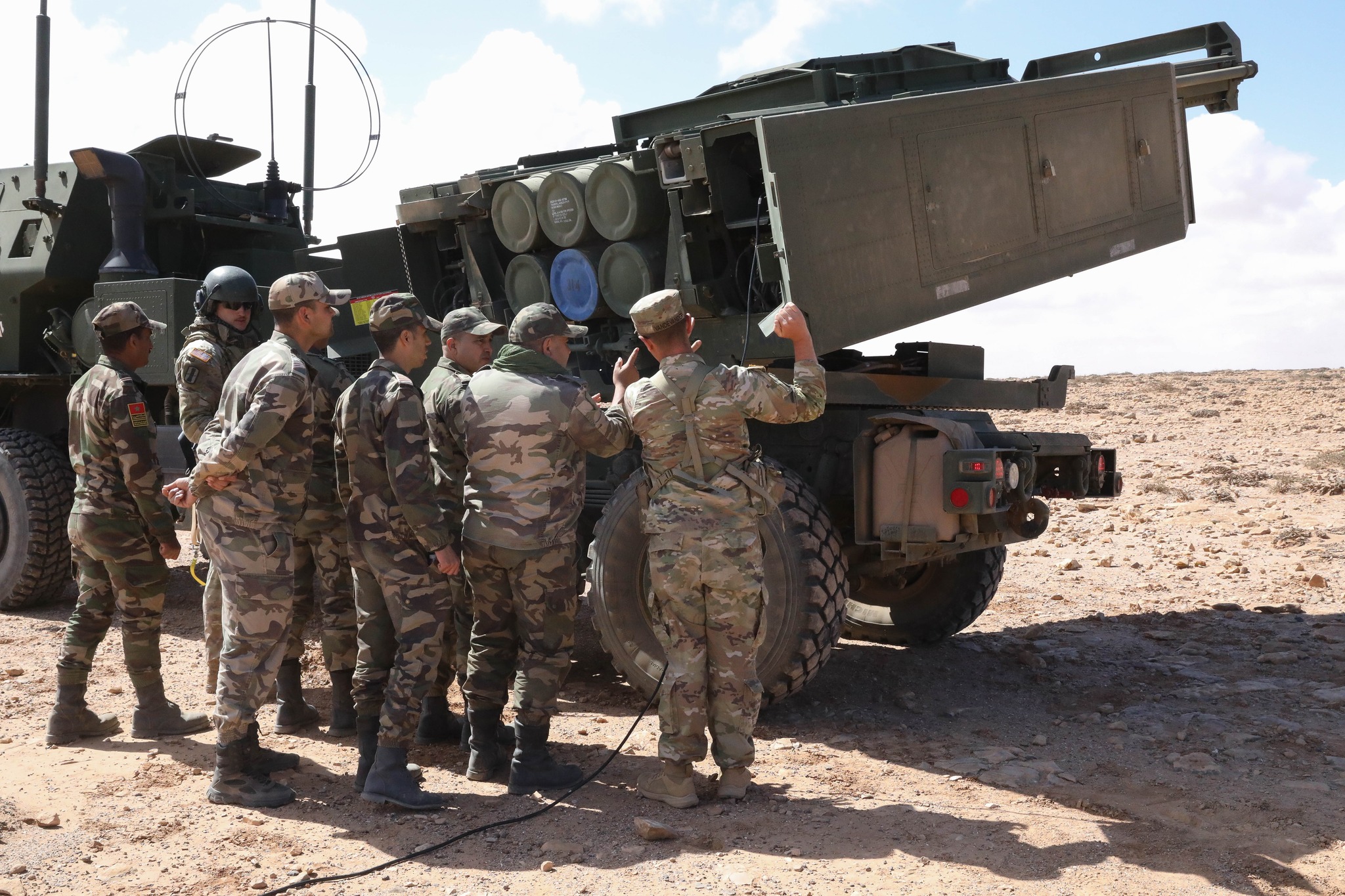
197th Soliders training on a HIMARS
U.S. Army Staff Sgt. Austin Vandevander, a High Mobility Artillery Rocket System (HIMARS) repairer assigned to the 3rd Battalion, 197th Field Artillery Regiment, New Hampshire Army National Guard, instructs Soldiers with the Royal Moroccan Armed Forces on HIMARS rocket capacity, May 14, 2025. Soldiers of the Battalion continue to live up to the legacy of those who served before them in peace and war.
-US Army photo

Legacies are created, not by unnoticed work with stuff. Legacies are created by doing things that make the lives of others better. You actually have to do something for people worth remembering. People who go out of their way to lead are remembered. Those that led have their legacy carry forward, even if their names are eventually forgotten. Their legacy is marked by virtue of the character of those they led. Veterans make a difference, and that is why we take time each Memorial Day to remember those that die defending freedom. They made a difference. Even if the only time we remember their names is when they are read on monuments on Memorial Day, their legacy lives on in the freedom we enjoy every day.

On this Memorial Day, remember the nine Soldiers from the 3D BN, 197th FAR who died in Vietnam:

SFC Raymond Mroczynski,

CPT Roland Labonte,

SGT William Gray,

CPL Mark McManus,

SFC Richard Raymond, 

SSG Richard Genest, 

SGT Gaetan Beaudoin,

SGT Guy Blanchette, and

SGT Roger Robichaud.

References

COL Town Recreation. (ND). COL Town Building Sign. COL Town Recreation Department. Lancaster, NH.

Gove, B. (2010). Logging railroads of New Hampshire’s north country. Bondcliff Books. Littleton, NH.

MacKin, J. (2019). Five national guardsmen from Manchester killed in Vietnam 50 years ago Monday. WMUR. https://www.wmur.com/article/five-national-guardsmen-from-manchester-killed-in-vietnam-50-years-ago-monday/28823220. Retrieved 5/23/2025.

Personal conversations with Soldiers of the 3d Bn 197th FAR

The Virtual Wall, (2019). Roland Charles Labonte. The Virtual Wall Vietnam Veterans Memorial. https://virtualwall.org/dl/LabonteRC01a.htm. Retrieved 5/23/2025

US Army. (ND). Lineage and honors: 3d battalion, 197th field artillery regiment. Army Center for Military History. 

The Veterans’ Struggle

Bennington Battle Monument with Seth Warner Monument in foreground
Bennington Battle Monument.
-Photo by Eixo, Public Domain

A few years ago, I picked up a book titled The Battle of Bennington: Soldiers & Civilians by Michael P. Gabriel while visiting the Bennington Battle Monument. While not the most riveting war book I’ve ever read, what impressed me were the number of first-hand accounts of the battle as told by the veterans who fought there. Some of the accounts were official reports by various commanders under John Stark and Seth Warner. Most were personal Soldier accounts, many made years after the battle, to support pension claims.

The Battle of Bennington was not the largest battle in the American Revolutionary War, but it was probably the most pivotal battle. As the British move south from Quebec to link up with forces in New York City, their supply lines were stretched. In order to complete the mission, they required the stores at Bennington. The loss there denied them access to food and ammunition necessary to continue their campaign. Although the British were able to win the first Battle at Saratoga, when counterattacked by American forces, General Burgoyne was compelled to surrender his forces, arms, and ammunition.

As one reads the accounts of the Battle of Bennington, it is hard not to miss the incredible courage demonstrated by the militia forces in that fight. The Soldiers from the New Hampshire militia had only been formed a few weeks before the battle by John Stark. Stark had left the Continental Army after a dispute with GEN Washington but was pressed into service to lead the State militia upon returning to Manchester. Part of that role included helping the Green Mountain Boys from the Vermont militia defend the New Hampshire Grants in what would become Vermont.

Burgoyne sent a detachment of Hessians to seize the provisions if the Continental Army at Bennington. Just outside the town, they established an entrenched defensive position on a hilltop as foul weather moved into the area (I can only imagine what it was like during that night. My first trip to the battlefield was cut short by an incoming storm. The thunder and lightning were terrifying that afternoon, and I had a dry, warm car to keep me safe). Thick woods still surround the encampment, which gives modern visitors a real feeling of what it was like to attempt to assault the redoubt on top of the hill. The only thing missing most days is the slippery mud. In small groups, each unit attacked by different routes. In the days before radios, and with limited visibility to coordinate movement, no unit really knew of the promised support to their left or right would materialize.

At the end of the day, the British lost over 900 men, the rebels 70.

While this was a small battle, it was important. Burgoyne was not able to obtain the supplies he needed to continue his attack. Instead, those same provisions were used to sustain the Americans during the second Battle of Saratoga that led to the British surrender.

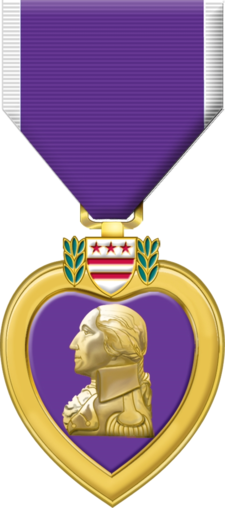
Purple Heart Medal
The Purple Heart was originally awarded to Soldiers in the Continental Army for merit. In the 20th century, it became an icon of an injury sustained in battle.
-USAF photo

As I said in the opening paragraph, the courage displayed by these men was amazing. Another thing stood out to me as I read their accounts, the trouble many of them faced collecting pensions promised them by the Federal Government for their service. Talk to any veteran today about their experience dealing with the VA. Most have at least one story of things the Department messed up. While it is human to err, the theme dating back to the Revolution and veterans is the same, greater struggles to receive the promised care for their wartime, service connected injuries that the actual battles that inflicted those wounds. Sadly, the biggest barrier to veterans receiving care is the very selflessness that runs through many combat veterans, their desire to deny medical treatment in order to continue fighting with their comrades. Claims made in the future are difficult to prove without that medical report at the time of the injury. By choosing to stay in the fight and not have their minor injuries documented, service members deny themselves the opportunity to easily apply for and receive future benefits to receive treatment or payments. Instead, veterans have to find comrades who will step up and verify that their battle buddy was injured in combat. Even when such evidence is available, the VA will often deny that such injuries were all that bad because the service member continued to fight. The bureaucrats do not understand seeking medical treatment is always an option under fire. Many of the accounts from Bennington veterans contain statements about why they were not able to seek medical attention, or how the military lost the records of their participation and injuries.

Veterans who fight our nation’s wars should not have to fight our nation to receive compensation and care for their service connected injuries and disabilities. Perhaps in the next 250 years things will improve. Veterans today have better access to records than those in the past. Still too many fight the same fight their predecessors have to get the government to take ownership of the injuries military service inflicted upon them. However, like the protection of liberty requires constant vigilance, the fight for care and compensation also requires persistence., and has for almost 250 years.

References

American Battlefield Trust (2002). Bennington. American Battlefield Trust.https://www.battlefields.org/learn/revolutionary-war/battles/bennington. Retrieved 11/10/24

Gabriel, M. (2012). The battle of Bennington: Soldiers & civilians. History Press. Charleston, SC.

National Park Service (N.D.). The Battle of Bennington: An American victory (Teaching with historic places). National Park Service. https://www.nps.gov/articles/the-battle-of-bennington-an-american-victory-teaching-with-historic-places.htm. Retrieved 11/10/24

Remember the Fallen

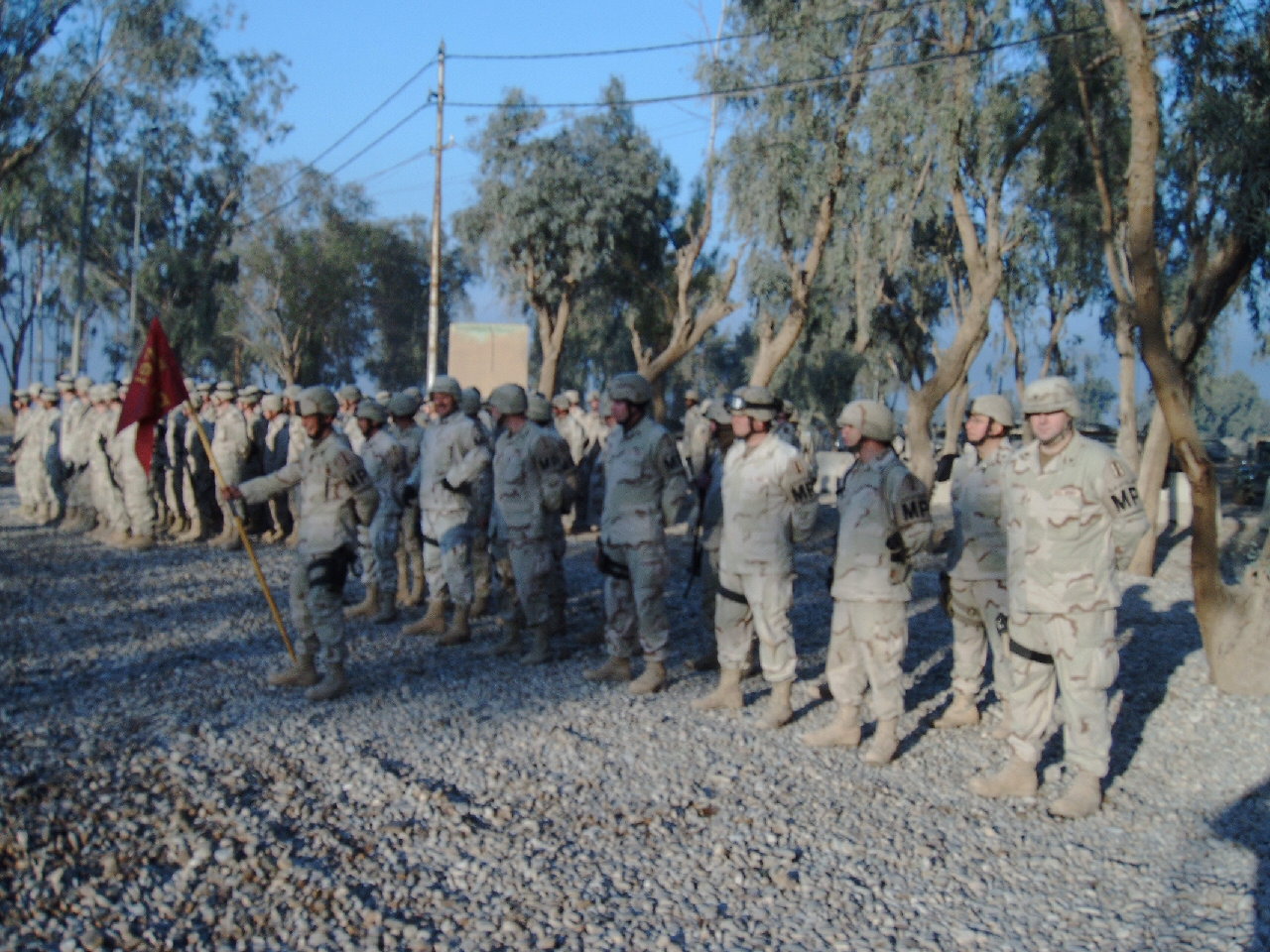
2nd Platoon members in formation to recieve awards
– photo by author

This is a true story as I remember it which means what I remember and the way I remember might be different from the way others remember it. October 15, 2004, was a normal day, if a day on deployment could be called normal by US standards. There was occasional gun fire, and the sound of periodic explosions. The streets were full though, the sun was out, and it was hot. However, things would quickly change, as they often did during our 2004 deployment. I was that platoon sergeant of 2nd platoon in HQ Battery (forward), 2nd Battalion, 197th Field Artillery Regiment, deployed as MPs. We also had a headquarters platoon, and three other numbered platoons. Our MP Company was assigned to serve in Baqubah, Tirkrit, and Mosul. While the 15th of October started normally, it did not end that way.

Second battalion was tasked with providing an in lieu of Military Police Company for Operation Iraqi Freedom in 2003 to begin in 2004. MP companies, unlike field artillery batteries, are not all the same. We were tasked to provide a 200 Soldier company. A field artillery battery has about 100 Soldiers. Clearly, our battalion would have to assemble Soldiers from all the batteries to make on MP Company.

A number of Soldiers from my organic field artillery platoon were divided between third and fourth platoons. I had Soldiers mostly from Headquarters Battery and Bravo Battery. Having previously served in Bravo, I knew many of the leaders. Most of the rest of Bravo had also been assigned to fourth platoon. By the end of our mobilization training at Ft. Dix, NJ, everyone had come to know everyone else.

We arrived in theater in February 2004. Each platoon had slightly different missions. By October, each was doing their thing well.

On 10/15, squad from fourth platoon, HQ/2/197 FA (ILOMP) was patrolling the city of Mosul. Having arrived the previous spring and working with the 293rd MP company (they were real, regular Army cops), they had become familiar with the city, its people, and rhythm. This day was not remarkable until the squad found themselves hemmed in, in traffic at a stop light.

At this time of the war, the Army was using unarmored, add on armored, and up armored HMMWVs for much of its patrol work. There were Strikers in Mosul, but there were far more HMMWVs. Our company had up armored HMMWVs. The armor saved Soldiers on many occasions, including Soldiers in second platoon.

Gunners were the most exposed crew members. Machine guns were mounted on the top of HMMWVs on turrets, allowing gunners to traverse 360 degrees. However, they had to stick half their body outside the vehicle to operate the weapon system and turret. Most vehicles did have front shields. Many had also received supplemental side armor as well, but still, the gunner was hanging out in harm’s way every mission.

While true, the gunners were the most exposed, it meant they also had the best view of the surroundings. Many a patrol was able to identify and engage with enemy forces before the enemy was ready to engage the patrol due to the sharp eye of a gunner. However, when your patrol is jammed in traffic, you lose the ability to maneuver and you become sitting ducks. Just the same, the firepower in a mounted MP squad is amazing.

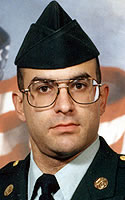
DOD Photo of Alan Burgess

As the fourth platoon patrol sat in traffic, gunners noticed something unusual about a car that had just pulled beside them. It seemed to sag, an indication it might be loaded with explosives, and the driver did not look like he belonged in this part of the city. SPC Alan Burgess started to warn the crew in his vehicle about the danger with the bomb exploded. The HMMWV Burgess was in was the closest to the car bomb. He was gravely wounded. The other occupants were mostly unscathed, a testament to the quality of the vehicle’s armor.

The rest of the squad rallied quickly. They conducted an immediate assessment of the occupants while also scanning for other threats. The squad leader recognized the need to evacuate SPC Burgess to the field hospital at the forward operating base. Shortly after arriving, the medical staff notified the squad leader, Alan died from his wounds.

As was the procedure, all bases in Mosul went into communications blackout. Only official and necessary communications were allowed until next of kin were notified. In Baqubah we heard about the car bomb on the news. We all worried anytime we heard of an attack about our brothers around the country and their safety. By the end of the day, we received word someone in fourth platoon had died. By morning, we learned it was Burgess from family members at home telling unit members in Iraq. The official blackout in Mosul was still in place.

HMMWV on a mission with a second platoon gunner in roof hatch
-photo by author

What happens next? The Army wanted us to continue our missions in Baqubah. We were not the first unit in history to lose a Soldier. Sadly, we would not be the last. In fact, three other American Service Members lost their lives that day in actions against our enemies. By that point in the deployment, many of the second platoon Soldiers were seeing mental health professionals at a forward operating base we received logistical support (second platoon operated IN Baqubah at a combat outpost). We asked them for support at our little base in the city, and they came. Even though none of us were at the scene of the attack, many second platoon Soldiers were affected by the results. Having the mental health professionals available during our time of need helped us heal enough to carry on.

Memorial Day is a day to remember people like Alan Burgess who died defending liberty. I have been asked why Veterans do not do more on Memorial Day to remember the fallen. Unlike our non-military fellow citizens, we remember the fallen every day. So on this Memorial Day, take a moment to think about the sacrifice every military member is willing to make to protect you. They make up less than one percent of our population. They do difficult things every day to be ready. Their working conditions are rarely safe or comfortable. Those who gave all deserve to be remembered. On this Memorial Day, take a few minutes to visit a veteran’s monument or the grave of a fallen service member and remember their sacrifice.

Memorial Day 2023

Military ceremonies remember fallen comrades.
-USDOD Photo by SGT Mark Hayward

George Washington said something like you can tell much about a nation by the way they treat their veterans. Sadly, with less than 25% of our population qualified to serve, and less than 1% stepping up to serve, most Americans have no idea about the sacrifices required to protect liberty. Twice each year, I divert from my usual talks on leadership to discuss veteran topics. Those occur on Memorial and Veterans Days. I feel, as a combat veteran, it is my obligation to share some thoughts on veteran issues during this time. Too many citizens offhandedly thank veterans here and there for their service without truly understanding the sacrifice. I hope each essay brings a measure of understanding for those support our troops but never served.

On Memorial Day you will hear combat veterans use the phrase, “All gave some; some gave all.” How do you give all you may ask? Every veteran contributes to the cause in some way. It does not matter whether you serve as an Infantryman, a fighter pilot, a safety officer on a carrier, unit clerk, or truck driver; every person has an important position in the military. Each thinks, and rightly so at times, their job is the most important. You see without the supply clerk to load the truck, and without the driver to drive the truck, or the MP to guide and secure the truck, the ammunition would never arrive at the firing battery, foxhole, or airfield for the cannon cockers, grunts, and flyboys to close with and destroy the enemy. Someone has to make sure all these people are paid and medically ready. Somebody has to tell their story. Every Soldier, Marine, Sailor, Coastie, and Airman is potentially a target for the enemy. As you can see everyone gives something to the cause. None are ever sure when they will be asked to give everything, including their lives, to the cause. All are at risk. Members of every branch and career field have died serving their country. That is why we have Memorial Day, to remember their sacrifices.

Service members do lots of different jobs in all kinds of terrain, weather, and environments.
-Photo by author

Not all combat related deaths occur on the battlefield. With today’s modern medicine, and forward deployed combat lifesavers, combat injuries are more survivable. Those injuries are still traumatic, preventing some individuals from fully recovering. Many die earlier in life than would be expected. Those deaths are not counted as combat deaths, even though the injuries that caused those deaths happened on the battlefield. We must remember them as well.

Not all military injuries are visible. Traumatic brain injury came into the spotlight as a result of the Global War on Terror. Like other combat injuries, this one also has the potential to shorten service members’ lives in two ways. The first is the lingering injury causes the death, as it may never fully heal. Additionally, those suffering from TBI may turn to another veteran cause of death, suicide.

On an average day, 22 service members and veterans commit suicide. I saw a statistic over the winter that claimed more service members have died from suicide since 2001 than died in all the fighting in Iraq and Afghanistan. You’ll note, there is no reference because I could not find it in time for my deadline. However, 22 suicides per day spread out over 22 years comes out to over 170,000 deaths. Iraq and Afghanistan account for under 10,000 combat deaths. I believe the number without having to find the original reference.

Military operations occur around the clock in peace and war, increasing the danger of death.
-Photo by author

Veteran suicide remains a big problem. Learn ways you can help a veteran in crisis. Recognize when someone is struggling. For a long time, the Army used the ACE model to help service members remember how to render mental health first aid. Ask the person if they are thinking of killing or hurting themselves. I am assured by mental health professionals that your asking will not put the idea in their head, so ask. Call for help. Depending on the circumstances, you should call 911 if there is already a life-threatening situation. If the veteran is expressing suicide ideation, call 877-4AID-VET ((877) 424-3838), or 988 the nationwide suicide hotline. E stands for escort, which means staying with the person in crisis until you arrive at an appropriate treatment facility, or the help you called for arrives. Following these simple steps will make you a hero for our heroes.

As the unofficial start of summer arrives, take time to gather with family and friends to attend a Memorial Ceremony or Parade. Really look at the names of the real people who appear on those war monuments. Each was a son, daughter, brother, sister, father, or mother and certainly someone’s battle buddy. If you thank a vet, ask an appropriate question about his or her military service, such as, “What was the best part of serving?”, “What is your best memory?”, “Why did you decide to serve?”, or something similar. Then listen to the story and ask suitable follow-up questions. If you are particularly attentive, you might actually hear things veterans rarely tell others. It will help you understand the saying “All gave some; some gave all.”

On Veterans Day, a Discussion on One Tradition; Fiddler’s Green

Traditions are an important part of military service. Every Veteran has a story about a rite or ritual. The Change of the Guard at the Tomb of the Unknowns in Arlington National Cemetery is such a tradition.
-Photo from PXHere.com, no other attribution information available.

The military is full of old war stories, ancient traditions, wild legends, and lots of faith in the ever after. Each branch uses their traditions to induct recruits, new noncomms, and junior officers into their ranks. Yesterday, November 10th, was the long celebrated Marine Corps Birthday. Celebrated with music, dance, cake, and drink, there is nothing quite like a Marine Ball on its Birthday. The Navy has rituals for first timers crossing the equator. Eventually, the Space Force will be around long enough to have traditions and legends but until then, they suffer the baby service tradition of being the object of ridicule and jokes. Even within the branches, each service has traditions for every skill. The Infantry, Queen of Battle, wears a light blue cord on their dress uniform. They are protected by their patron St. Maurice. Those that ride to battle in hulls of steel on endless tracks in the Calvary wear spurs and cowboy hats to remind them of the softer steeds from much earlier in their history. The mounted warrior, St. George, looks after other’s fighting from live and steel warhorses. The cannoneers, rocketeers, archers, stone slingers, and catapulters in the Field Artillery are a special bunch. Those Kings of Battle are watched over by St. Barbara, they also have a special place in the afterlife called Fiddler’s Green. Fellow Redlegs and other Veterans, enjoy your free lunches today.

Imagine, if you will, a battery gathered ‘round the fire shortly after the end of the Civil War. The cannoneers feed their horses, clean the bore, and head for chow. It is likely one or two of the section chiefs uncork a canteen of every Redleg’s favorite elixir, Artillery Punch. Number one places another log on the fire as the evening wears on. Talk turns to those comrades lost in the last few years.

As Chief of Smoke, the senior enlisted leader in any field artillery battery, walks the line of steel, he hears a tenderfoot talk of the hell that awaits all Redlegs given the effectiveness of each cannon in battle. Smoke stops, turns, and eyes the powder monkey with curiosity.

-Photo by Army CPL Davis

“Why, young lad, have you never heard of the place reserved for St. Barbara’s finest? It’s part way past the road to heaven on the road to hell. Fear not the eternal fire. The gun guide will always meet every section and lead them to their designated position. Before final entry, each shall report their names to compare against the roll of those acknowledged as members of the Honorable order of St. Barbara. You see, legend has it…”

Halfway down the trail to hell, In a shady meadow green,

Are the souls of many departed Redlegs camped near a good old-time canteen.

And this eternal resting place is known as Fiddler’s Green.

Though others must go down the trail to seek a warmer scene,

No Redleg ever goes to hell, Ere he’s emptied his canteen.

And so returns to drink again, with friends at Fiddler’s Green

(Poem from the U. S. Field Artillery Association)

As Smoke finishes the poem, number one stokes the fire. The cannoneers crawl in their bedrolls and softly fall to sleep, comforted by the dream that one day they will be reunited with their comrades on Fiddler’s Green.

Now dear readers, some of you may be Sailors, and there might be a Marine who is non Artillery. Perhaps you heard Fiddler’s Green was reserved for you, or maybe the Infantry of Calvary. ‘Tis not true. Only those Kings who know the smell of propellant, or the ink from a TFT, who’ve slammed a finger in a breach, or spotted rounds to save the Queen have space reserved on Fiddler’s Green. This story is recreated from best I can recall from when I heard it from my Smoke, who shared it with us all. As Smoke, this tale I’ve told, to newbies and occasionally those who reclassed to Artillery. Often, as suggested by tradition, the tale is shared over the universal bore cleaner, emergency liquid propellant, and the sure cure for what ever ails you, Field Artillery Punch. Mind you this is not that sissy Chattem Artillery punch for which you might find a recipe on the Food Channel Website. No, dear readers, this is the stuff aged under a tree out back since the last St. Barb’s Ball and used to charge the next bowl, a secret not shared here in view of the uninitiated, and for fear the Russians might use it against us.

-Photo by Army SPC Bowling

To my Veteran comrades, enjoy your day. Accept the gratitude of our nation. Remember, with your comrades, the good times and bad, those who are gone and with us still, over those free coffees, breakfasts, and lunches.

For those who have not served, that would be more than 98% of you, thank that old dude wearing the KOREAN WAR hat. Ask the lady in the MP tee shirt about her service. Attend a Veteran’s Ceremony. And if you want your very own holiday, call a recruiter to see if you qualify to serve in our nation’s military. No matter which service or branch you choose, you’ll have adventures you can tell your grandchildren about before you journey off to Fiddler’s Green or other places where non Artillerymen go before getting to hell!

Fiddler’s Green poem from the U.S. Field Artillery Association

All photos from DVIDS, the Defense Virtual Information Distribution Service (unless oftherwise noted), https://www.dvidshub.net/search?q=artillery&view=grid

A Day to Remember, at the Start of Summer

Given such a small number serve in our Nation’s military, it is easy to forget those who fell defending liberty.
-Photo by Eric Smart on Pexels.com

“The 30th of May, 1868, is designated for the purpose of strewing with flowers, or otherwise decorating the graves of comrades who died in defense of their country during the late rebellion, and whose bodies now lie in almost every city, village and hamlet churchyard in the land.” General John Logan, National Commander of the Grand Army of the Republic (GAR) issued this order to all the GAR posts. He also instructed members to guard in perpetuity the final resting places of the fallen in order to remind future generations of “The cost of a free and undivided republic.” Generations in communities since them continue to come together to decorate those graves, remember the fallen, and the true price of peaceful liberty.

Many communities across the post Civil War Nation would gather in the spring, clean up after winter, and decorate the grave sights of those who died in the bloodiest conflict in US history. Soldiers on both sides of the conflict fought bravely, like those on both sides in wars before and after our current wars. Each as a father, son, husband, or brother, and sometimes a mother, daughter, wife, or sister. As a result of the timing of these remembrance and spring cleaning activities, it is easy to understand why and how so many people who lack any connection with our Nation’s Armed Forces see this long weekend as nothing more than the unofficial start of summer.

In spite of over 20 years of fighting a war against terrorists around the world, few Americans know a member of the military and even fewer know someone who died in any of our Nation’s wars. In 2018, Forbes quoted a Rand Corporation report that 2.77 million people fought the war on terror. That is less than 0.8% of our Nation’s total population. Given that in 20 years of fighting, our Nation lost 6,840 service members, it is very unlikely most Americans even know a family who had a loved one die. Even now, the United States still has a small contingent of military personnel deployed in hazardous duty zones.

Photo by Sharefaith on Pexels.com

The small size of those who served and died in uniform shows the impact any individual has in a given situation. This small set of Americans died defending freedom. As a result, we have an absolute obligation to remember them as a group, and as individuals, as we enjoy the liberty they guaranteed.

You may notice that community remembrances are led by current military members, veterans, and family members. They know that if they fail to lead these events, those who never knew liberty’s defenders will forget them. Just because you do not personally know a person who died serving in uniform does not mean you should let the burden of remembering fall only upon those who have a personal connection with those individuals. Everyone has a personal connection by virtue of their freedom. Step up, volunteer to read a poem or lay a wreath. Take time this Memorial Day, and every day, to remember those who laid down their lives so you could live free.

References

McCarthy, N. (2018).2.77 million service members have served on 5.4 million deployments since 9/11 [infographic]. Forbes. Retrieved from: https://www.forbes.com/sites/niallmccarthy/2018/03/20/2-77-million-service-members-have-served-on-5-4-million-deployments-since-911-infographic/?sh=4fee37c450db on 5/23/22

Stilwell, J. (2022). Memorial Day by the numbers: Casualties of every American war. Military.Com. Retrieved from:https://www.military.com/memorial-day/how-many-us-militay-members-died-each-american-war.html on 5/22/22

Unknown. (2022). Memorial Day history. Memorial Day Website. Retrieved from: https://www.usmemorialday.org/history-of-memorial-day on 5/23/22.

U.S. Department of Veterans Affairs. (n.d.). Celebrating America’s freedoms; The origins of Memorial Day. Department of Veterans Affairs. Washington, DC. Retrieved from: https://www.va.gov/opa/publications/celebrate/memday.pdf on 5/23/22.

(c) 2022 Christopher St. Cyr

Building Trusting Teams

As trust grows between members of your team, you will find your team functions better. As teams function better, trust grows. It really does not matter where the leader inserts team building in this cycle, only that s/he does. Communication is a key aspect to building trust in teams, described in an earlier post. Creating channels of open communication between team members about more than just work helps all the team members understand each other better. Engage your team in challenging work. Great challenges create a shared team identity and history. Challenging work develops confidence in team members, improves trust, and encourages greater positive risk taking because team members know they are supported.

A smart phone representing communication
Photo by FOX on Pexels.com

While communication was discussed in the second post of this series, there are some specific aspects of communication to help improve team development. During Project Aristotle, Google researched why some of their teams were more effective and productive than others. One of their first reported findings was that teams that permit everyone about equal say are the most productive. They found such teams have the greatest teams had emphatic communications which created a culture of psychological safety. Google found that teams with these characteristics tended to allow about equal time for communication from all members.

Leaders start the discussion by opening up, so others see their vulnerabilities. They insist on respectful descent. They present a future that is hard but achievable. Leaders encourage the team to attempt difficult tasks and support them when they fail by examining what happened and how to improve. These behaviors support disciplined risk taking. A leader’s vision for the future is, “Like water in a bucket, vision evaporates and must be constantly replenished – that is, communicated.” (Blanchard)

As you project your vision for a better future, you begin to paint a picture of something that does not yet exist. Your vision should invite your teammates to join you on the achievement adventure. While the vision you present should be hard to achieve, it should not be impossible. People bond when they accomplish hard things.

Stephen Ambrose documents the trials and tribulations of a company of infantrymen from WWII in his book Band of Brothers. Easy Company was a well respected company because of the many victories it earned. The men of Easy became life-long friends. It is unlikely these Soldiers would have every known each other outside the war. However, their leaders trained them hard which built their confidence. Their battles were difficult, testing those bond, hardening them like steel. Each man trusted the other with their own lives. Imagine what it is like to work in a team like that.

Formation of Soldiers graduating.
Photo courtesy of NHRTI.

It is easy to point to any number of military units to illustrate the point that hard work builds a team. There are plenty of examples of teams outside the military that worked hard, build trust, and accomplished great things. Jocko Willink wrote, “Combat is a reflection of life, only amplified and intensified,” in his book Extreme Ownership (p.12). As a result, there are many successful teams where the leader established an expectation of success and provided support. The leader understood when teams take on difficult tasks, failures will occur. That leader knew every mistake was a learning opportunity to be shared across the team. Those teams earned bragging rights when they accomplished things others thought impossible. Their successes, not their failures, are what others noticed and remembered. They attracted others who wanted to do great things because of the shared history and team identity. Trust grows in these teams, allowing them to function better.

An example is the child advocacy center movement. There are over 900 child advocacy centers across the United States recognized by the National Children’s Alliance. Each consists of a team from several organizations that serve abused children such as law enforcement, child protection services, medical and mental health providers, prosecutors, and advocacy programs. The team leader does not supervise any of these people.

The problems are real. The work is difficult and challenging. While it seems all these people are working towards a common goal of protecting children, each has their own view of how to approach the problem of child abuse. Sometimes these organizations have rules that make communication difficult. Often there is a great deal of friction between the organizations the team members represent. Yet, the team leader is trained to create trust between team members by facilitating meetings that create bonds between members. The leader asks team members questions to find the common ground between competing interests.

Man constructing furniture
Photo by Ono Kosuki on Pexels.com

Over time, team members create strong bonds that inspire collaboration and cooperation. The result is, offenders are held accountable for what they have done. Child receive appropriate services to deal with their traumatic experiences, allowing them to heal and lead more normal lives. Team members often become friends because of their common history. As these teams grow, they find people want to belong rather than go it alone.

Team building is a core leadership competency. Building trust is an essential element of that process. Leaders build their teams by ensuring everyone has a voice, challenging them with hard work, and creating a culture of learning by allowing mistakes and providing support. These teams have shared experiences they value, a history of success, and create space others want to join. Building teams is a cycle to creating trust and improving performance. Pick an activity that does either, build on it, and before long you will find you have a trusting, highly functioning team.

References

Thank a Vet by Hiring a Vet

Cha-BOOM! Another morning starts with mortars landing on the roof. Bap-bap-bap-bap-bap. The M-240 machine gunner on the observation post over my head fires at someone or something as I roll out of bed and turn on the radio. I hear the Sergeant of the Guard (SOG) informing the operations center that we are receiving direct small arms fire and indirect mortar fire. I think, “No $#!7, we can hear it!” As I pull my body armor on, I hear the SOG directing one of the posts to fire on a position believed to house the forward observer for the mortars. He controls the fire of that position by calling in small corrections, allowing the gunner to zero in on the forward observer. As he radios each correction, we can hear shots cracking around him and the mortars continue to rain down.

Making life and death decisions under pressure creates a level of character for all Veterans, a quality adaptable to any job.

By now I am racing to the operations center to check in, receive accountability from my other squads, and coordinate a counter-attack. Cha-BOOM – another round lands on the roof, shaking the building. “I’ve been hit!”, the SOG yells into the radio. “Tweak it down one more notch,” he directs the machine gunner as they continue to zero in on the observer. “You got him. Now find that RPK.” directs the SOG. The mortars stop and soon, so does the small arms fire. The insurgents melt back into the city before we can roll out the gate and engage with them.

The one thing that stands out in my mind after nearly two decades since this battle occurred was the way the Sergeant of the Guard skillfully directed the fires of the fighting positions while under direct fire. What still amazes me however is that had he not announced on the radio he had been injured, no one listening would have any idea he was wounded. He continued to direct the battle and move from position to position like he was doing a little fitness training in his hometown.

I have heard people say that leadership is the most important thing on the battlefield. The leadership provided by the Sergeant of the Guard on that June morning directly resulted in the enemy lose of their eyes directing the mortars being used against us. Because they lost the ability to control their fires, the others fighters gave up the fight. The SOG’s cool reaction under fire, and while wounded, set an example of how good leaders instill confidence, provide guidance, and create trust under pressure.

This Field Artilleryman spent a year serving as a Military Police Soldier and helped train thousands of local police.

Most leaders in the most work places will never face such a life and death situation. However, many react like minor things are life and death events and engage in seagull management. The term comes from The One-Minute Manager. Ken Blanchard shares the story of a manager flying over his workers. When she catches someone doing something wrong, she swoops in, flaps her wings, makes lots of noise, and on the way out dumps on the people as they sort out the confusion.

When an employer hires a veteran, they gain an employee that knows what crises look like. Most know what an appropriate response is to given situations. Too often, employers look at a veteran’s employment history and sees they served in one of the combat arms, infantry (queen of battle), field artillery (King of Battle), armor, or carvery and has no idea what their real skills are.

National Guard member working a COVID Vaccination Site.

The military makes leaders of young people. A 20 or 21-year-old Soldier might be responsible for the very lives of four or five other people, like the Sergeant on the roof during the mortar attack. Even if that Soldier makes a text book correct decision, the Soldiers he leads might still die. How many life and death decisions do leaders in your organization have to make on a regular basis? I suspect in most cases, the answer is few. Yet the very people who are qualified to recognize and make those decisions are placed at the bottom of hiring lists because they do not appear to have skills.

If you are an employer that values leaders who can work independently, create a positive work environment, motivate people with a variety of skills, and accomplish things, you need to look at that veteran a second time. Lots of people now feel free to walk up to a person in uniform and thank them for their service. What are you really thankful for? If you are grateful they provided leadership in tough circumstances, offer them a job or connect them with someone who can.

Veterans have demonstrated the capability to learn new things under pressure. They know how to work in teams. They understand you do not have to like the other person in your foxhole, but you need to know how to work with them so you both survive. Veterans value loyalty, duty, honor, and service. They know what hard work is because for them, and eight-hour day is only the first part of the work day; many have worked 20 or 30-hour days

Veterans worked a variety of jobs in the military. Often, what they are tasked to do is not aligned with what they are trained to do but they figure out how to complete the mission.

As a job interviewer, you may not understand all the jargon veterans use. Ask them to clarify what they mean. Even the most junior leader in the military creates mission orders for their team based on what their boss needs. Veterans learn to understand the intent of the mission, which in the business world is a job or project. They develop plans to accomplish their part of the project. They communicate their plan with their bosses and their team. Veterans learn to coordinate their actions with the teams operating to their left, right, and rear, basically, all around them.

Veterans may not know how to operate your Black Hole Client Management System, but they know how to gather information. They may not be able to operate your particular milling machine, but they learn to operate lots of different military equipment. They may not know your particular protocol to deal with a crisis, but they know how to quickly make decisions based on the available information, their understanding of the intention of the project, the guiding principles of the organization, and then how to execute in a calm, disciplined way. Every organization needs people who can make decisions under pressure, inspire others to be more than they are, and complete important work with little supervision. Those are normal days in the military, and that is why veterans make good hires. Do not just thank a vet this Veterans Day; hire one.

References

Blanchard, K, & Johnson, S (1983). The one-minute manager. Berkley Books. London, UK.

Marshall A. (2019). Baqubah: Bones and blood. Baqubah Press. Barrington, NH

Willink, J, & Babin, L. (2015). Extreme ownership. St. Martin’s Press. New York, NY.

Top photos by author

Bottom photos from New Hampshire National Guard

Learn More

https://hireaveteran.com/

These are a small number of organizations looking to help employers find and hire Veterans. Selecting these sites for sharing here is intended only to raise awareness for employers and Veterans of some ways they can connect. Their selection is not an endorsement.

(c) 2021 Christopher St. Cyr

Memorial Day 2021

Twenty-one paces north. Halt for 21 seconds. Right face and freeze for 21 seconds. Right face. Change shoulder arms wait 21 seconds. March south 21 paces and repeat. This is the life of a Tomb Guard, one of the most elite small units in the United States Army. Every day, around the clock, in any weather they stand guard over the bodies of three unknown Soldiers honoring their sacrifice.

SGT Younger selected the remains placed at the Tomb.
Photo from Explore: The Tomb of the Unknown Soldier. Arlington National Cemetery.

Most Americans are familiar with the 20th century Tomb of the Unknown Soldiers. There are videos on YouTube of Sentries confronting visitors for acting disrespectfully. There are tales of their dedication to the point of not abandoning their post in the greatest extremes of weather. The view of Washington, DC is one of the best in the area. Few however know there is a second Tomb of Unknown Soldiers.

Less less than half a mile north is the less famous Tomb of the Civil War Unknown Soldiers. This monument was placed over the remains of 2,111 Soldiers found and gathered from the Civil War battles around the Washington, DC area. About 100 yards from the front step of Arlington House, and in Mrs. Lee’s rose garden, this large grave was clearly intended to shame Robert E Lee and his family. The government of the Unite States, at the direction of President Lincoln, acquired the title to the estate after Mrs Lee failed to pay taxes assessed on the property during the Civil War (Hanna, 2001).

By 1864, both sides lost many sons to the fighting. The War Department was tasked with gathering the fallen and ensuring they received proper burials. Even before the United States received the deed to the property, they began burying Soldiers from both sides of the conflict on these grounds. The War Department attempted to return remains of the dead to their families when possible. Before long existing cemeteries were full. Those who could not be identified were gathered in a single location. It is estimated that about one half of those who died fighting in the Civil War could not be identified (Hanna, 2001).

The tomb was described as a pit 25 feet deep and round, it was divided into chambers as it was filled (Hanna, 2001). It is is the first memorial to unknown Soldiers in Arlington National Cemetery. Even though burials in the tomb ended sooner, the monument was not dedicated until September 1866. It was topped with cannon and inscribed,

Tomb of the Civil War Unknown Soldiers.
Photo by Elizabeth Fraser (2017) from the same source above.

Beneath this stone

Repose the bones of two thousand one hundred and eleven unknown soldiers

Gathered after the War

From the fields of Bull Run, and the route to the Rappahanock, their remains could not be identified. But their names and deaths are recorded in the archives of their country, and its grateful citizens

Honor them as of their noble army of martyrs. May they rest in peace.

SEPTEMBER. A. D. 1866 (US Army, ND).

James A. Garfield, then an Ohio Congressman – later President, officiated the first national Memorial Day service at this site in 1868. He denied he had the words to adequately convey the meaning of the deaths of those laid in the Tomb. He noted that in the days before the war, “Peace, liberty, and personal security were blessings as common and universal as sunshine and showers and fruitful seasons.” Of those laid to rest he said,

And now consider this silent assembly of the dead.

What other spot so fitting for their last resting place as this under the shadow of the Capitol saved by their valor? Here, where the grim edge of battle joined; here, where all the hope and fear and agony of their country centered; here let them rest, asleep on the Nation’s heart, entombed in the Nation’s love! (Garfield, 1868)

Arlington National Cemetery also became home to Unknowns from the War of 1812 and the Spanish American War. Those Unknowns from 1812 were originally buried at the Washington Navy Yard. More casualties were identified during the Spanish American War, but not all. They were also buried at ANC (Arlington National Cemetery (2020).

The Unknown is brought to the Tomb.
Photo: Library of Congress

People discuss things for which they are willing to die. For many, it is just talk. For those who serve and guard our Nation’s liberty, it is more than talk. On Memorial Day, we remember those who defended liberty with their very lives. For them, defending freedom, justice, and liberty were more than words. They willing risk their lives on every mission, in training or in combat. For those buried in the Tombs of the Unknowns, not only did they give their lives, they surrendered everything, even their identity. That is why the Sentry walks those 21 steps north and south everyday around the clock. Those Soldiers do it to honor those with nothing left to give. When you gather this Memorial Day with family and friends over burgers and beer, remember the Soldier guarding those known but to God. Remember those Unknown who died so you may enjoy the blessings of “Peace, liberty, and personal security”.

References

Arlington National Cemetery (2020). Explore the Tomb of the Unknown Soldier. Arlington National Cemetery History Education Series, Arlington, VA.

Garfield, J. (1886). Decoration day address. What so Proudly We Hail. 2013. Washington, DC. Retrieved from https://www.whatsoproudlywehail.org/curriculum/the-american-calendar/decoration-day-address-1868 5/25/21.

Hanna, J (2001) Arlington house: The Robert E. Lee memorial. U.S. Department of the Interior, National Parks Service, Washington, DC.

Mougel, N (2011) translated by Gratz, J, World War I casualties Reperes

Public Affairs Office (2021), Resource guide/Tomb of the Unknown Soldier centennial commemoration, Arlington National Cemetery, Arlington, VA

U.S. Army (ND). Arlington National Cemetery. Office of Army Cemeteries, Department of the Army, Washington, DC. https://www.arlingtoncemetery.mil/ Retrieved 5/24/2021

(c) 2021 Christopher St. Cyr

The Three Legs of Managing Leadership; Be, Know, Do

Leading from the front builds character and trust. To be up front, leaders must know the way. Their example shows they know where to go and what to do. Photo by form PxHere

This is the final topic in my series on managing as a leader. While it might seem odd to discuss leadership in this series, there are some basic leadership principals all managers must possess. Successful manager lead even if they lack direct reports. Possessing leadership skills ensures your ability to influence others to accomplish what needs to be done. An example of someone without direct reports is a project manager. You lead teams that may be working on other projects. None may report to directly to you. Project managers still influence team leaders to complete projects appropriately.

With all that said, regular readers know this post could never cover all the details of leading. Scores of books, articles, and classes are done every year on leadership. I have been a leader for a long time and I still read books, articles, take classes, and practice.

At my first leadership class in the Army, I learned the three legs of the leadership stool are Be, Know, Do. Decades later, Be, Know, Do remain the core of Army leadership doctrine. These three principles apply whether you are an Army leader, CEO of General Motors, or president of the local Lions Club.

The foundation of leadership is character. It is the Be in Be, Know, Do. The cornerstone of that foundation is trust. Every action you take determines your character. If you are always late to meetings you become known as a tardy person. If you yell at others anytime you are stressed, others think of you as an angry person. If you effectively use resources to achieve quality results, people judge you as reliable.

Trust is the cornerstone of character because every other character trait rests on trust. Using the examples above, setting a meeting time means that you trust others to show up at that time and place. In order to avoid stress and become angry, you trust others to complete tasks as promised. When you trust others to use resources effectively they do. Every other character trait relies on trust.

When your actions are aligned with your values, it is like turning any gear in a series of synchronized gears. When one turns, they all turn. Aligned actions and character create the synchronization required to accomplish quality work and lead others.
Photo by Miguel u00c1. Padriu00f1u00e1n on Pexels.com

Aligning your actions with your professed values creates a state of virtue. That becomes your character. When you say one thing and continually do something else, others view you as untrustworthy and a hypocrite. The hard part for everyone in this daily struggle is living up to the values you profess requires examination and reflection of your actions. People justify when their actions run contrary to their values. Find someone you trust to hold your mirror as you reflect on your actions. That second person provides perspective to your reflective observations.

My friend Gerry Berry used to say you could tell what was important to someone not by what he said, rather by what he did. He used that line with me every time I feed him an excused to not work out or go fishing with him. Gerry is gone now, so working out with him and joining him on the lake are no longer possible. When acting, recognize what really is important. Gerry held my mirror for many years which helped me see how my actions were often contrary to my values.

Some people say leaders are born and not made. I disagree. Leadership is like any other activity. Some people are born with natural talents. Talented people who work hard improve their skills becoming excellent. Others with less talent but a great desire to learn coupled with discipline outperform those talented people who choose not to improve their natural talent.

Think about someone you knew in high school who had a natural athletic ability but only played JV and the person who had less talent but always made varsity. The difference was work. It is the same with leadership. Some people are born with a natural charisma, yet they cannot lead a group in the Pledge of Allegiance. Others never have many friends yet lead important organizations. People choose to follow that person because the leader knows how to use power to ethically influence others by providing purpose, direction, and motivation. Together they can accomplish great things and make organizations better. Those unnatural leaders learn the process through education and practice.

Good leaders understand the process of leadership. It starts with a clear idea of what needs to be done and why it is important. That is the purpose. They clearly, continually, and consistently communicate that message to group members. They motivate. They assign each team member a role explaining why what they do is important to the greater good. That is direction. Leaders focus on building their followers skills and abilities in order to provide the best product of service possible with the available resources. As a result, the organization becomes better as they strive to accomplish their mission.

Leadership is a process that can be learned.
Chart by author

Leadership is a process. People can learn processes. Teaching people the leadership process provides the opportunity for them to adapt behaviors and become better leaders. Leaders use processes and people to produce results. Leaders DO things like teach, inspire, motivate, and learn.

To become a good leader, one has to have some knowledge and desire to learn. Leaders need to know about people, what motivates them, how they work together, understand how personality affects their perspective, and how to use the strengths of each individual well. Leaders know something of the work to be done or how to hire knowledgeable people to supervise the work. Leaders learn about the people they lead. Leaders combine prior knowledge and current learning to create new ideas and better ways of accomplishing things. Leaders learn about their strengths and weaknesses, biases, and habits. That learning allows leaders to grow and create change in themselves and others. Leaders never stop learning.

The process of leadership requires people to possess character; creating action through the efforts of others; to learn and know about the job, leading, and people. Character is developed every day with every action you take. You become known by your actions, not your words. Ensure what you say is what you do. Learn more about your job, people, and leadership. Learning helps you think better because you have more information to create effective solutions to problems. Develop and work processes that inspire others to achieve. Motivate them to create the world envisioned in your organization’s mission statement. Your actions improve your organization and create a better world by influencing others to make a difference. Manage your leadership actions using the three legs of the leadership stool. Become a leader others choose to follow; BE, KNOW, DO.


Post Script

Little Leadership Lessons provides ideas and insights to become a better person and by extension, a better leader. You may notice at the top of each page there is a link to a training page. Little Leadership Lessons is published by Saint Cyr Training. We provide virtual, in-house, and off-site training opportunities for progressive organizations that understand the need for high-quality, well-rained leaders. Click here if you want to learn more.


References

  • Kinicki, A. & Williams, B. (2008). Management: A practical introduction (3d Ed.). McGraw-Hill Irwin. New York, NY
  • Sinek, W. (2014) Leaders eat last: Why some teams pull together and others don’t. Portfolio/Penguin. New York, NY
  • Wickham, J. (1983). Military Leadership: FM 22-100. U.S. Army Adjutant General Publications Center. Baltimore, MD.
  • Willink, J. & Babin, L. (2015). Extreme ownership: How U.S. Navy SEALS lead and win. St. Martin’s Press. New York, NY